上一片说,驯化把野草挑成了大个头庄稼——个头越大,饭量也越大。土壤就是庄稼的自助餐厅,"肥力"就是这家餐厅的供餐能力。Last leaf, domestication picked weeds into big crops — and big crops eat big. Soil is the crop's buffet restaurant, and fertility is how well that buffet keeps serving.
第 1 步:菜单上的三大件 N、P、KStep 1: The big three on the menu — N, P, K
先看菜单上最重要的三道菜。First, the three most important dishes on the menu.
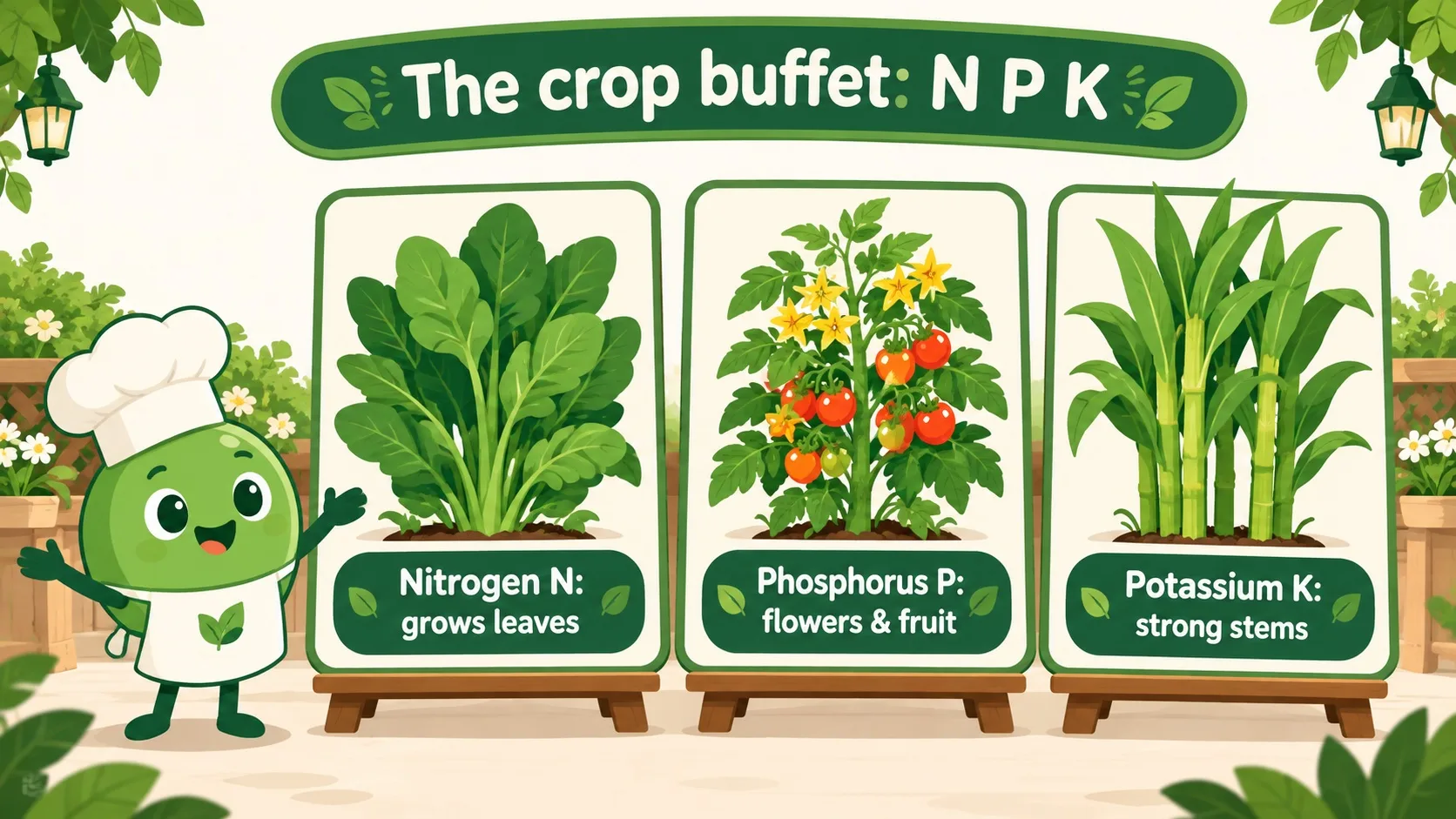
庄稼吃得最多的三种元素:氮 N 管长叶——叶子茂不茂看它;磷 P 管花果——开花、结果、扎根都靠它;钾 K 管茎秆——茎粗秆壮、风吹不倒。因为需求量大、土壤里常常不够,它们被叫作"大量元素"。The three elements crops consume most: Nitrogen N grows leaves — lush foliage depends on it; Phosphorus P drives flowers and fruit — blooming, fruiting, rooting; Potassium K strengthens stems — thick stalks that stand up to wind. Needed in bulk yet often scarce in soil, they're called macronutrients.
菜不够时,庄稼不会喊饿——但叶子会"说话"。When a dish runs short, crops can't call out — but their leaves can talk.
第 2 步:看叶子,开处方Step 2: Read the leaf, write the prescription
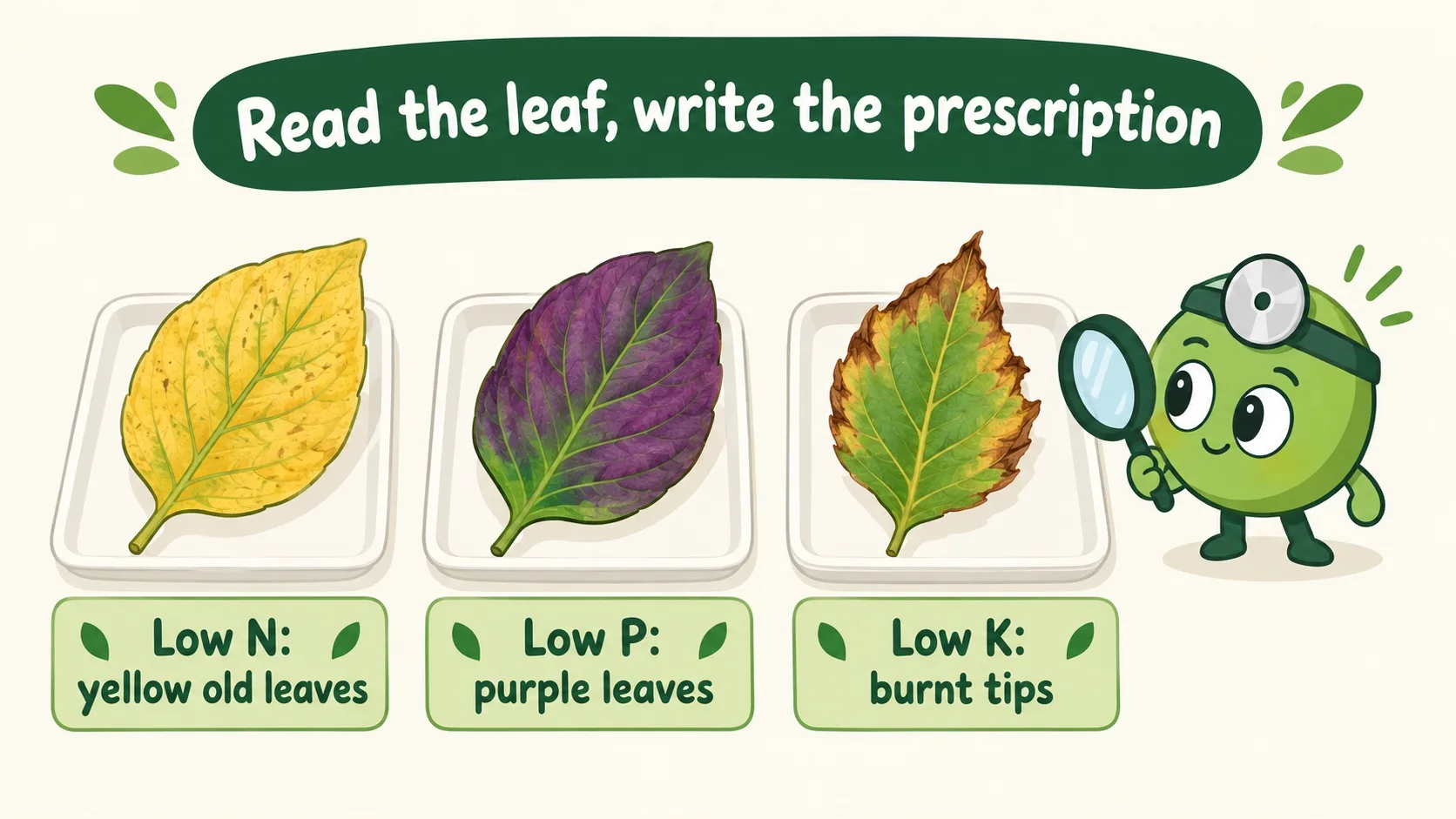
老叶整片发黄,多半缺氮;叶片泛出紫色,多半缺磷;叶尖焦枯、茎软易倒,多半缺钾。学会看叶子的颜色和姿势,不用仪器也能当"植物医生"。Old leaves turning yellow all over — likely short of nitrogen; a purple tint on the leaves — likely short of phosphorus; burnt tips and floppy stems — likely short of potassium. Read a leaf's color and posture, and you're a plant doctor with no instruments.
那给庄稼"加餐",是不是越多越好?So is piling on extra fertilizer always better?
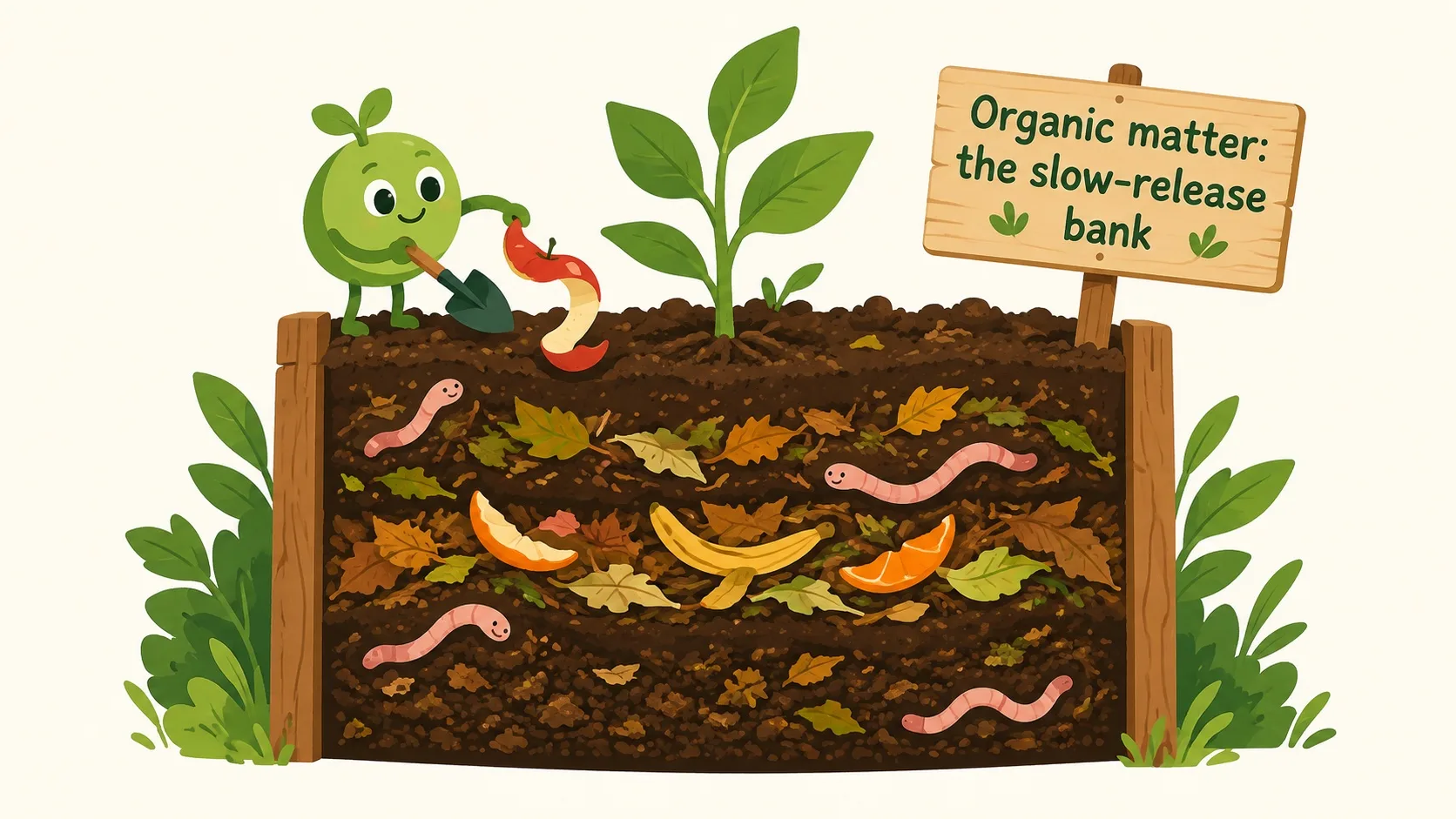
不是。堆肥、落叶这些有机质被微生物慢慢分解,像银行一样细水长流地"放养分",还养蚯蚓、松土壤;化肥见效快,但一次下太浓会"烧苗",冲进河里还会惹祸。好厨师讲究搭配和火候——施肥也一样。No. Microbes break down compost and fallen leaves slowly — like a bank releasing nutrients in a steady trickle — while feeding earthworms and loosening soil. Chemical fertilizer acts fast, but too much at once "burns" the crop, and runoff into rivers causes trouble. A good chef balances dishes and heat — so does fertilizing.
🎮 你来当施肥门诊医生(30 秒)🎮 Your turn: run the fertilizing clinic (30 seconds)
四位病人已挂号:先看症状,再开处方——小心,最后一位并不是缺肥。Four patients are waiting: read the symptoms, then prescribe — careful, the last one isn't missing fertilizer at all.
一句话记住它:土壤肥力 = 土壤开的自助餐——氮长叶、磷花果、钾壮秆;叶子会报菜名,施肥贵在适量。Remember it in one line: soil fertility is the crop buffet — N for leaves, P for flowers & fruit, K for stems; leaves tell you the order, and the right amount beats more.
N/P/K 三大元素:氮长叶、磷促花果、钾壮茎秆The macronutrients: N grows leaves, P drives flowers & fruit, K strengthens stems缺素症状:老叶黄缺氮、叶片紫缺磷、焦尖倒伏缺钾Symptoms: yellow old leaves → N, purple leaves → P, burnt floppy tips → K有机质 + 微生物细水长流;一次施太浓会烧苗、污染水体Organic matter + microbes feed slowly; over-fertilizing burns crops and pollutes water
内容参考 OpenStax 等公开教材,多来源核对 · AI 生成、人工审核 · 发现错误欢迎指正,帮这片叶子长得更好。Based on OpenStax and other open textbooks, cross-checked across sources · AI-generated, human-reviewed · Spotted a mistake? Tell us — help this leaf grow.
 Back to tree