导览器显示卫星拍下的云图。小树问:到了太空,卫星为何不直接掉下来?The museum guide shows a satellite weather image. Mia asks why a satellite does not simply fall straight down.
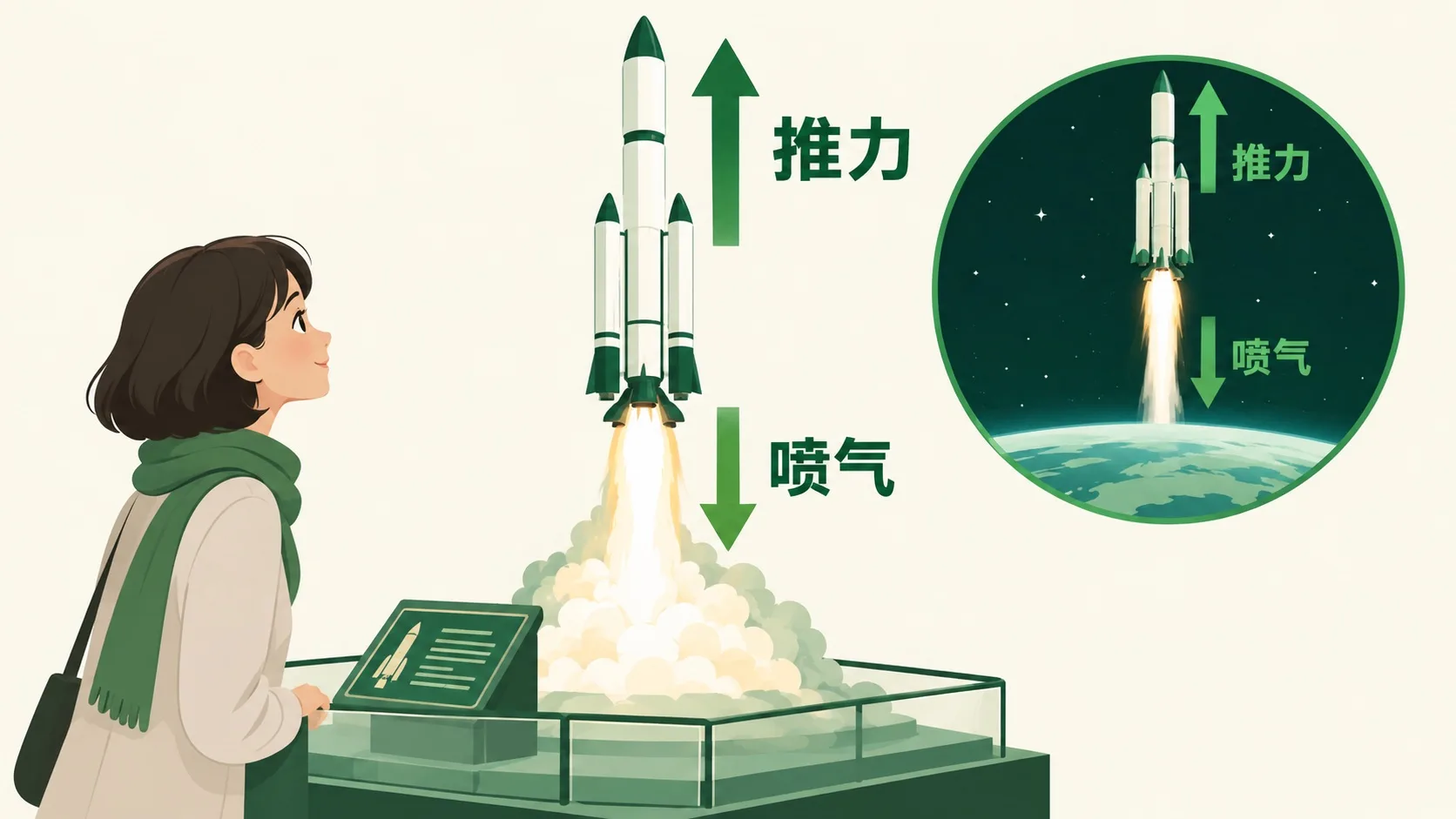
第 1 步:喷出物质,获得推力Step 1: Expel mass to gain thrust
先看火箭怎样离开地面。Start with how a rocket leaves the ground.
火箭向后喷出气体。自身因此获得反向推力。它不需要推着空气前进。许多火箭携带燃料和氧化剂。A rocket expels gas backward and gains forward thrust. It does not need to push against air. Many rockets carry both fuel and an oxidizer.
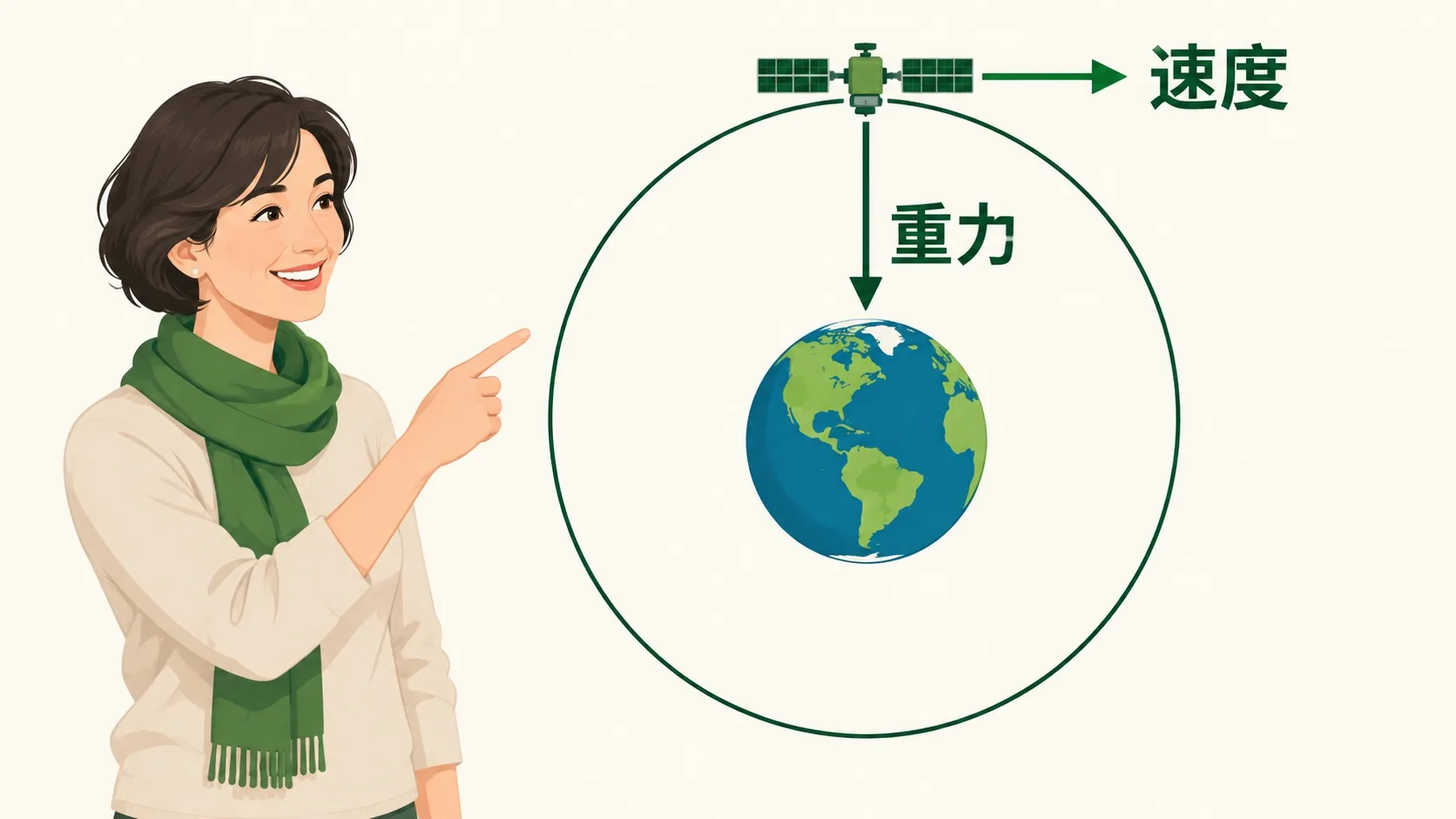
第 2 步:轨道是一边前进一边下落Step 2: Orbit is forward motion while falling
升得高,就一定能绕地球吗?Does reaching a high altitude guarantee an orbit?
进入轨道还需要合适的横向速度。重力持续改变飞行方向。卫星一边前进,一边向地球下落。地球表面也在下方弯开。Orbit requires suitable sideways speed as well as altitude. Gravity keeps bending the path. The satellite moves forward while falling toward Earth, whose surface curves away below.
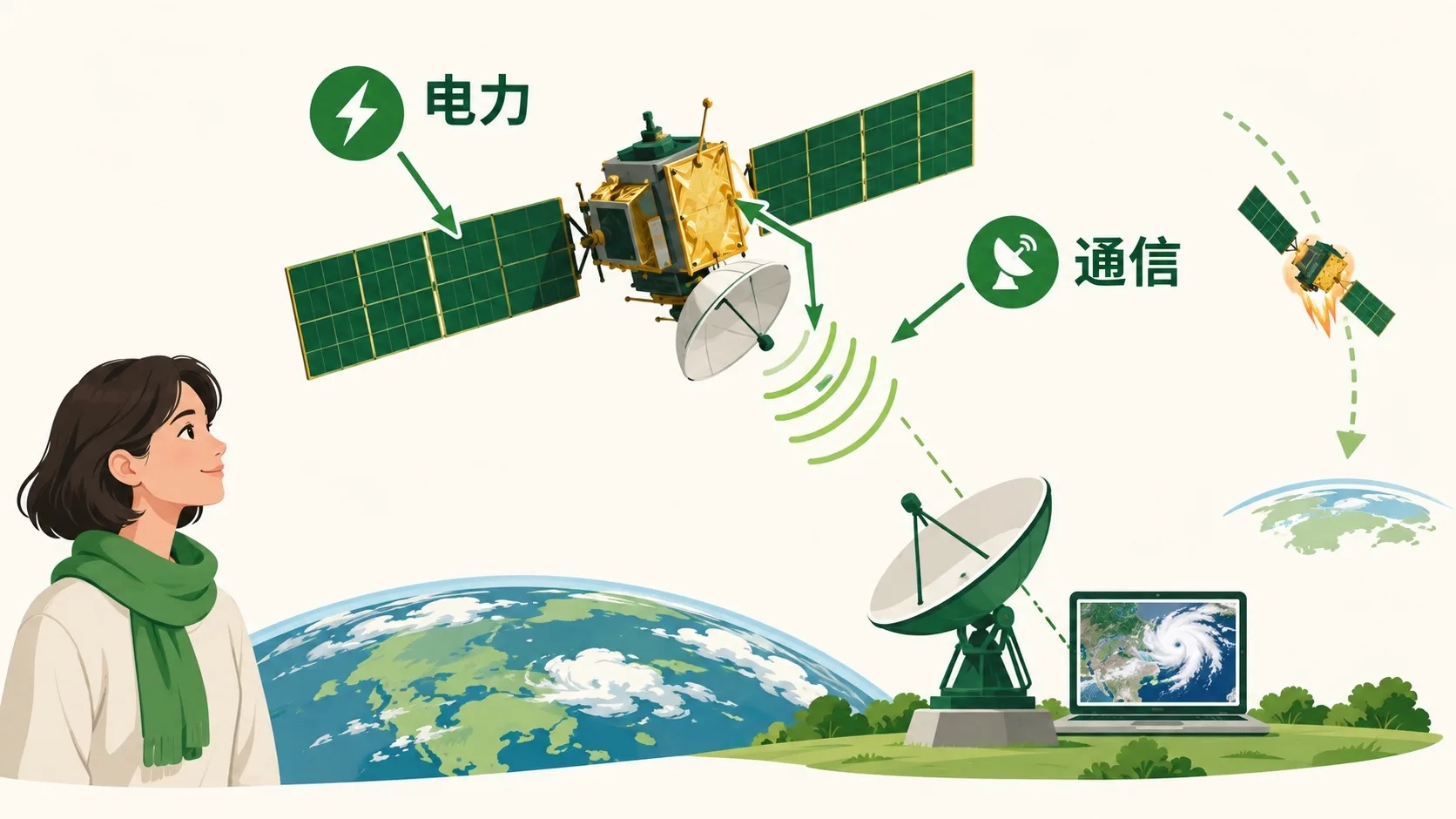
第 3 步:任务靠系统协作Step 3: Missions depend on connected systems
在轨道上,还需要做什么?What is needed once in orbit?
卫星需要电力、通信和姿态控制。任务团队不断测量并修正。热管理与故障准备同样重要。任务结束还要考虑空间碎片。A satellite needs power, communication, and attitude control. Teams measure its state and make corrections. Thermal control and fault planning also matter. End-of-mission plans consider debris.
🎮 机制实验室:观察,再判断🎮 Mechanism lab: observe, then decide
选择模型中的速度档,比较落地、近圆轨道与较长椭圆路径。轨迹示意,不作数值轨道预测。Compare low-speed fall, near-circular orbit, and an extended ellipse. Paths are schematic, not numerical predictions.
一句话记住它:Remember it:航天不只要升空,还要入轨、运行和善后。Space engineering includes launch, orbit, operations, and the end of a mission.
火箭向后喷出气体。A rocket expels gas backward and gains forward thrust.进入轨道还需要合适的横向速度。Orbit requires suitable sideways speed as well as altitude.卫星需要电力、通信和姿态控制。A satellite needs power, communication, and attitude control.
牛顿力学与系统框架:较高把握。轨道图不按比例,不用于实际轨道计算。High confidence in Newtonian mechanics and the systems framework. Orbit diagrams are not to scale or suitable for mission calculations.
核对日期:2026 年 10 月 6 日。文字与配图由 AI 生成;已做来源核对及程序测试,待人工复核。Checked 6 October 2026. Text and illustrations are AI-generated. Sources and software checks were performed; human review is pending.
 Back to tree