🐦 物种形成:一个家族分家成两支🐦 Speciation: One Family, Two Branches
上一片里,自然选择把一群鸟打磨得更适应环境。这一片问:如果同一个家族被一条大河分开,两边各自演化几万年——会不会变成两家?Last leaf, natural selection sharpened a flock to fit its home. This leaf asks: if one family is split by a great river, and each side keeps changing for ages — do they become two families?
第 1 步:一条河,两个世界Step 1: One river, two worlds
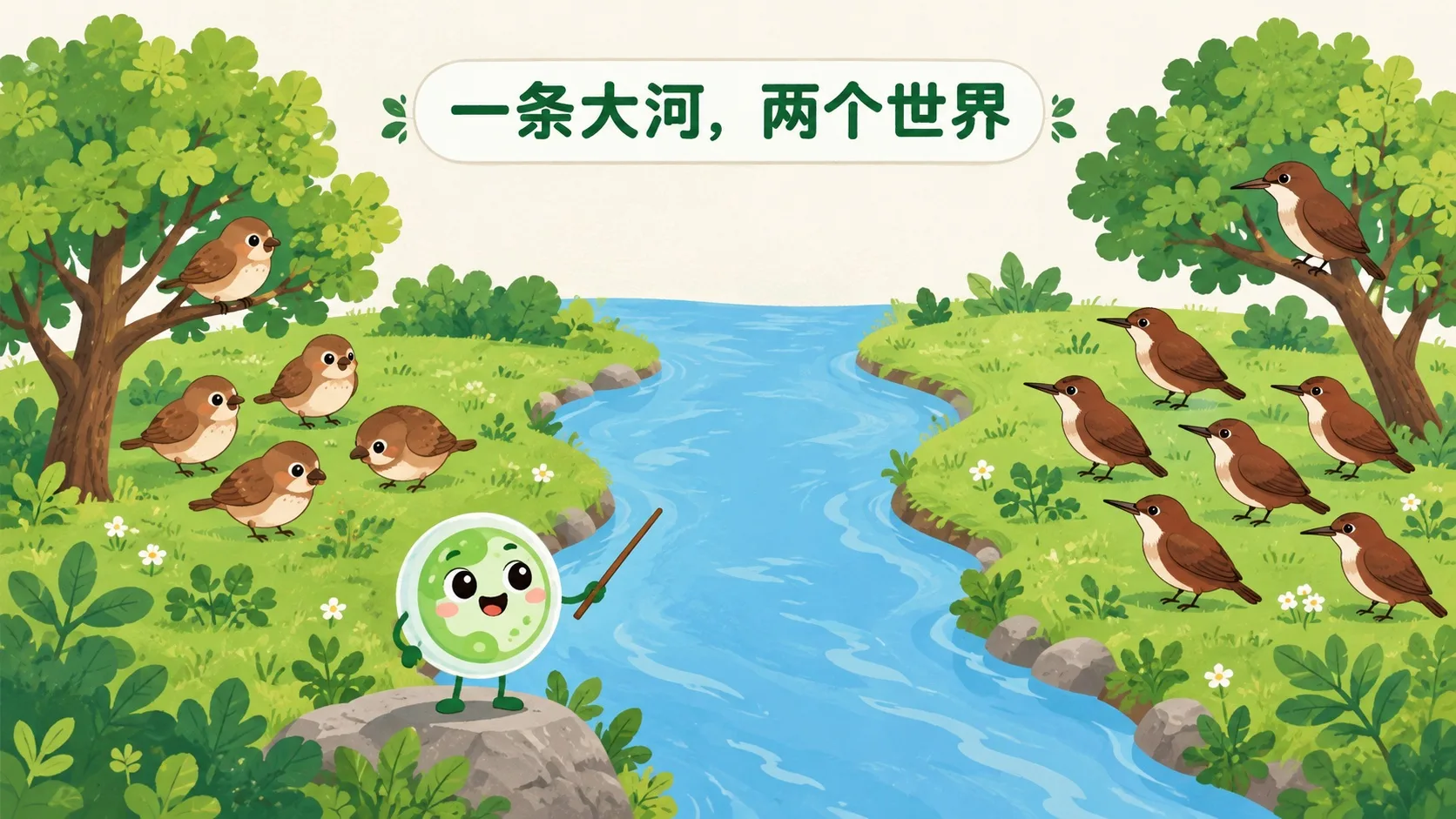
先看分家的第一步——家族是怎么被拆开的?First, how does a family get split in the first place?
地理隔离:大河、山脉、沙漠把一群生物切成两半,两边不再见面,基因也不再交换。这就是新物种的第一步。分开以后,两边的命运就各自拐弯了。Geographic isolation: a river, a mountain range or a desert cuts one population in two. The two sides stop meeting, and genes stop flowing between them — step one of a new species. After the split, each side steers its own course.
隔开之后,两边不还是同一群鸟吗?为什么时间一久就变了?They are still the same birds right after the split — so why does time change them?
第 2 步:菜单不同,本领不同Step 2: Different menus, different skills
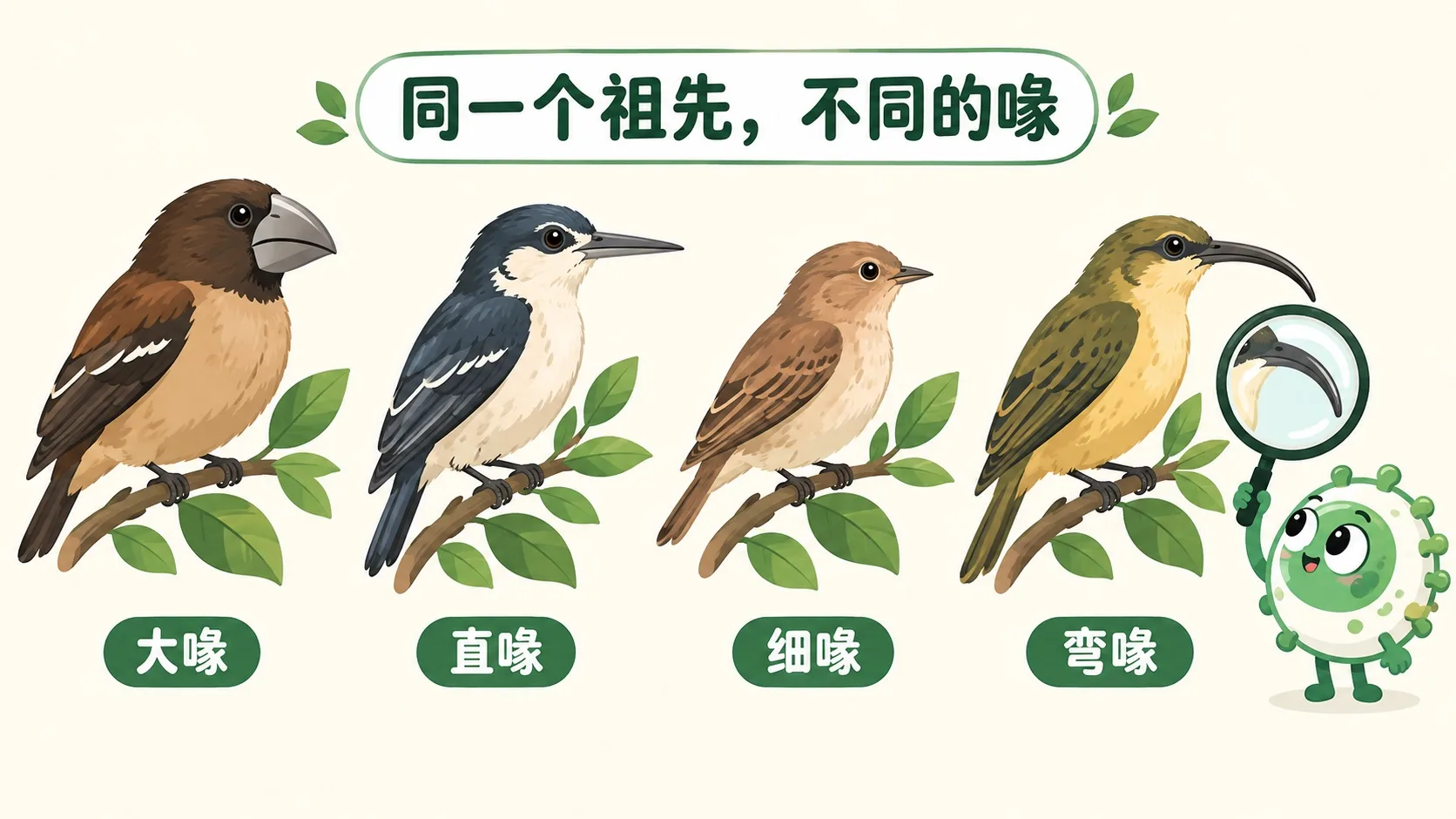
达尔文雀:同一个祖先飞到不同小岛,岛上食物不同——吃大种子的喙厚,吸花蜜的喙长。自然选择在两边各推各的方向,几万年下来,喙的形状成了两边各自的“生活笔记”。Darwin's finches: one ancestor flew to different islands with different food. Thick beaks crack big seeds; long curved beaks sip nectar. Natural selection pulls each side its own way — and after ages, the beaks read like each side's private diary.
喙长得不一样,可它们见面还能认出对方吧?到哪一步才算“两个物种”?Different beaks — but they would still recognise each other, right? When exactly are they two species?
第 3 步:差异攒够了,就不能交配Step 3: Diverged too far to interbreed
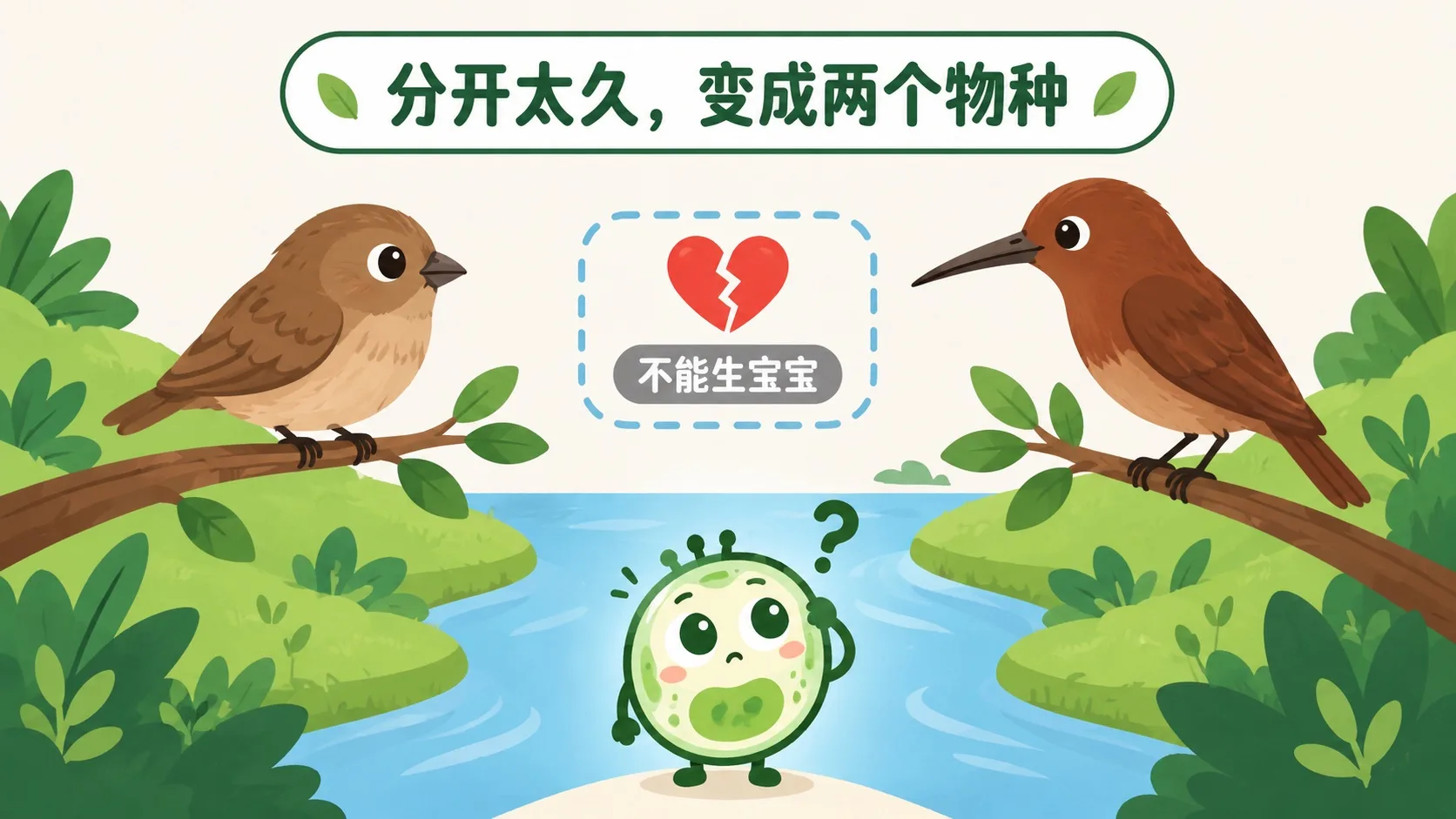
隔离久了,两边攒的差异越来越多:羽毛、叫声、求偶舞都渐渐对不上。就算重逢,也生不出健康的后代——这叫生殖隔离。到这一步,科学家就说:它们是两个物种了。记住:物种 = 能互相繁殖、生出健康后代的一群生物。After long isolation, differences pile up: plumage, songs and courtship no longer match. Even if they meet again, they cannot raise healthy chicks — that is reproductive isolation, and now scientists say: two species. Remember: a species = a group that can breed and raise healthy young together.
🎮 你来当隔离实验员(1 分钟)🎮 Your turn: isolation lab (1 minute)
道理讲完了。拖动“隔离时间”和“环境差异”两个滑块,看两岸的鸟怎么越走越远;再闯 4 关,判断它们到底算几个物种。Theory done. Drag the “isolation time” and “environment difference” sliders to watch the two banks drift apart, then face 4 rounds: how many species are they really?
一句话记住它:地理隔离 → 两边各自积累差异 → 不能交配 = 新物种。物种不看长相,看能不能一起繁殖。Remember it in one line: geographic isolation → differences pile up on each side → no more interbreeding = a new species. A species is about breeding together, not looking alike.
地理隔离是第一步:大河、山脉把一家分成两半,基因不再交流Geographic isolation comes first: a river or mountain cuts one family in two, and genes stop mixing两边环境不同,自然选择各推各的方向——达尔文雀的喙就是证据Different environments pull each side its own way — Darwin's finches are the evidence差异攒够了 → 不能交配 = 新物种;物种 = 能互相繁殖的一群Enough divergence → no interbreeding = a new species; a species is a group that breeds together
内容参考 OpenStax 等公开教材,多来源核对 · AI 生成、人工审核 · 发现错误欢迎指正,帮这片叶子长得更好。Based on OpenStax and other open textbooks, cross-checked across sources · AI-generated, human-reviewed · Spotted a mistake? Tell us — help this leaf grow.
 Back to tree