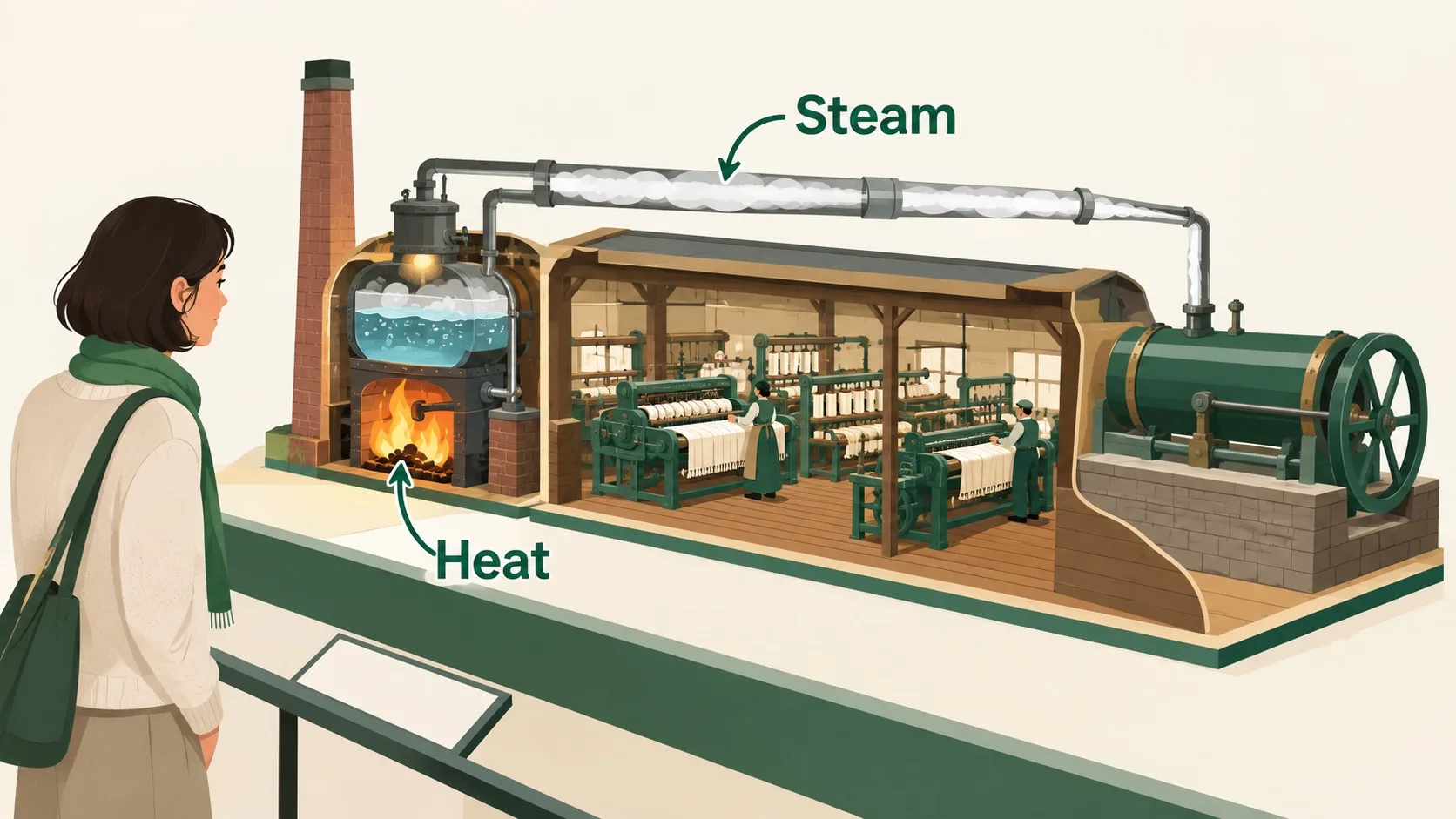
小树来到纺织作坊。煤在炉里燃烧,怎么让另一边的机器转起来?Mia visits a textile workshop. How can coal burning in a furnace turn a machine across the room?
第 1 步:热先进入蒸汽Step 1: Heat enters the steam
从热量怎样搬运开始。Start with heat being carried.
锅炉把热传给水。水受热产生蒸汽。蒸汽可把能量送到汽缸。它不是燃料本身。A boiler transfers heat to water. Heating produces steam. Steam carries energy to a cylinder. It is not the fuel itself.
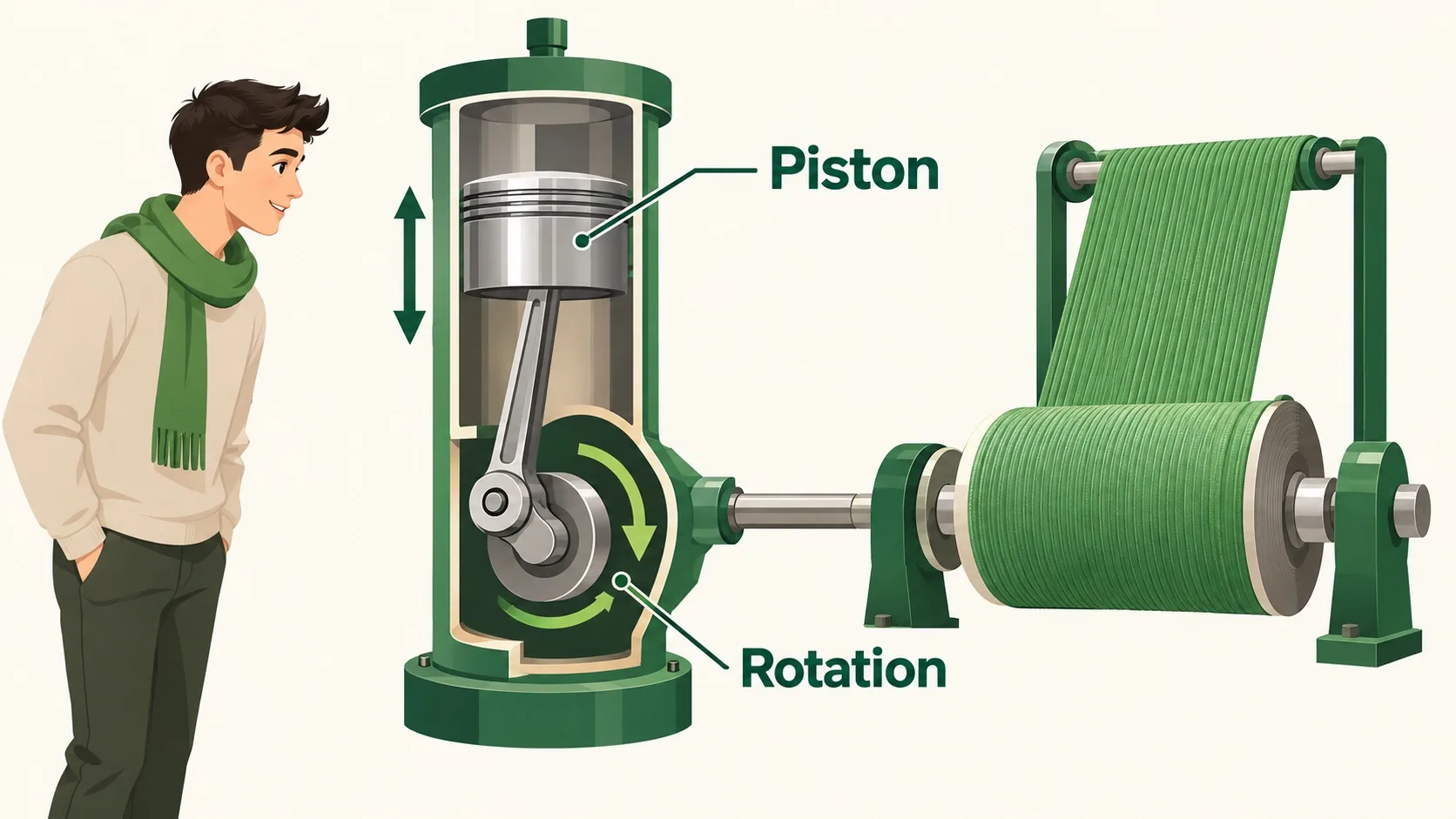
第 2 步:压力推动活塞Step 2: Pressure moves a piston
热量到了汽缸,怎样产生运动?How does energy reaching the cylinder create motion?
活塞两边的压力不同,就会受力。机构把往复运动变成转动。不同蒸汽机的循环并不相同。排汽与冷凝也是设计的一部分。A pressure difference pushes a piston. A mechanism can turn back-and-forth motion into rotation. Steam-engine cycles differ. Exhaust and condensation are also parts of the design.
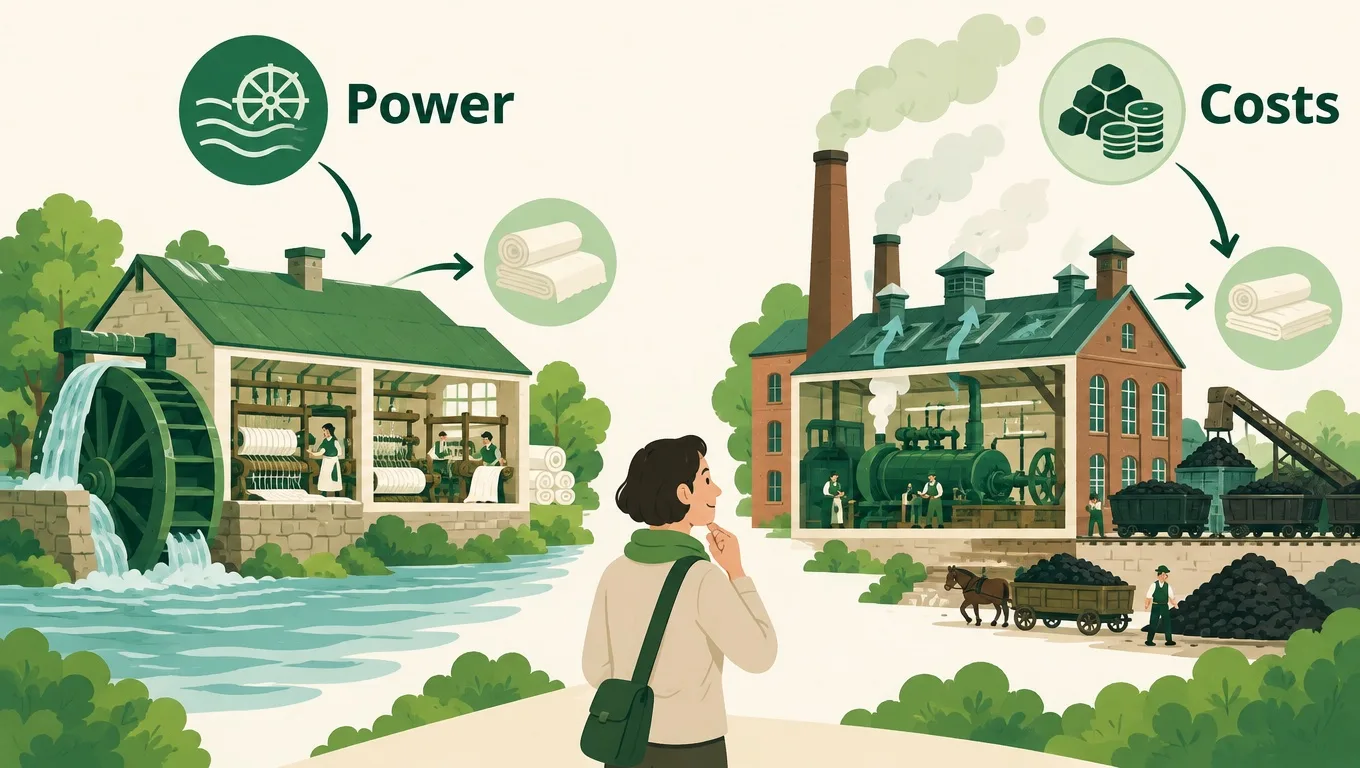
第 3 步:机器改变工厂位置Step 3: Power changes factory locations
稳定的动力会改变什么?What changes with a dependable source of power?
作坊不再只依靠水流或人力。燃料和运输却变得更重要。产量提高,也带来污染与劳动问题。瓦特改进了蒸汽机,并非最早发明者。Workshops were less tied to flowing water or muscle. Fuel and transport became more important. Output grew alongside pollution and labour problems. Watt improved steam engines; he did not invent the first one.
🎮 机制实验室:观察,再判断🎮 Mechanism lab: observe, then decide
推力=压差×面积。这里一千帕乘一平方厘米为零点一牛顿;不计摩擦。Force = pressure difference × area. One kPa times one square centimetre is 0.1 newton; friction is omitted.
一句话记住它:Remember it:蒸汽机把热转成机械运动,也改变生产组织。Steam engines turn heat into mechanical motion and reshape production.
锅炉把热传给水。A boiler transfers heat to water.活塞两边的压力不同,就会受力。A pressure difference pushes a piston.作坊不再只依靠水流或人力。Workshops were less tied to flowing water or muscle.
机械原理与改进史:较高把握。工业化的影响因地区、阶层和时期而异。High confidence in mechanics and the improvement history. Industrialization affected places, groups, and periods differently.
核对日期:2026 年 10 月 6 日。文字与配图由 AI 生成;已做来源核对及程序测试,待人工复核。Checked 6 October 2026. Text and illustrations are AI-generated. Sources and software checks were performed; human review is pending.
 Back to tree