上一片里,食物被嚼碎、咽下,滑进食道。🩺 小医生拍拍肚子:“第一站到了。”可胃并不生产营养——它只干三件事:装、搅、杀。Last leaf, chewed food slid down the esophagus. 🩺 The little doctor taps a belly: “First stop.” The stomach makes no nutrients — it only stores, churns and kills.
第 1 步:先装后放:一只弹性储袋Step 1: Store first, release slowly: a stretchy bag
空胃只有拳头大,凭什么装下一整顿饭?An empty stomach is fist-sized — how does it fit a whole meal?
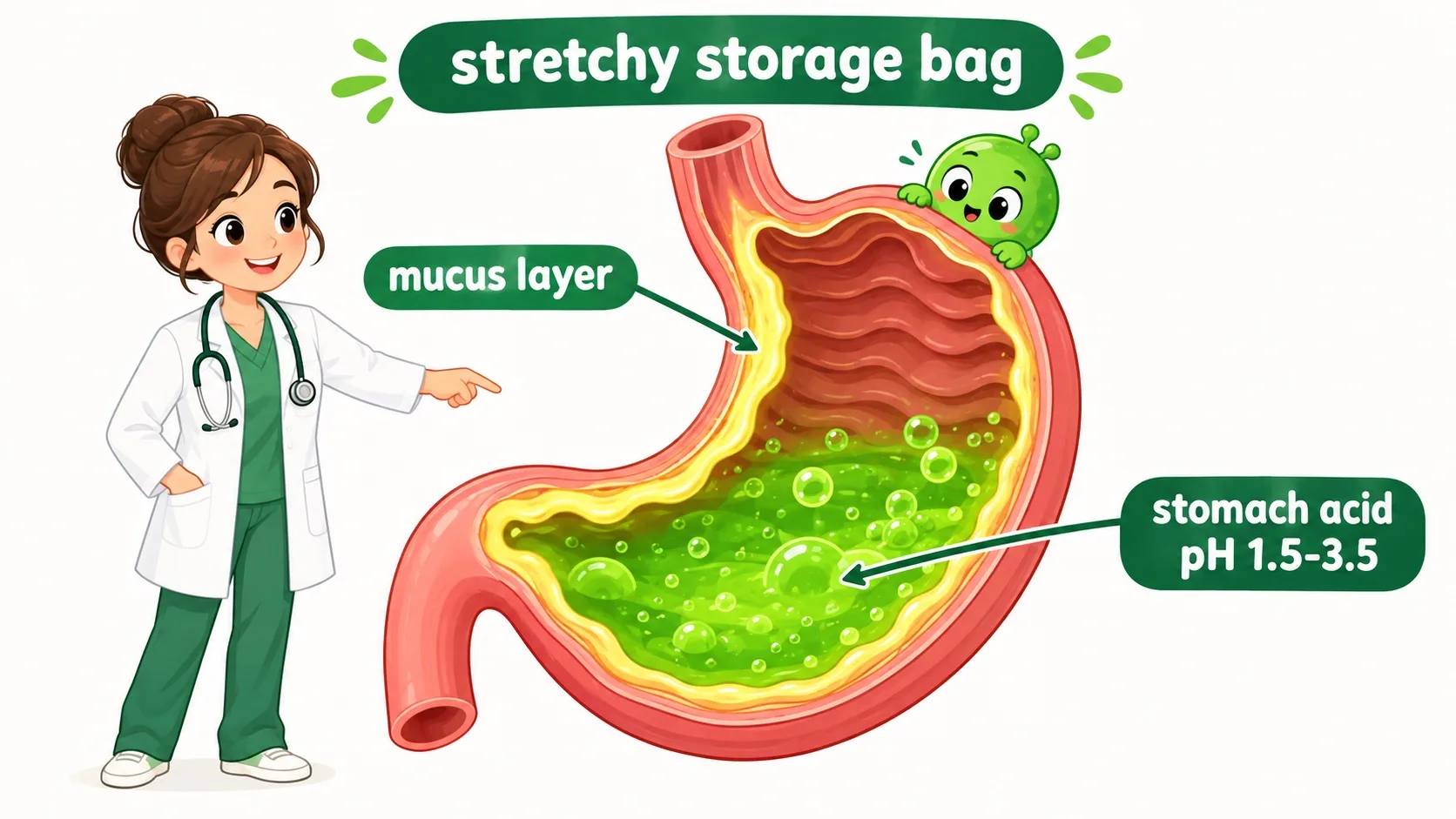
靠胃壁上手风琴一样的皱褶:装满后能展开到 1~1.5 升。它是个弹性储袋——先收住一大口饭,再一小批一小批地放行,不让下游忙不过来。箭头指的是两样关键东西:绿莹莹的胃酸,和护住胃壁的黏液层,第 3 步会用到。Thanks to accordion-like folds: filled, it expands to 1–1.5 L. It's a stretchy storage bag — it holds a whole meal, then releases it in small batches so the next stage is never overwhelmed. The arrows point to two key things: the green stomach acid, and the mucus layer shielding the wall — you'll meet them again in Step 3.
装进去的还是大块食物,怎么把它变成糊糊?The stored food is still chunky — how does it become mush?
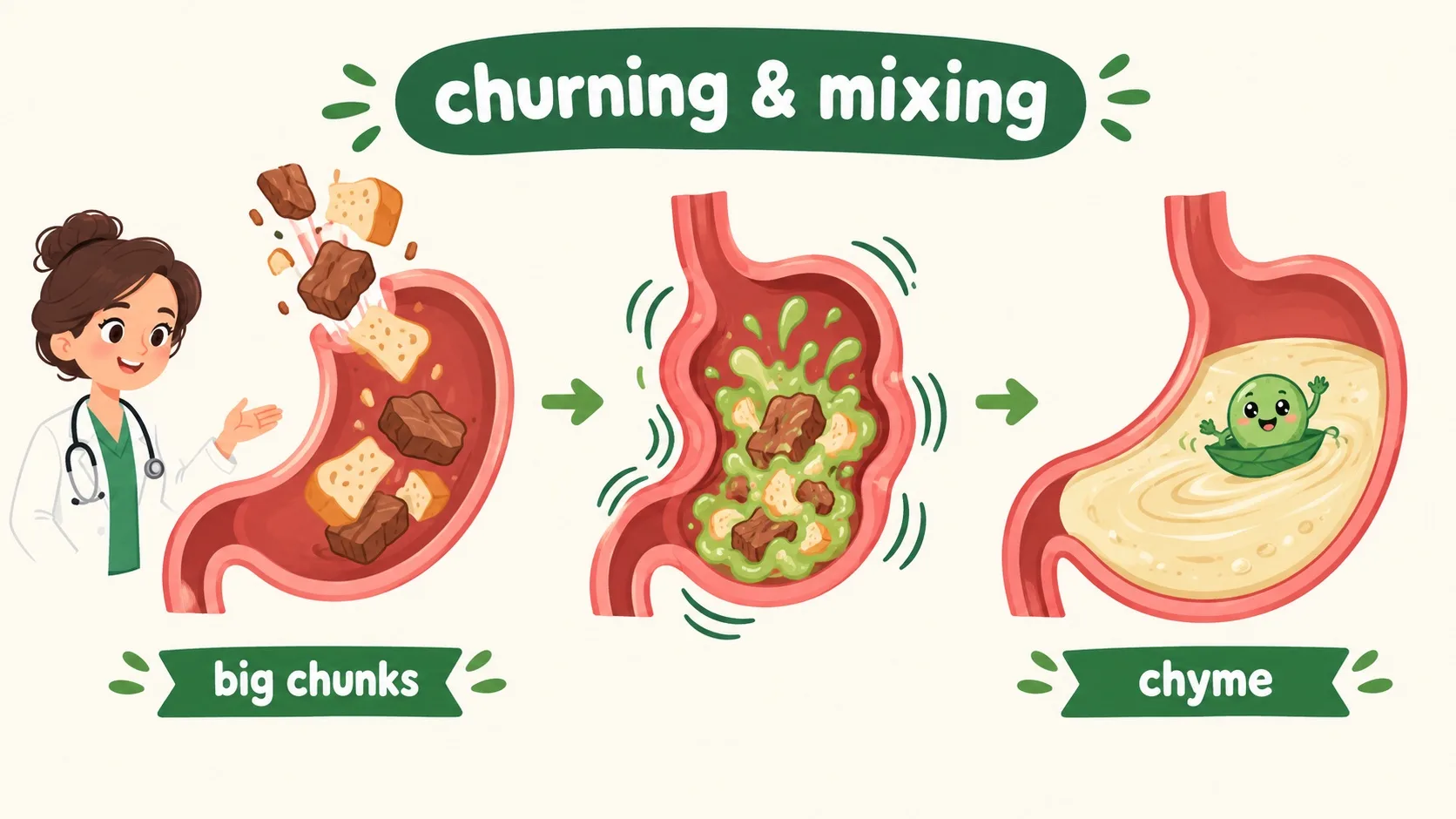
胃壁肌肉一波波收缩(这叫蠕动),像揉面一样把食物和胃酸反复搅拌成糊状的食糜。胃酸 pH 1.5~3.5,强到能杀灭大多数细菌——所以胃还是个杀菌罐。而胃蛋白酶这种消化酶,恰好只在强酸里干活,中性环境就罢工。The stomach wall contracts in waves (peristalsis), kneading food with acid into a mush called chyme. The acid, pH 1.5–3.5, kills most bacteria — so the stomach is also a germ canister. And pepsin, a digestive enzyme, works only in strong acid; in neutral surroundings it goes on strike.
这么酸的液体泡着自己,为什么胃不把“自己”消化掉?If the acid is that strong, why doesn't the stomach digest itself?
第 3 步:黏液墙,和两个常见误区Step 3: The mucus wall, and two myths
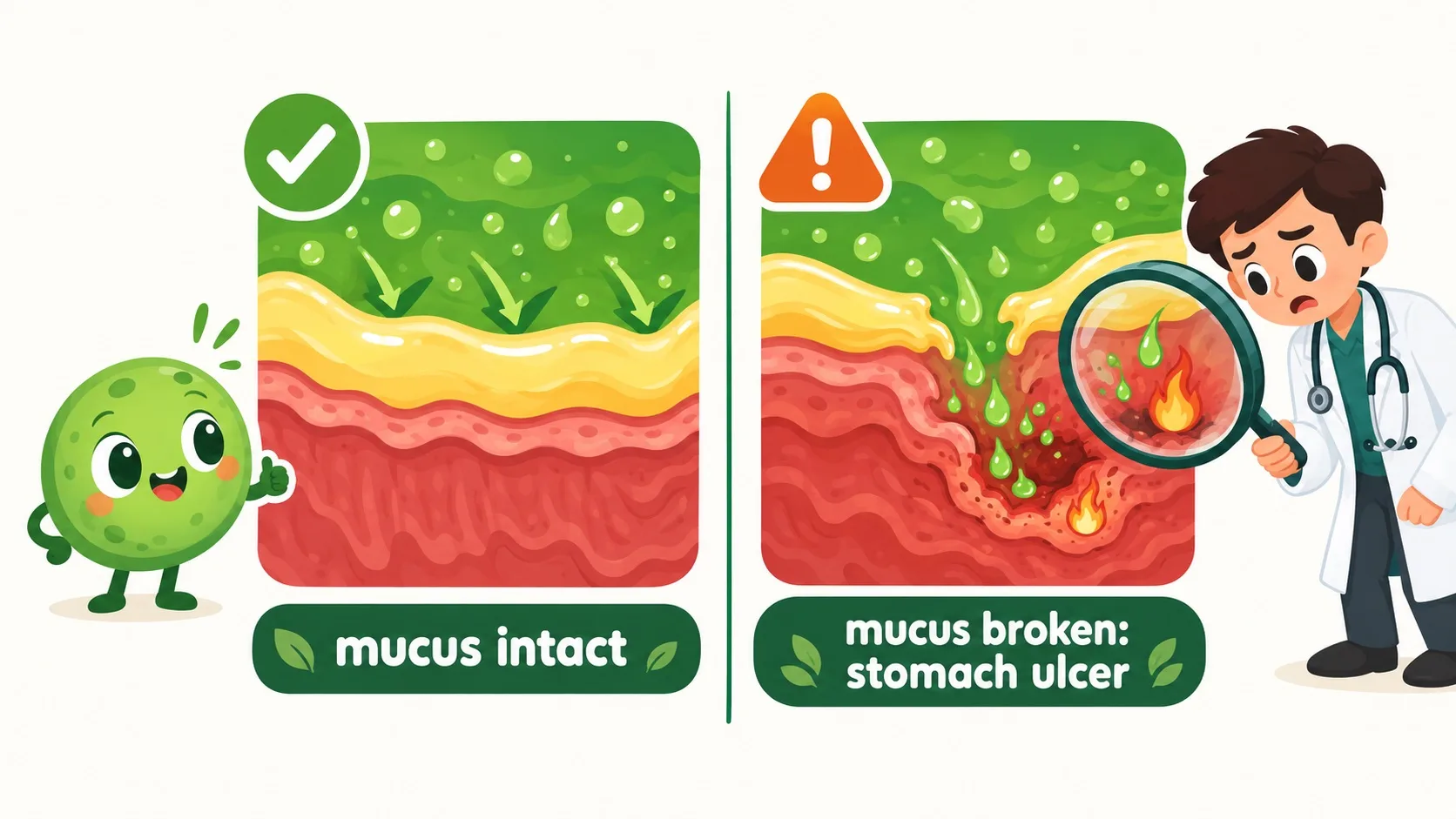
因为胃内壁盖着一层黏液墙,把强酸和胃壁隔开。墙破了,酸就直接咬伤胃壁——这就是胃溃疡,常见“凶手”是一种叫幽门螺杆菌的细菌和某些止痛药。顺带破个案:胃的容量基本固定,“胃越撑越大”是错觉——变迟钝的是“吃饱”的信号,不是胃本身。Because the inner wall is coated with a mucus wall that keeps acid off the flesh. When the wall breaks, acid bites the lining — that's a stomach ulcer, often caused by a bacterium called H. pylori or certain painkillers. One myth busted: stomach size barely changes; “it stretches bigger” is a feeling — the fullness signal gets duller, not the stomach itself.
🎮 你来管一间胃酸实验室(30 秒)🎮 Run the stomach acid lab (30 seconds)
先拖 pH 滑块看三个表盘:蛋白酶效率、杀菌力、黏液墙。再闯 4 关:杀菌、细嚼慢咽、反酸警报、中和陷阱。Drag the pH slider and watch three gauges: pepsin efficiency, germ-killing power, mucus wall. Then clear 4 rounds: sterilize, chew slowly, acid alert, and the dilution trap.
一句话记住它:胃 = 弹性储袋 + 搅拌机 + 杀菌罐。它用强酸和蠕动把食物打成食糜,再靠黏液墙保住自己,然后交给小肠。Remember it in one line: stomach = stretchy bag + mixer + germ canister. It uses acid and churning to make chyme, protects itself with mucus, then hands over to the small intestine.
胃装 1~1.5 升,靠蠕动把食物搅拌成食糜(chyme)The stomach holds 1–1.5 L and churns food into chyme胃酸 pH 1.5~3.5:杀菌 + 让胃蛋白酶开工(酶只爱强酸)Acid pH 1.5–3.5 kills germs and wakes pepsin up (the enzyme loves acid)黏液墙隔开酸与胃壁;破了 = 胃溃疡;“越撑越大”是错觉The mucus wall guards the lining; break it = ulcer; “it stretches bigger” is a myth
内容参考 OpenStax 等公开教材,多来源核对 · AI 生成、人工审核 · 发现错误欢迎指正,帮这片叶子长得更好。Based on OpenStax and other open textbooks, cross-checked across sources · AI-generated, human-reviewed · Spotted a mistake? Tell us — help this leaf grow.
 Back to tree