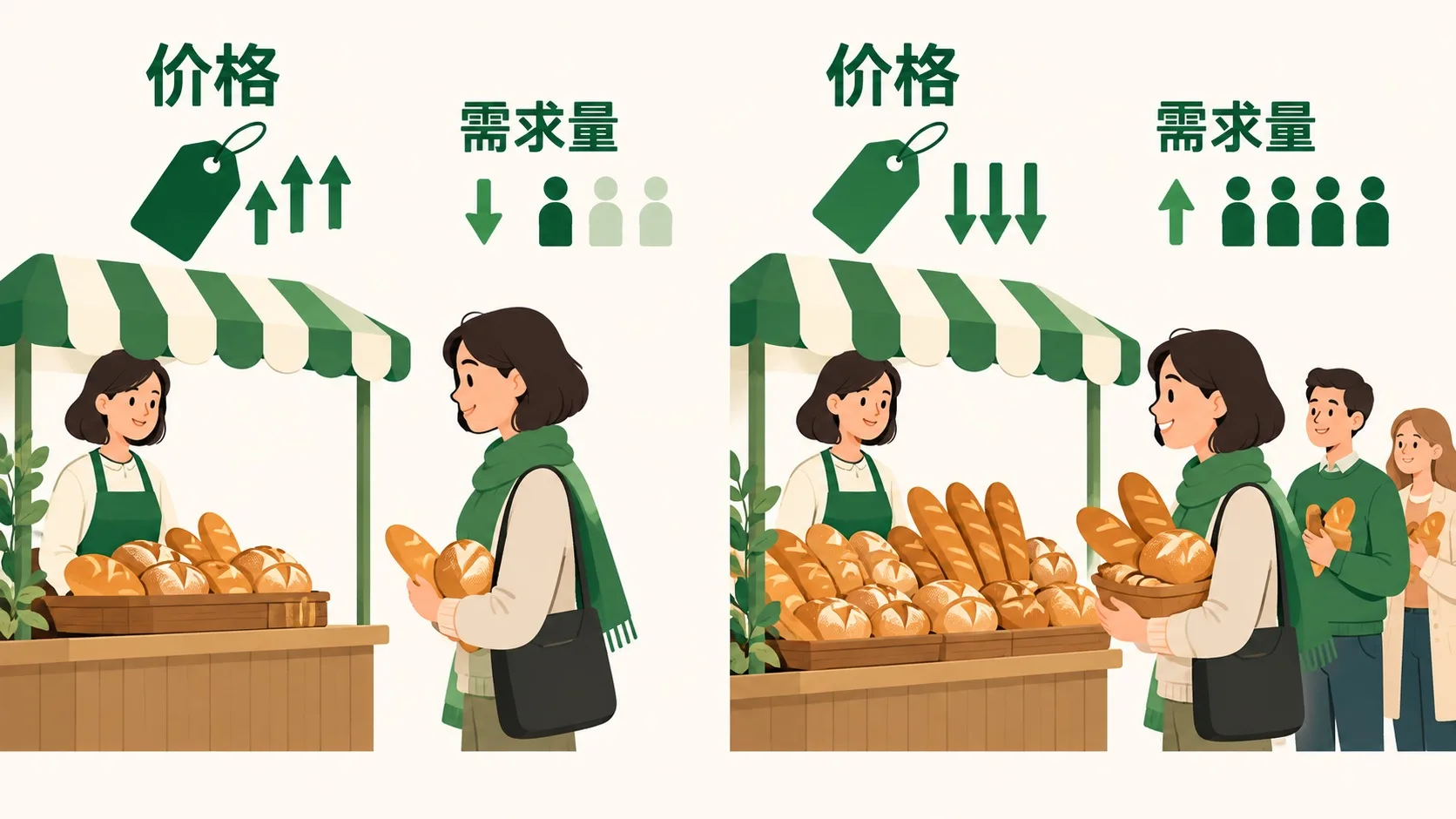
其他条件不变时,价格较高。人们通常想买较少数量。这里说的是有能力也愿意购买。想要但买不起,不算同样的需求。Other things equal, a higher price usually lowers the quantity people want and can afford to buy. Demand combines willingness with purchasing ability. A wish alone is not the same thing.
第 2 步:卖家也回应价格Step 2: Sellers respond too
买家想少买,卖家会怎样?When buyers want less, what about sellers?
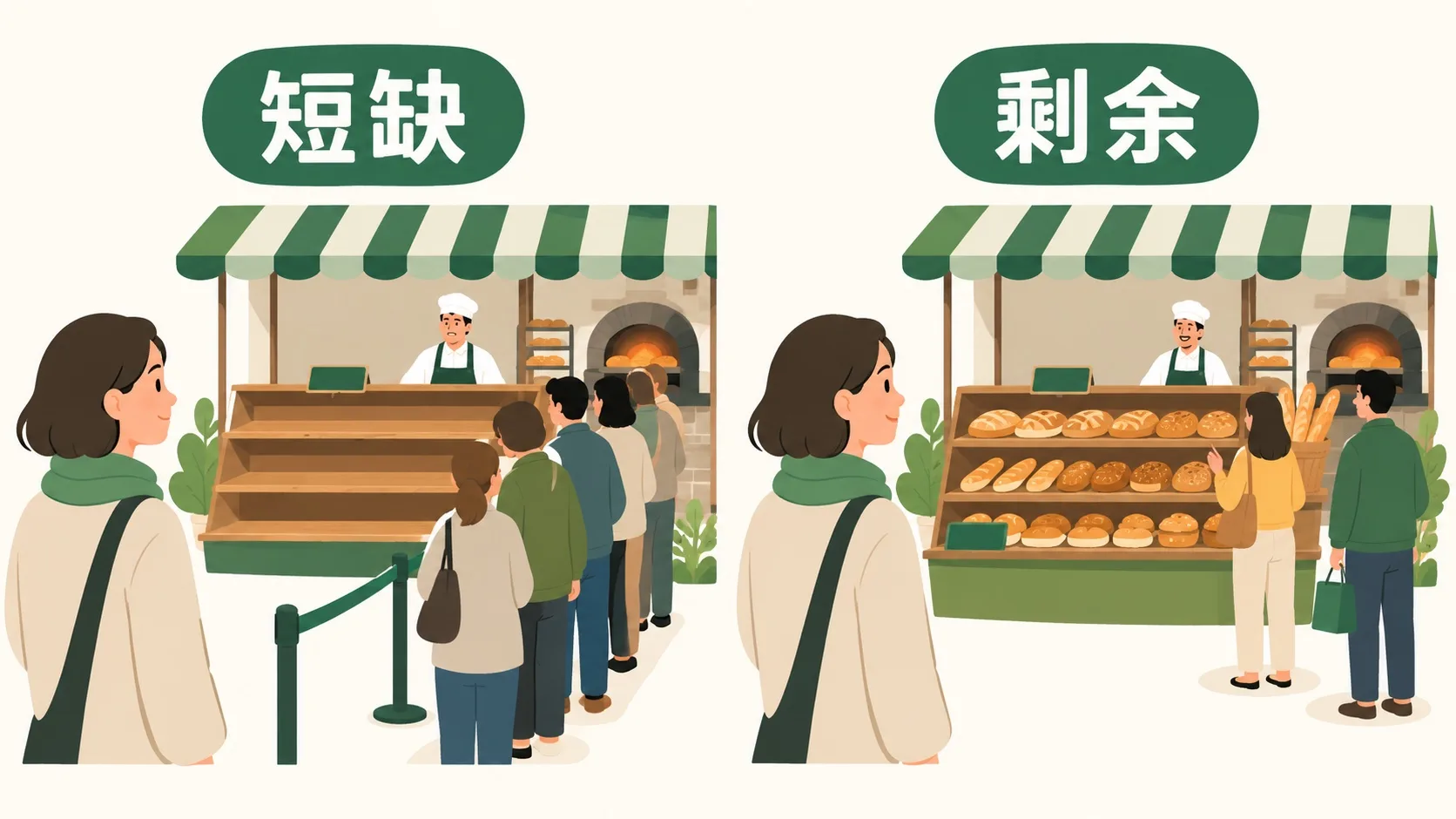
较高价格常鼓励更多供给。但烤炉和时间限制产量。价格过低时,想买的可能多于现货。价格过高时,面包可能剩下。A higher price often encourages more supply. Ovens and time still limit production. A low price may leave more buyers than available bread. A high price may leave bread unsold.
第 3 步:均衡不是永远不变Step 3: Equilibrium can move
怎样让想买和想卖的数量接近?When can planned buying and selling match?
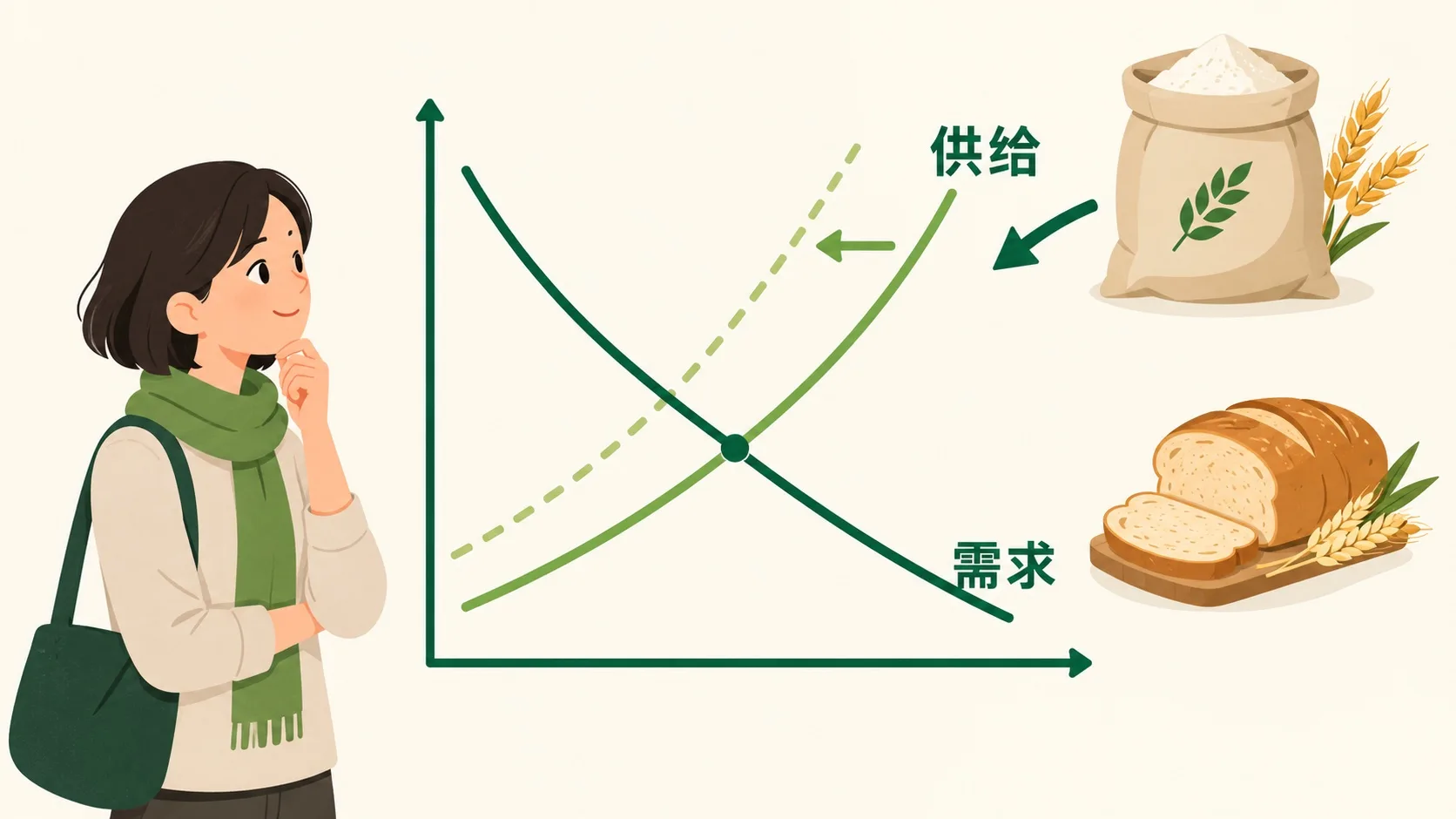
模型中的交点叫均衡。它表示供给量等于需求量。面粉涨价会改变供给条件。均衡不保证公平,也不排除现实摩擦。The model’s intersection is equilibrium: quantity supplied equals quantity demanded. More expensive flour changes supply conditions. Equilibrium does not guarantee fairness or remove real-world frictions.
🎮 机制实验室:观察,再判断🎮 Mechanism lab: observe, then decide
假设需求量=十二减价格,供给量=价格加二。把差值调成零。Assume demand = 12 − price and supply = price + 2. Adjust until their difference is zero.
一句话记住它:Remember it:供需模型用价格连接买卖计划,但要说明其他条件。Supply and demand link buying and selling plans through price, under stated assumptions.
其他条件不变时,价格较高。Other things equal, a higher price usually lowers the quantity people want and can afford to buy.较高价格常鼓励更多供给。A higher price often encourages more supply.模型中的交点叫均衡。The model’s intersection is equilibrium: quantity supplied equals quantity demanded.
模型逻辑:较高把握。线性曲线为虚构教学数据,现实市场未必完全竞争。High confidence in the model logic. Linear curves use fictional teaching data; real markets need not be perfectly competitive.
核对日期:2026 年 10 月 6 日。文字与配图由 AI 生成;已做来源核对及程序测试,待人工复核。Checked 6 October 2026. Text and illustrations are AI-generated. Sources and software checks were performed; human review is pending.
 Back to tree