上一片量好了「多远」。这一片加上时间,回答「多快」——而且要小心:光有快慢还不够,方向也得上,两样合体才是速度本尊。Last leaf measured “how far”. Add time and this leaf answers “how fast” — but watch out: up-to-speed is not enough. Combine it with direction and you get true velocity.
第 1 步:谁更快——比法只有一种Step 1: Who's faster — there's only one fair comparison
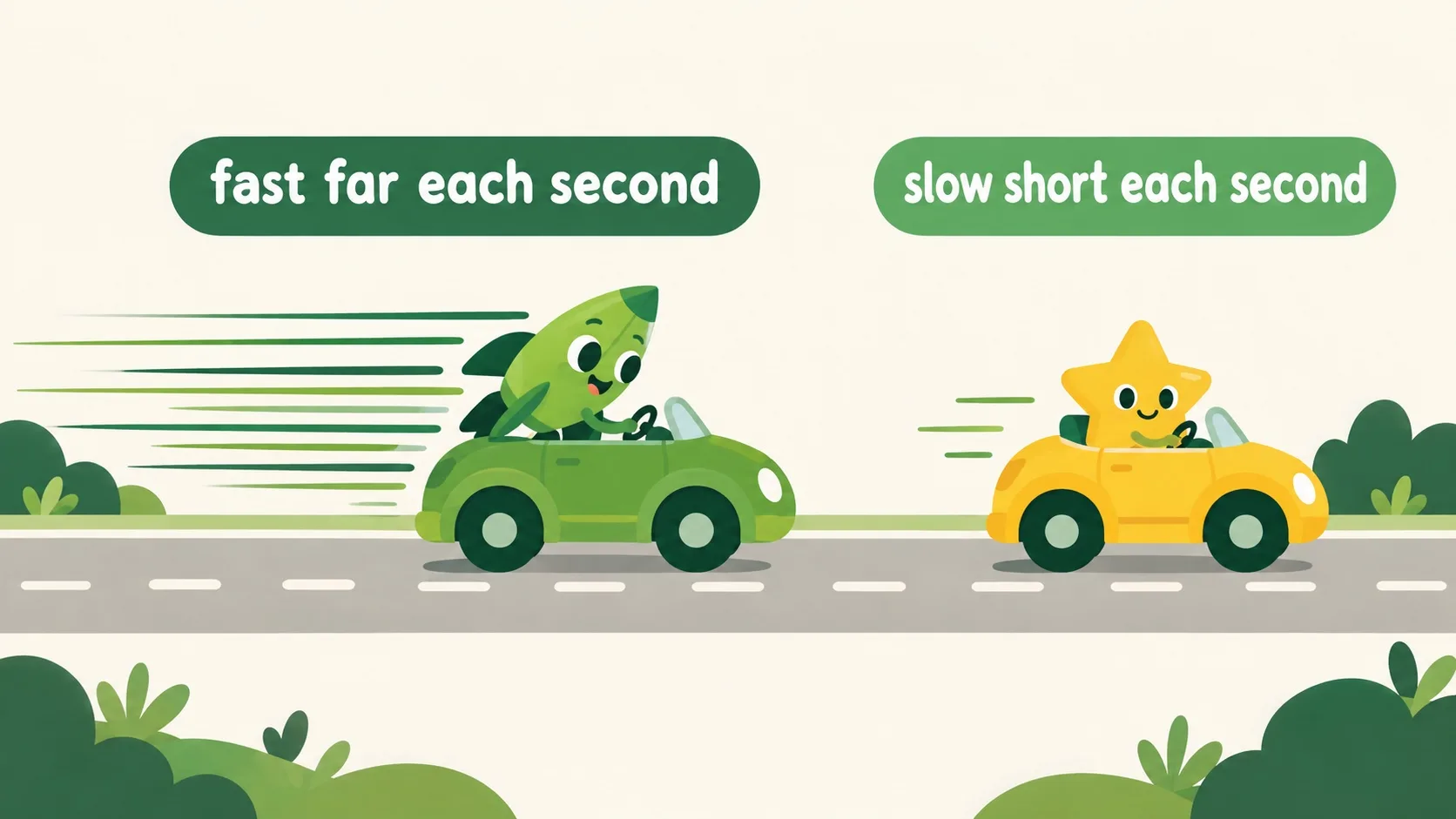
两辆车走同一条路,凭什么说谁快?Two cars on the same road — what makes one faster?
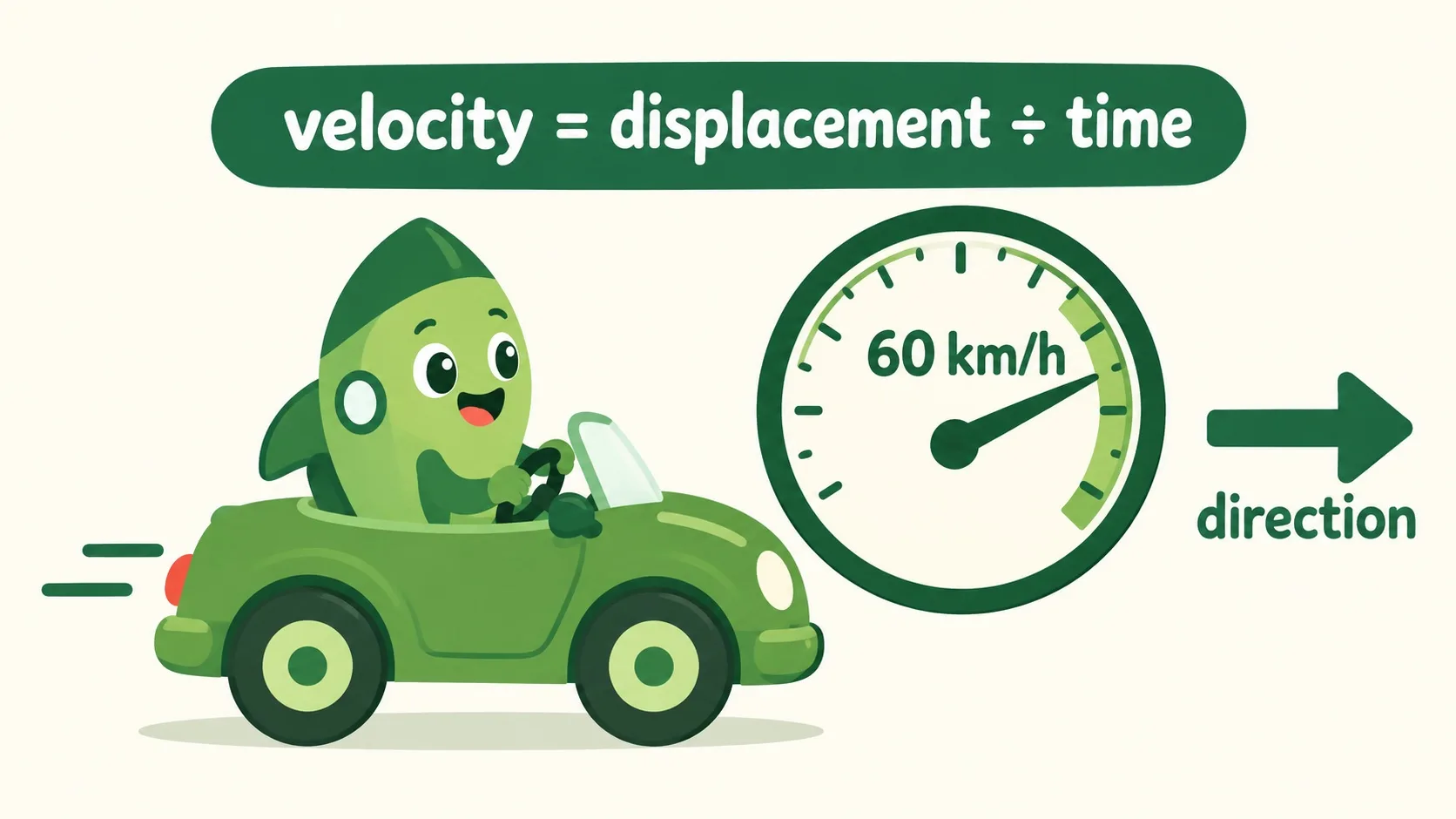
只看「跑了多远」不公平,只看「用了多久」也不公平——要比「每秒钟挪了多少」:速度 = 位移 ÷ 时间。同样跑 100 米:20 秒跑完是 5 米/秒,10 秒跑完就是 10 米/秒。速度还带方向:往右 10 米/秒和往左 10 米/秒,是两回事。“Went farthest” is unfair; “took longest” is unfair too — compare how much each car moves every second: velocity = displacement ÷ time. Same 100 m: 20 s gives 5 m/s, 10 s gives 10 m/s. And direction comes free with it: 10 m/s rightward is not 10 m/s leftward.
可仪表盘上的指针一直在动,速度到底指哪一个?But the dashboard needle never sits still — which velocity is it showing?
第 2 步:仪表盘——瞬时与平均Step 2: The dashboard — instant and average
仪表盘读的是一瞬间:这一秒指针指 60 km/h,下一秒可能就变了,这叫瞬时速度。要问「这趟整体多快」,就用总位移 ÷ 总时间,得到平均速度。长途旅行两个数都要用:仪表盘看当下,行程表报全程平均。The dashboard reads one instant: the needle shows 60 km/h this second and may change the next — that is instantaneous velocity. Ask “how fast was the whole trip” and you divide total displacement by total time to get the average velocity. A long drive needs both: the needle for right now, the trip meter for the whole journey.
如果折返跑回原点,平均速度会是多少?And if you turn back to the very start, what is the average velocity?
第 3 步:折返陷阱——回到原点速度是多少Step 3: The turn-back trap
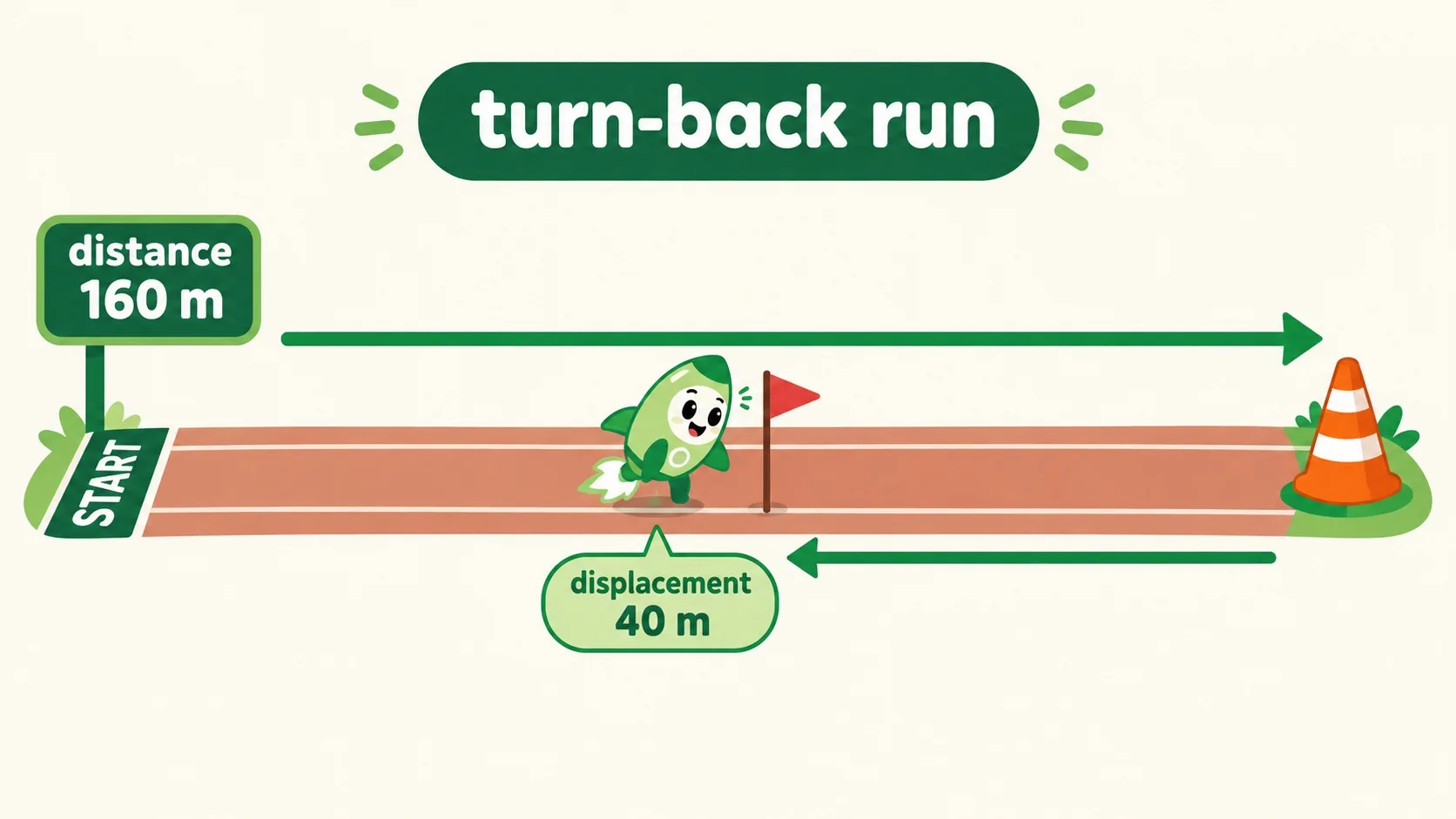
小火箭跑去 100 米,再折回 60 米,停在离起点 40 米处:路程 = 100 + 60 = 160 米,位移 = 40 米。用位移算平均速度,用路程算平均速率——后者不带方向,只表示「跑得多快」。要是它一路折返回起点:位移 = 0,平均速度就是 0,可它明明一直在跑!所以两个词千万别混用。The rocket runs 100 m out, turns and runs 60 m back, stopping 40 m from the start: distance = 100 + 60 = 160 m, displacement = 40 m. Use displacement for average velocity, distance for average speed — the latter has no direction, it only says how briskly the trip went. If it turned all the way back to the start: displacement = 0 and average velocity is 0, even though it never stopped running! Never mix the two words up.
🎮 你来算一趟(30 秒)🎮 Your turn: run the numbers (30 seconds)
道理讲完了。拖滑块调「去程、折返、时间」,让小车跑一趟,盯住平均速度和平均速率的差别——完成 4 个任务。Theory done. Drag the outbound / turn-back / time sliders, run the car, and watch average velocity and average speed come apart — finish 4 tasks.
一句话记住它:速度 = 位移 ÷ 时间(带方向);速率 = 路程 ÷ 时间(不带方向)。仪表盘看瞬时,全程用平均;折返回原点,平均速度是 0,速率可不是。Remember it in one line: velocity = displacement ÷ time (with direction); speed = distance ÷ time (no direction). The needle shows the instant, the whole trip uses averages; turn back to the start and velocity is 0 — but speed is not.
速度 = 位移 ÷ 时间,带方向;速率 = 路程 ÷ 时间,不带方向Velocity = displacement ÷ time, with direction; speed = distance ÷ time, without仪表盘指针 = 瞬时速度;总位移 ÷ 总时间 = 平均速度Dashboard needle = instantaneous velocity; total displacement ÷ total time = average velocity折返回原点:位移 0,平均速度 0,但平均速率不为 0Turn back to the start: displacement 0, average velocity 0 — yet average speed is not
内容参考 OpenStax 等公开教材,多来源核对 · AI 生成、人工审核 · 发现错误欢迎指正,帮这片叶子长得更好。Based on OpenStax and other open textbooks, cross-checked across sources · AI-generated, human-reviewed · Spotted a mistake? Tell us — help this leaf grow.
 Back to tree