👁️ 视觉:眼睛是大脑的摄像头👁️ Vision: the Eye Is the Brain's Camera
信号再快,也得先有东西可传。光从窗外涌进来,怎么变成你看见的世界?🩺 小医生举着一台“人体摄像头”走来,🦠 小细胞抢着先看镜头。However fast the signal, something must come in first. How does light flooding through a window become the world you see? 🩺 Doc walks in holding a "human camera"; 🦠 Cellie rushes to peek at the lens.
第 1 步:眼球=会自动对焦的摄像头Step 1: The eyeball — a camera that autofocuses
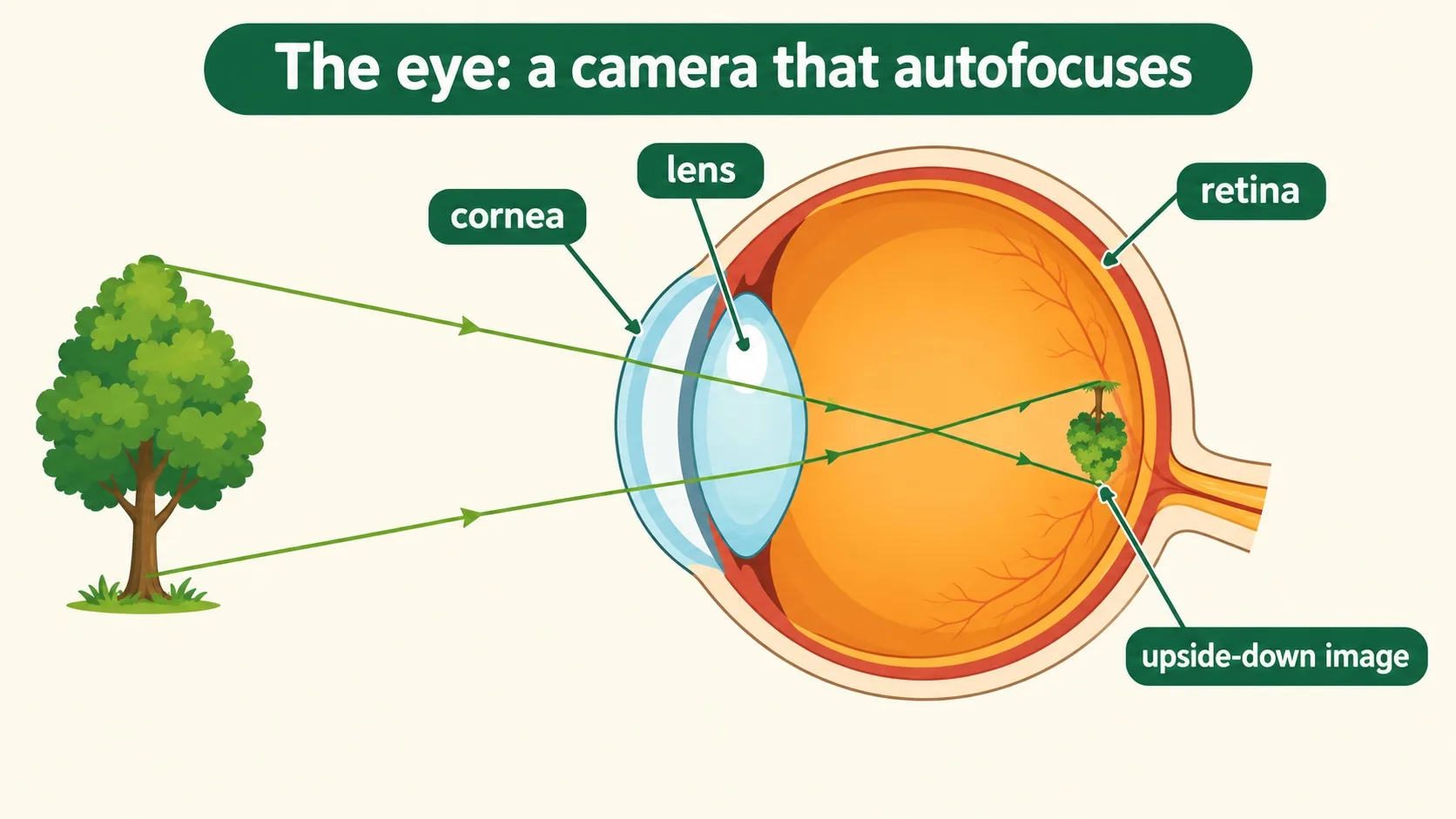
先拆开这台摄像头,看光走过的路。Let's open this camera and trace the path of light.
光先进角膜(透明的窗口),再穿过晶状体——一个能变厚变薄的凸透镜,负责调焦。光线汇聚后落在视网膜上,成的是一个上下颠倒的像。看远时晶状体变扁,看近时变厚——跟手机对焦一个道理,只是全自动。Light enters through the cornea — a clear window — then passes the lens, a convex lens that thickens and thins to focus. Converged, the rays land on the retina, forming an upside-down image. Far view: the lens flattens; near view: it bulges. Same as a phone's autofocus — just fully automatic.
既然能自动对焦,为什么还有人看不清?If autofocus is built in, why can't some people see clearly?
第 2 步:近视——像没落在该落的地方Step 2: Nearsightedness — the image misses its landing spot
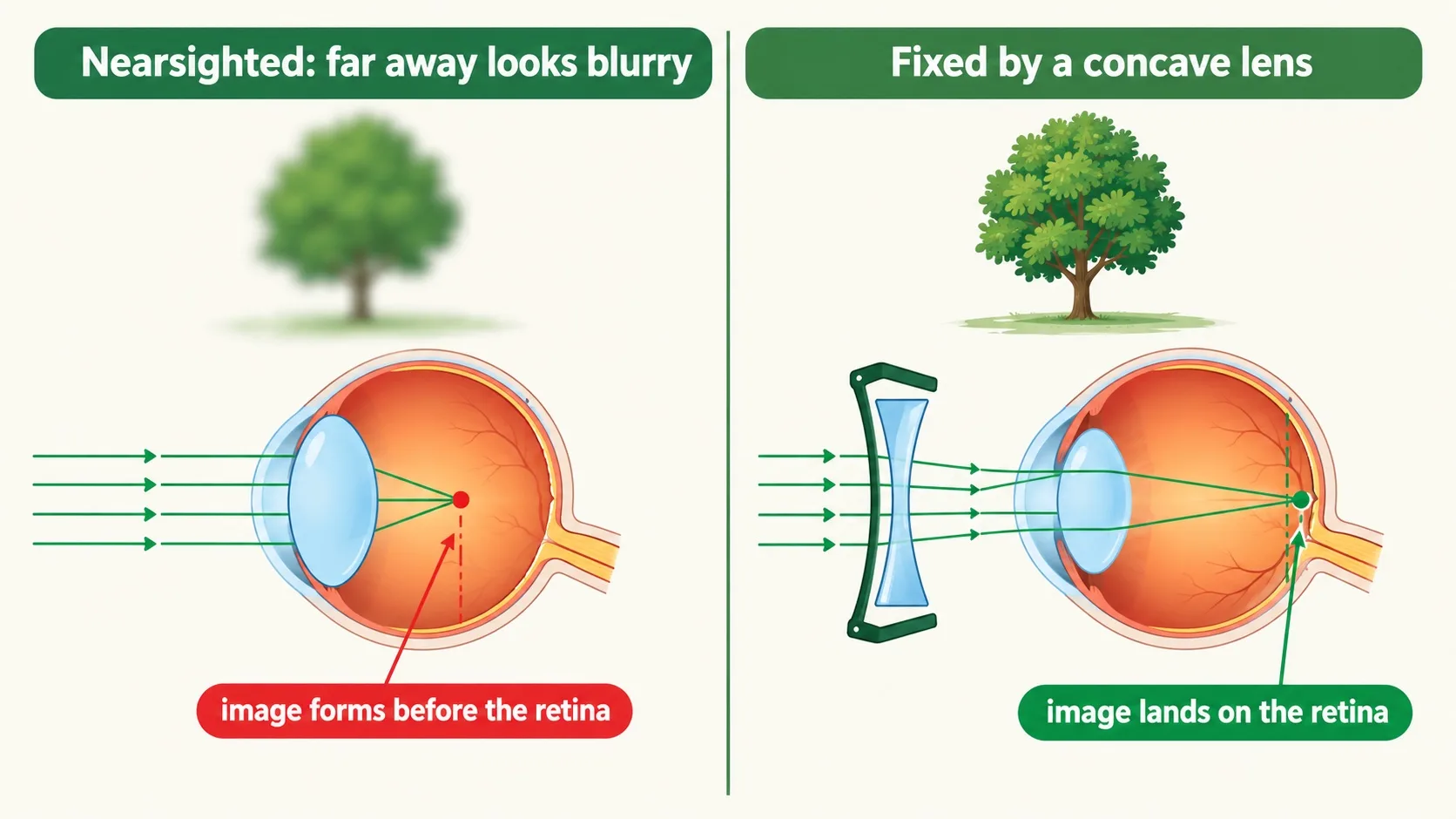
看不清,多半是像落错了地方:晶状体太厚(或眼球太长),远处光的焦点落在视网膜前面,画面就糊了——这是近视。给眼前加一片凹透镜(中间薄),先把光适当散开,焦点就被推回视网膜上,世界重新清晰。远视相反,像落在后面,用凸透镜补。Blurry vision is usually a landing problem: the lens too thick (or the eyeball too long), so distant light focuses in front of the retina — that's nearsightedness. Put a concave lens (thin in the middle) in front to spread the light slightly first, and the focus is pushed back onto the retina. Farsightedness is the opposite — focus behind — fixed with a convex lens.
倒立的像躺在视网膜上,为什么我们看到的世界是正的?The image on the retina is upside-down — why does the world look upright?
第 3 步:看见,发生在大脑里Step 3: Seeing happens in the brain
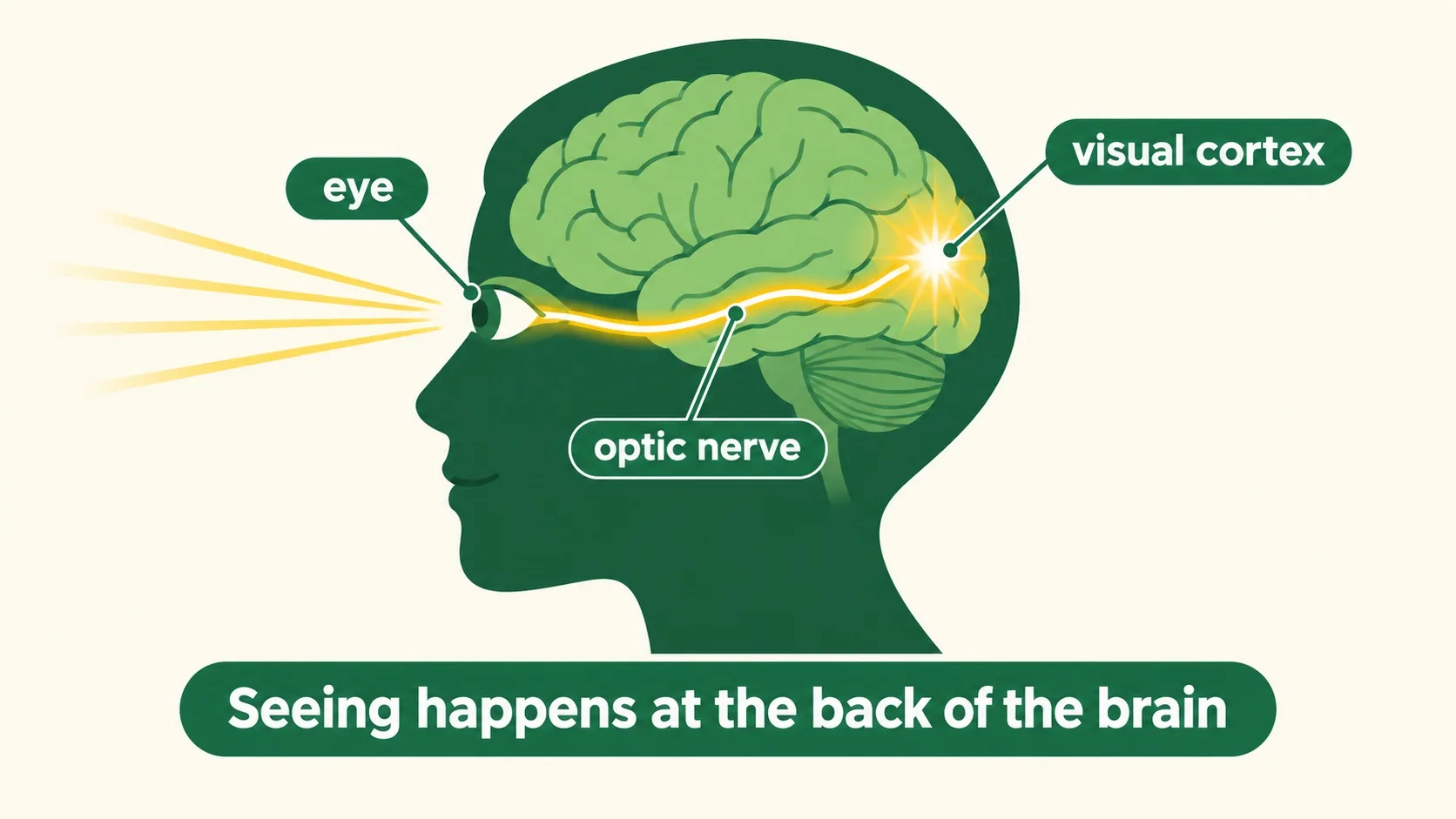
视网膜上有上亿感光细胞,把光变成电信号——上一片的神经冲动登场——再由视神经这根“视频线”传到大脑后部的枕叶。视觉皮层把倒像翻正、拼出颜色和形状,“看见”其实发生在这里。所以说:眼睛是摄像头,大脑才是真正的屏幕。The retina packs hundreds of millions of light-sensing cells that turn light into electric signals — last leaf's nerve impulses — carried by the optic nerve, the "video cable", to the occipital lobe at the back of the brain. The visual cortex flips the image upright and assembles color and shape: seeing actually happens here. The eye is the camera; the brain is the real screen.
🎮 你来操作成像台(30 秒)🎮 Your turn: run the imaging bench (30 seconds)
接手 🩺 小医生的眼球成像台:看远、看近、近视配镜,4 关全部对上焦。Take over 🩺 Doc's eye bench: far, near, nearsighted, fitted glasses — nail the focus in all 4 rounds.
一句话记住它:视觉 = 光经角膜、晶状体调焦,在视网膜成倒立像,变成电信号后由视神经送到枕叶翻正拼装——“看见”发生在大脑里。近视是像落在视网膜前,凹透镜推回去。Remember it in one line: vision = light focused by cornea and lens onto the retina as an upside-down image, converted to electric signals, sent by the optic nerve to the occipital cortex to be flipped and assembled — seeing happens in the brain. Nearsighted focus falls short; a concave lens pushes it back.
光的路:角膜→晶状体(调焦)→视网膜(倒立像)→视神经→枕叶Light's path: cornea → lens (focus) → retina (inverted image) → optic nerve → occipital lobe看远晶状体变扁、看近变厚;近视=焦点在视网膜前,凹透镜矫正Lens flattens for far, bulges for near; nearsighted = focus in front, fixed by a concave lens视网膜把光变成电信号,“看见”发生在枕叶视觉皮层The retina converts light to signals; seeing happens in the occipital visual cortex
内容参考 OpenStax 等公开教材,多来源核对 · AI 生成、人工审核 · 发现错误欢迎指正,帮这片叶子长得更好。Based on OpenStax and other open textbooks, cross-checked across sources · AI-generated, human-reviewed · Spotted a mistake? Tell us — help this leaf grow.
 Back to tree