人一眼就能分出糖和盐。机器不行——它没有眼睛,也没有舌头。它只有一招:把看到的东西变成数字、打个分,再按分数做决定。学会这一招的最小零件,就叫“神经元”。You can tell sugar from salt at a glance. A machine can't — no eyes, no tongue. It has only one trick: turn what it sees into numbers, give a score, then act on the score. Its smallest part that does this is the neuron.
第 1 步:打分Step 1: Score
机器要做的第一件事:把“看到的东西”变成一个分数。First the machine must turn “what it sees” into a single number.
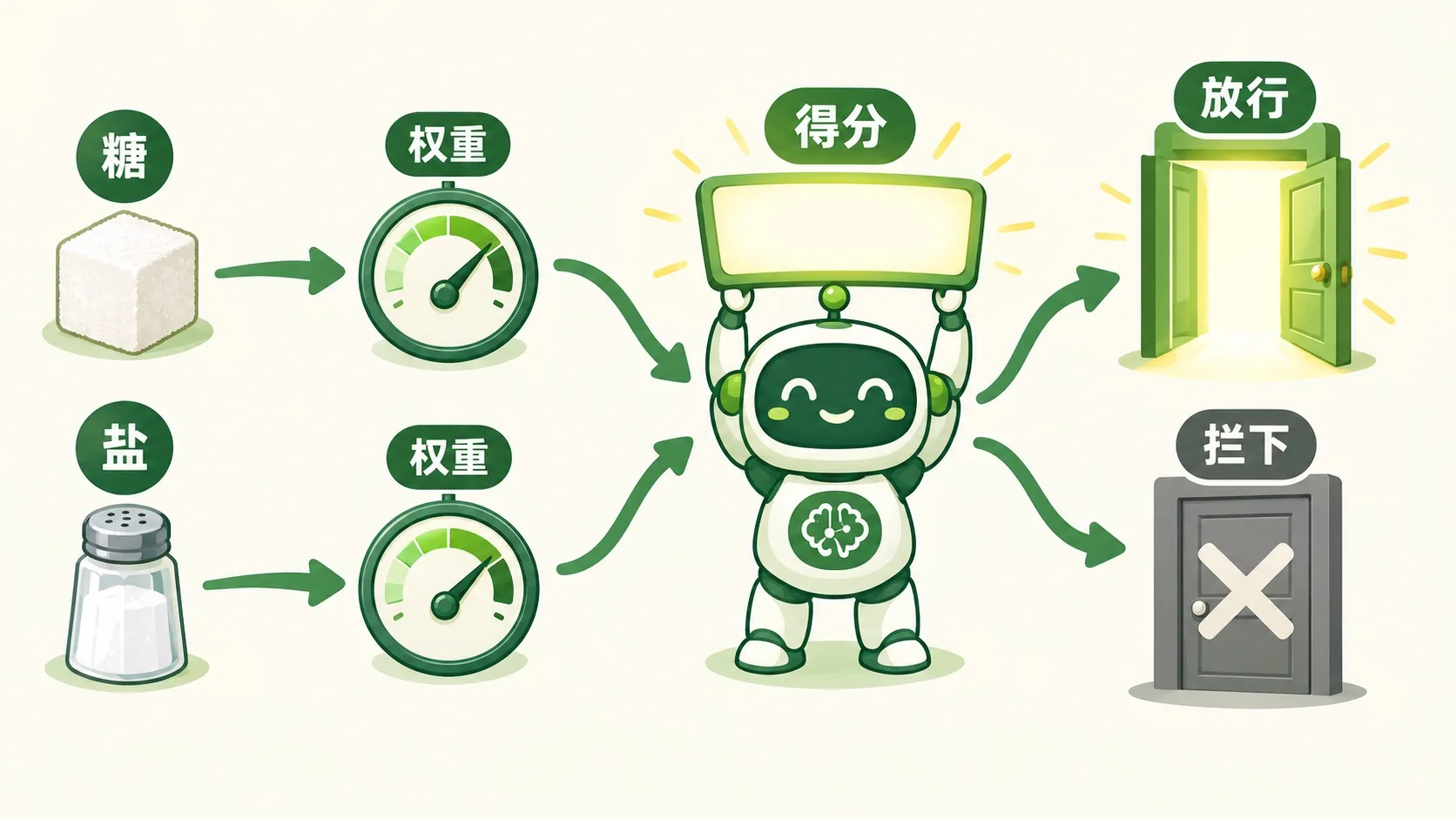
碗里的东西给机器人两个信号:是不是糖、是不是盐。每个信号乘上一个旋钮(叫“权重”,表示有多重要),加起来,再加一个保底分——这就是得分 z。糖的旋钮拧得越大,分数越高;盐的旋钮拧成负数,分数就被拉低。The bowl gives the robot two signals: is it sugar, is it salt. Each signal gets multiplied by a dial (the “weight” — how much it matters), added together, plus a baseline — that's the score z. Crank sugar's dial up and the score climbs; set salt's dial negative and salt drags it down.
但光有分数还不够——机器人最终只需要做一件事:开门,还是关门?But a score alone doesn't act — the robot ultimately needs one decision: open the door, or shut it?
第 2 步:门卫Step 2: The gate
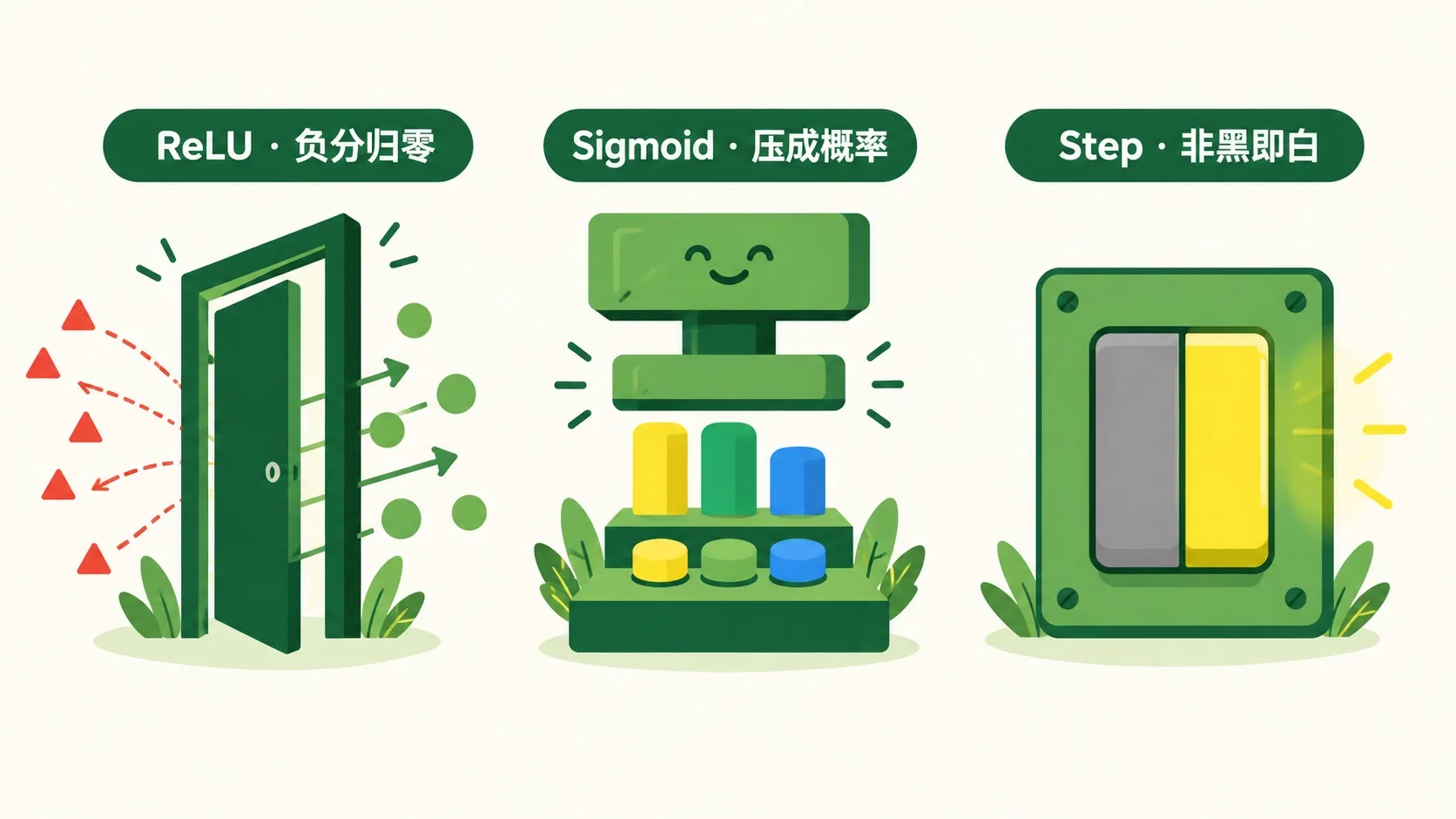
门卫(学名“激活函数”)负责把分数翻译成开关。三种最常见的性格:ReLU 把负分直接归零;Sigmoid 把任意分数压进 0~1,当成概率用;Step 最简单——大于 0 就开,否则就关。没有门卫,一百层网络叠起来也只是一条直线。The gate (its textbook name: activation function) translates score into action. Three common personalities: ReLU zeroes negatives outright; Sigmoid squeezes any score into 0–1 to use as a probability; Step is simplest — above 0 opens, otherwise shuts. Without a gate, a hundred stacked layers are still one straight line.
还剩最后一个问题,也是最重要的一个:旋钮一开始是瞎拧的,它怎么知道自己拧错了?One last question, the big one: the dials start out randomly wrong. How does the machine know it got them wrong?
第 3 步:学习Step 3: Learning
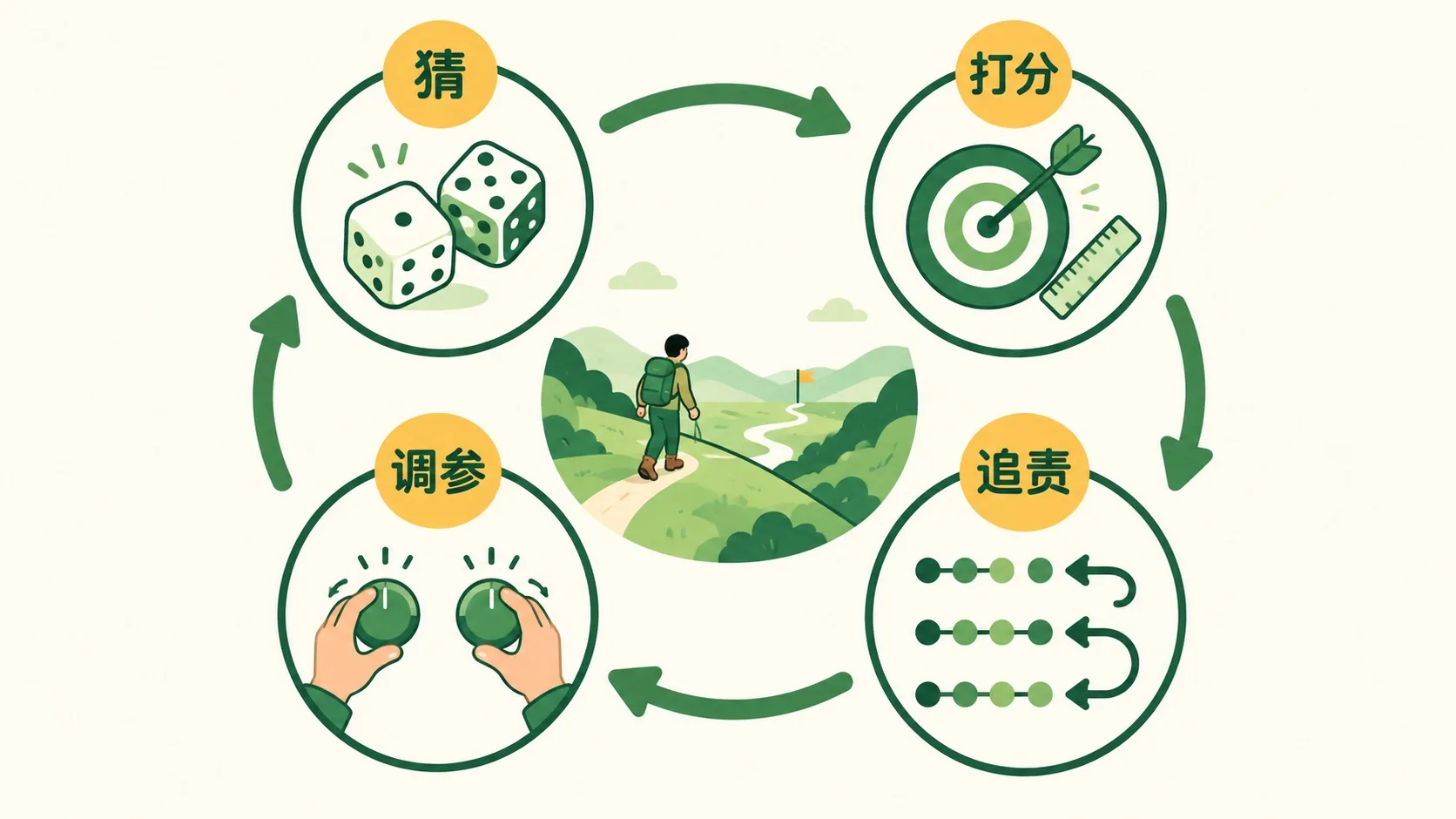
靠四步一循环:先猜(掷骰子)→ 给答案打分(离目标差多远,就是“误差”)→ 往回追责(把误差倒着传回去,算出每个旋钮各负多少责任)→ 每个旋钮朝差错更小的方向拧一点点。循环几百万次,旋钮就越来越准——就像蒙着眼下山,每一步都往低处挪。A four-step loop: guess (roll the dice) → score the answer (how far off it is — the “error”) → blame backwards (send the error back to see how much each dial is at fault) → nudge every dial a little toward less error. Millions of loops later the dials are sharp — like walking downhill blindfolded, every step heading lower.
🎮 你来教它一次(30 秒)🎮 Your turn: teach it (30 seconds)
道理就这么多。最快弄懂的办法,是自己教一次:下面这个机器人一开始把旋钮全拧反了——糖来了它关门,盐来了才开门。你亲手拧一拧,或者点“自动学习”看它自己怎么拧。That's the whole idea. The fastest way to get it: teach it yourself. The robot below starts with both dials twisted backwards — sugar gets the door slammed, salt gets it opened. Turn the dials yourself, or hit auto-learn and watch it tune itself.
一句话记住它:神经元 = 打分器 + 门卫;学习 = 猜错就拧旋钮。把千千万万个这样的小零件叠在一起、让它们一起学,就是今天会聊天、会画画的 AI。Remember it in one line: a neuron = a scorer + a gate; learning = twisting the dials after every wrong guess. Stack millions of these and let them learn together — that's the AI that chats and paints today.
内容参考 OpenStax 等公开教材,多来源核对 · AI 生成、人工审核 · 发现错误欢迎指正,帮这片叶子长得更好。Based on OpenStax and other open textbooks, cross-checked across sources · AI-generated, human-reviewed · Spotted a mistake? Tell us — help this leaf grow.
 Back to tree