旅行册里有许多故事。阿禾学着问:这些故事的证据在哪里?The notebook holds many stories. Ahe now asks where their evidence comes from.
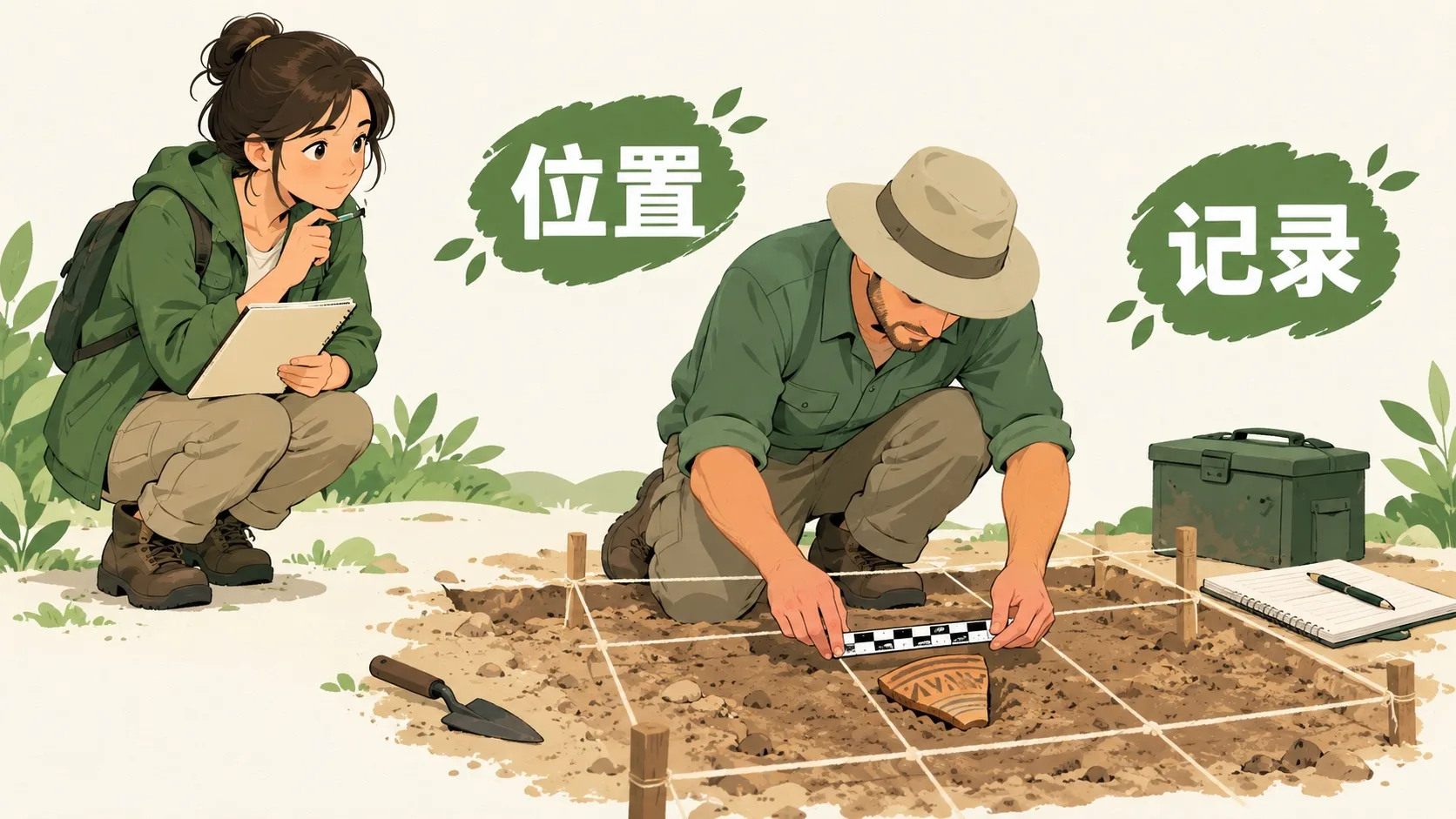
第 1 步:先记录位置Step 1: Record context first
考古研究过去人类留下的物质痕迹。Archaeology studies material traces of past human lives.
陶片的位置和周围土层很重要。出土环境叫作背景信息。随手拿走物品,会让联系永久丢失。A potsherd’s position and surrounding soil matter. These relationships form its context. Removing an object without recording them can destroy information that cannot be recovered later.
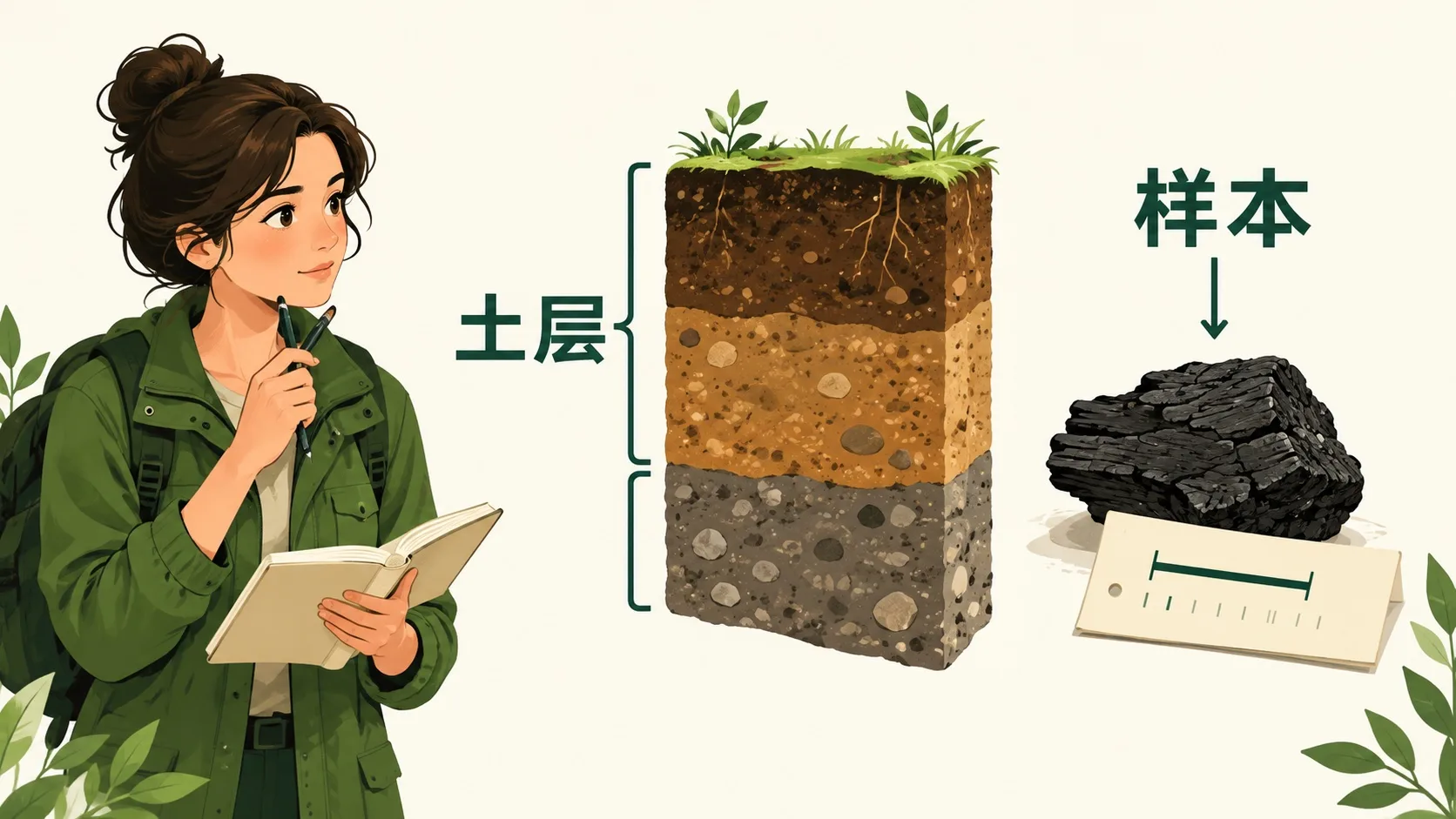
第 2 步:年代需要多条线索Step 2: Dating uses several clues
未扰动土层常是下旧上新。In undisturbed deposits, lower layers are generally older.
但坑洞或翻土会打乱顺序。碳十四测年可研究合适的有机材料。结果是带有误差的范围,不是万能日期。Pits and later disturbance can complicate that order. Radiocarbon dating can analyze suitable organic remains. Results carry uncertainty and need interpretation; the method does not date every kind of object directly.
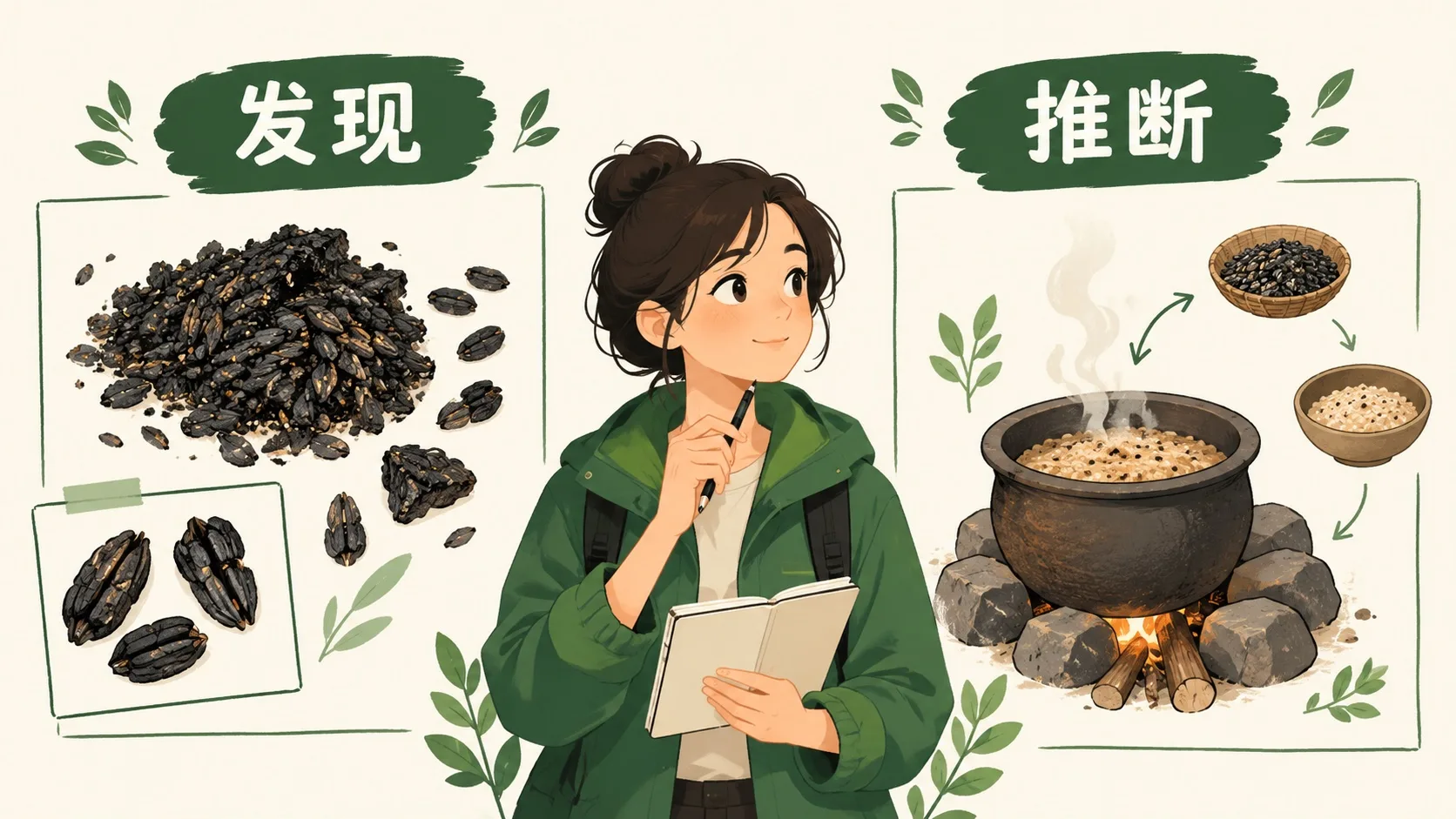
第 3 步:让解释接受检查Step 3: Make interpretations testable
阿禾把发现和推断分两栏。Ahe separates observation from inference.
发现是“这里有烧焦谷粒”。推断可能是“这里做过饭”。更多样本可支持或改变解释。考古不是只找珍宝。“Charred grain was found here” is an observation. “People cooked here” is an interpretation to investigate. More evidence may support or revise it. Archaeology is not simply a search for valuable treasures.
🎮 证据工作台🎮 Evidence desk
把五张卡分为“观察/有记录”与“解释/待证”。先看证据支持多大结论。Sort five cards into “Observed / documented” or “Interpretation / unproven”. Ask how much the evidence actually supports.
一句话记住它:物品和出土背景同样重要。Remember: Objects and context both matter.
物品和出土背景同样重要。Objects and context both matter.测年结果有适用条件与范围。Dating methods have limits and uncertainty.观察与解释要分开。Separate observations from interpretations.
依据上述公开资料编写 · AI 辅助制作 · 发现问题欢迎指正,帮这片叶子长得更好。Based on the public sources above · AI-assisted production · Spotted a problem? Tell us — help this leaf grow.
 Back to tree