上一片里,机器人学会了看坡:往哪边滑、一次滑多少。可它身上有成千上万个旋钮——这次输出没答对,到底该谁负责?每个旋钮又该改多少?Last leaf, the robot learned to read the slope: which way to slide, and how far. But it carries thousands of knobs — when the output misses, who is to blame, and how much should each knob change?
第 1 步:红灯倒着走Step 1: The red light walks backwards
先看方向——误差回来的路,和去的时候正好相反。Start with the direction — the error travels home exactly opposite to the way it came.
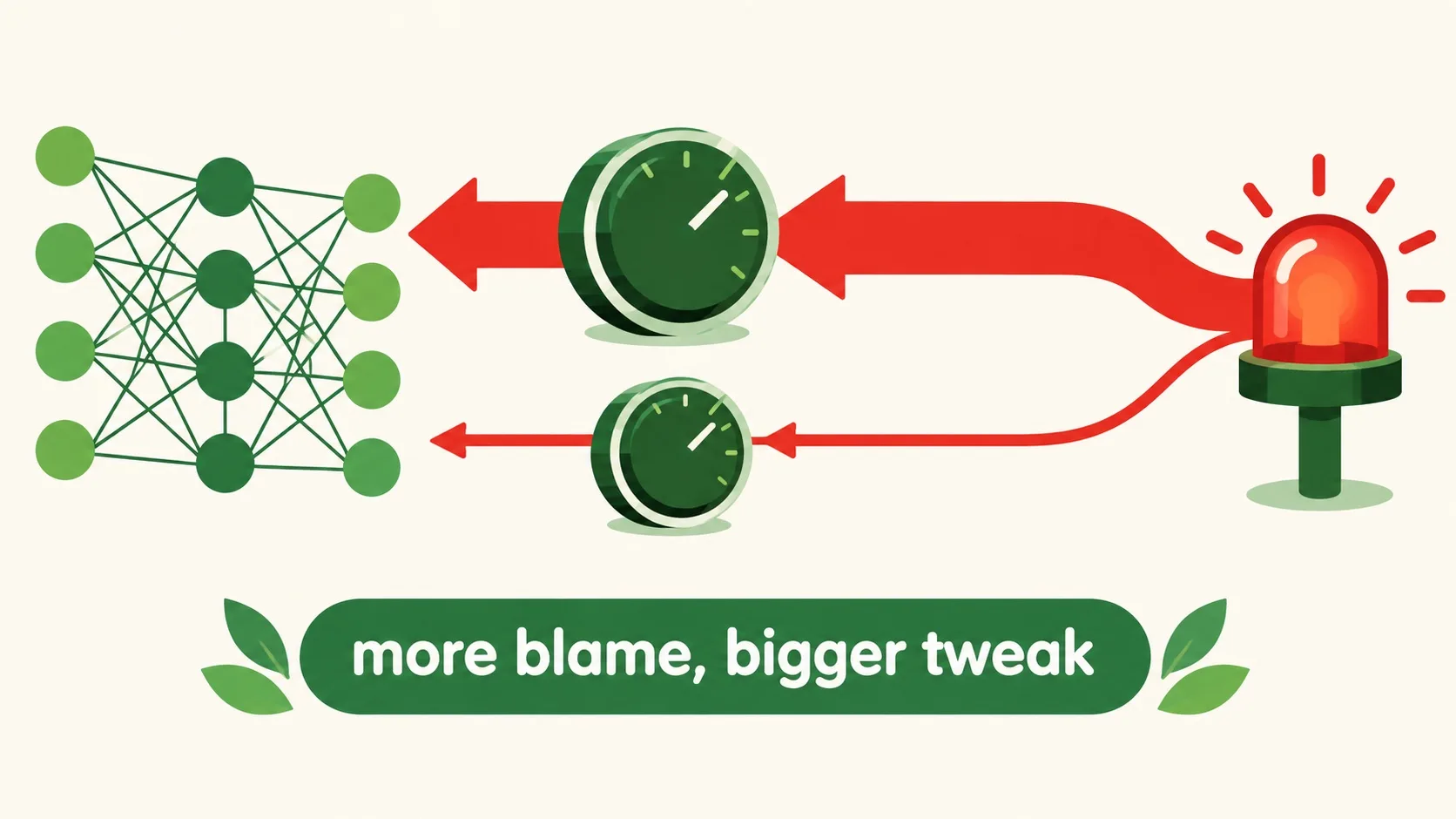
答案从出口出来,没答对,出口亮起红灯(误差)。红灯不发脾气,只做一件事:沿着原来的电线倒着走回去。路过每个旋钮时,谁对结果影响大,箭头就画得越粗——粗箭头,就是大责任。The answer leaves the exit and misses — the output lights up red (the error). The red light doesn't shout; it does one thing: it walks back along the very wires it came from. At every knob, the bigger the influence, the fatter the arrow — a fat arrow means a big share of the blame.
那「责任」到底怎么分?规矩只有一条。So how is the blame actually split? There is exactly one rule.
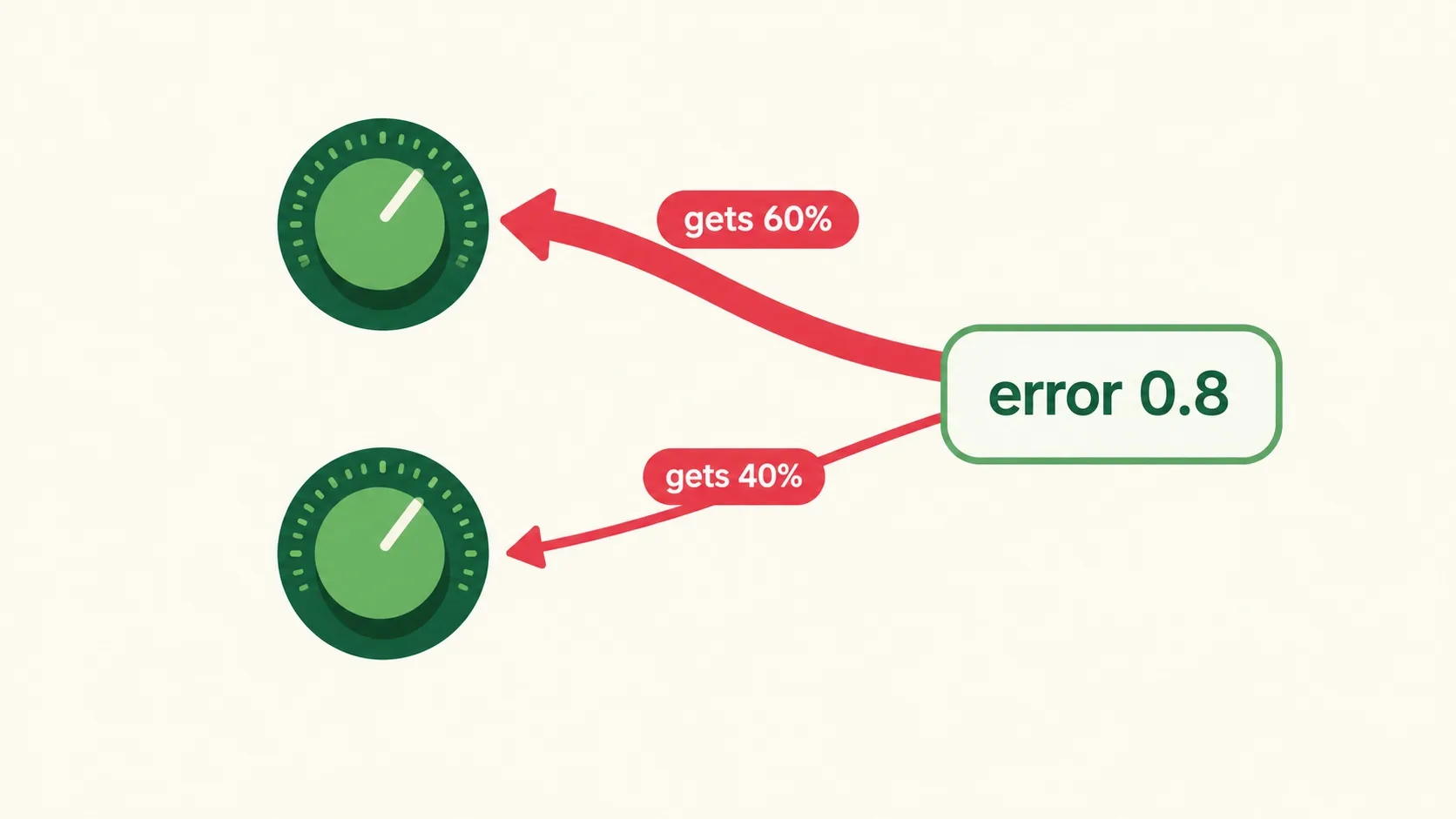
出口的误差是 0.8,要分给前面的两个旋钮。上面那个对结果影响大,分到 60%(背 0.48);下面那个影响小,分到 40%(背 0.32)。这条分锅规矩的学名叫链式法则——说白了就是「顺藤摸瓜」:沿着电线一段段往回推,你影响多大,就背多少锅。The output error is 0.8, and it must be shared between the two knobs behind it. The upper knob shapes the result more, so it gets 60% (0.48 of the blame); the lower one matters less and gets 40% (0.32). The official name of this rule is the chain rule — really just “follow the vine to the melon”: walk back wire by wire, and your share matches your influence.
四个动作都齐了,把它们串成一圈。All four moves are on the table — now join them into a loop.
第 3 步:训练的一圈Step 3: One full training round
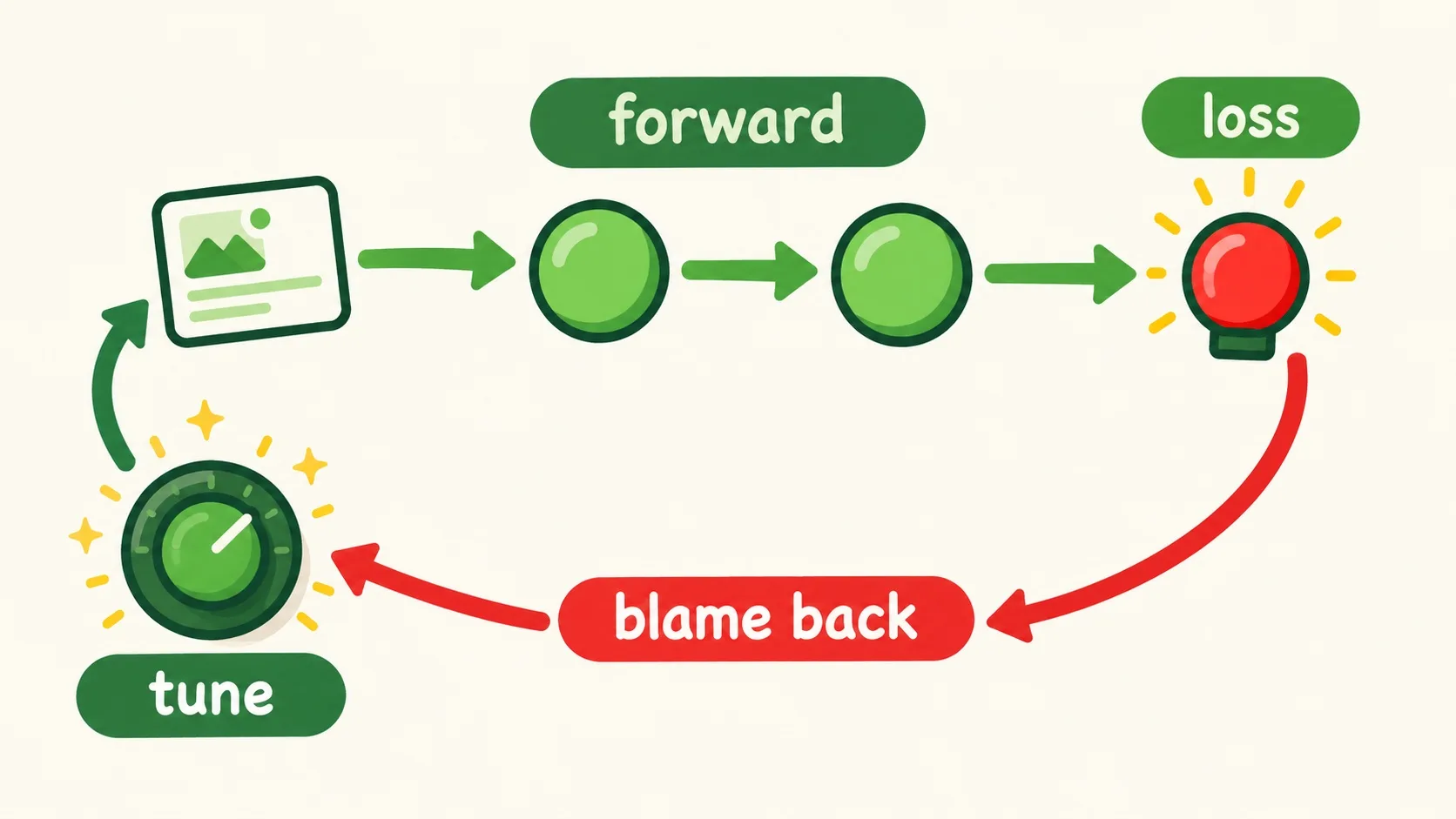
往前算(前向传播)→ 出口算误差 → 红灯往回追责(反向传播)→ 每个旋钮按责任大小拧一点(梯度下降)。四个动作转一圈,就是训练的一轮。网络循环几百万轮,旋钮越拧越准,直到出口的红灯熄灭。Flow forward (forward propagation) → measure the error at the exit → the red light carries the blame back (backpropagation) → every knob twists a little by its share (gradient descent). One turn of these four moves is one training round. Loop it millions of times and the knobs get sharper and sharper — until the red light goes out.
🎮 你来当判官(30 秒)🎮 Your turn: judge the blame (30 seconds)
道理讲完了。4 个案子,每个案子两个旋钮带着影响条——点一下该背更多锅的那个,看看你判得准不准。Theory done. Four cases, each with two knobs carrying influence bars — tap the knob that owes more blame and see how well you judge.
一句话记住它:反向传播 = 误差红灯倒着传;谁影响大、谁多背锅,每个旋钮按锅的大小拧一点。Remember it in one line: backpropagation = the red error light travels backwards; bigger influence means bigger blame, and every knob twists a little by its share.
方向相反:误差从出口倒着传回去,每个旋钮收到属于自己的那份责任Opposite direction: the error flows back from the exit, handing every knob its own share of blame分锅规则:影响越大、锅越重——这就是链式法则(顺藤摸瓜)The blame rule: bigger influence, heavier blame — that's the chain rule (follow the vine)完整一圈:往前算 → 算误差 → 往回追责 → 拧旋钮,循环几百万次One full round: forward → measure error → blame back → tune, looped for millions of rounds
内容参考 OpenStax 等公开教材,多来源核对 · AI 生成、人工审核 · 发现错误欢迎指正,帮这片叶子长得更好。Based on OpenStax and other open textbooks, cross-checked across sources · AI-generated, human-reviewed · Spotted a mistake? Tell us — help this leaf grow.
 Back to tree