🐝 布朗运动:小颗粒被分子撞得“乱晃”🐝 Brownian Motion: tiny grains jostled by molecules
上一片拆开了原子和分子,可它们小得连最好的显微镜都看不见——那科学家凭什么相信它们真的在动?答案藏在一个 200 年前的意外里:花粉在水里“乱晃”。Last leaf opened up atoms and molecules — but they are far too small for even the best microscope to see. So how do scientists know they really move? The answer hides in a 200-year-old accident: pollen grains wandering in water.
第 1 步:布朗的意外发现Step 1: Brown's lucky accident
先回到 1827 年,看植物学家布朗在显微镜里撞见了什么。Back to 1827: what did the botanist Brown see through his microscope?
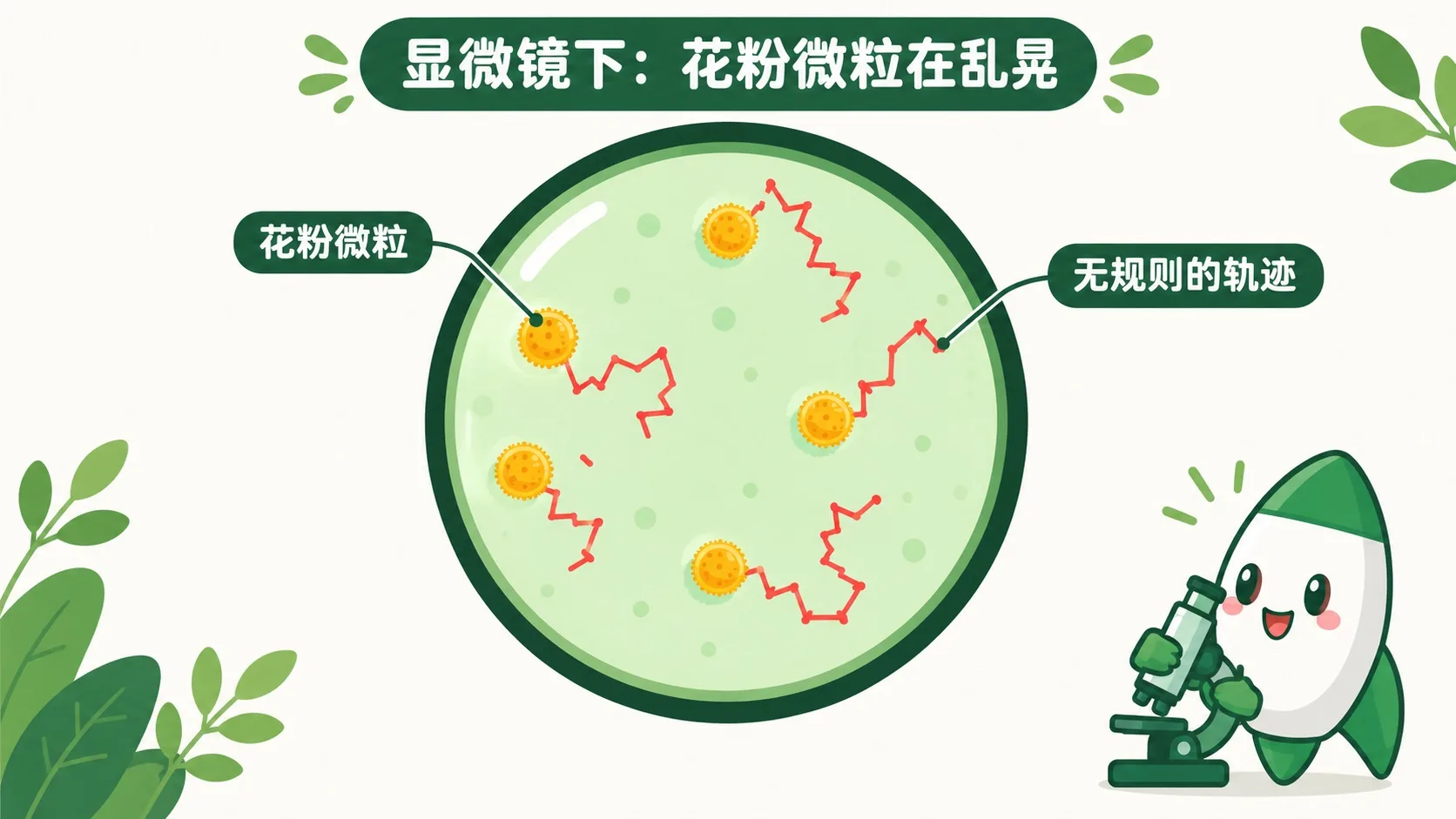
他把花粉撒进水里,发现花粉碎屑不是静静浮着,而是不停地、无规则地乱晃。换成灰尘、岩石粉末……照样乱晃。这说明乱晃跟“是不是花粉”没关系,水里好像有什么看不见的东西在推它们。He dusted pollen into water and saw the tiny grains were not resting quietly — they wandered non-stop, with no pattern at all. He switched to dust, to powdered rock… the same dance. So it had nothing to do with pollen being “alive”: something invisible in the water seemed to be pushing them.
花粉又没有脚,它到底被谁推得停不下来?Pollen has no legs — so who keeps pushing it around?
第 2 步:到底是谁在推它Step 2: Who is doing the pushing?
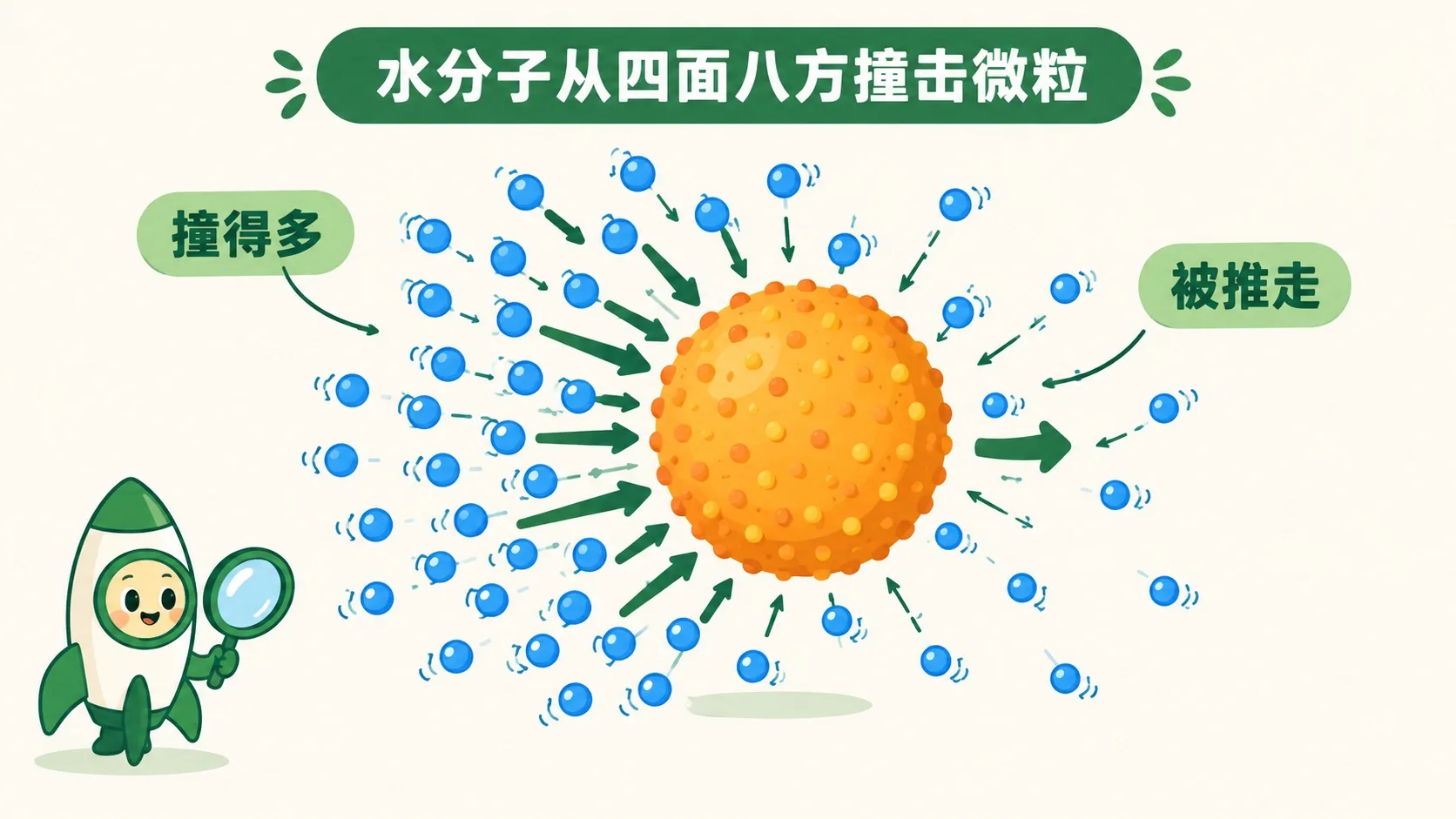
答案是看不见的水分子。它们从四面八方不停地撞微粒:某一瞬间左边撞得多,微粒就被挤到右边;下一瞬间又反过来。这就是布朗运动——动的是“微粒”,不是分子。微粒越大,各方向撞击越容易抵消,晃得越不明显;微粒越小,布朗运动越明显。The answer: invisible water molecules, hitting the grain from every side. For one instant more come from the left, so the grain is shoved right; a moment later it is the other way round. This is Brownian motion — it is the grain that moves, not the molecules. The bigger the grain, the more the kicks cancel out, so the wandering fades; smaller grains wander more.
既然微粒乱晃是分子撞的,改一下温度,会不会露馅?If molecules cause the wandering, will changing the temperature give them away?
第 3 步:看不见运动的“间接证据”Step 3: Indirect proof of an invisible dance
会。温度越高,分子跑得越快,撞击越猛,微粒晃得越剧烈——冷水里轨迹短而温和,热水里轨迹又长又疯狂。1905 年爱因斯坦把这场“乱晃”写成了公式,佩兰用实验证实。从此人类不用“看见”分子,也能断定:分子在永不停息地运动。It does. Hotter water means faster molecules and harder kicks, so the wandering turns violent — short, gentle trails in cold water; long, wild ones in hot water. In 1905 Einstein turned the dance into an equation, and Perrin confirmed it in the lab. Since then, nobody needs to “see” a molecule to know: molecules never stop moving.
🎮 你来当观察员(30 秒)🎮 Your turn: observe (30 seconds)
道理讲完了。先拖一拖水温滑块,看微粒晃得怎么变;再判断下面 4 句说法——小心“布朗运动就是分子运动”这个坑。Theory done. Drag the water-temperature slider and watch the grains; then judge 4 statements — and don't fall into the classic trap “Brownian motion is molecules moving”.
一句话记住它:布朗运动是“微粒”的无规则运动,由看不见的分子撞击造成——它是分子永不停息运动的间接证据;温度越高越剧烈,微粒越小越明显。Remember it in one line: Brownian motion is the random wandering of tiny grains, caused by invisible molecules bumping them — indirect proof that molecules never rest. Hotter means wilder; smaller grains wander more.
动的是“花粉微粒”,不是分子;分子太小,看不见It's the pollen grain that moves, not the molecules — molecules are far too small to see它是分子不停运动的“间接证据”(爱因斯坦 1905 算公式、佩兰验证)It is indirect proof that molecules never stop moving (Einstein's 1905 equation, verified by Perrin)温度越高越剧烈;微粒越小越明显Hotter water → wilder wandering; smaller grains → more obvious motion
内容参考 OpenStax 等公开教材,多来源核对 · AI 生成、人工审核 · 发现错误欢迎指正,帮这片叶子长得更好。Based on OpenStax and other open textbooks, cross-checked across sources · AI-generated, human-reviewed · Spotted a mistake? Tell us — help this leaf grow.
 Back to tree