🛰️ 天体运动:卫星不掉下来的秘密🛰️ Celestial Motion: Why Satellites Never Fall
上一片里,开普勒让我们看到行星沿椭圆奔跑。可小火箭更关心一个问题:绕地球飞的卫星,为什么不掉下来?答案藏在一句反直觉的话里——它其实一直在掉。Last leaf, Kepler showed us planets running along ellipses. But the little rocket cares about one question: why don't satellites fall down? The answer hides in a counter-intuitive line — they are falling, all the time.
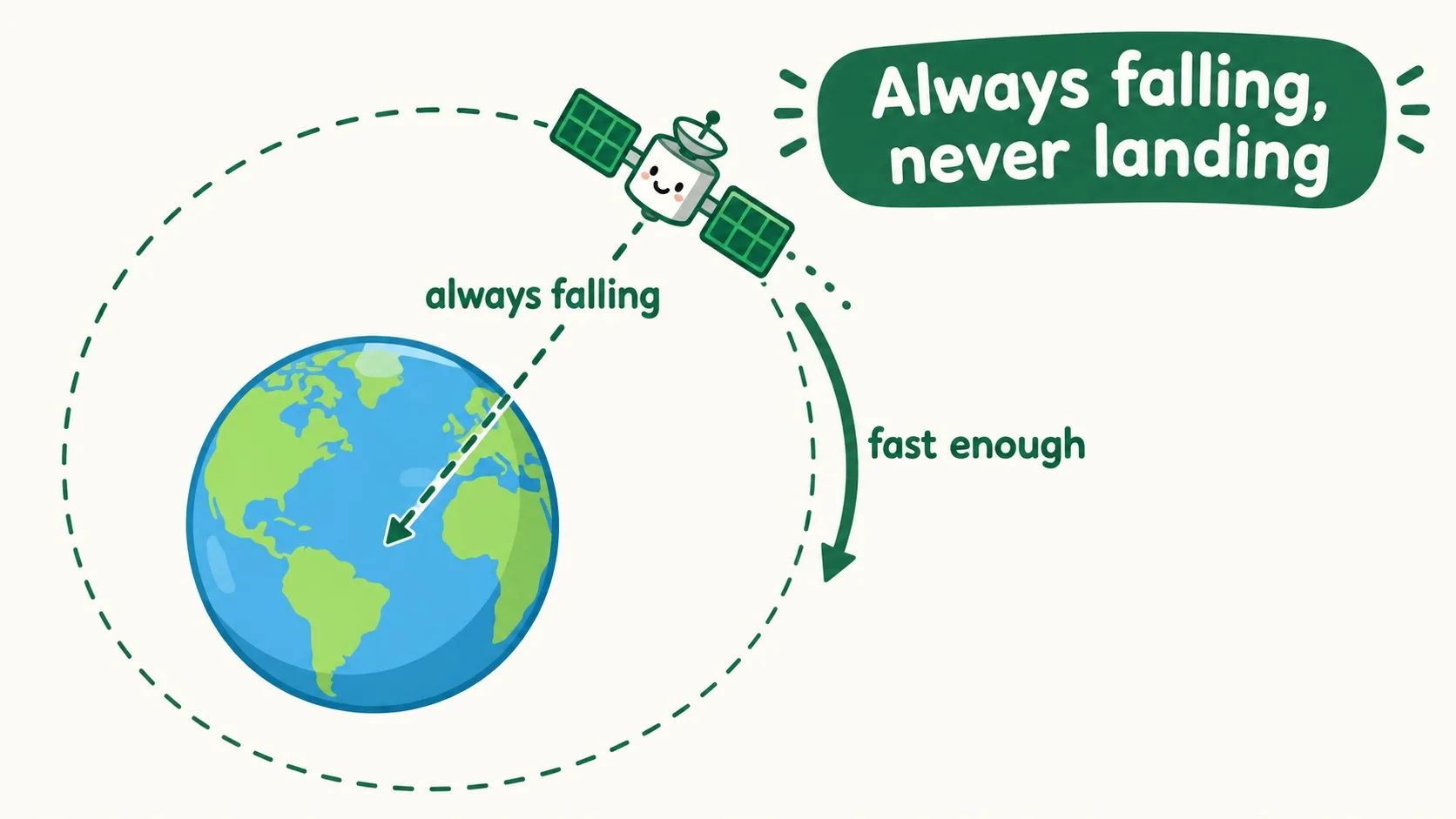
第 1 步:一直在掉,却掉不到地面Step 1: Always falling, never landing
先看卫星在天上做的事——它一刻不停地朝地球掉。Look at what the satellite is really doing up there: falling toward Earth, non-stop.
想象站在高塔上水平扔一块石头:它一边向前飞,一边往下掉,落地前划出一道弧线。扔得越快,弧线越长、落点越远。快到某个速度时,弧线的弯曲正好和地球表面的弯曲一样——每往下掉一点,地面也在它脚下“弯走”一点,于是永远落不到地面。卫星不是没有重力,而是重力全用来让它“拐弯”,拐成了一个圈。Picture throwing a stone sideways from a tall tower: it flies forward while falling, tracing an arc. Throw it faster and the arc stretches farther. At one special speed the arc bends exactly as much as Earth's surface does — for every metre it drops, the ground curves away beneath it, so it never lands. A satellite isn't gravity-free: gravity is entirely busy bending its path into a circle.
那要多快,才能一直“错过”地面?So how fast must it go to keep missing the ground?
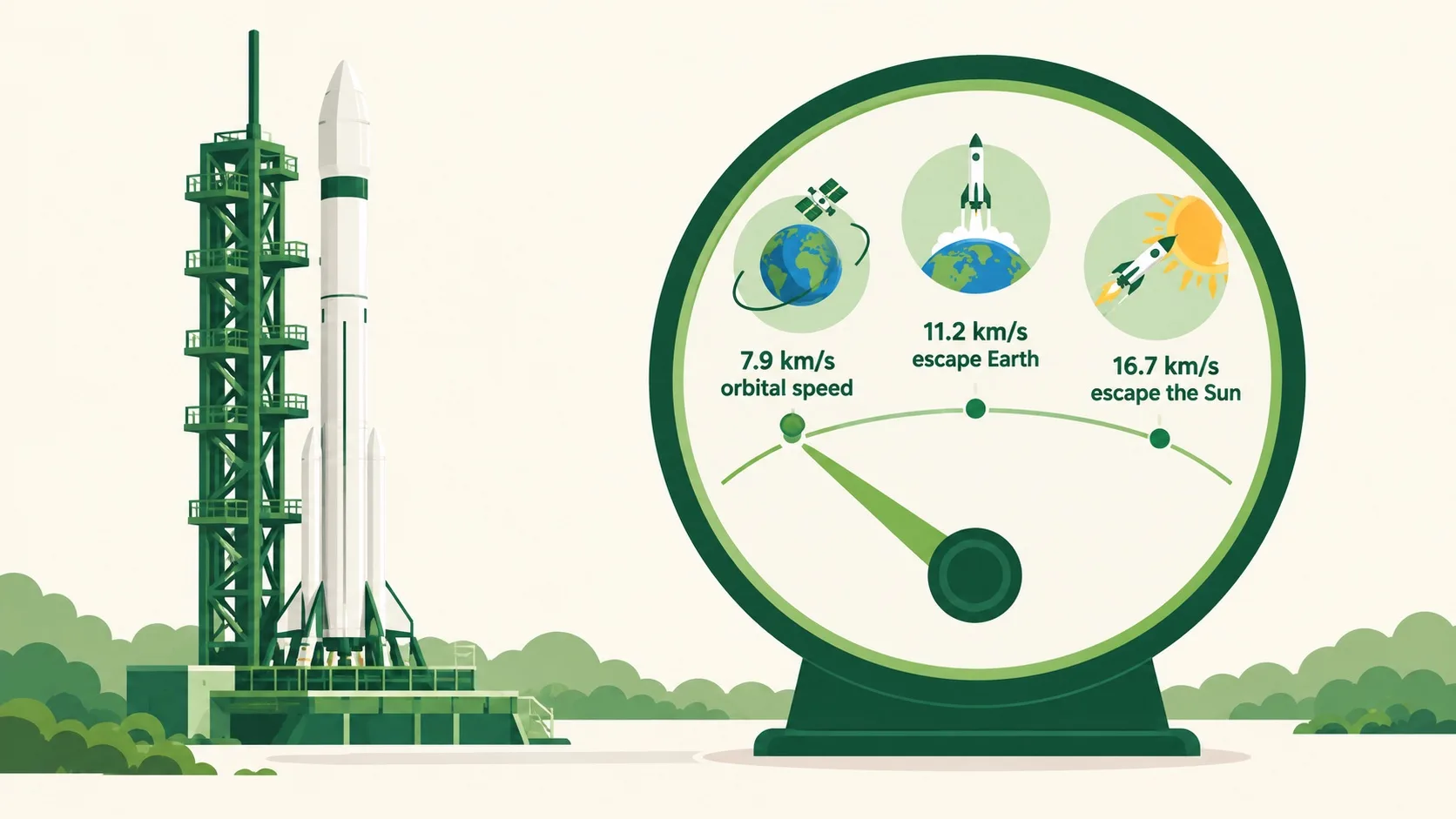
第 2 步:速度表盘上的三档Step 2: Three notches on the speed dial
发射台的表盘刻着三档:7.9 km/s(第一宇宙速度)是贴着地球绕圈的最低门槛,达到它就能成为近地卫星;11.2 km/s(第二宇宙速度)能彻底挣脱地球引力,去月球或别的行星;16.7 km/s(第三宇宙速度)连太阳也拦不住,直接飞出太阳系。速度不到 7.9 km/s,卫星会像那块石头一样掉回来。The launch dial has three notches. 7.9 km/s (the first cosmic velocity) is the lowest ticket to a low orbit around Earth. 11.2 km/s (the second) breaks free of Earth's gravity — off to the Moon or other planets. 16.7 km/s (the third) even the Sun can't hold — out of the solar system. Below 7.9 km/s, the satellite falls back like that stone.
速度再快一点,轨道会变成什么样?And if it goes a little faster — what shape then?
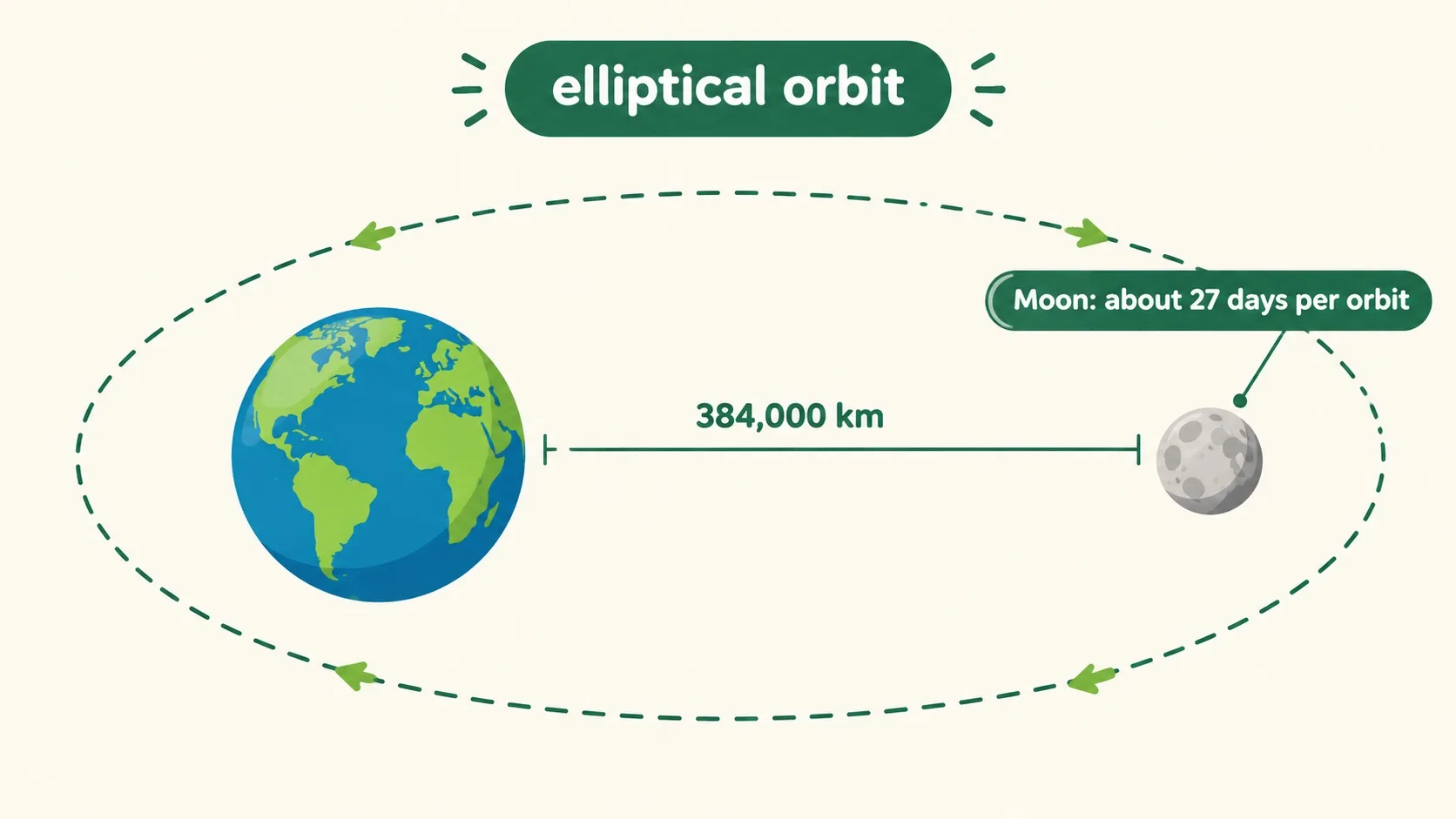
第 3 步:椭圆轨道与月球Step 3: Ellipses and the Moon
正圆被拉长成椭圆:卫星离地球近时跑得快,远时慢下来——这正是开普勒定律说的。月球是地球最忠实的伴侣:在约 38 万千米外,约 27 天绕一圈,靠地球引力“掉”了 45 亿年还稳稳当当。速度恰好时,掉就是绕;速度太大时,绕就变成逃。The circle stretches into an ellipse: fast when close to Earth, slow when far — exactly what Kepler's laws say. The Moon is Earth's most loyal companion: about 384,000 km away, one lap in about 27 days, kept “falling” by gravity for 4.5 billion years and still going strong. With the right speed, falling becomes orbiting; too much speed, and orbiting becomes escaping.
🎮 你来当发射员(30 秒)🎮 Your turn: launch officer (30 seconds)
道理讲完了。先拖速度滑块,把四种命运都试一遍;再按 4 张任务卡自己发射。Theory done. Drag the speed slider and try all four fates; then launch for the 4 mission cards.
一句话记住它:卫星不掉下来,是因为它一直在掉——只是速度恰好让它每次都“错过”地面。Remember it in one line: a satellite doesn't fall down because it IS falling — its speed just makes it miss the ground, every time.
卫星一直在掉:重力把它“拐弯”,拐成了绕地球的圈It is always falling: gravity bends its path into a loop around Earth7.9 km/s 第一宇宙速度(近地环绕);11.2 逃地球;16.7 逃太阳7.9 km/s first cosmic velocity (low orbit); 11.2 escapes Earth; 16.7 escapes the Sun速度决定轨道形状:太慢掉回、恰好成圆或椭圆、够大就一去不回Speed sets the shape: too slow falls back, just right circles or ellipses, enough and it never returns
内容参考 OpenStax 等公开教材,多来源核对 · AI 生成、人工审核 · 发现错误欢迎指正,帮这片叶子长得更好。Based on OpenStax and other open textbooks, cross-checked across sources · AI-generated, human-reviewed · Spotted a mistake? Tell us — help this leaf grow.
 Back to tree