上一片,⚗️ 小烧瓶把分子拼成了「有机化合物」。现在,🦠 小细胞接过接力棒——分子再往前走一步,就该「活」起来了。细胞,就是生命最小的完整单位(病毒除外,它得借别人的细胞才能复制)。Last leaf, ⚗️ the little flask assembled molecules into organic compounds. Now 🦠 the little cell takes the baton — one step beyond molecules, things get alive. The cell is the smallest complete unit of life (viruses aside — they must borrow a cell to copy themselves).
第 1 步:一个细胞,一座小工厂Step 1: One cell, one tiny factory
细胞那么小,里面到底装了些什么?The cell is tiny — what is packed inside?
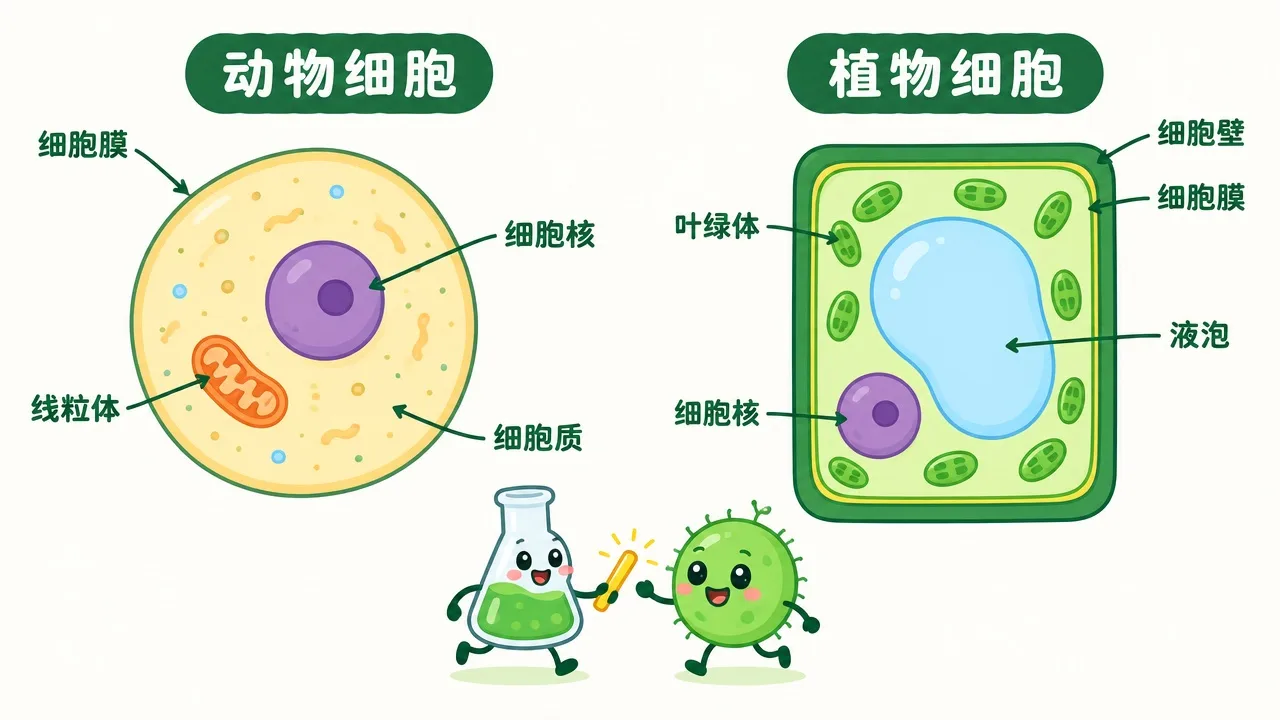
动物细胞(左)和植物细胞(右)并排一比,共性一目了然:都有细胞膜(门卫)、细胞核(总部)和细胞质(车间地面)。植物细胞还多三样——细胞壁(结实的厚墙)、叶绿体(太阳能厨房)和液泡(大水仓)。每个细胞器各司其职,细胞就是一座分工明确的小工厂。Put an animal cell (left) next to a plant cell (right) and the shared kit jumps out: both have a cell membrane (the gate), a nucleus (control center) and cytoplasm (the workshop floor). Plant cells add three extras — a cell wall (a sturdy brick wall), chloroplasts (solar kitchens) and a vacuole (water storehouse). Each organelle minds its own job: a cell is a tiny factory with a clear division of labour.
细胞小到什么程度?不用工具能看见吗?Just how small is a cell — can we see one with bare eyes?
第 2 步:显微镜下的世界Step 2: The world under the microscope
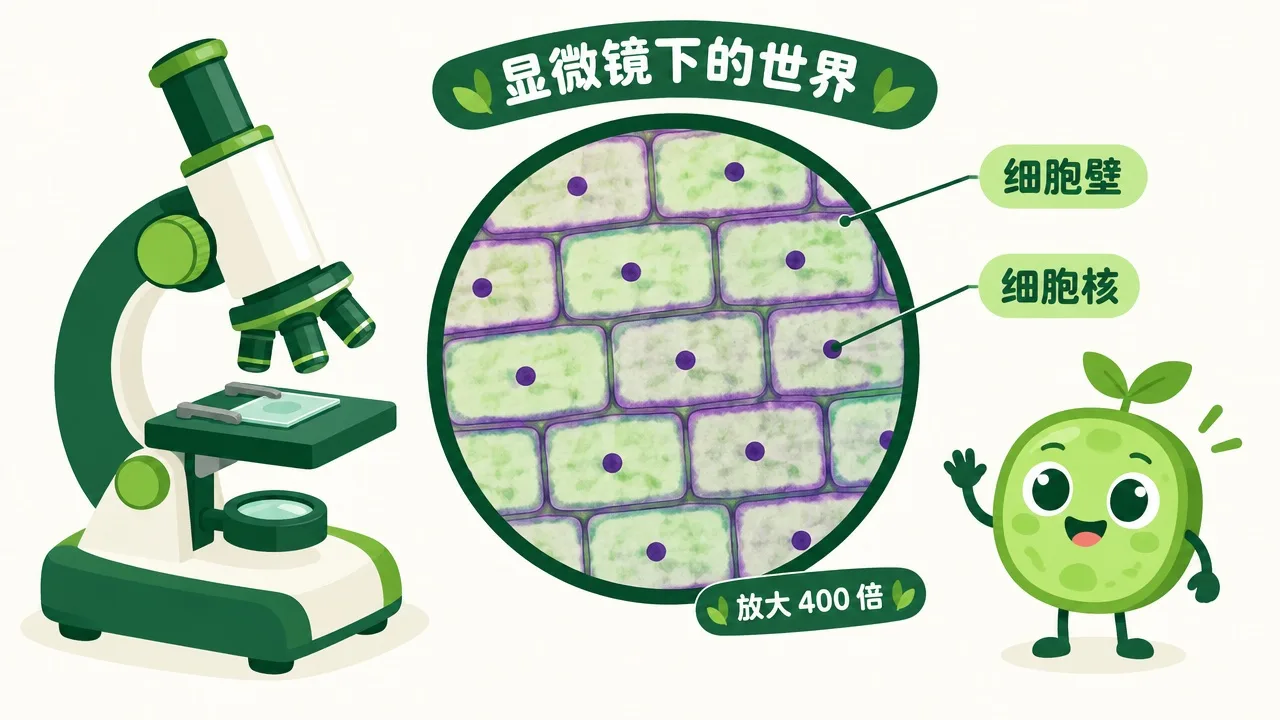
大多数细胞只有几十微米,一根头发丝的直径就够并排放下好几个。显微镜把这个看不见的世界放大:洋葱表皮细胞像一格一格的砖墙,每一小格都有自己的细胞核。同一个身体里,细胞形状千奇百怪——神经细胞长出长长触手,红细胞像小圆饼——但它们都遵守同一套结构规则。Most cells are only tens of micrometres wide — several fit side by side across one hair. Microscopes blow this invisible world up: onion-skin cells look like a brick wall, and every little box has its own nucleus. Inside one body, cells take wild shapes — nerve cells grow long tentacles, red blood cells look like little buns — yet they all follow the same structural rules.
「细胞」这个词,又是谁起的?So who came up with the word “cell”?
第 3 步:虎克的小房间Step 3: Hooke's little rooms
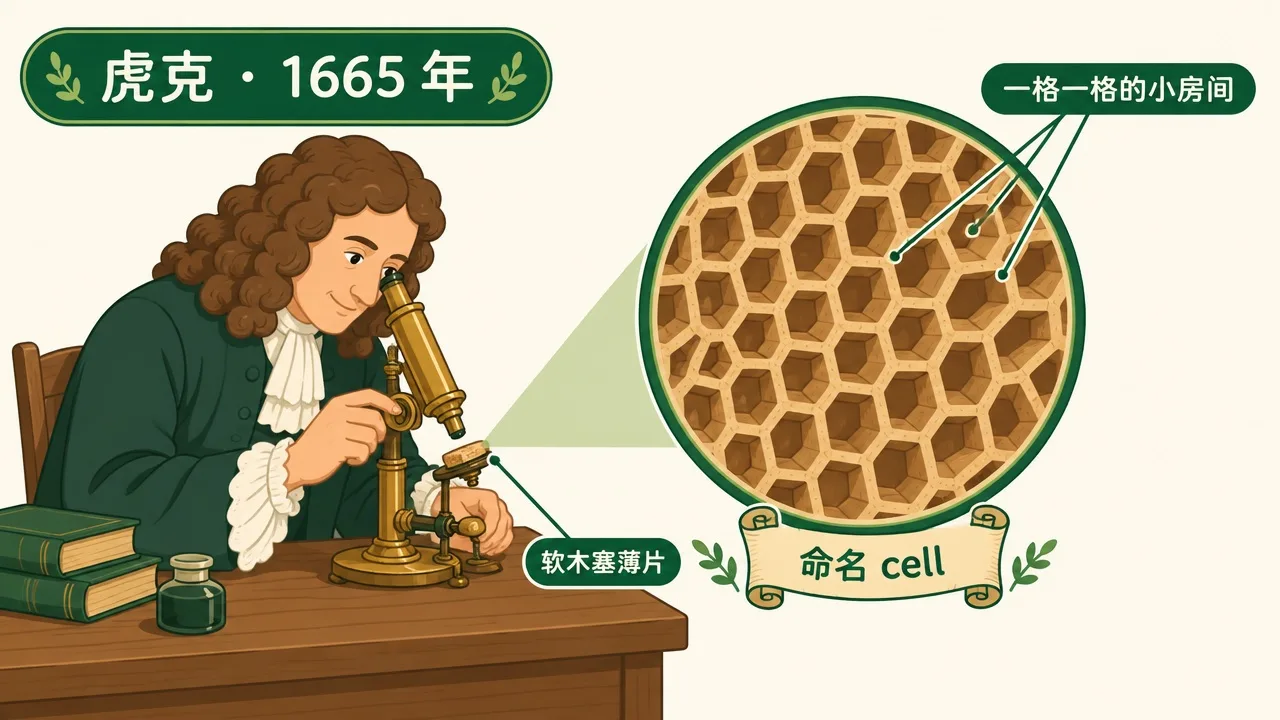
1665 年,英国科学家虎克(Robert Hooke)用自制显微镜观察一片软木塞薄片,看到密密麻麻的小格子——像修道院里一间间小房间,于是他起名「cell」(小房间)。其实他看到的,是死细胞留下的细胞壁空壳。细胞这个词,就这样从一块软木塞里「长」了出来。In 1665, English scientist Robert Hooke peered at a thin slice of cork through his homemade microscope and saw rows of tiny boxes — like little rooms in a monastery — so he named them “cells”. What he actually saw were the empty cell walls left behind by dead cells. That is how the word “cell” grew out of a piece of cork.
🎮 你来拼一个细胞(1 分钟)🎮 Your turn: assemble a cell (1 minute)
道理讲完了。8 个零件、4 个关卡:先拼动物细胞,再拼植物细胞——把每个细胞器放回它的工位。Theory done. Eight parts, four levels: build an animal cell, then a plant cell — put every organelle back at its workstation.
一句话记住它:细胞是生命的基本单位;细胞膜、细胞质、细胞核是通用配置,植物细胞另有细胞壁、叶绿体、液泡三件套。Remember it in one line: the cell is the basic unit of life; membrane, cytoplasm and nucleus are the standard kit, while plant cells add a wall, chloroplasts and a vacuole.
细胞是生命最小的完整单位(病毒例外,它得借别人的细胞才能复制)The cell is the smallest complete unit of life (viruses must borrow one to copy themselves)动植物细胞都有细胞膜、细胞质、细胞核;植物细胞多细胞壁、叶绿体、液泡Animal and plant cells share membrane, cytoplasm and nucleus; plants add wall, chloroplasts and vacuole1665 年虎克用显微镜看软木塞,给这些「小房间」起名 cellIn 1665 Hooke saw cork under his microscope and named the little rooms “cells”
内容参考 OpenStax 等公开教材,多来源核对 · AI 生成、人工审核 · 发现错误欢迎指正,帮这片叶子长得更好。Based on OpenStax and other open textbooks, cross-checked across sources · AI-generated, human-reviewed · Spotted a mistake? Tell us — help this leaf grow.
 Back to tree