小林把还书故事搬上舞台。观众怎样看见人物的选择?Lin stages the book-return story. How can an audience see a character’s choices?
第 1 步:用行动呈现冲突Step 1: Stage conflict through action
先把叙述变成可演的动作。Turn narration into playable action.
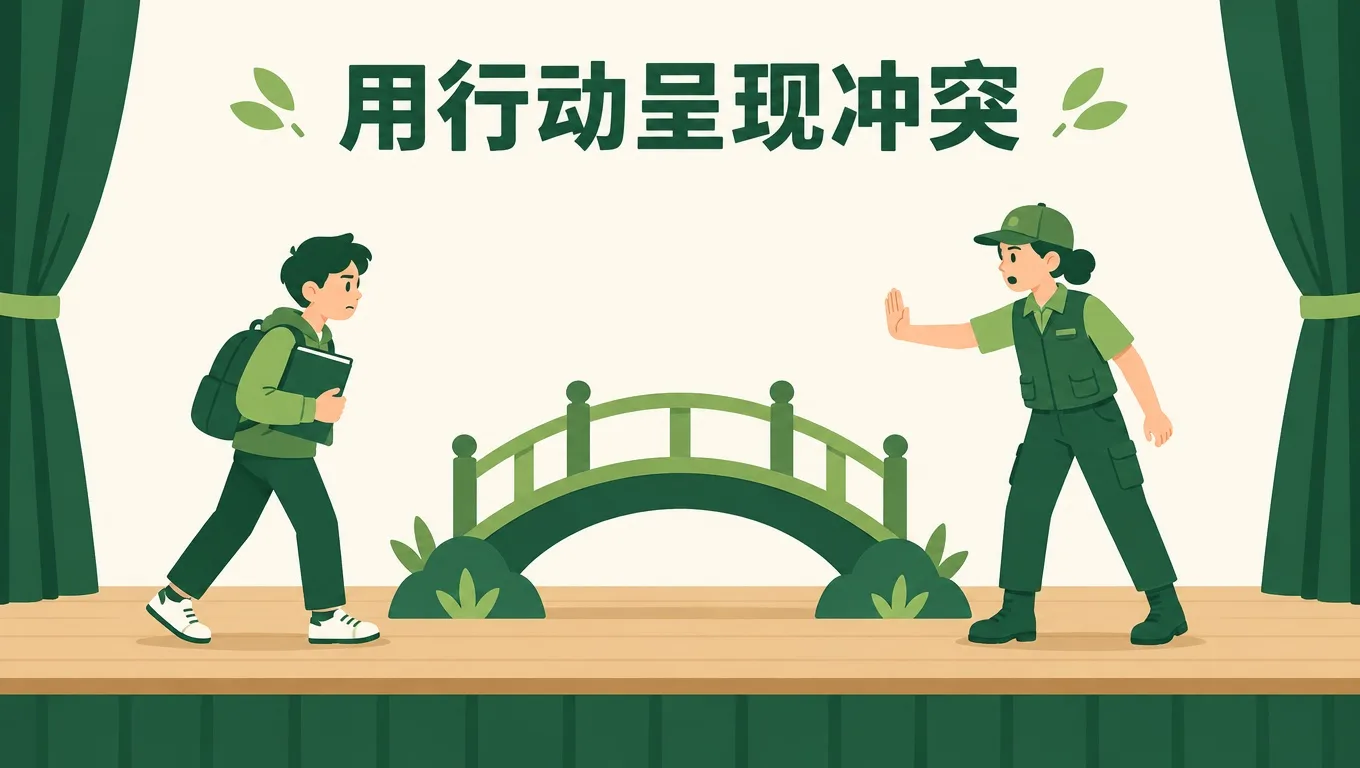
戏剧常通过演员的行动和对话展开。小林想过桥,守桥人担心安全。双方目标不同,冲突便能在台上出现。Drama often unfolds through performed action and dialogue. Lin wants to cross; the keeper worries about safety. Different goals create a conflict the audience can witness.
第 2 步:台词之外还有舞台Step 2: Beyond dialogue
没有说出的信息从哪里来?Where does unspoken information come from?
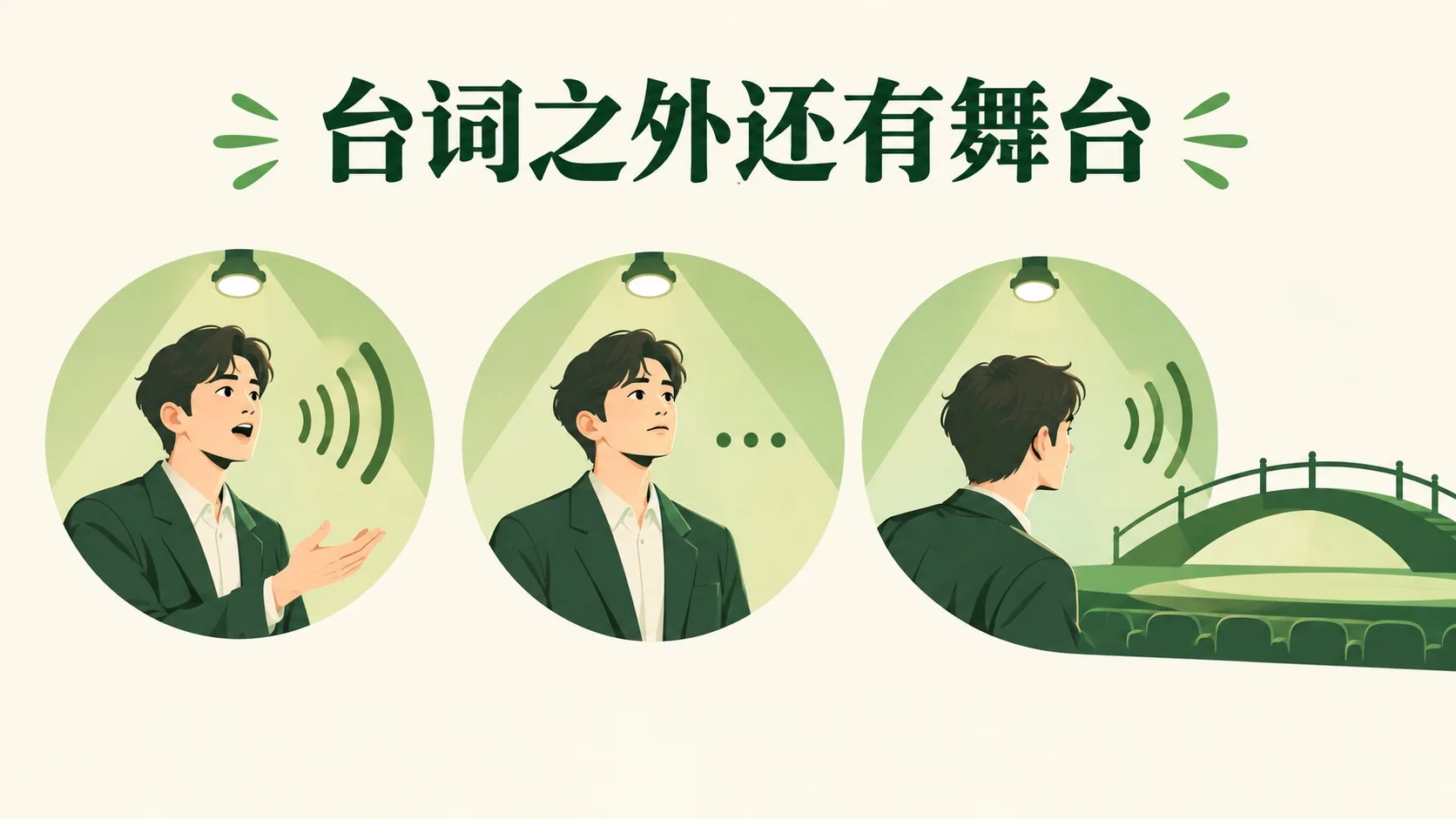
停顿、走位、灯光和声音都会传递信息。舞台说明提示表演条件。同一句话换个语气,人物关系也可能变化。Pauses, movement, light and sound communicate. Stage directions suggest performance conditions. A changed tone can alter the relationship implied by the same line.
第 3 步:排演检验表达Step 3: Rehearsal tests expression
写好的剧本,演出一定一样吗?Must every production of a script be identical?
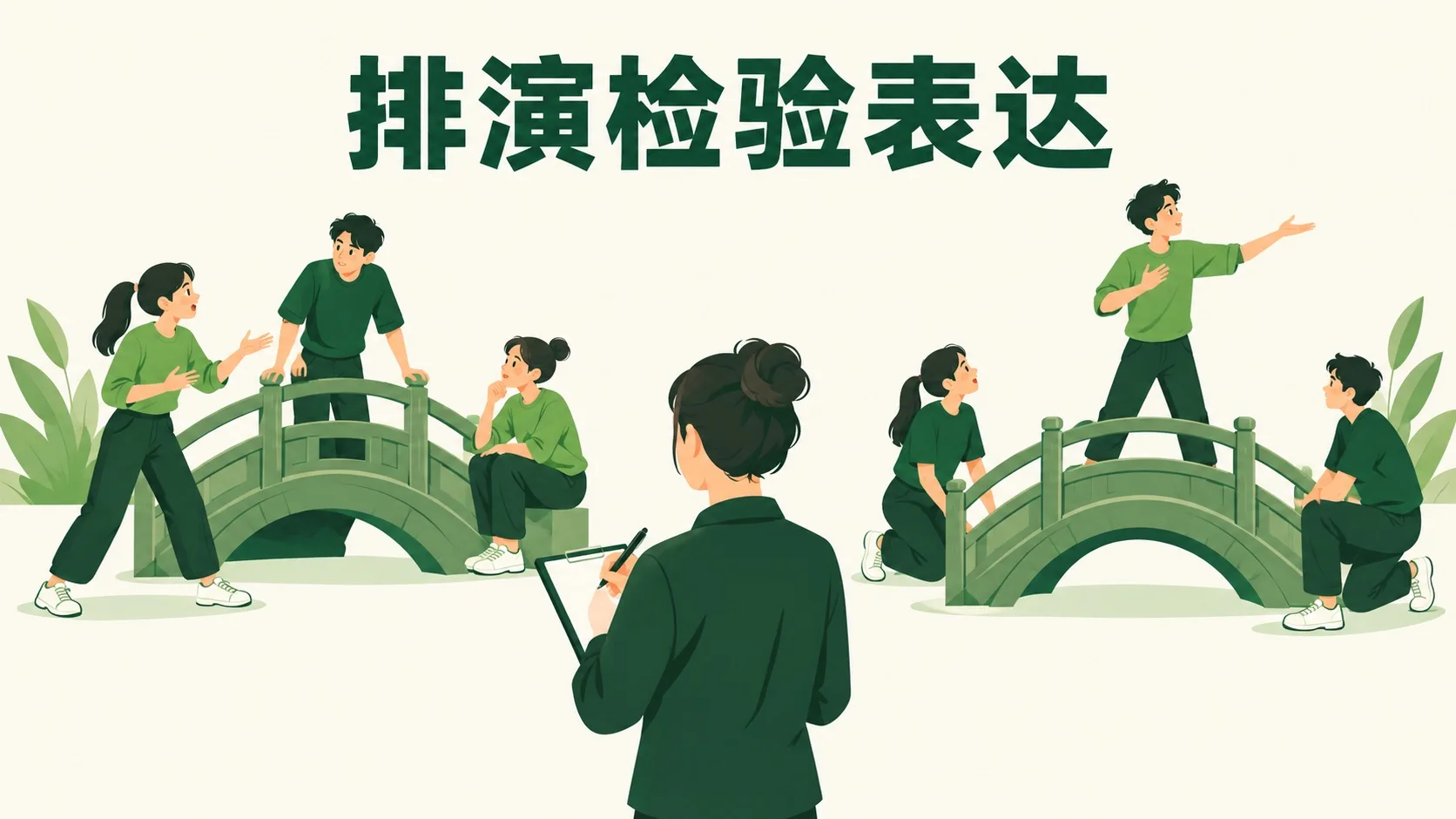
排练会检验动作是否清楚。导演和演员可以作出不同解释。比较演出时,要指出声音、动作等依据。不能只说哪版唯一正确。Rehearsal tests whether action communicates clearly. Directors and actors can interpret a work differently. Compare performances through specific sounds and actions rather than declaring one uniquely correct.
🎮 你来探索与判断🎮 Explore and reason
先操作实践台,再用四个挑战检验理解。每次判断都能看见理由。Explore the practice table, then try four challenges. Each judgment comes with a reason.
一句话记住它:戏剧让行动、语言与舞台一起讲故事。Remember: Drama tells through action, language and staging together.
冲突来自目标或处境的张力。Conflict arises from tension in goals or circumstances.停顿和灯光也有意义。Pauses and lighting can matter.同一剧本允许不同演绎。A script can support different interpretations.
来源与理解边界Sources and limits
不同文化的戏剧传统形式多样;本页以短剧说明基本元素。Theatrical traditions differ across cultures; a short play illustrates basic elements here.
来源查阅:2026 年 10 月 6 日。场景与例题为教学创作;插图为概念示意,不是历史实物照片。Sources checked on 6 October 2026. Scenarios and exercises are educational creations; illustrations are conceptual, not historical photographs.
参考上列公开资料 · AI 生成与自动化检查 · 欢迎提供可核查的勘误。Based on the public sources above · AI-generated and automatically checked · Verifiable corrections are welcome.
 Back to tree