文化馆想劝大家保护旧桥。怎样表达,才清楚又有说服力?The fair wants to persuade visitors to protect the old bridge. What makes a message clear and convincing?
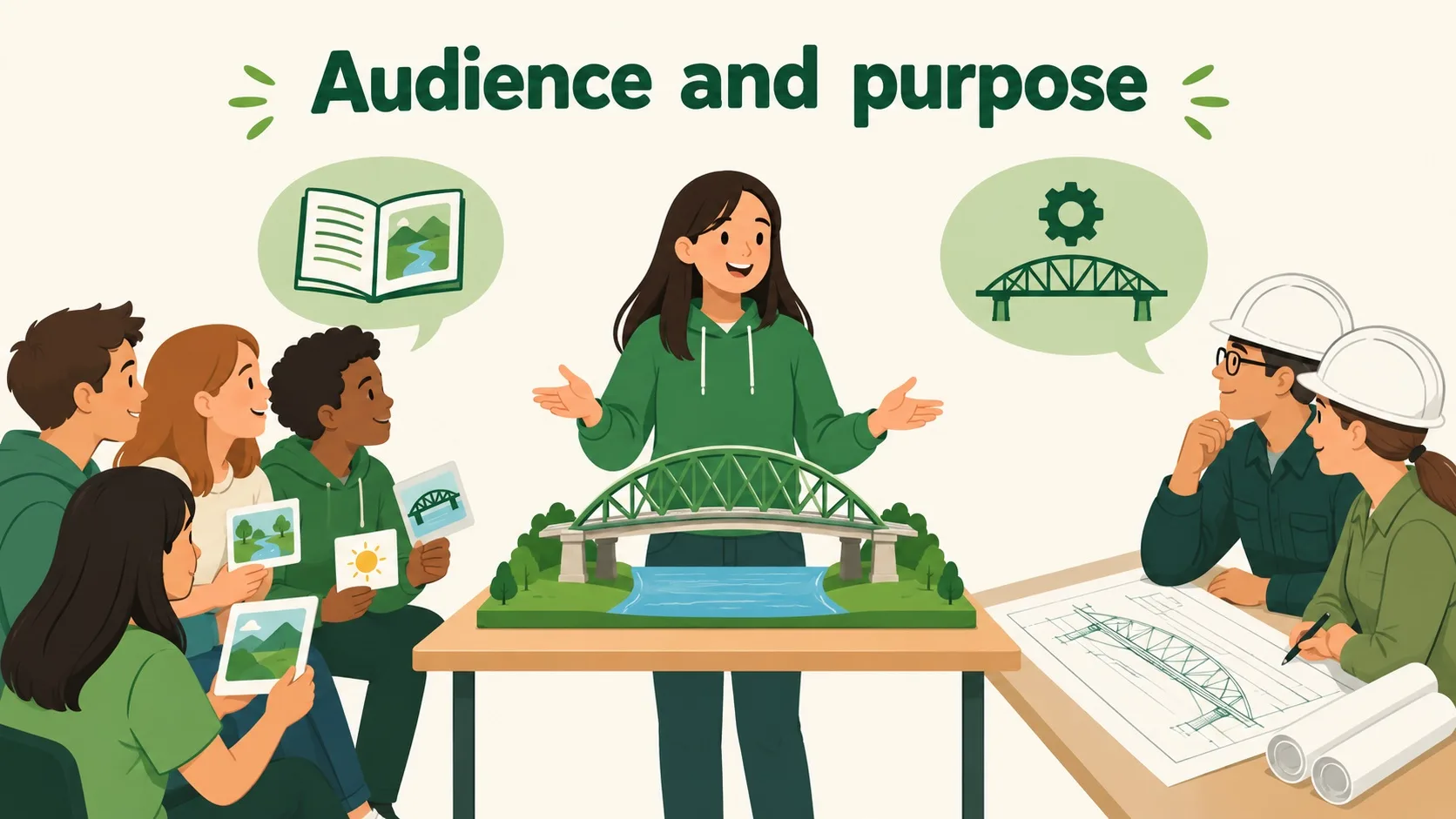
第 1 步:先看对象与目的Step 1: Audience and purpose
开口前先问说给谁听。Identify the audience before speaking.
修辞研究表达怎样产生效果。向同学介绍旧桥,与向工程师说明修缮,重点会不同。目的和听众影响词语选择。Rhetoric studies how communication works on an audience. Explaining a bridge to classmates differs from discussing repairs with engineers. Purpose and audience shape word choice.
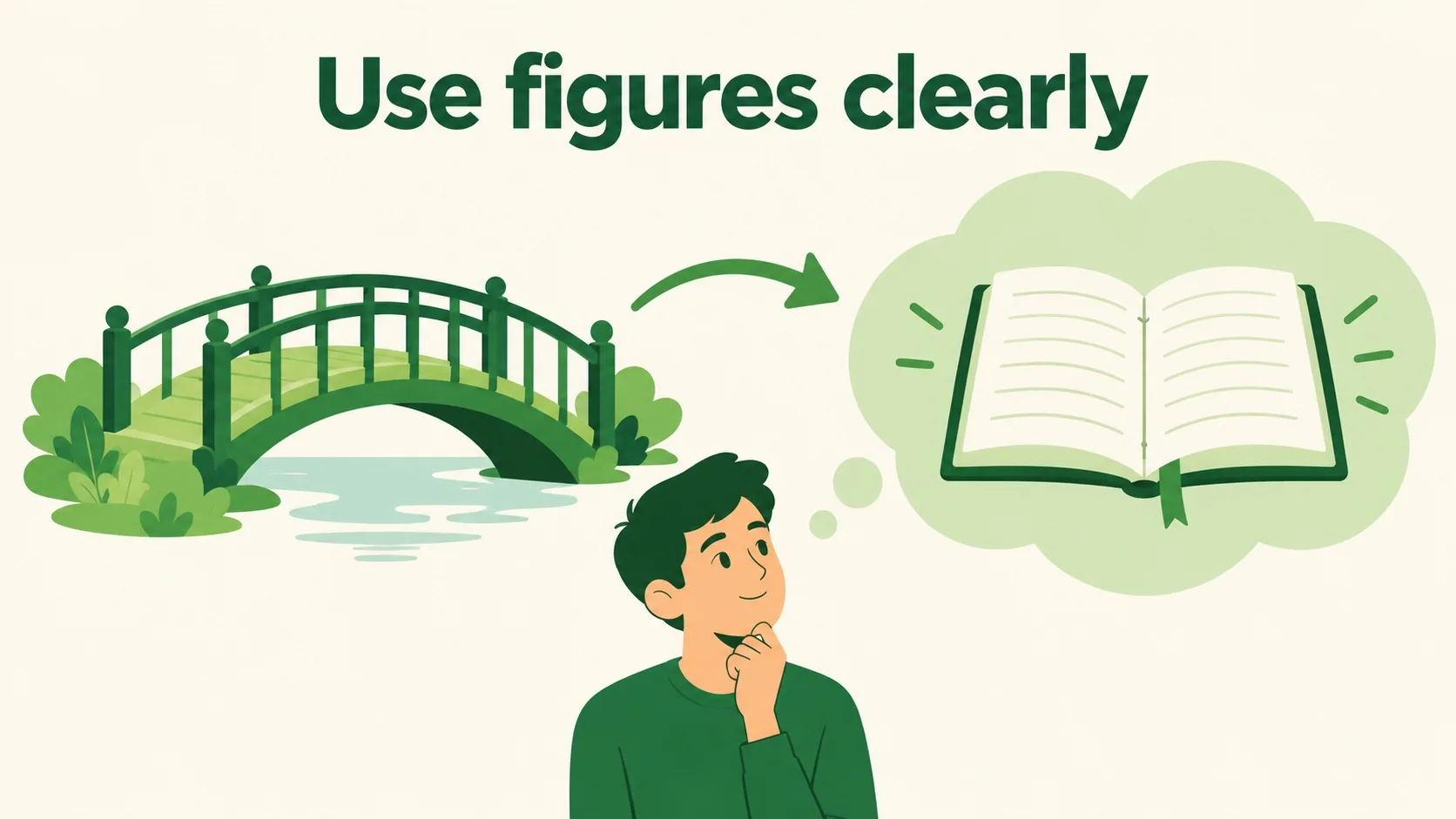
第 2 步:把比较说清楚Step 2: Use figures clearly
选好重点,再安排表达。Now shape the expression.
“旧桥像一本日记”是明喻。直接说“旧桥是日记”是隐喻。“桥在等待”用了拟人。它们帮助理解,不是字面事实。“The bridge is like a diary” is a simile. “The bridge is a diary” is a metaphor. “The bridge waits” personifies it. These illuminate ideas without being literal claims.
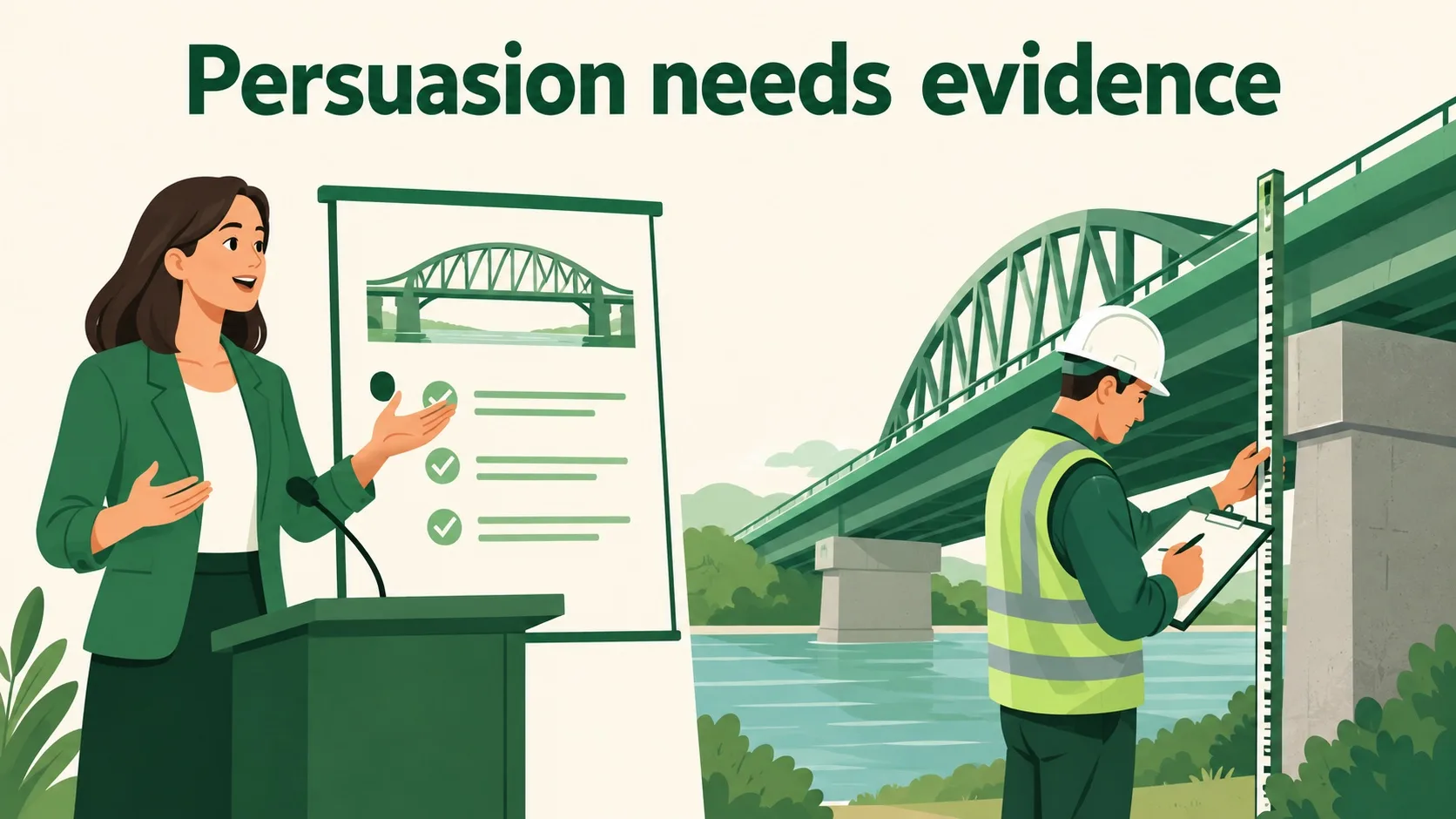
第 3 步:感染力不能替代证据Step 3: Persuasion needs evidence
听起来动人,就足够可信了吗?Does moving language make a claim reliable?
修辞也可以组织理由和证据。保护方案仍需说明价值、成本与风险。动人的比喻不能证明桥梁安全。听众也应检查依据。Rhetoric also organizes reasons and evidence. A preservation proposal still needs value, cost and risk information. A moving metaphor cannot establish structural safety. Listeners should check support.
🎮 你来探索与判断🎮 Explore and reason
先操作实践台,再用四个挑战检验理解。每次判断都能看见理由。Explore the practice table, then try four challenges. Each judgment comes with a reason.
一句话记住它:修辞让表达适合目的,也需要诚实的依据。Remember: Rhetoric fits expression to purpose and still requires honest support.
先看目的和听众。Consider purpose and audience.修辞格不必按字面理解。Figures of speech need not be literal.感染力与可信度要分别判断。Assess emotional effect and credibility separately.
来源与理解边界Sources and limits
分类是入门工具。实际表达可能同时采用多种修辞。The categories are introductory tools. Actual expressions may combine several devices.
来源查阅:2026 年 10 月 6 日。场景与例题为教学创作;插图为概念示意,不是历史实物照片。Sources checked on 6 October 2026. Scenarios and exercises are educational creations; illustrations are conceptual, not historical photographs.
参考上列公开资料 · AI 生成与自动化检查 · 欢迎提供可核查的勘误。Based on the public sources above · AI-generated and automatically checked · Verifiable corrections are welcome.
 Back to tree