上一片我们用泛音认出了乐器。声音还会跑:在山谷里喊一嗓子,山会“回”你一声——回声,就是弹回来的声音。Last leaf, overtones told instruments apart. Sound also travels: shout across a valley and the mountain answers back — an echo is simply sound bouncing home.
第 1 步:声音撞墙,弹回来Step 1: Sound hits the wall and bounces back
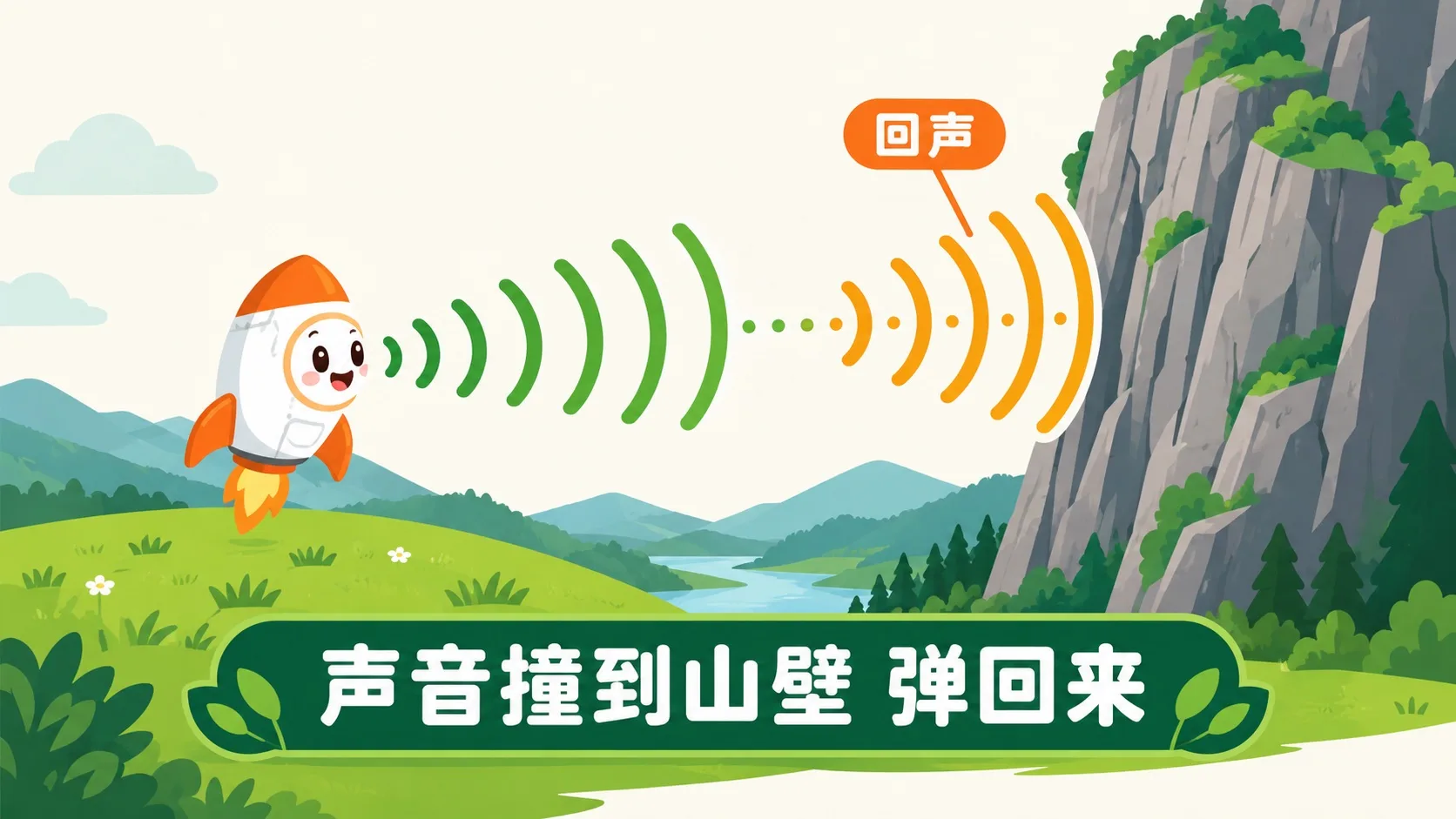
先看山谷里的一次喊话:声音出发、撞山、返回。Watch a single shout: the sound leaves, hits the cliff, and returns.
声音在空气里约以 340 米/秒向前跑,撞上又大又硬的障碍物会像皮球一样弹回来,这就是回声。先听到喊声、再听到它的“复制品”。可卧室里为什么没有?因为墙太近:往返不到 0.1 秒,回声和原声糊在一起;耳朵要 0.1 秒以上才分得开。0.1 × 340 ÷ 2 = 17 米——墙至少这么远,才听得到回声。Sound races through air at about 340 m/s; hit a big hard obstacle and it bounces back like a ball — that's an echo. First the shout, then its copy. So why not in a bedroom? The walls are too close: the round trip takes under 0.1 s, blurring copy into original — your ears need 0.1 s or more to split them. 0.1 × 340 ÷ 2 = 17 m — walls must be at least that far to hear an echo.
既然回声会报出“晚了多少秒”,它能帮我们量什么?If an echo reports “how many seconds late”, what can it measure?
第 2 步:用回声测距离Step 2: Ranging with echoes
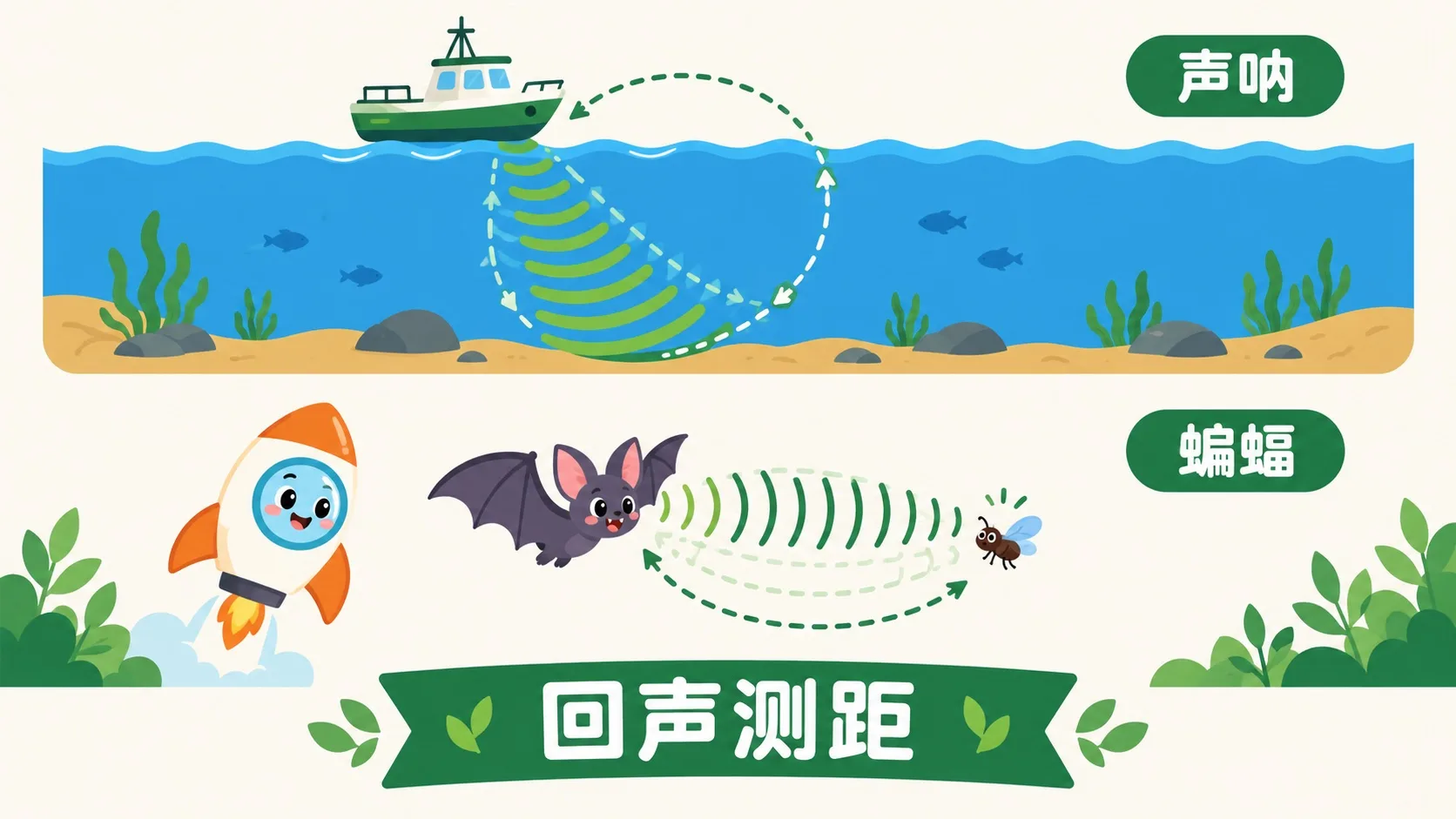
声音跑一个来回:去 + 回 = 2 倍距离,所以距离 s = v × t ÷ 2。船底朝海底发一声,0.4 秒后收到回波:340 × 0.4 ÷ 2 = 68 米,这就是水深。这套办法叫声呐(sonar)。蝙蝠在黑夜里用同样的招数“看”路:发出超声波,听回波,一把抓住飞虫。人只是把蝙蝠的耳朵做成了机器。Sound runs there and back = twice the distance, so distance s = v × t ÷ 2. A ship pings the seabed and hears the return 0.4 s later: 340 × 0.4 ÷ 2 = 68 m — that's the depth. This trick is called sonar. A bat “sees” in the dark the same way: it sends ultrasound, listens to the return, and snaps up a moth. We simply built the bat's ears into a machine.
有时候,我们一点回声都不想要。怎么办?Sometimes we want no echo at all. What then?
第 3 步:把回声“吃掉”Step 3: Soaking the echo up
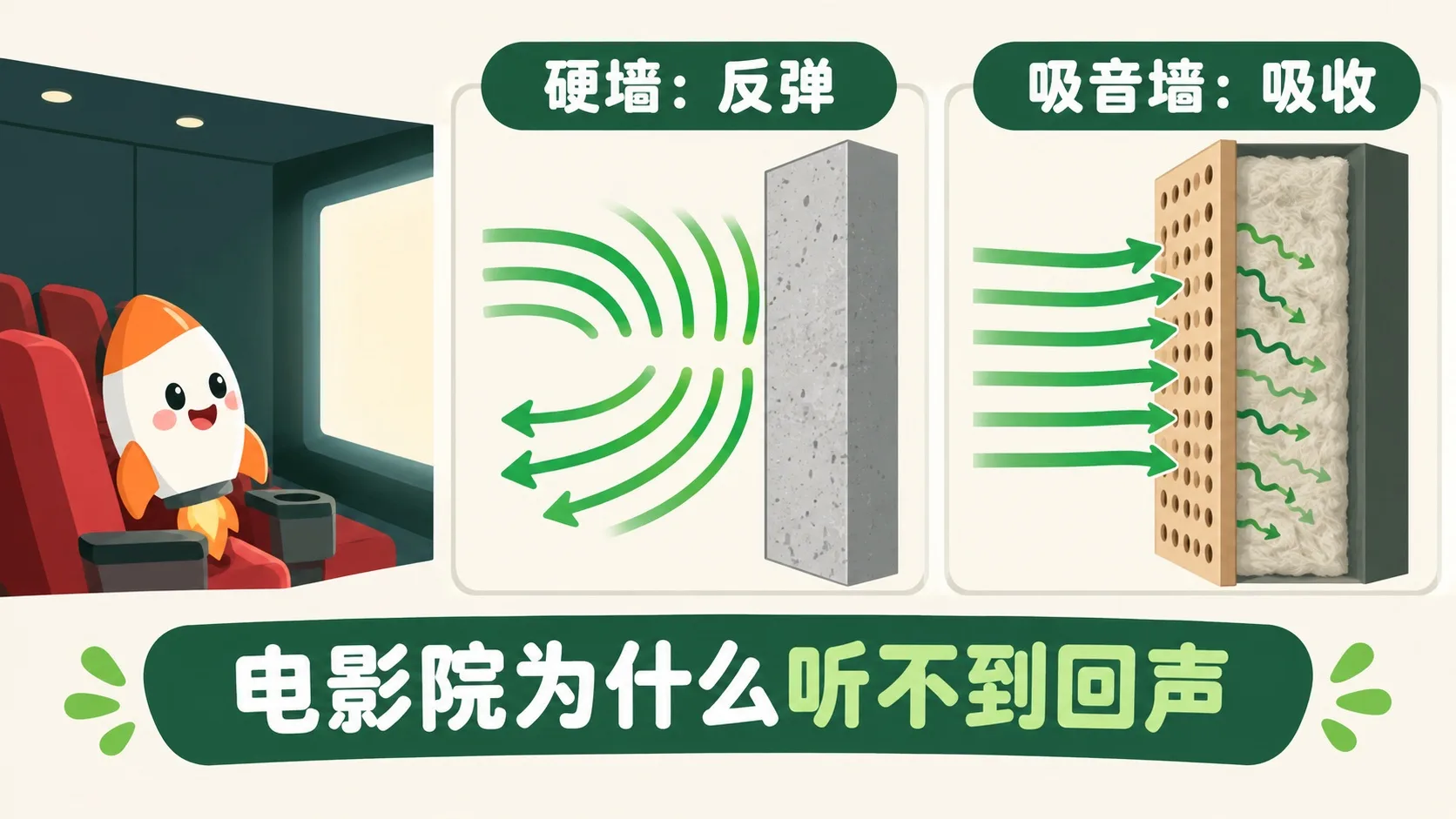
电影院、音乐厅最怕多余的回声:声音在墙上弹来弹去,台词就糊成一团。工人给墙贴上多孔的吸音材料(吸音板、软包、毛毡):声波钻进小孔,在纤维里来回摩擦,能量变成热,弹不回来。硬墙反射、吸音墙吸收——一硬一软搭配,电影院里才只剩下画面里的声音。Cinemas and concert halls dread stray echoes: sound bouncing wall to wall smears every line. So workers cover walls with porous absorbers (acoustic panels, soft padding, felt): waves crawl into the holes, rub through the fibres, and their energy turns into heat instead of bouncing back. Hard walls reflect, absorber walls absorb — together they leave only the sound from the screen.
🎮 你来当喊话员(30 秒)🎮 Your turn: valley shouter (30 seconds)
道理讲完了。先拖距离滑块、喊一声看声波往返;再完成 4 关距离挑战。Theory done. Drag the distance slider and shout to watch the round trip; then clear 4 distance challenges.
一句话记住它:回声是声音撞到远处大障碍物弹回来的“复制品”;它跑的是往返路,距离 s = v × t ÷ 2。Remember it in one line: an echo is the copy of a sound bouncing off a big distant obstacle; it runs a round trip, so s = v × t ÷ 2.
回声 = 声波反射;算距离用 s = v × t ÷ 2,别忘除以 2Echo = reflection; use s = v × t ÷ 2 — never forget the 2墙要够远(超过约 17 米 / 延迟大于 0.1 秒),耳朵才分得出回声Walls must be far enough (over ~17 m / 0.1 s delay) for ears to split the echo声呐和蝙蝠用回声测距;电影院用吸音材料把回声吸掉Sonar and bats range by echo; cinemas soak echoes up with absorber walls
内容参考 OpenStax 等公开教材,多来源核对 · AI 生成、人工审核 · 发现错误欢迎指正,帮这片叶子长得更好。Based on OpenStax and other open textbooks, cross-checked across sources · AI-generated, human-reviewed · Spotted a mistake? Tell us — help this leaf grow.
 Back to tree