🎸 音色:同样的音高,为什么一听就知道是谁🎸 Timbre: same pitch — so why do you know who it is?
上一片说,响度让声音有大有小。可就算大小一样,钢琴和吉他弹同一个音,你闭着眼也能分出来。秘密藏在波形里——这就是音色。Last leaf, loudness set how big a sound is. Yet even at equal loudness, a piano and a guitar playing the same note stay easy to tell apart. The secret lives in the waveform — that's timbre.
第 1 步:同一个音,不同的波形Step 1: One note, three waveforms
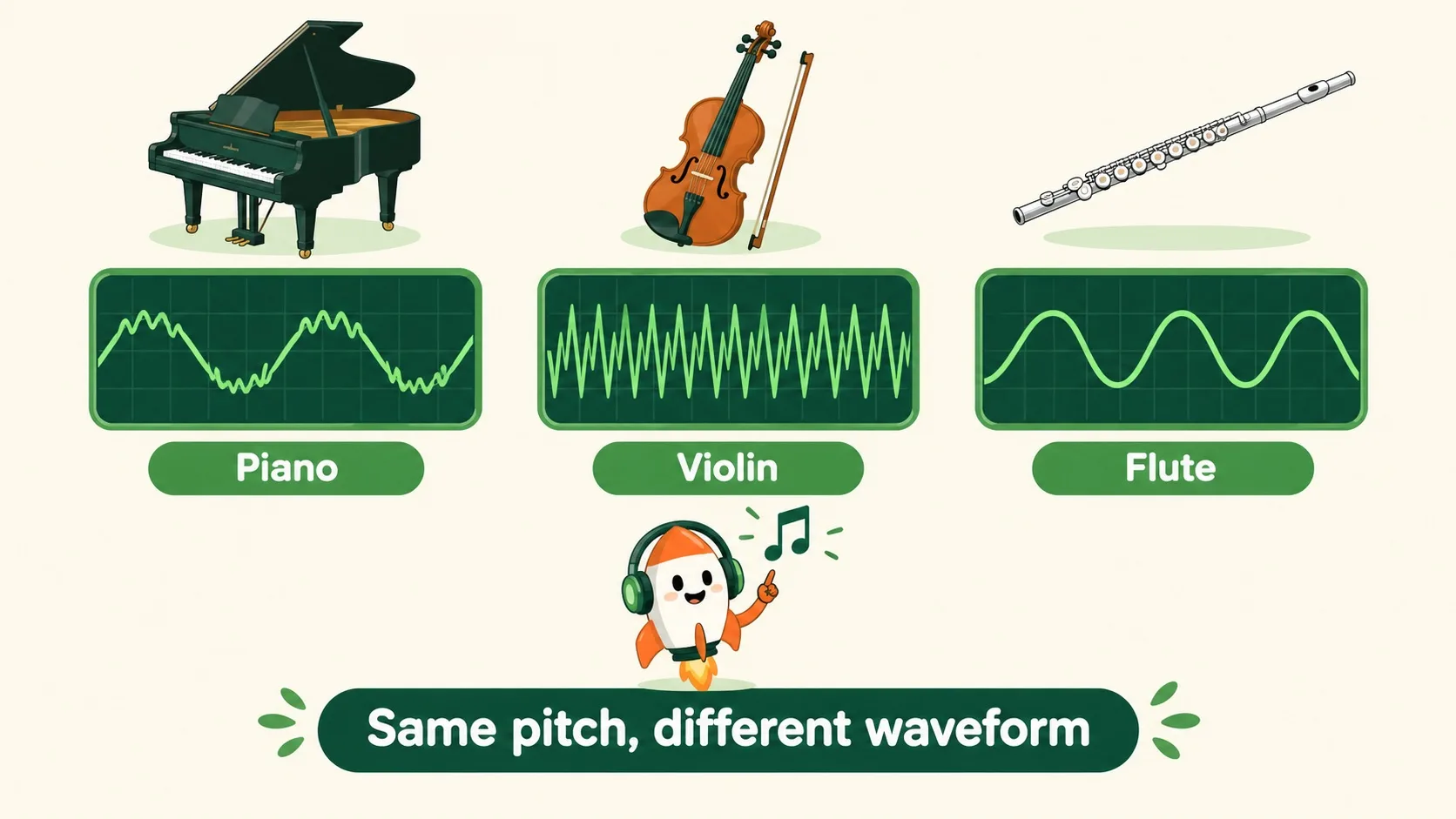
先做一个实验:让钢琴、小提琴、长笛演奏同一个音。Try an experiment: have a piano, a violin and a flute play one and the same note.
音高由振动的快慢(频率)决定——三件乐器的频率相同,所以听起来是“同一个音”。但乐器很少只发一个纯净的振动:它们同时叠着许多“泛音”(基音的高倍频)。基音决定音高,泛音配比决定波形细节,波形细节就是音色。频率相同、波形不同,一眼就能看出是三件乐器。Pitch comes from how fast the air vibrates (frequency) — all three share it, so you hear “the same note”. But an instrument rarely makes one pure vibration: it stacks many “overtones” (higher multiples of the base note). The base sets the pitch; the overtone recipe shapes the waveform — and the waveform is the timbre. Same frequency, different shapes: three instruments at a glance.
波形不一样,差别到底藏在哪?把它拆开看看。Where exactly does the difference hide? Let's take a sound apart.
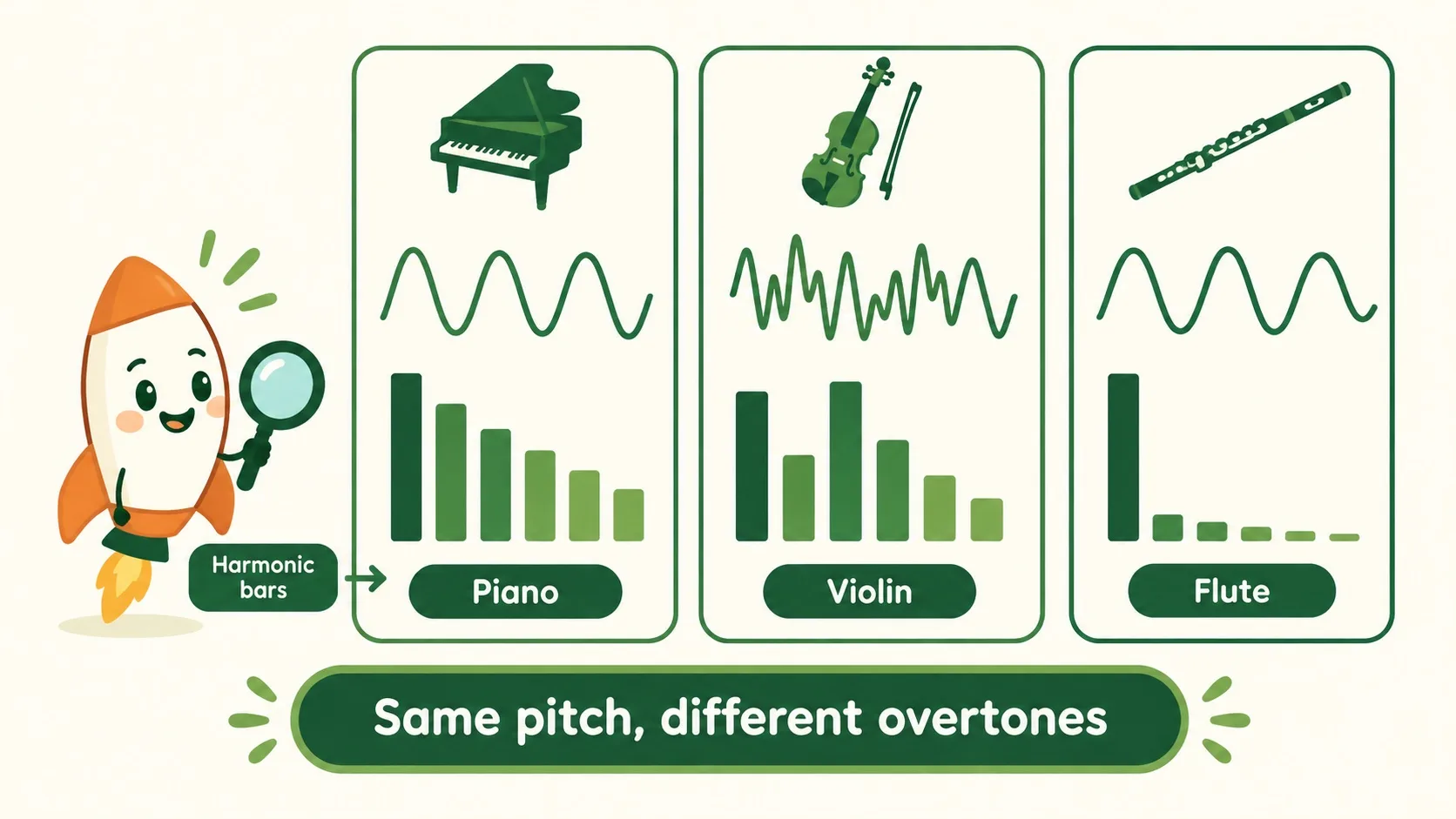
第 2 步:泛音配比,就是音色配方Step 2: The overtone recipe is the timbre
把声音拆成一根根“泛音柱”:钢琴敲弦,泛音一层层平滑减弱;吉他拨弦,高号泛音又多又亮;长笛吹气,几乎只剩基音,最接近纯音。同一首歌里换一件乐器,音高不变,配方全变——耳朵听的就是这份配方。同一个人说话、唱歌、打电话,配方也基本不变,所以“声纹”能认出你。Split a sound into “harmonic bars”: a struck piano fades its overtones smoothly; a plucked guitar keeps bright high overtones; a blown flute leaves almost only the base note, closest to a pure tone. Swap instruments on the same song and the pitch stays while the recipe changes — that recipe is what your ear tastes. A person's recipe barely changes whether speaking, singing or phoning — which is why a “voiceprint” can recognise you.
记住一份“配方”,能拿它做什么?Once you can remember a recipe, what can you do with it?
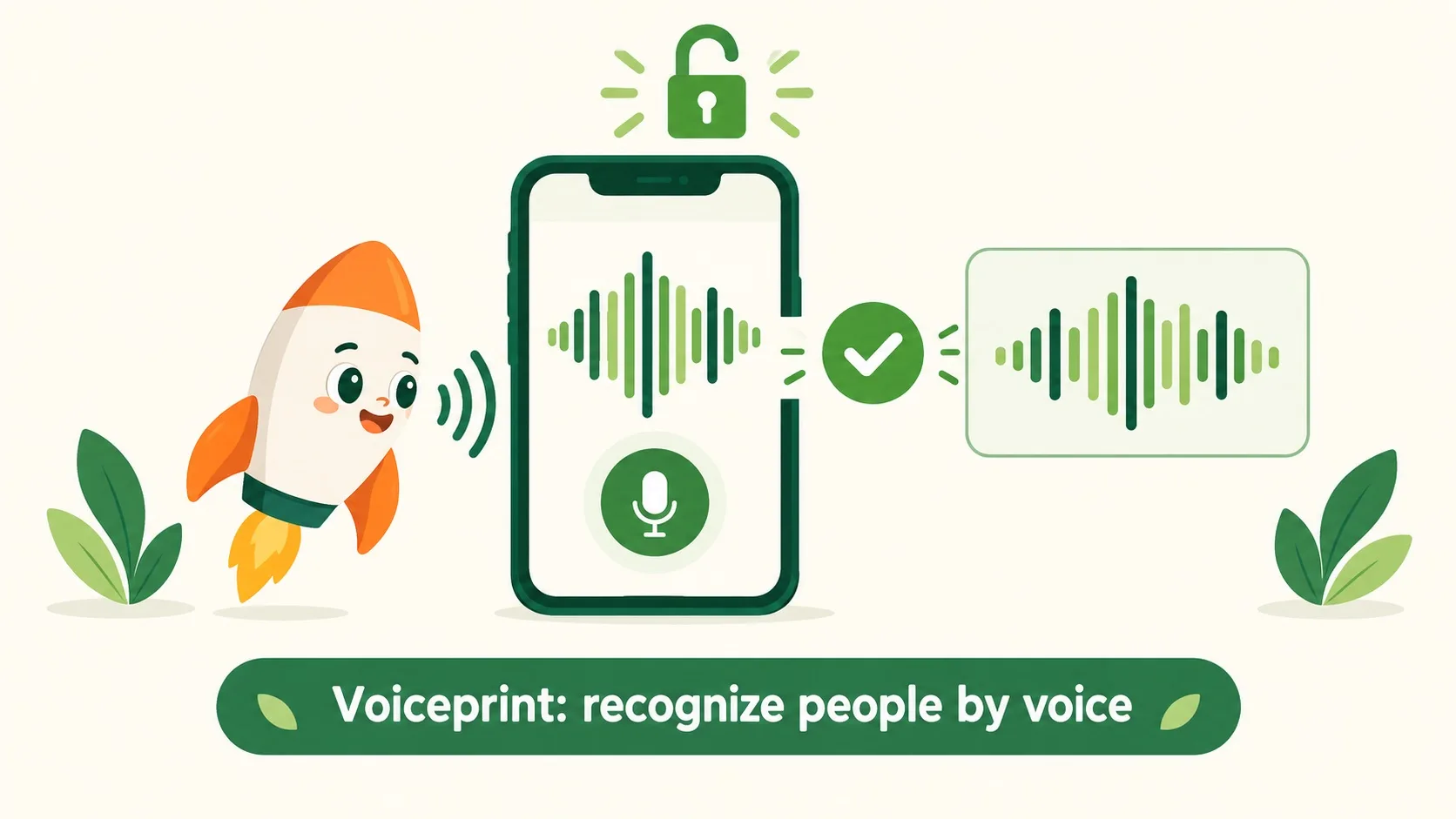
第 3 步:听声辨人Step 3: Recognising people by voice
手机解锁、银行核身、警方鉴声,都靠声纹(voiceprint):把你说的话画成波形,和存档的“泛音指纹”比对。音高可以模仿,泛音结构却极难伪造。同样的道理也在乐队里:合奏时你能听出哪把是大提琴、自己的乐器有没有跑调——靠的都是音色。Phone unlock, bank verification and forensic audio all lean on the voiceprint: your speech is drawn as a waveform and matched against the stored “overtone fingerprint”. Pitch is easy to imitate, but the overtone structure is very hard to fake. The same trick works in an orchestra: you can pick out the cello, or hear that your own instrument drifted — all by timbre.
🎮 你来当辨音师(30 秒)🎮 Your turn: sound detective (30 seconds)
道理讲完了。先切换乐器,对照波形与泛音柱、听一听;再完成 4 关辨音挑战。Theory done. Switch instruments, compare waveforms and harmonic bars, and listen; then clear 4 recognition challenges.
一句话记住它:音色 = 同一个音高上的“泛音配方”。基音定音高,泛音定身份;波形不同,一听就知道是谁。Remember it in one line: timbre is the overtone recipe at a given pitch. The base note sets the pitch, the overtones set the identity — different waveform, instantly known.
音高看频率(振动快慢),音色看泛音配比(波形细节)Pitch reads frequency; timbre reads the overtone recipe (waveform detail)钢琴泛音平滑递减、吉他泛音明亮锋利、长笛近乎纯音Piano fades smoothly, guitar stays bright and sharp, flute is nearly pure声纹识别 = 给声音录下“泛音指纹”,比密码难伪造A voiceprint records your overtone fingerprint — harder to fake than a password
内容参考 OpenStax 等公开教材,多来源核对 · AI 生成、人工审核 · 发现错误欢迎指正,帮这片叶子长得更好。Based on OpenStax and other open textbooks, cross-checked across sources · AI-generated, human-reviewed · Spotted a mistake? Tell us — help this leaf grow.
 Back to tree