💡 电功率:电器吃电有多快💡 Electric Power: How Fast Appliances Eat
上一片算了电功——电流做了多少事;这一片看它做得有多快。家里的灯泡、电视、吹风机上印着不同的瓦数,那其实是它们的「吃电速度」。Last leaf we counted electric work — how much the current got done. This leaf watches how fast it gets done. The watts printed on bulbs, TVs and hair dryers are really their “eating speed” for electricity.
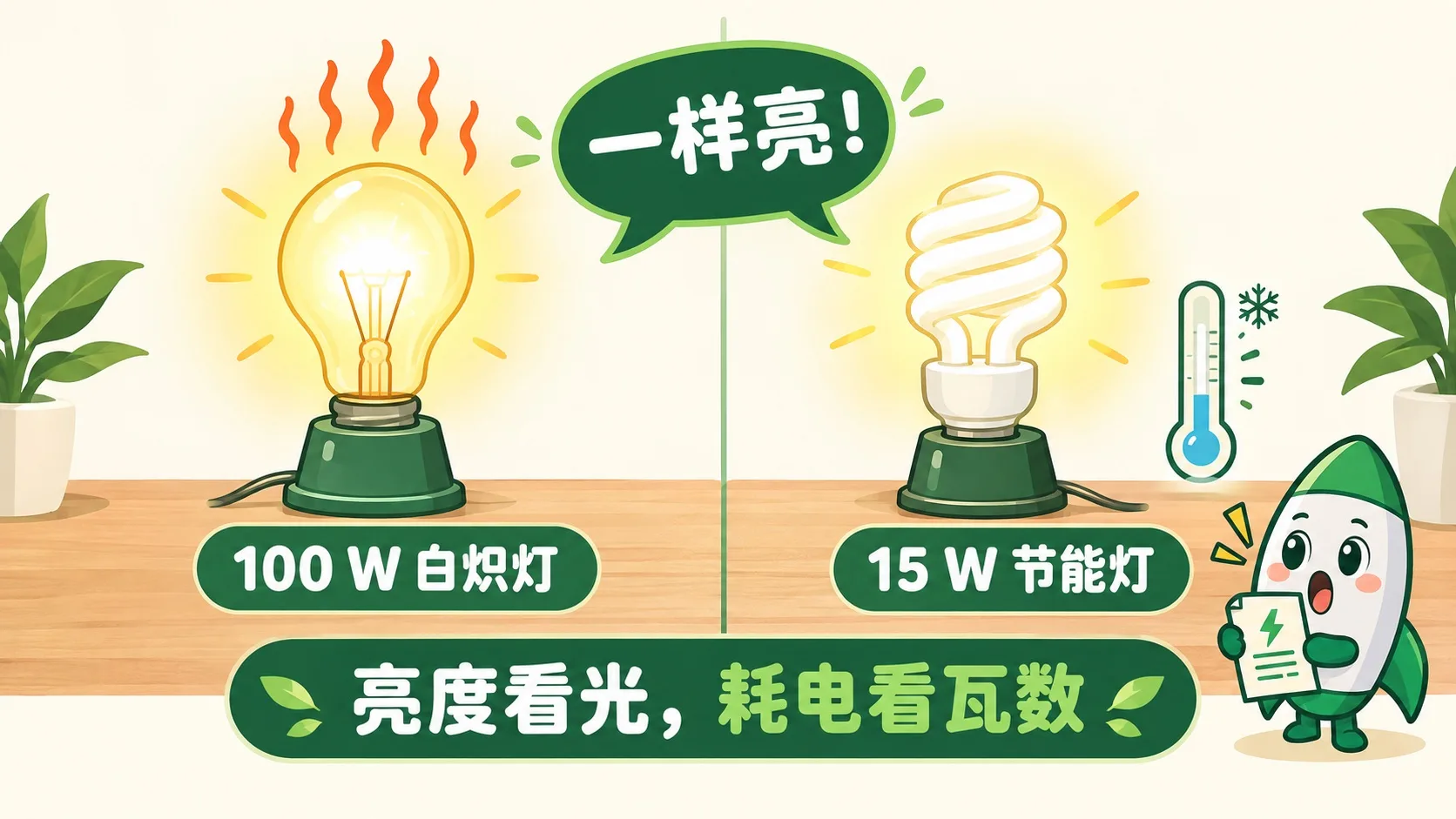
先看一个奇怪的对比:两盏灯一样亮,瓦数却差得远。A curious comparison first: two lamps glowing equally bright, yet their watts are far apart.
100 W 的白炽灯和 15 W 的节能灯,亮起来几乎一样。但瓦数不是亮度,而是「吃电速度」:白炽灯把大部分电能变成了热(所以烫手),节能灯几乎都变成了光。同样亮一小时,节能灯只用约六分之一的电。A 100 W incandescent and a 15 W energy-saving lamp glow about equally bright. But watts are not brightness — they are eating speed: the incandescent turns most of its electricity into heat (too hot to touch), while the energy-saver turns almost all of it into light. For the same hour of light, the saver uses about one sixth of the energy.
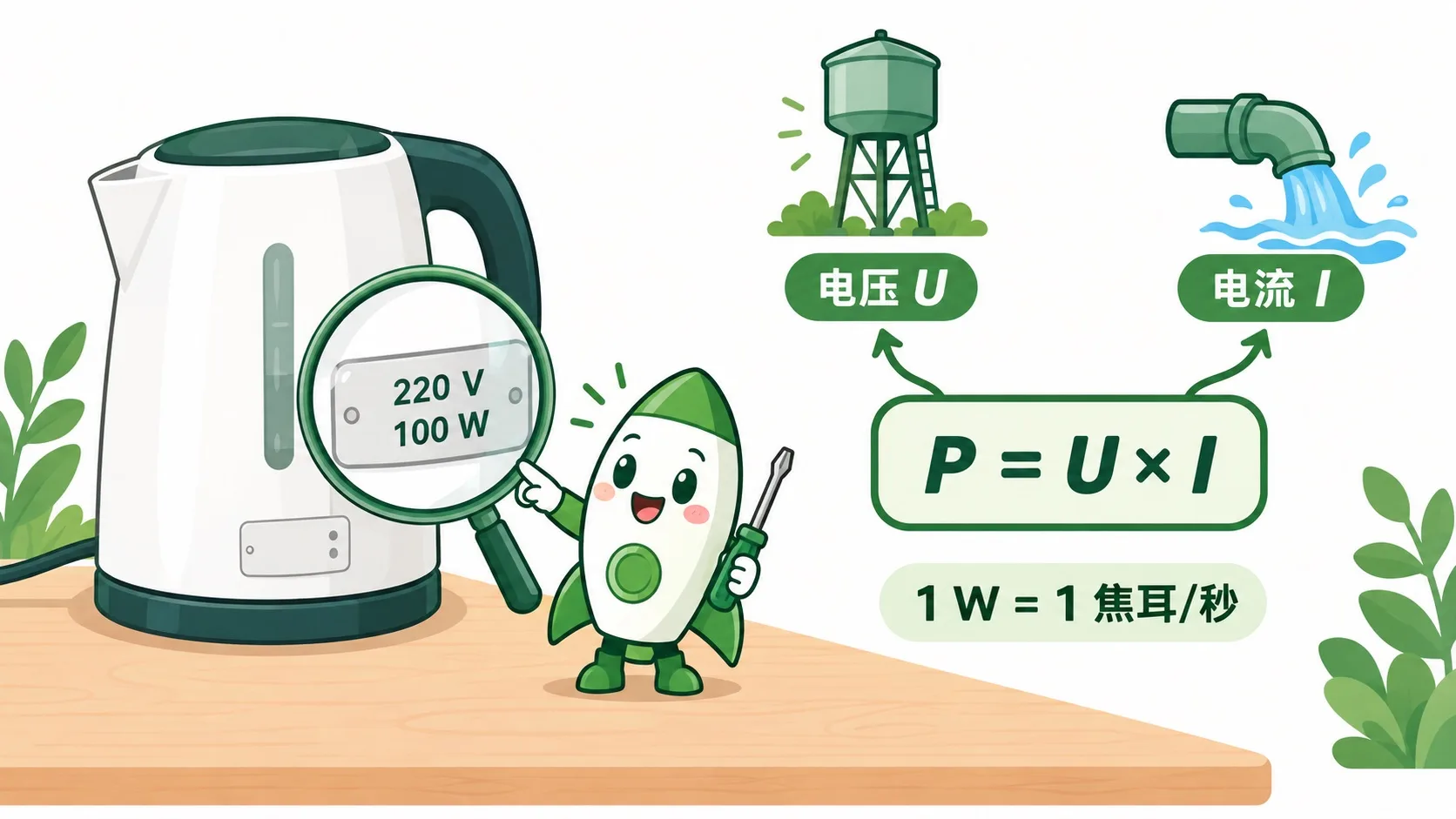
那瓦数到底在说什么?答案藏在电器的铭牌上。So what do watts actually say? The answer hides on the appliance's nameplate.
第 2 步:瓦数 = 电压 × 电流Step 2: Watts = voltage × current
P = U × I:电压 U 像「水压」,电流 I 像「每秒流过的水量」,乘起来就是每秒送出的能量,也就是功率。1 W = 1 J/s。铭牌上的「220 V 100 W」意思是:接 220 V 电压时,它每秒吃掉 100 J 电能。P = U × I: voltage U is like water pressure, current I is like the water flowing each second; multiply them and you get the energy delivered per second — the power. 1 W = 1 J/s. A nameplate reading “220 V 100 W” means: at 220 V it eats 100 J of electricity every second.
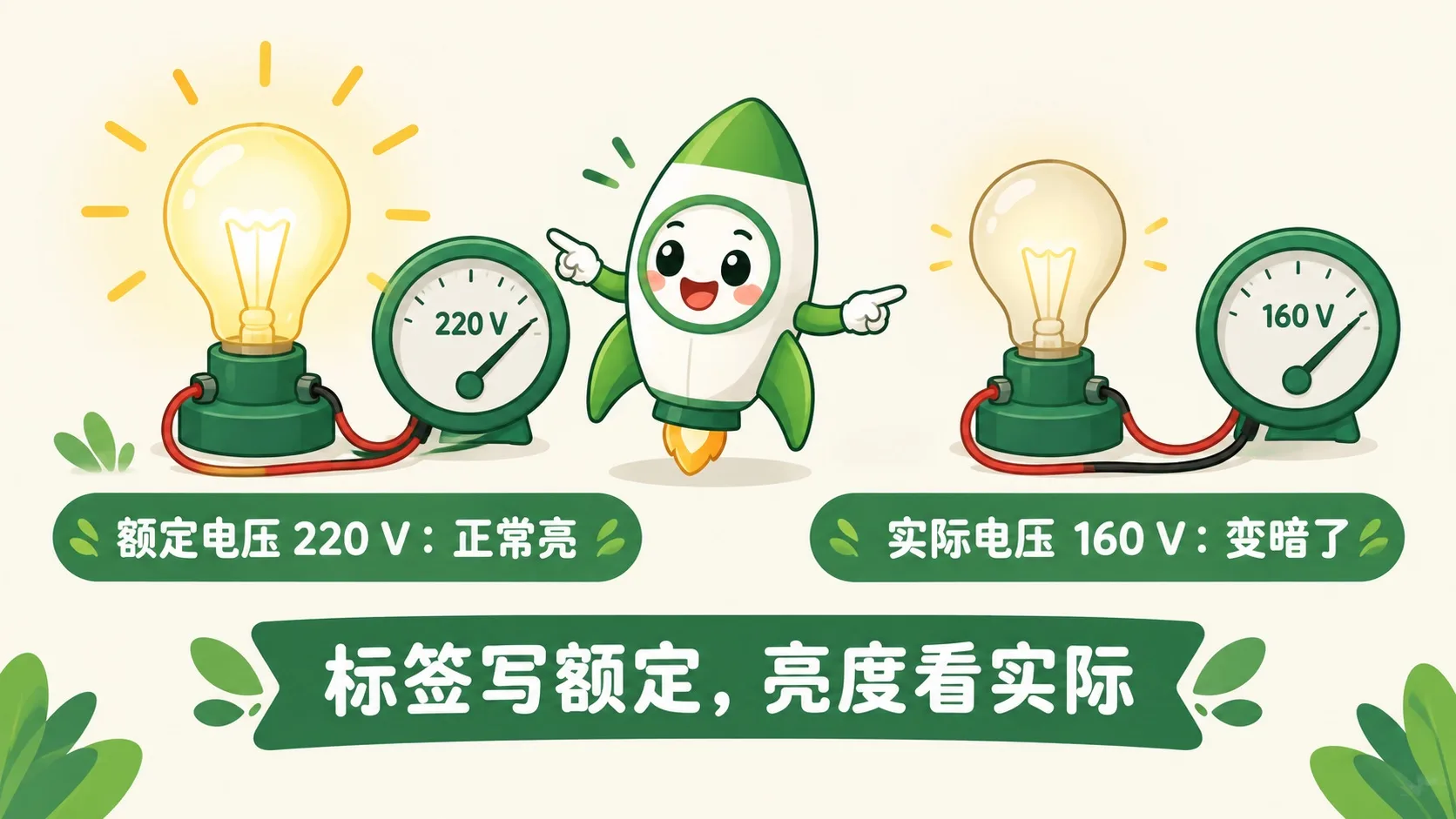
不过铭牌上的数字有个前提——电压得正好是 220 V。But the number on the label comes with a condition — the voltage must be exactly 220 V.
第 3 步:额定是承诺,实际看电压Step 3: Rated is a promise; actual depends on voltage
铭牌上的瓦数是「额定功率」——设计电压下的承诺。实际电压偏低(比如 160 V),实际功率就变小,灯也变暗。所以同一盏灯,傍晚电压低时会发暗。大功率电器(空调、热水器)电流大,要用更粗的铜线——细线扛不住,原因就在下一片。The watts on the label are the rated power — a promise made for the design voltage. If the actual voltage sags (say to 160 V), the actual power drops and the bulb dims. That is why the same lamp can look dimmer in the evening. High-power appliances (AC, water heater) draw big currents and need thicker copper wires — thin wires cannot take it, and the next leaf reveals why.
🎮 你来当电器实验员(30 秒)🎮 Your turn: run the power lab (30 seconds)
道理讲完了。拖动电压、电流滑块,把瓦数调到电视和台灯的量级;再完成 4 道挑战。Theory done. Drag the voltage and current sliders to reach TV and desk-lamp territory — then take on the 4 challenges.
一句话记住它:瓦数 = 电器每秒吃掉的电能(P = U × I)——不是亮度,是吃电速度。Remember it in one line: watts are the energy an appliance eats every second (P = U × I) — not brightness, but eating speed.
P = U × I:电压或电流变大,瓦数都变大;1 W = 1 J/sP = U × I: raise either voltage or current and watts go up; 1 W = 1 J/s同样亮度,瓦数小 = 省电:15 W 节能灯 ≈ 100 W 白炽灯的亮Same brightness, fewer watts = less energy: a 15 W saver matches a 100 W incandescent铭牌写的是额定功率(设计电压下的承诺),实际功率随实际电压变Labels show rated power (a promise at the design voltage); actual power follows the actual voltage
内容参考 OpenStax 等公开教材,多来源核对 · AI 生成、人工审核 · 发现错误欢迎指正,帮这片叶子长得更好。Based on OpenStax and other open textbooks, cross-checked across sources · AI-generated, human-reviewed · Spotted a mistake? Tell us — help this leaf grow.
 Back to tree