🔌 电功:电能干了多少活🔌 Electric Work: How Much Did the Energy Do?
上一片把电路铺好了:并联让电流各走各的。这一片来算账——电流流过电器时一直在干活:发热、转动、发光。到底干了多少活?电表又是怎么把它记下来的?Last leaf we wired the circuit: parallel paths let the current split. Now let's settle the bill — as current flows through a device it keeps working: heating, spinning, glowing. How much work does it do? And how does the meter keep score?
第 1 步:电功 W = UItStep 1: Electric work W = UIt
先给“干活多少”一个算式。First, a formula for “how much work”.
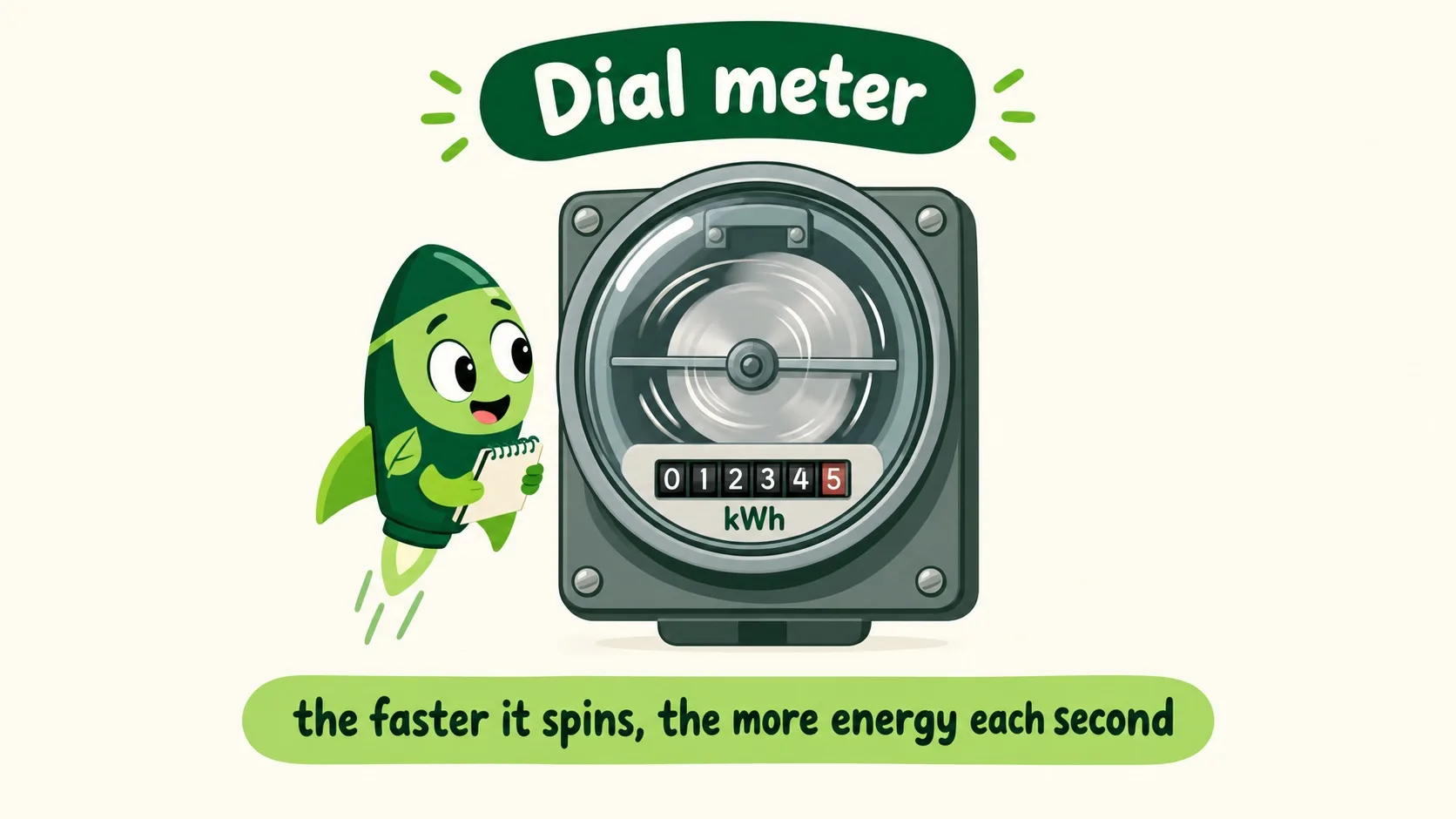
电流做的功叫电功:W = U × I × t(电压 × 电流 × 时间),它正好等于消耗的电能。家里的转盘电表就是一台“计功器”:用电越快(功率越大),铝盘转得越快;电器一停,盘也停。读数窗里的数字,就是把每一秒的消耗一点点攒起来。The work done by current is called electric work: W = U × I × t (voltage × current × time) — exactly the electric energy consumed. The dial meter on your wall is a work-counter: the faster energy is used (the higher the power), the faster the aluminum disc spins; switch everything off and it stops. The digit window simply adds up every second of consumption.
可电表读数上的“度”,到底是什么单位?But what exactly is a “kWh” on the meter?
第 2 步:1 度电 = 1 kWhStep 2: 1 kWh, the unit of the bill
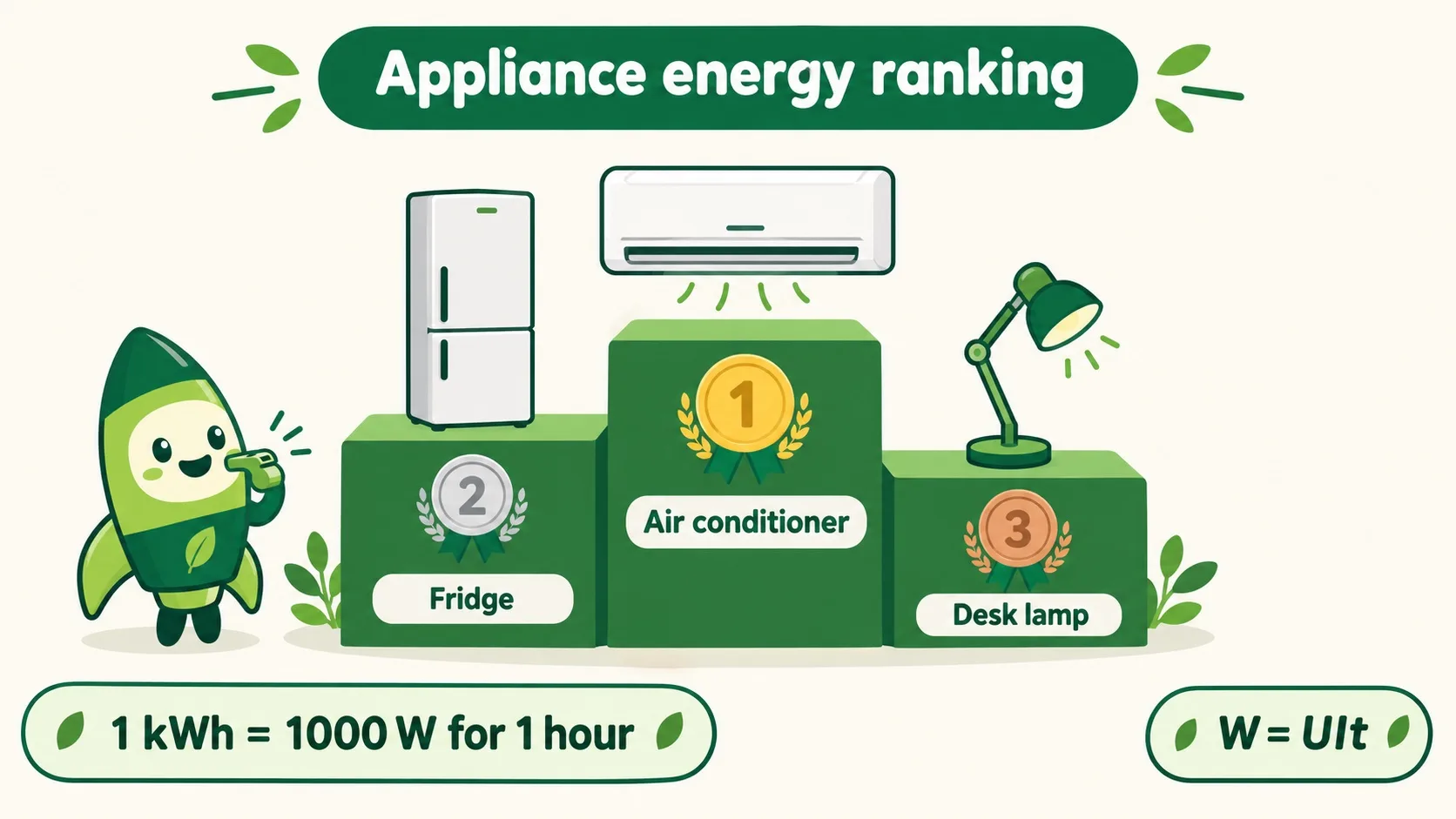
1 度电 = 1 kWh = 1000 瓦的电器工作 1 小时。同样 1 度电,给台灯(大约 10 瓦)能点 100 小时,给空调(大约 1000 瓦)只够开 1 小时——功率越大,干活越快,耗电也越快。所以省电有两个旋钮:换功率更小的电器,或者缩短使用时间。One kWh = a 1000 W appliance running for 1 hour. The same 1 kWh keeps a desk lamp (about 10 W) glowing for 100 hours, but an air conditioner (about 1000 W) drinks it in 1 hour — higher power means faster work and faster drain. So saving energy has two knobs: use lower-power appliances, or use them for less time.
那每月一张的电费单,数字是怎么来的?So where do the numbers on the monthly bill come from?
第 3 步:看懂电费单Step 3: Read the bill
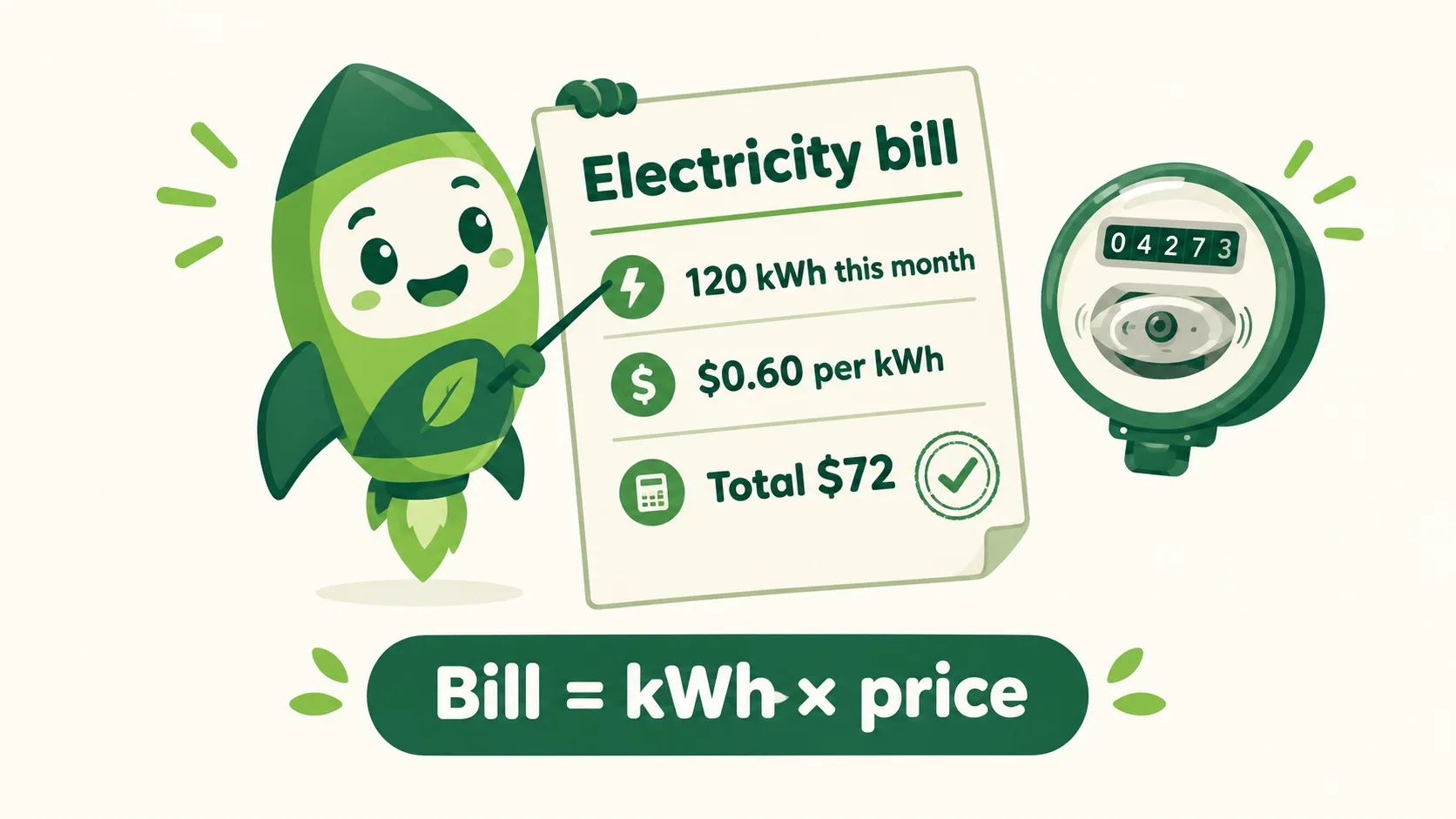
电费单只做一道乘法:电费 = 度数 × 单价。比如本月用了 120 度、单价 0.6 元/度,应付就是 72 元。看单子先找两行:本期用电量(度)和单价(元/度)。想少交钱?减少度数——也就是少开大功率电器、少开长时间。The bill is one multiplication: cost = kWh × price. Use 120 kWh in a month at 0.6 per kWh, and you owe 72. When reading a bill, find two lines first: this period's kWh, and the price per kWh. Want to pay less? Cut the kWh — fewer high-power appliances, shorter hours.
🎮 你来当电力管家(30 秒)🎮 Your turn: run the meter (30 seconds)
道理讲完了。先拖电压、电流、时间三个滑块,看转盘转速和电费怎么变;再完成 4 张计算单。Theory done. Drag voltage, current and time — watch the disc spin and the bill climb; then clear 4 bill tickets.
一句话记住它:电功 W = UIt,就是电流消耗的电能;1 度电 = 1 kWh = 1000 瓦用 1 小时;电费 = 度数 × 单价。Remember it in one line: electric work W = UIt is the energy the current uses; 1 kWh = 1000 W for 1 hour; bill = kWh × price.
电功 W = U × I × t(电压 × 电流 × 时间),单位是焦耳;平时用“度”W = U × I × t (voltage × current × time), measured in joules; daily life uses kWh1 度 = 1 kWh = 1000 瓦的电器用 1 小时;转盘电表数“功”1 kWh = a 1000 W appliance for 1 hour; the dial meter counts work省电两旋钮:降功率、减时间;电费 = 度数 × 单价Two saving knobs: lower power, less time; bill = kWh × price
内容参考 OpenStax 等公开教材,多来源核对 · AI 生成、人工审核 · 发现错误欢迎指正,帮这片叶子长得更好。Based on OpenStax and other open textbooks, cross-checked across sources · AI-generated, human-reviewed · Spotted a mistake? Tell us — help this leaf grow.
 Back to tree