上一片里,通才机器人读完了整座图书馆,什么都懂一点,却还不会上班。这一片看它用一小摞专项资料再练一程,变身持证上岗的专才。Last leaf, our generalist robot finished reading the whole library — it knows a bit of everything, but it still can't take a job. This leaf shows how one small stack of specialist material turns it into a certified specialist.
第 1 步:再练一程,专才上岗Step 1: One more training run, then on duty
上岗只差最后一段路——用专项数据再练一程。One short walk remains: one more training run on specialist data.
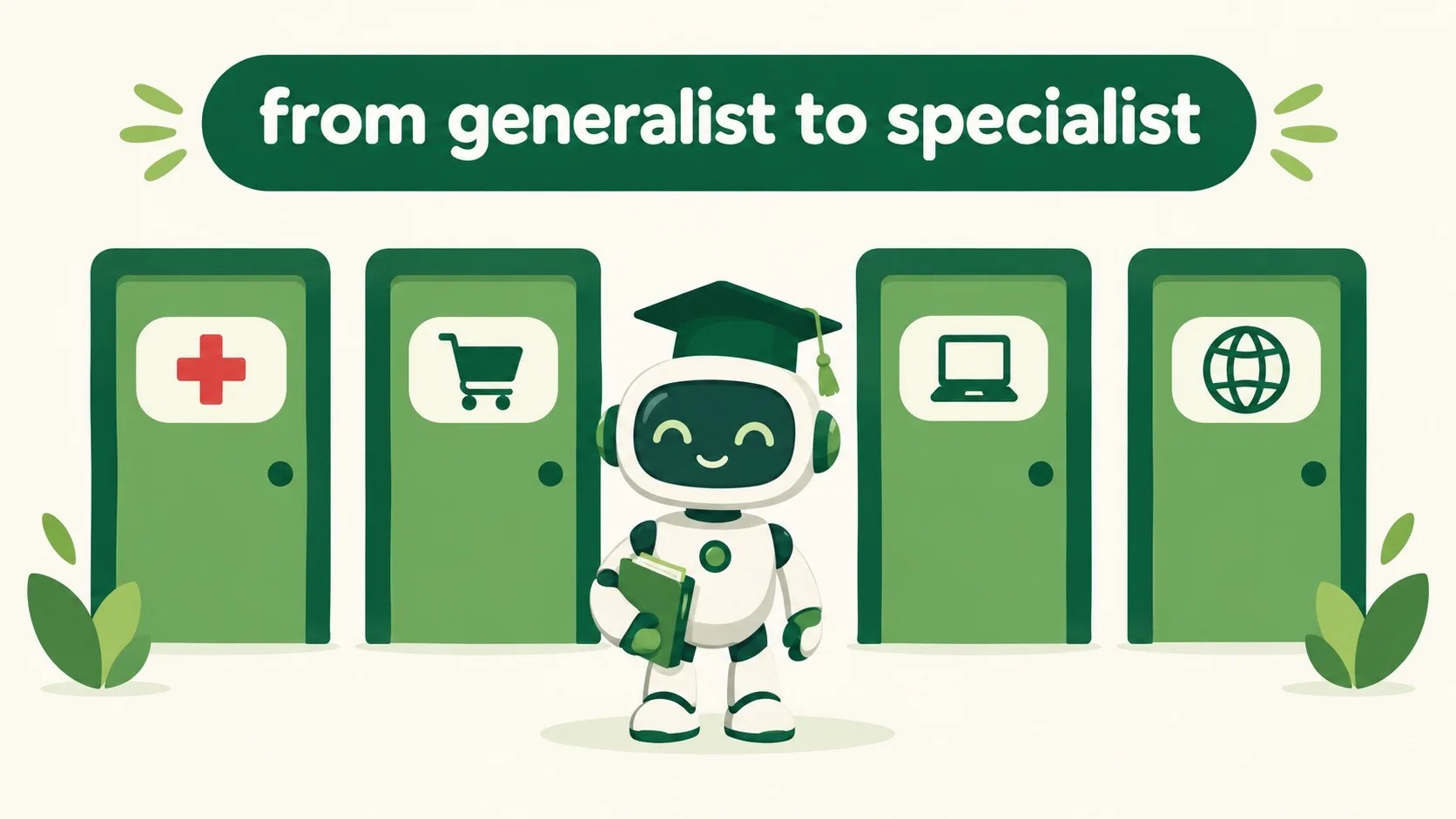
微调(Fine-Tuning):在通用底座(预训练模型)上,再加一轮专项训练。数据不用多——几千到几万条就够。就像读完图书馆的通才,上岗前拿着岗位手册做模拟演练:固定的问题、标准的话术,练出肌肉记忆。练完,它就变成会问诊、会客服、会写代码的专才。Fine-tuning: take the generalist base (a pre-trained model) and run one more training round on a specialist data set. The data is small — a few thousand to a few tens of thousands of examples. Like a library-trained generalist drilling with a job manual before day one: fixed questions, standard phrasing, until muscle memory forms. After training, the base becomes a specialist that can triage, support, and code.
听着像预训练的老套路?其实规模差了好几个量级。Sounds like pre-training again? The scales differ by orders of magnitude.
第 2 步:小册子对图书馆Step 2: A booklet vs the whole library
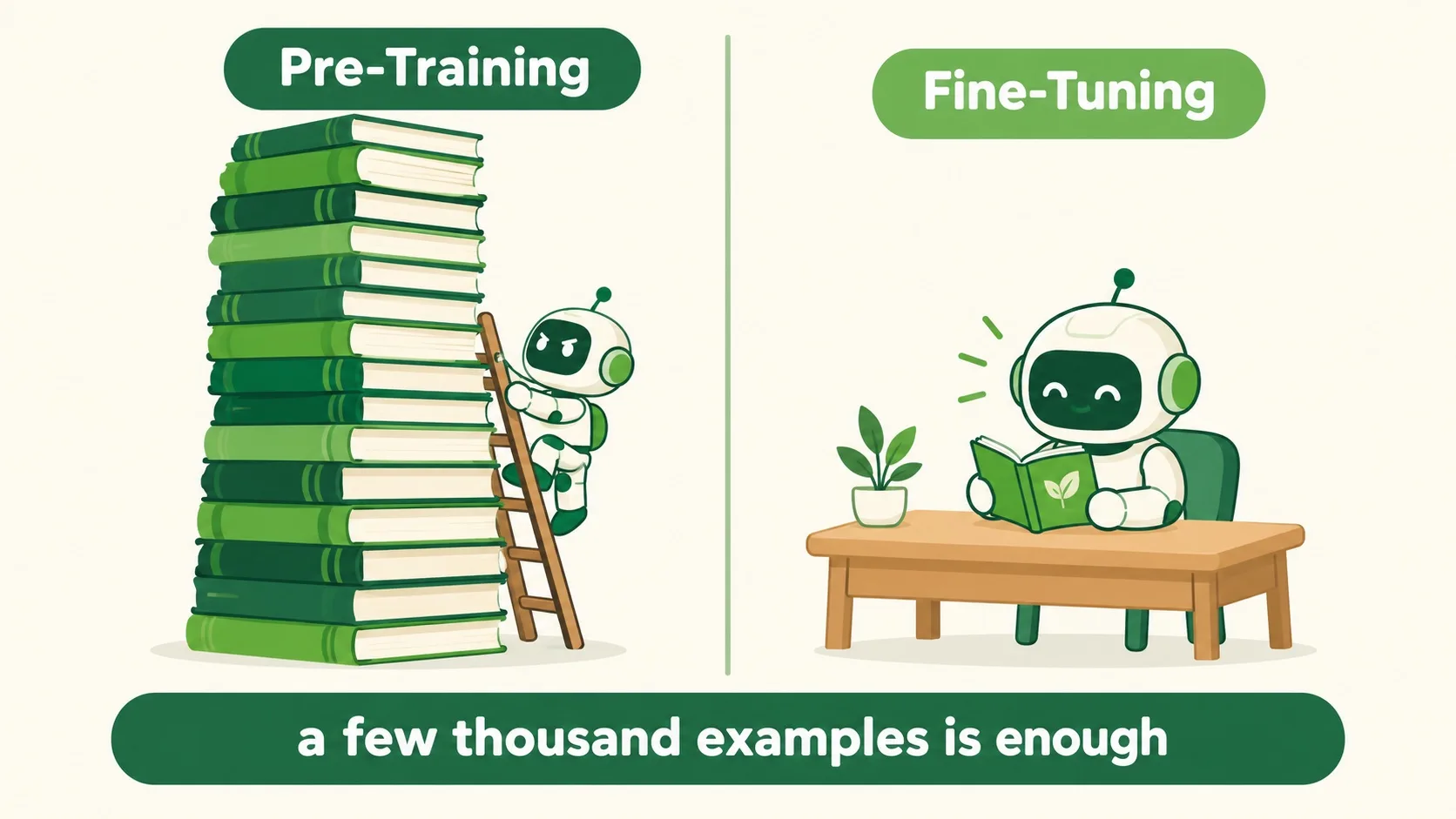
预训练读“整座图书馆”:海量文本,目标很宽——学会语言的通用规律。微调只看“一本岗位手册”:几千到几万条专项样本,目标很具体——会问诊、会客服、会写代码。预训练要成千上万张显卡跑几个月;微调常常几张卡、几天就够。数据少得多,方向也准得多。Pre-training reads “the whole library”: massive text, a wide goal — learn the general patterns of language. Fine-tuning reads “one job manual”: a few thousand targeted examples, a very specific goal — triage, support, code. Pre-training needs thousands of GPUs for months; fine-tuning often takes a few cards and days. Far less data — and a far sharper focus.
那微调具体动模型里哪些零件?主流有两种选法。So which parts of the model actually change? Two main answers.
第 3 步:两种练法:全参数与轻量Step 3: Two ways to train: full and light
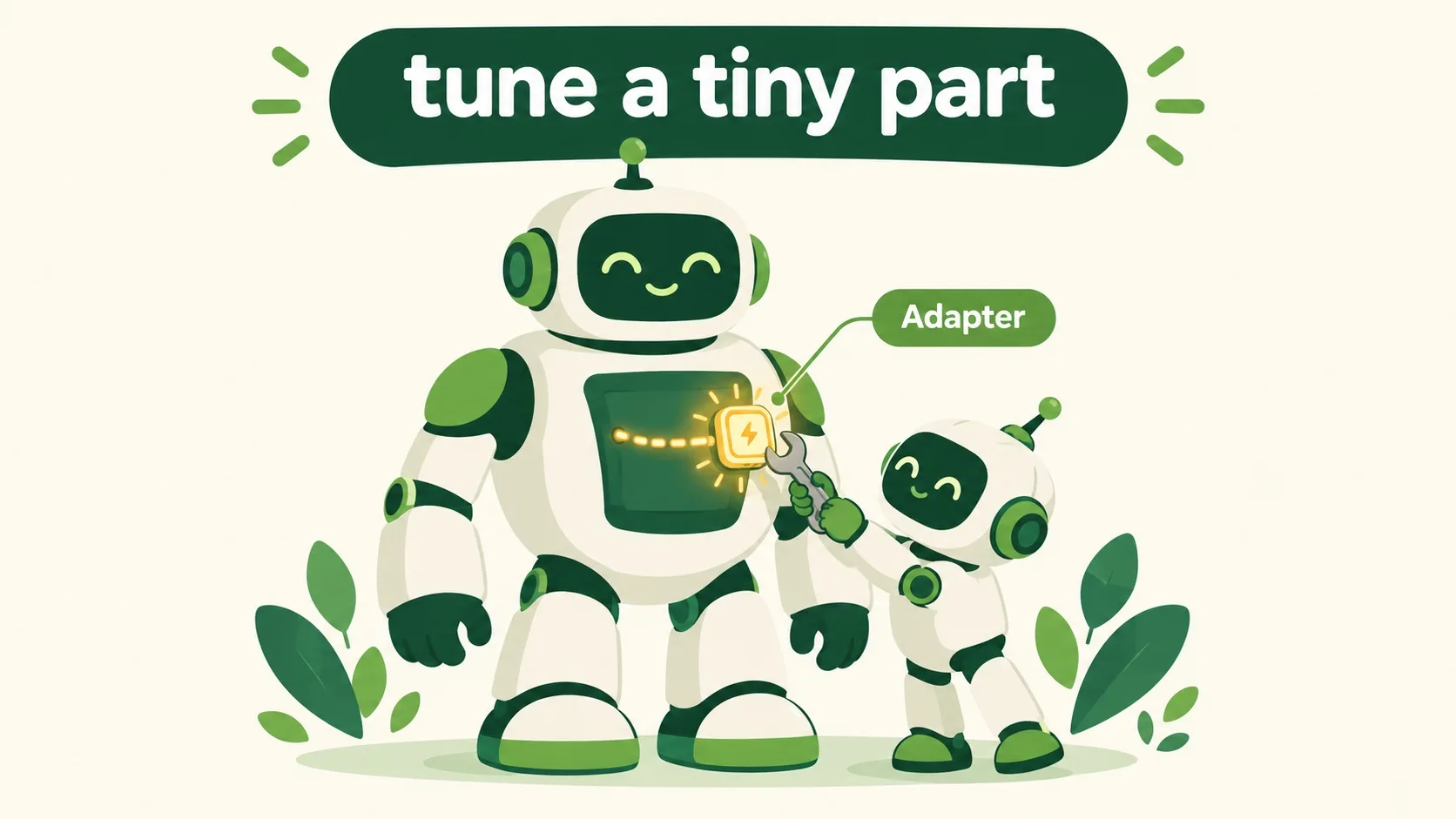
全参数微调(Full Fine-Tuning):把模型里所有参数一起重练。效果好,但像给整栋楼重新装修——贵。轻量微调(PEFT):冻住绝大部分参数,只调一小撮,或者外挂一个小适配器(Adapter;LoRA 是常见的一种)。像给大楼装个智能门锁:省钱省力,效果常常接近。工程里,轻量微调越来越主流。Full fine-tuning: retrain every parameter at once. Great results, but like renovating the whole building — expensive. Parameter-efficient fine-tuning (PEFT): freeze most parameters and tune a tiny slice, or attach a small adapter module (Adapter; LoRA is a popular kind). Like adding a smart door lock to the building: cheaper, lighter, often nearly as good. In practice, light fine-tuning is becoming the mainstream.
🎮 你来当培训主管(30 秒)🎮 Your turn: training manager (30 seconds)
道理讲完了。给通才机器人接 4 个上岗任务,替它选对「特训套餐」;也可以点「自动演示」看一遍。Theory done. Four work orders are waiting — pick the right training pack for each. Or hit “Auto demo” and watch.
一句话记住它:微调 = 用几千到几万条专项数据,给预训练通才再练一程,练成岗位专才;预算紧就只调一小撮(轻量微调)。Remember it in one line: fine-tuning trains a pre-trained generalist one more run on a few thousand specialist examples, turning it into a pro — and when budget is tight, tune only a tiny part.
微调 = 通用底座 + 专项数据再练一遍;数据只要几千到几万条Fine-tuning = a general base + one more run on specialist data; a few thousand examples is enough和预训练的区别:数据少得多、目标具体得多(会问诊 / 会客服 / 会写代码)vs pre-training: far less data and a much narrower goal (triage / support / code)全参数微调效果最好但最贵;轻量微调(PEFT、Adapter、LoRA)只调一点点,省钱省力Full fine-tuning is best but priciest; light fine-tuning (PEFT / Adapter / LoRA) tunes a tiny part — cheaper and nearly as good
内容参考 OpenStax 等公开教材,多来源核对 · AI 生成、人工审核 · 发现错误欢迎指正,帮这片叶子长得更好。Based on OpenStax and other open textbooks, cross-checked across sources · AI-generated, human-reviewed · Spotted a mistake? Tell us — help this leaf grow.
 Back to tree