上一片里,小火箭学会了读加速度。这一片看一个最干净的下落:不用推、不用拉,放手让重力干活。Last leaf, our little rocket learned to read acceleration. Now for the cleanest fall of all: no push, no pull — just let go and let gravity work.
第 1 步:两样东西,一样快Step 1: Two objects, one speed
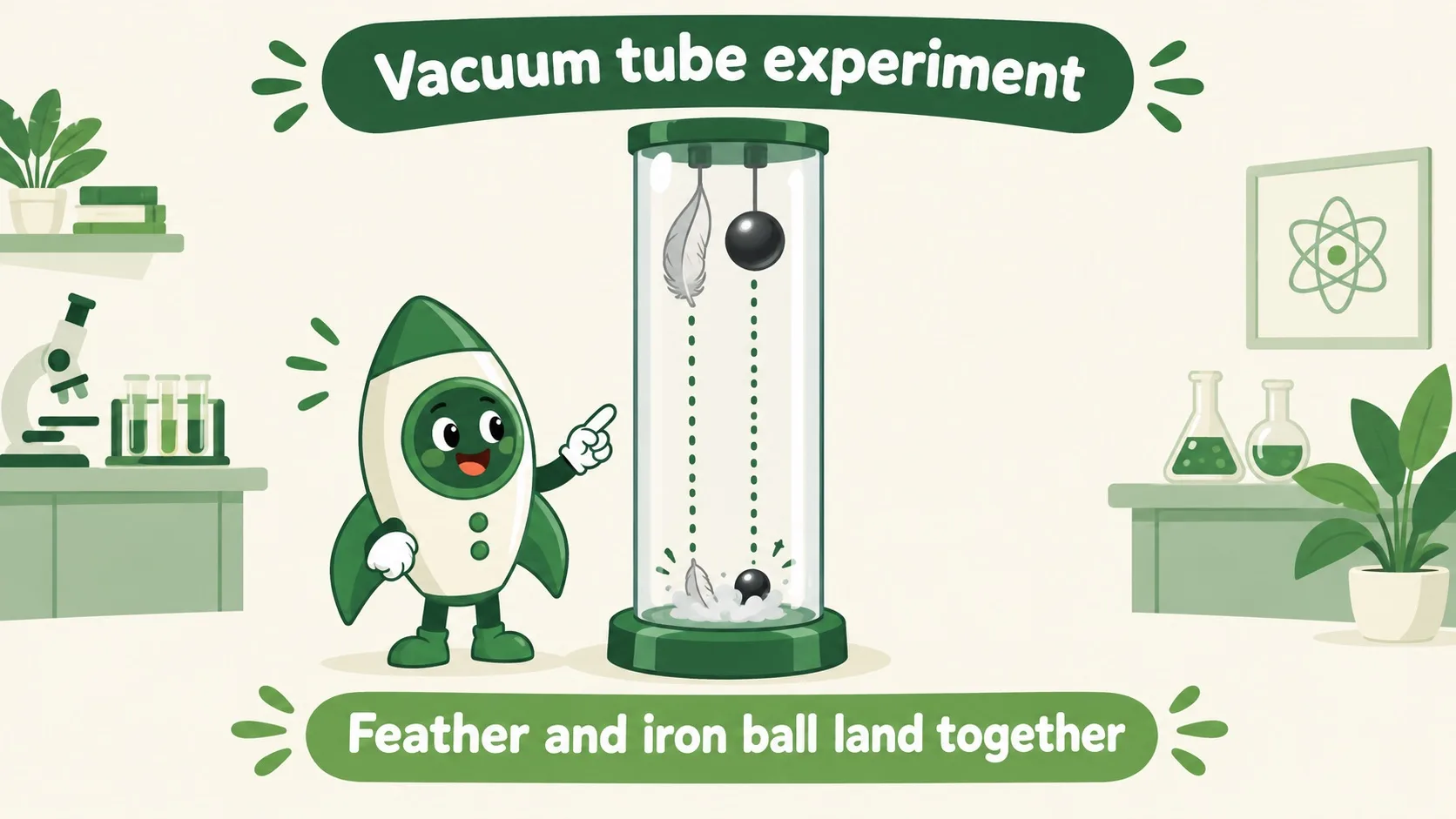
先看一个反常的现象——羽毛和铁球,居然同时落地。Start with a strange sight — a feather and an iron ball, landing together.
把小火箭实验室的玻璃管抽成真空,让羽毛和铁球并排放手。没有空气挡住羽毛,两样东西一路并排下落,碰到管底的时间一模一样。空气一退场,轻重就不再有发言权。Pump the lab tube down to a vacuum and drop a feather and an iron ball side by side. With no air to hold the feather back, they fall neck and neck and reach the bottom at exactly the same moment. Once air leaves the stage, weight has no say.
可现实里羽毛明明飘得慢,问题出在哪?But in real life a feather drifts down slowly — so what's going on?
第 2 步:是空气在捣乱Step 2: Air is the troublemaker
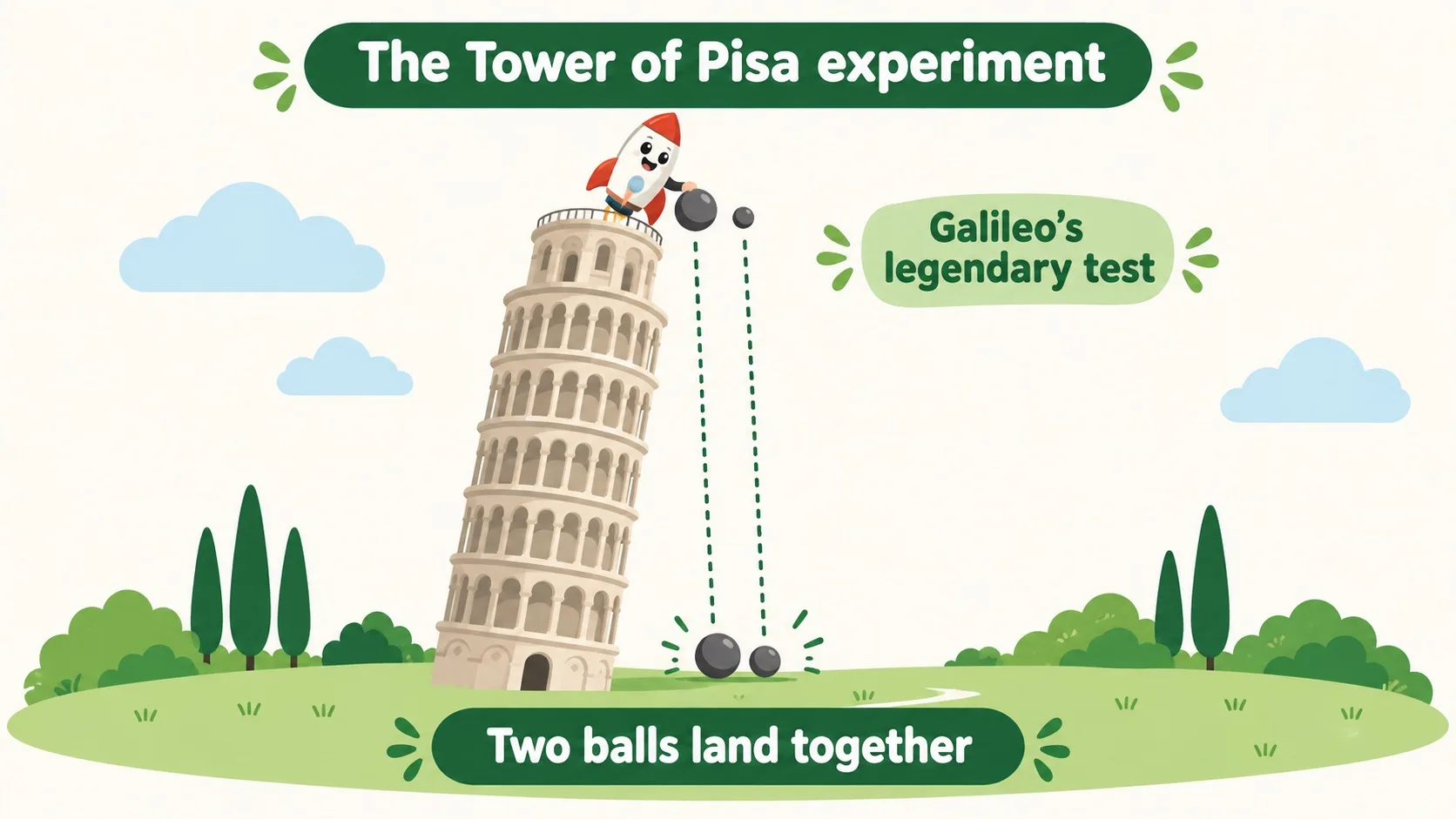
捣乱的是空气:羽毛迎风面大,被空气拖得慢慢飘;铁球几乎不受影响。传说伽利略在比萨斜塔上扔下两个轻重不同的球,它们同时落地。真空中一切物体都做自由落体——只受重力、从静止开始下落,加速度都等于 g,约 9.8 米/秒²:每过一秒,速度快 9.8 米/秒。Air is the troublemaker: the feather has a big surface for air to grab and drifts slowly, while the iron ball barely notices. Legend says Galileo dropped two balls of different weights from the Tower of Pisa and they landed together. In a vacuum every object free-falls — from rest, under gravity alone, with the same acceleration g ≈ 9.8 m/s²: every second, speed grows by 9.8 m/s.
那落地的时间,到底谁说了算?So what decides how long the fall takes?
第 3 步:高度说了算Step 3: Height decides
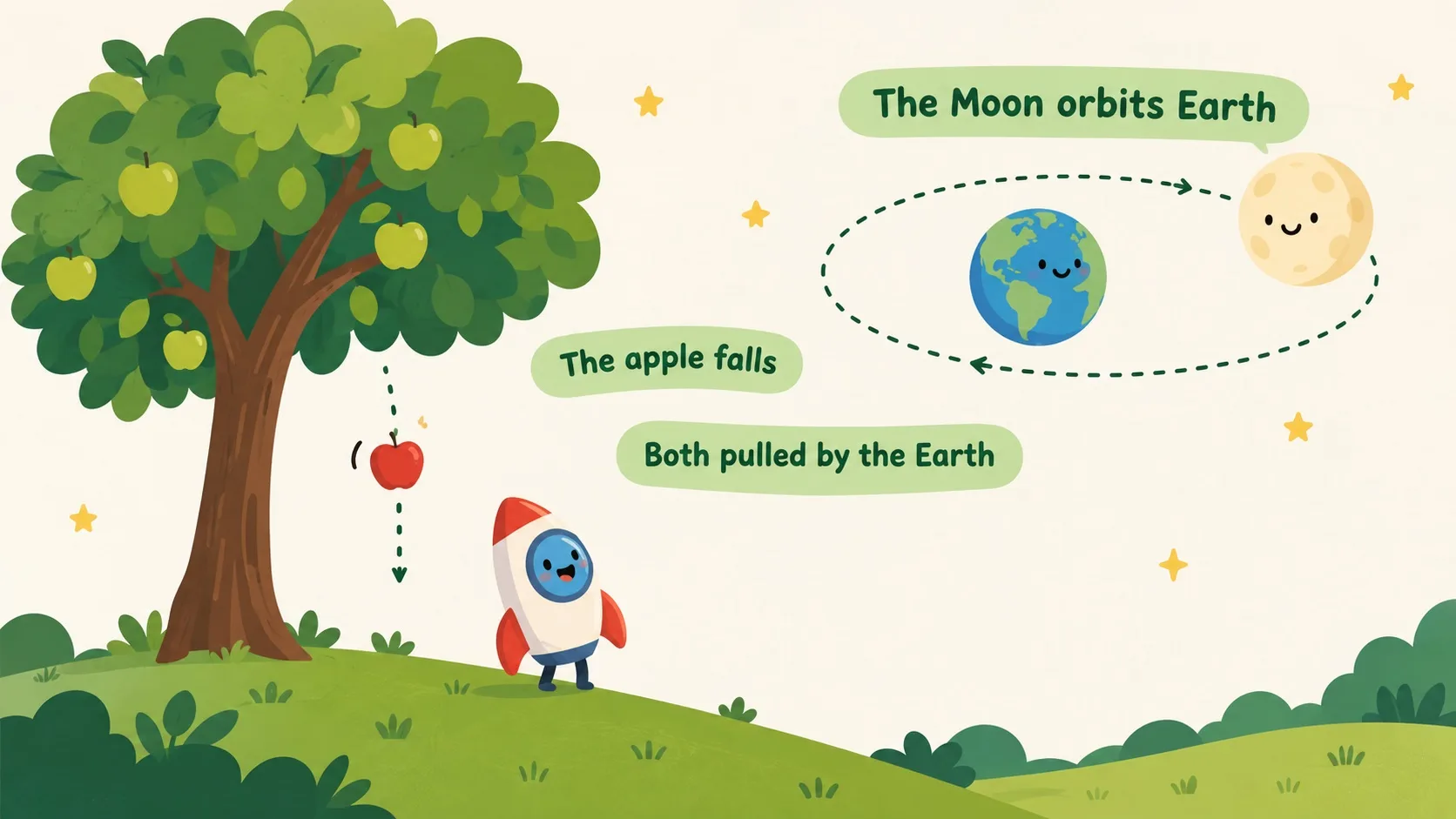
答案只有高度:t = √(2h÷g)。从 1 米落下约 0.45 秒,5 米约 1 秒,20 米约 2 秒——质量完全不出现。小火箭抬头看:树上的苹果往地上掉,天上的月亮绕着地球转,其实都被地球拉着——这是下一站《万有引力》的预告。The answer is height alone: t = √(2h/g). About 0.45 s from 1 m, about 1 s from 5 m, about 2 s from 20 m — mass never shows up. The little rocket looks up: the apple drops to the ground and the Moon circles the Earth, both pulled by the same Earth — a preview of universal gravitation, next stop.
🎮 你来当实验员(30 秒)🎮 Your turn: lab duty (30 seconds)
道理讲完了。先自己挑物体、调高度,按「同时放手」看谁先落地;再完成 4 次预测。Theory done. Pick objects and set the height, press “Drop together” to watch; then take on 4 predictions.
一句话记住它:真空中只看高度,质量不参与;空气阻力才是捣乱的那一个。Remember it in one line: in a vacuum, only height matters — mass never shows up. Air drag is the troublemaker.
自由落体 = 只受重力、从静止下落;真空中羽毛和铁球同时落地Free fall = gravity only, starting from rest; in a vacuum a feather and an iron ball land togetherg ≈ 9.8 米/秒²:每秒速度增加 9.8 米/秒g ≈ 9.8 m/s²: speed grows by 9.8 m/s every second落地时间只由高度决定:t = √(2h÷g),质量不出现Falling time depends on height alone: t = √(2h/g) — mass never appears
内容参考 OpenStax 等公开教材,多来源核对 · AI 生成、人工审核 · 发现错误欢迎指正,帮这片叶子长得更好。Based on OpenStax and other open textbooks, cross-checked across sources · AI-generated, human-reviewed · Spotted a mistake? Tell us — help this leaf grow.
 Back to tree