🏭 基因表达:DNA 指令变蛋白质的流水线🏭 Gene Expression: the DNA-to-protein assembly line
细胞能呼吸、能干活,靠的是一群叫蛋白质的“工人”。可 DNA 只是一本配方书——配方怎么变成工人?这一片跟 🦠 小细胞进工厂,看两道工序、一盏开关。Cells breathe and work thanks to a crew of “workers” called proteins. But DNA is only a recipe book — how does a recipe become a worker? Follow 🦠 Little Cell into the factory: two workstations and one switchboard.
第 1 步:转录——说明书不外借,抄一份带走Step 1: Transcription — the manual never leaves; a copy does
流水线的第一站,发生在一个特别的房间里。The first station sits in a very special room.
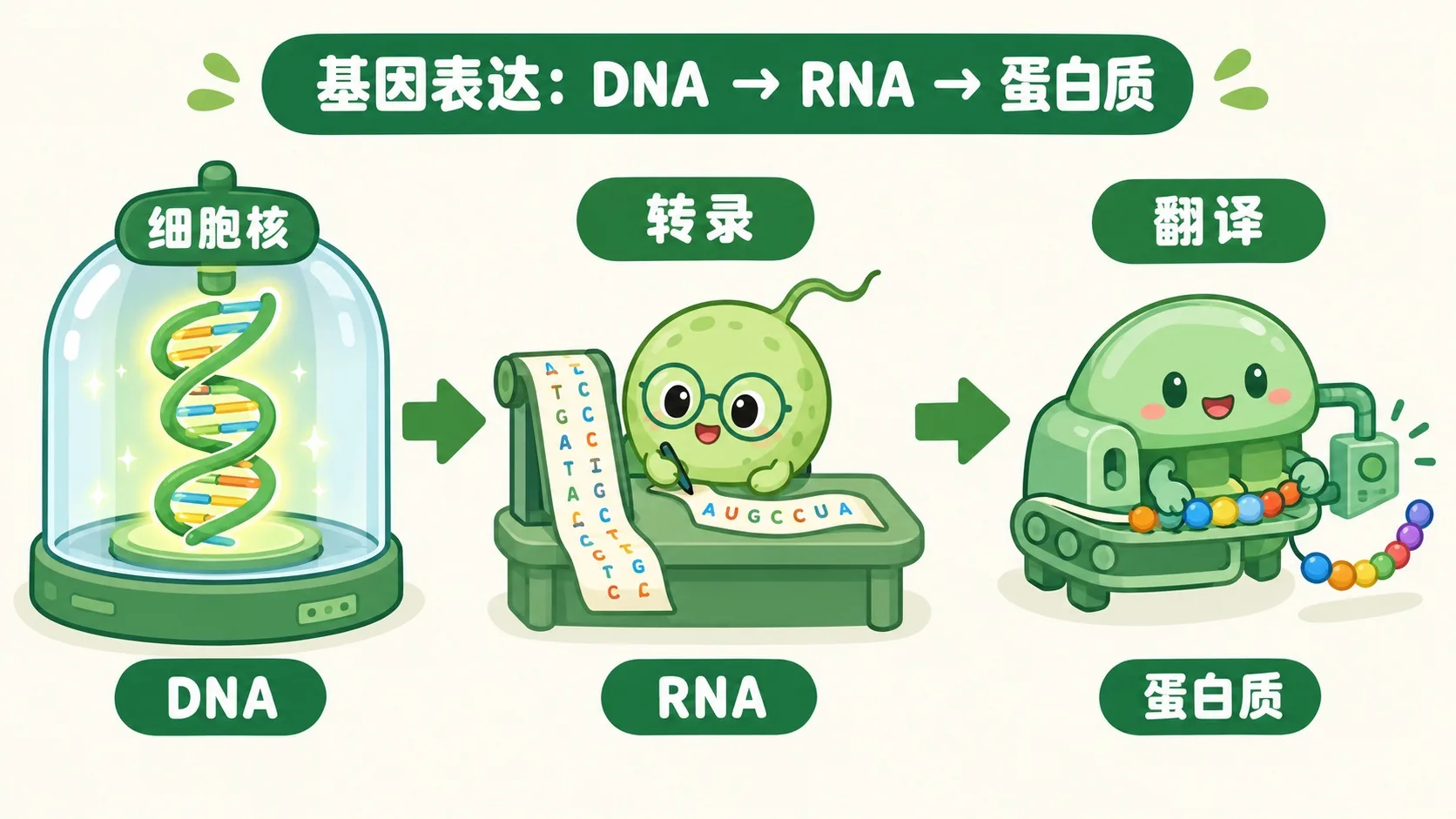
DNA 住在细胞核里,是镇馆之宝,不能出门干活。抄写员把需要的段落,抄到一张轻便的纸条上。这张纸条叫 RNA(核糖核酸),是带 U 字母的临时抄本。这一步叫转录:DNA → RNA。抄完,纸条从核孔递到车间。DNA lives in the nucleus — the crown jewel, never sent out to work. A scribe copies the needed passage onto a light paper strip. That strip is RNA, a temporary copy written with U instead of T. This step is transcription: DNA → RNA. Done, the strip slips out through a nuclear pore.
纸条递出来了。可上面写的还是“字母”,谁看得懂?The strip is out. But it is still written in “letters” — who can read it?
第 2 步:翻译——三个字母一个词,拼出氨基酸链Step 2: Translation — three letters a word, building the chain
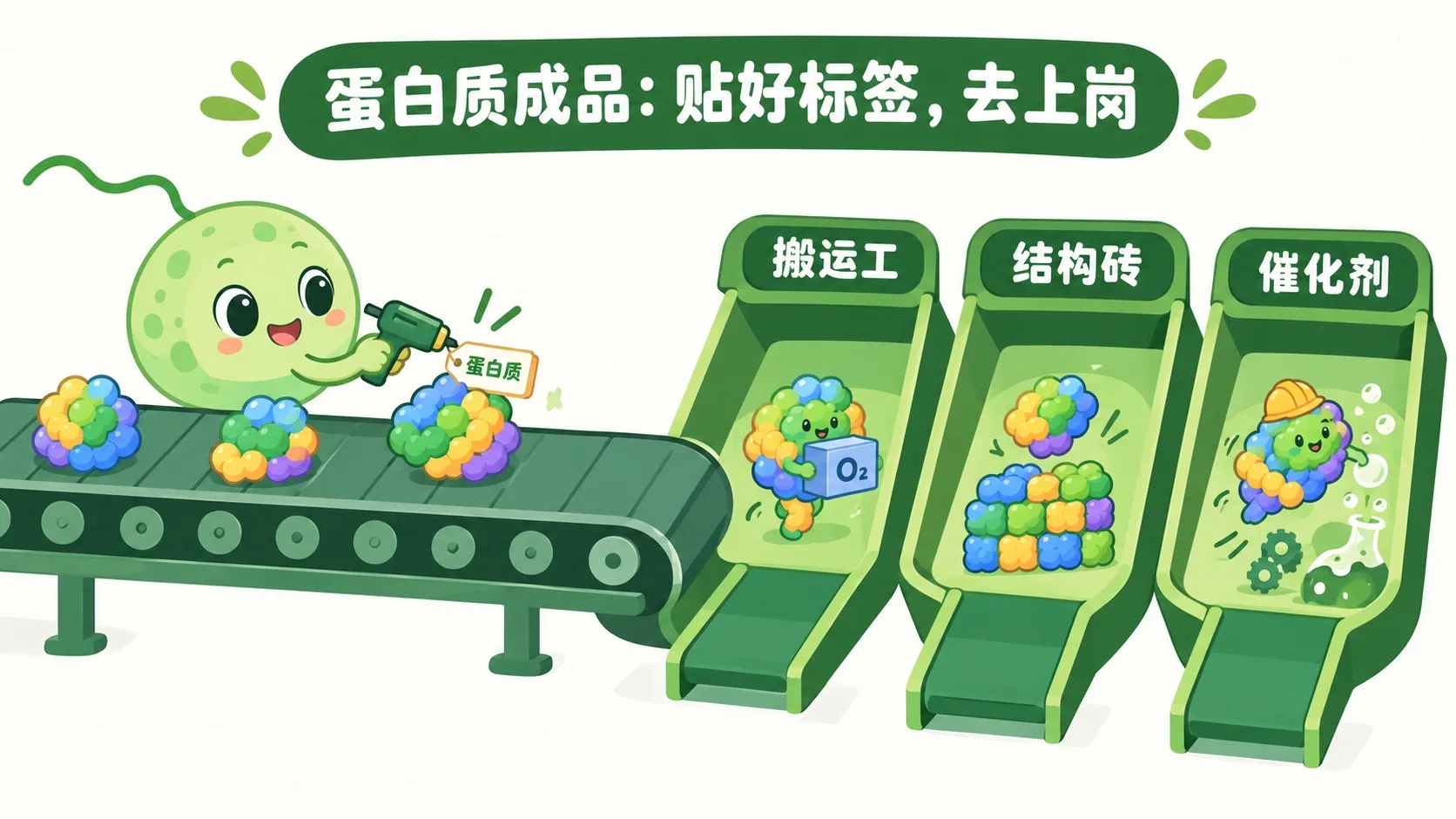
核糖体是一台会走路的拼装机。它读 RNA:每三个字母算一个“词”,一个词对应一个氨基酸。氨基酸被串成链,链再卷出形状——蛋白质就下线了。这一步叫翻译:RNA → 蛋白质。刚下线的成品还要贴标签:当搬运工、结构砖,或者催化剂。The ribosome is a walking assembly machine. It reads RNA: every three letters count as one word, and one word means one amino acid. The amino acids are strung into a chain, and the chain folds into shape — a protein is born. This step is translation: RNA → protein. Fresh products get labelled too: carrier, building block, or catalyst.
等等——每个细胞的说明书一模一样,为什么眼球和肌肉干着完全不同的活?Wait — every cell carries the identical manual. So why do an eye and a muscle do such different jobs?
第 3 步:同一个剧本,不同的开关Step 3: Same script, different switches
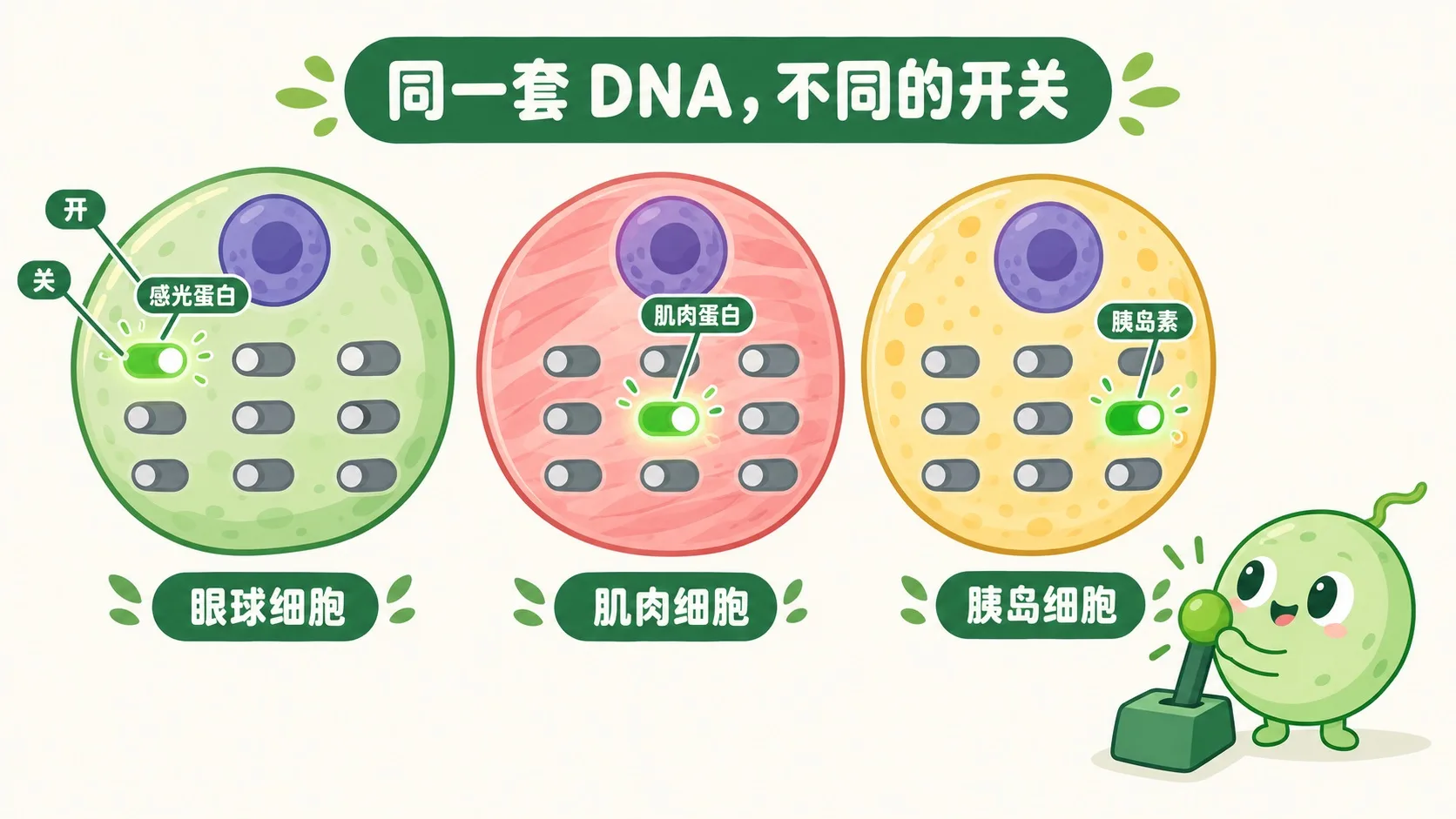
每个基因前面都有一盏开关。眼球细胞开“感光蛋白”的灯,肌肉细胞开“肌肉蛋白”的灯,胰岛细胞开“胰岛素”的灯。同一套 DNA,谁开哪盏灯,谁就长成什么细胞。这叫选择性表达——开关锁定后,细胞就记住了自己的身份。Every gene has a switch in front of it. Eye cells flip on the “light-sensing protein” switch; muscle cells flip on the “muscle protein” switch; pancreas cells flip on the “insulin” switch. One same DNA — whichever lamp a cell turns on decides what it becomes. That is selective expression: once the switches lock in, a cell remembers who it is.
🎮 你来当流水线主管(1 分钟)🎮 Your turn: line manager (1 minute)
道理讲完了。先点“转录”把 DNA 抄成 RNA,再点“翻译”拼出氨基酸链。4 关全通就出师——第 3 关要你判断:哪个细胞会打开这盏开关?Theory done. First hit “Transcribe” to copy DNA into RNA, then “Translate” to build the amino-acid chain. Clear all 4 levels — level 3 asks you: which cell flips this switch on?
一句话记住它:基因表达 = 转录(DNA→RNA)+ 翻译(RNA→蛋白质)。同一套 DNA,靠不同的开关活出不同的细胞。Remember it in one line: gene expression = transcription (DNA→RNA) + translation (RNA→protein). One same DNA lives as different cells by flipping different switches.
DNA 不出核:转录抄成 RNA 再带出去DNA stays in: transcription copies it into RNA and sends the copy out三个字母一个词:翻译拼出氨基酸链,卷成蛋白质Three letters a word: translation strings amino acids into a protein基因开关决定谁开灯——这就是细胞各不相同的秘密Gene switches decide who turns which lamp on — that is why cells differ
内容参考 OpenStax 等公开教材,多来源核对 · AI 生成、人工审核 · 发现错误欢迎指正,帮这片叶子长得更好。Based on OpenStax and other open textbooks, cross-checked across sources · AI-generated, human-reviewed · Spotted a mistake? Tell us — help this leaf grow.
 Back to tree