🪷 等比数列:每一跳都翻几倍🪷 Geometric Sequences: every hop multiplies
上一片等差数列,每一步都加同一个数;这一次机器人把「加」换成了「乘」——每一步都乘同一个数。数列会变成什么样?Last leaf, arithmetic sequences added the same number each step. Now the robot swaps “add” for “multiply” — every step multiplies by the same number. What happens to the sequence?
第 1 步:一步一乘,荷叶疯长Step 1: Multiply each step and watch it grow
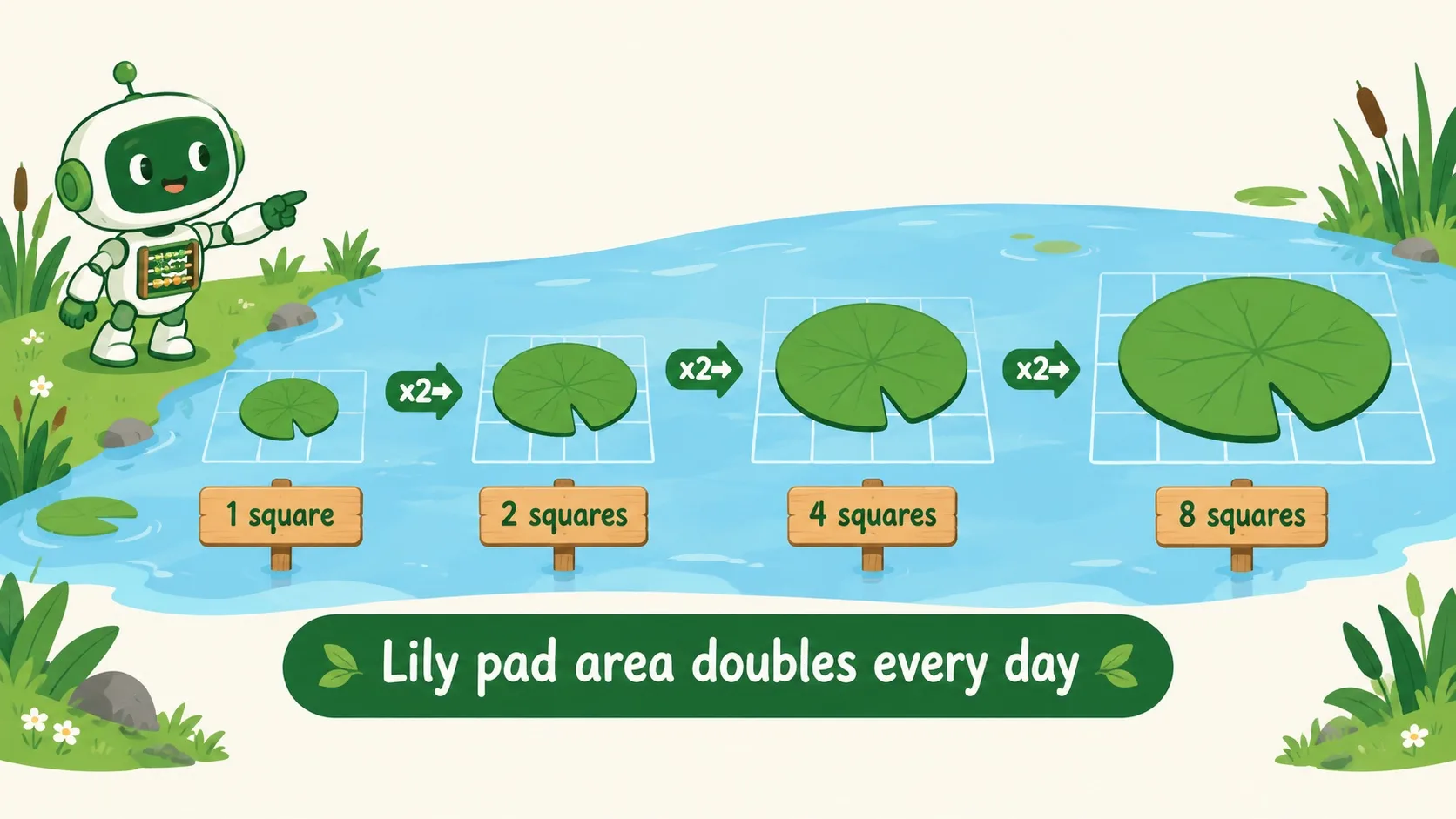
先看池塘里最直观的一幕:荷叶的面积,每天翻一倍。Start with the clearest picture of all: a lily pad whose area doubles every day.
荷叶面积每天 ×2:第 0 天 1 格大,第 1 天 2 格,第 2 天 4 格,第 3 天 8 格。像这样「相邻两项的比固定」的数列,就叫等比数列(Geometric Sequence);这个固定的倍数叫公比,常用 q 表示。用这里的例子:每一项除以它前面一项都等于 2,所以 q=2。The lily pad's area doubles daily: 1 square on day 0, then 2, then 4, then 8. A sequence whose neighbouring terms keep a fixed ratio is a geometric sequence; that fixed multiplier is the common ratio, written q. Here every term divided by the one before gives 2 — so q = 2.
荷叶第 20 天多大,难道要乘 19 次?不用——有个通项公式帮你一步到位。Day 20's size — would you really multiply 19 times? No need: a formula gets you there in one step.
第 2 步:从首项一路乘过去Step 2: Multiply your way from the first term
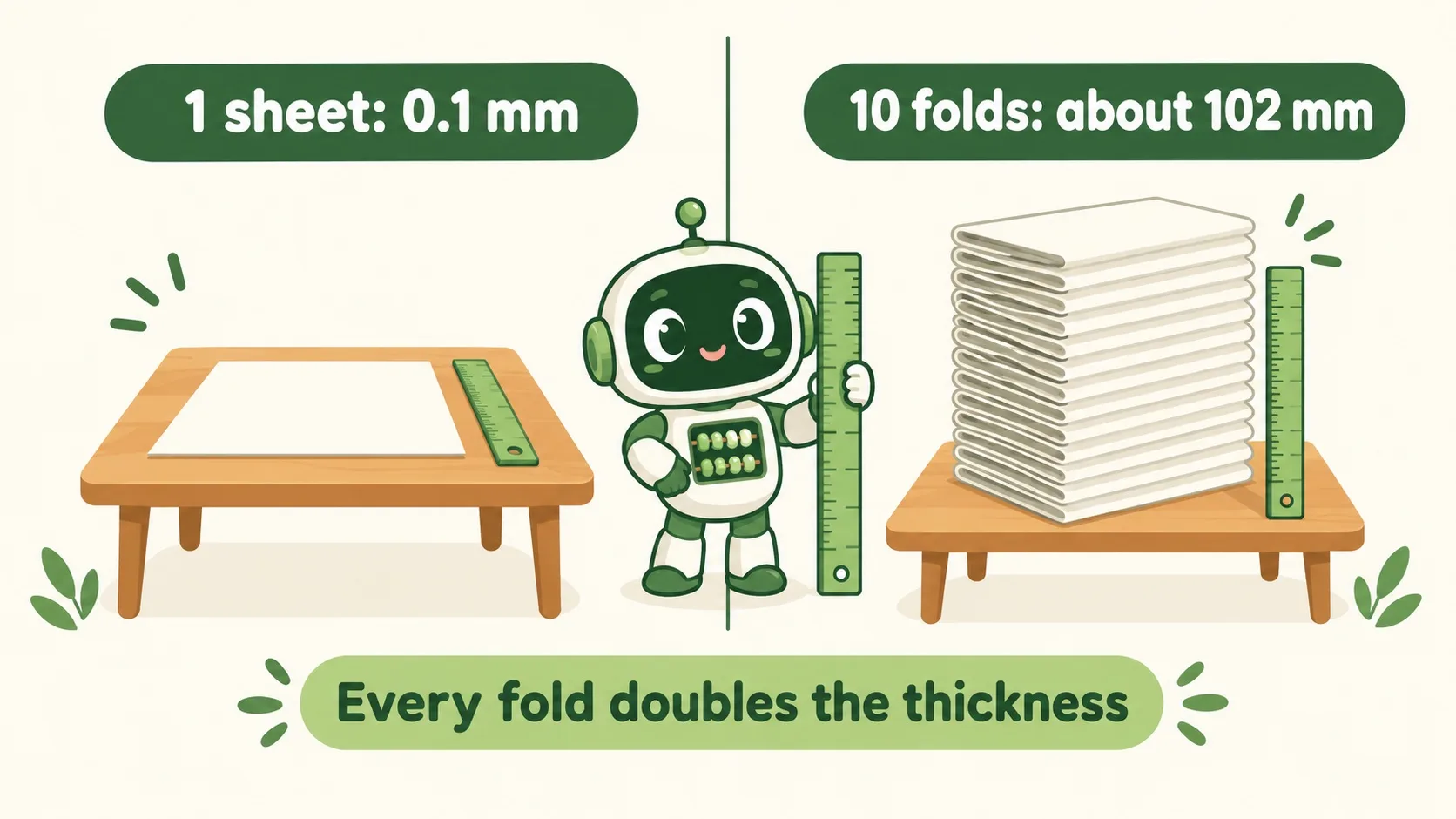
通项公式:aₙ = a₁ × qⁿ⁻¹。a₁ 是首项,q 是公比,n 是第几项:从首项出发,往后每走一步乘一个 q,到第 n 项一共乘了 (n−1) 次。折纸也是同一个故事:0.1 毫米的纸每折一次厚度 ×2(q=2),折 10 次就是 0.1 × 2¹⁰ ≈ 102 毫米——薄薄一张纸,折成一叠十厘米厚的砖。The general term: aₙ = a₁ × qⁿ⁻¹. a₁ is the first term, q the common ratio, n the position: starting from a₁, every step multiplies one more q, so by term n you have multiplied (n−1) times. Paper folding tells the same story: a 0.1 mm sheet doubles its thickness at each fold (q = 2). Ten folds: 0.1 × 2¹⁰ ≈ 102 mm — a thin sheet turned into a ten-centimetre brick.
这种「一步一乘」的涨法,在真实世界里到处都是——最经典的就是细菌分裂。This multiply-per-step growth is everywhere in the real world — the classic case is bacteria splitting.
第 3 步:真实世界里的等比Step 3: Geometric growth in the real world
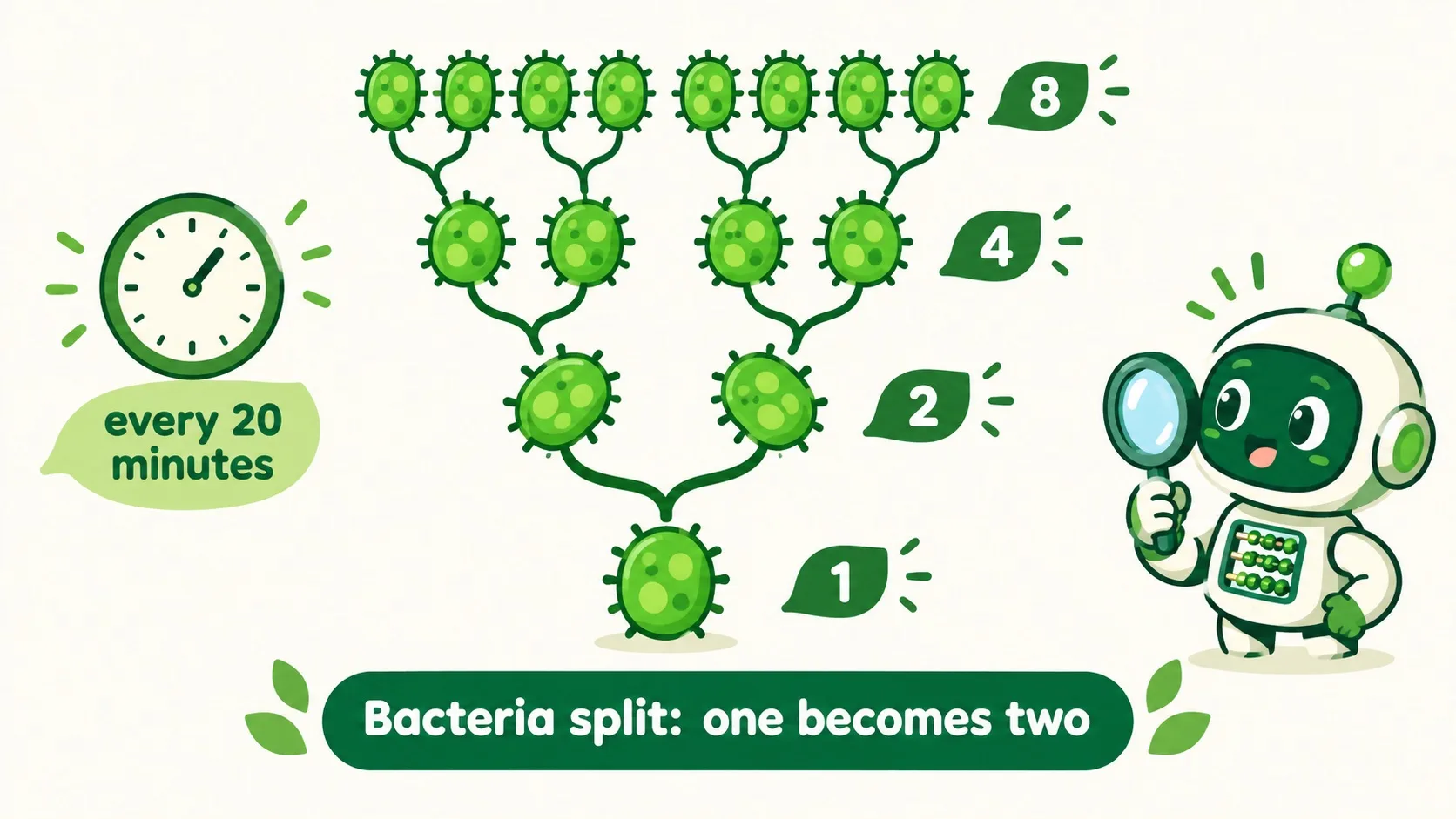
1 个细菌每 20 分钟分裂成 2 个,就是 q=2 的等比数列:1 → 2 → 4 → 8 → …。3 小时是 9 代,1 × 2⁹ = 512 个;12 小时是 36 代,就超过 680 亿个。等比数列前期慢悠悠,后面涨得吓人——这就是指数增长的威力。One bacterium splits into two every 20 minutes — a geometric sequence with q = 2: 1 → 2 → 4 → 8 → …. Three hours is 9 generations: 1 × 2⁹ = 512. Twelve hours is 36 generations: over 68 billion. Geometric growth looks lazy at first, then explodes — that is the power of exponential growth.
🎮 你来翻倍(1 分钟)🎮 Your turn: double it (1 minute)
荷叶每天翻一倍。你来跳满 10 次,猜猜它最后多大——答对就撒花。The lily pad doubles daily. Jump ten times and guess how big it gets — a correct guess sets off the confetti.
一句话记住它:每一步都乘同一个数 q,就是等比数列;第 n 项 = 首项乘 (n−1) 次 q,涨起来快得吓人。Remember it in one line: multiply by the same number q every step and you have a geometric sequence; term n is the first term times q, (n−1) times over — and it grows frighteningly fast.
相邻两项的比固定不变,这个固定的倍数就是公比 qNeighbouring terms keep a fixed ratio — that fixed multiplier is the common ratio q通项 aₙ = a₁qⁿ⁻¹:从首项出发,乘 (n−1) 次 qGeneral term aₙ = a₁qⁿ⁻¹: start at the first term, multiply q (n−1) times指数增长:折纸 10 次厚 102 毫米,细菌 12 小时超 680 亿Exponential growth: 10 folds reach 102 mm; bacteria pass 68 billion in 12 hours
内容参考 OpenStax 等公开教材,多来源核对 · AI 生成、人工审核 · 发现错误欢迎指正,帮这片叶子长得更好。Based on OpenStax and other open textbooks, cross-checked across sources · AI-generated, human-reviewed · Spotted a mistake? Tell us — help this leaf grow.
 Back to tree