👂 听觉:把振动翻译成声音👂 Hearing: Turning Vibrations into Sound
上一片,光变成了脑中的画面。可闭上眼睛,世界照样热闹——空气里的振动怎么变成鸟叫、铃声和悄悄话?🩺 小医生掏出一支「人体麦克风」,🦠 小细胞把耳朵贴上去:走,进耳朵里闯一趟关。Last leaf, light became a picture in the brain. But close your eyes and the world is still noisy — how does vibration in the air become birdsong, doorbells and whispers? 🩺 Doc pulls out a "human microphone"; 🦠 Cellie presses an ear to it: let's run the obstacle course inside the ear.
第 1 步:一声鸟叫的闯关路Step 1: One bird call's obstacle course
先跟着一声鸟叫,从耳廓一路闯到大脑。Follow one bird call from the outer ear all the way to the brain.
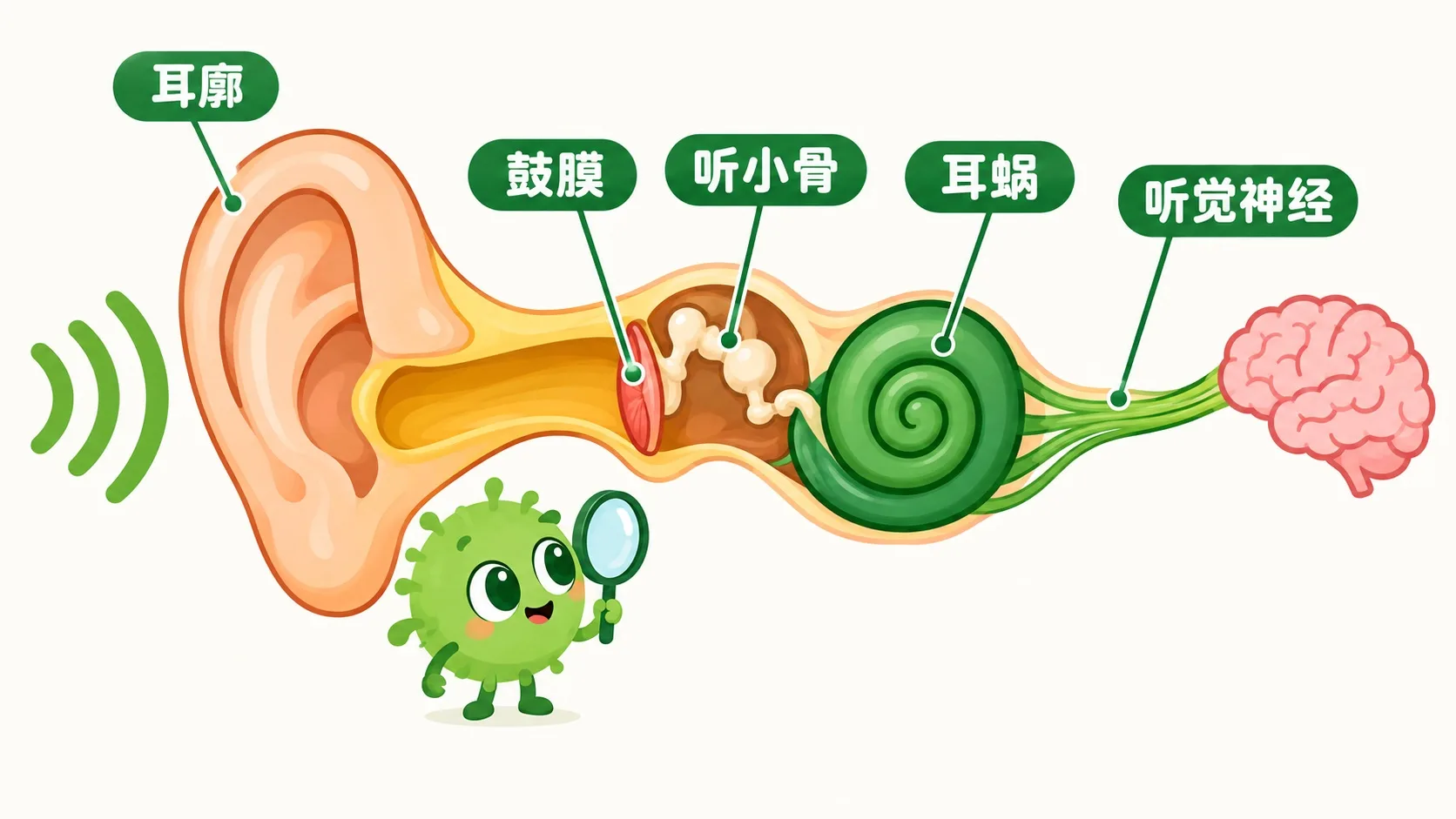
耳廓像小喇叭,把声波拢进耳道,震得鼓膜——一层薄薄的小鼓面——嗡嗡响;旁边三块听小骨(人体最小的骨头)接力,把振动放大 20 多倍;振动涌进耳蜗,里面的毛细胞把它变成电信号;听觉神经再一路传到大脑颞叶。和视觉一样,「听见」其实发生在大脑里,耳朵只管翻译。The outer ear funnels sound waves into the canal, buzzing the eardrum — a thin little drum skin; three ear bones (the smallest in your body) relay the vibration, amplified more than 20-fold; the surge enters the cochlea, where hair cells turn it into electric signals; the hearing nerve carries them to the temporal lobe. Like vision, hearing happens in the brain — the ear just translates.
振动进了耳蜗,凭什么能分清高音和低音?Once vibration is inside the cochlea, how can it tell high notes from low ones?
第 2 步:耳蜗——管音高的钢琴键盘Step 2: The cochlea — piano keys for pitch
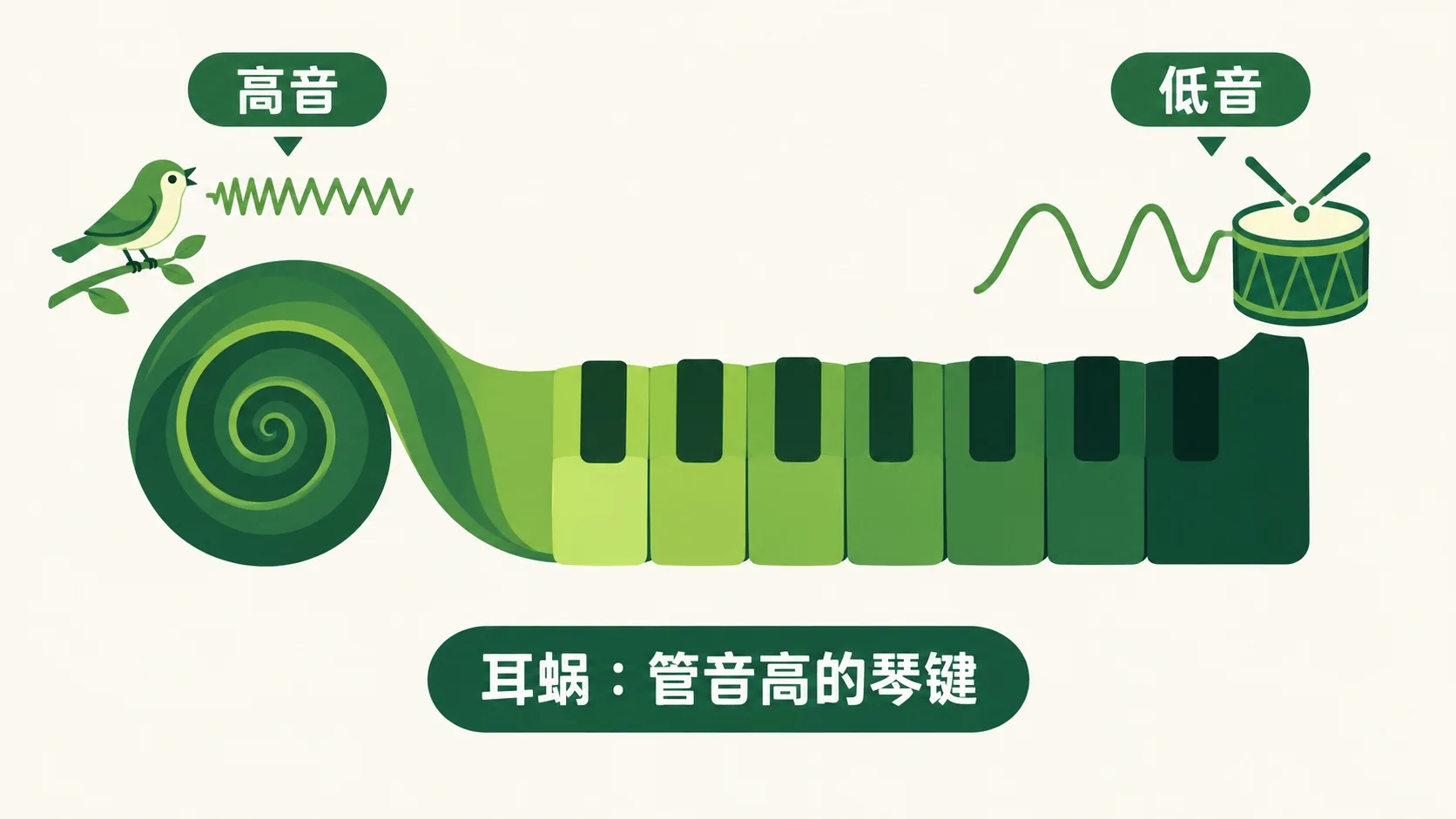
把蜗牛壳似的耳蜗拉直,就是一盘钢琴键盘:入口附近的毛细胞管高音(振动快的),越往深处管的音越低(振动慢的)。哪个位置的毛细胞被拨动,大脑就听出什么音高——一根琴键一个音,所以你能分清鸟叫和大鼓。Unroll the snail-shell cochlea and you get a piano keyboard: hair cells near the entrance handle high notes (fast vibrations), and the deeper you go, the lower the notes they handle (slow vibrations). Whichever spot gets plucked tells the brain the pitch — one key, one note — which is how you tell a bird from a bass drum.
毛细胞这么能干,能一直大声加班吗?Hair cells are amazing — can they keep working overtime in loud noise?
第 3 步:坏掉的毛细胞不会长回来Step 3: Broken hair cells never grow back
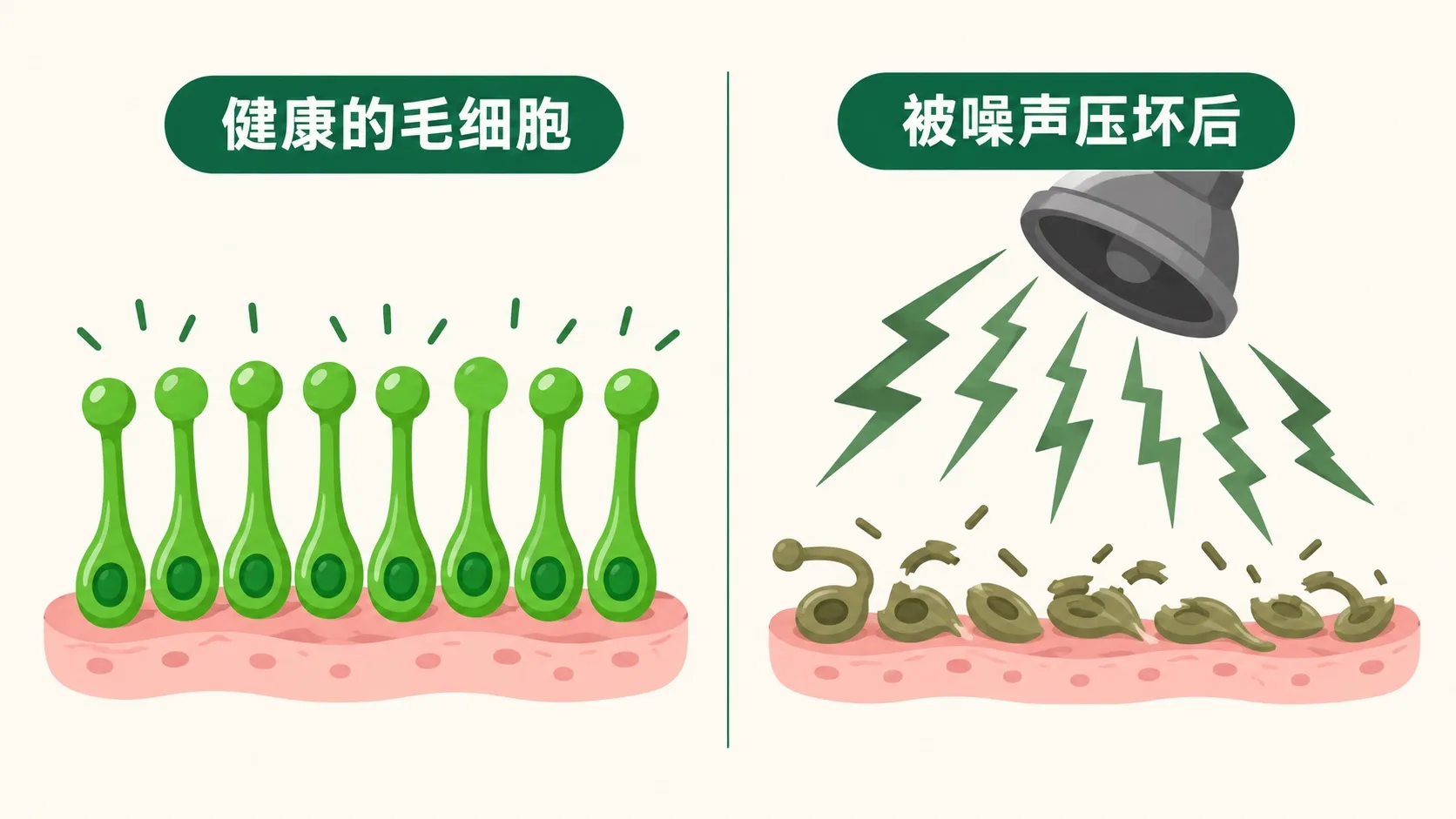
不能。毛细胞是「一次性员工」:长时间大音量(比如耳机开到最大)会把这些小绒毛压断,坏了不再长,听力就悄悄下滑。记住 60-60 原则:音量不超 60%,连听不超 60 分钟。另外,耳蜗旁边的前庭(三根小半规管)管平衡——晕车晕船,多半是它在抗议。No. Hair cells are one-shot workers: long stretches of loud sound (earbuds at full blast, for example) snap those tiny hairs, they never grow back, and hearing quietly slides away. Remember 60-60: volume under 60%, no more than 60 minutes at a time. And next to the cochlea sits the vestibular system (three tiny loops) that handles balance — motion sickness is usually it protesting.
🎮 声音之旅(30 秒)🎮 Your turn: the sound journey (30 seconds)
接手 🩺 小医生的麦克风:前两关沿声音的路点中下一站,后两关在耳蜗琴键上点中管那个音的键。Take over 🩺 Doc's microphone: rounds 1–2 click the next stop along the sound path; rounds 3–4 find the right cochlea key for each pitch.
一句话记住它:听觉 = 振动的翻译工程:耳廓收集、鼓膜振动、听小骨放大、耳蜗按位置分出高低音并变成电信号、听觉神经送进大脑——「听见」发生在大脑里。Remember it in one line: hearing is vibration translation: outer ear collects, eardrum vibrates, ear bones amplify, the cochlea sorts pitches by position into signals, and the hearing nerve delivers them to the brain — hearing happens in the brain.
声音的路:耳廓 → 鼓膜 → 听小骨(放大 20 多倍)→ 耳蜗 → 听觉神经 → 大脑颞叶The sound path: outer ear → eardrum → ear bones (20x+ amplification) → cochlea → hearing nerve → temporal lobe耳蜗像钢琴键盘:入口管高音、深处管低音,哪个位置被拨动就听出什么音The cochlea is a piano keyboard: entrance = high notes, deep end = low notes; the plucked spot sets the pitch毛细胞不可再生:耳机 60-60 原则护耳;前庭管平衡,晕车是它在抗议Hair cells never regrow: protect them with the 60-60 rule; the vestibular system runs balance — motion sickness is its protest
内容参考 OpenStax 等公开教材,多来源核对 · AI 生成、人工审核 · 发现错误欢迎指正,帮这片叶子长得更好。Based on OpenStax and other open textbooks, cross-checked across sources · AI-generated, human-reviewed · Spotted a mistake? Tell us — help this leaf grow.
 Back to tree