🔥 热传递:热量总是往冷处跑🔥 Heat Transfer: Heat Always Flows to the Cold
上一片里,热量能改变温度。这一片跟着小火箭去三个现场:热量到底是怎么“跑”的?金属勺、烧水壶、太阳,各演示一条路。Last leaf, heat changed temperatures. This leaf follows the little rocket to three places to see how heat actually travels: a metal spoon, a kettle, and the Sun — one road each.
第 1 步:传导——热顺着物体自己爬Step 1: Conduction — heat climbs through the object
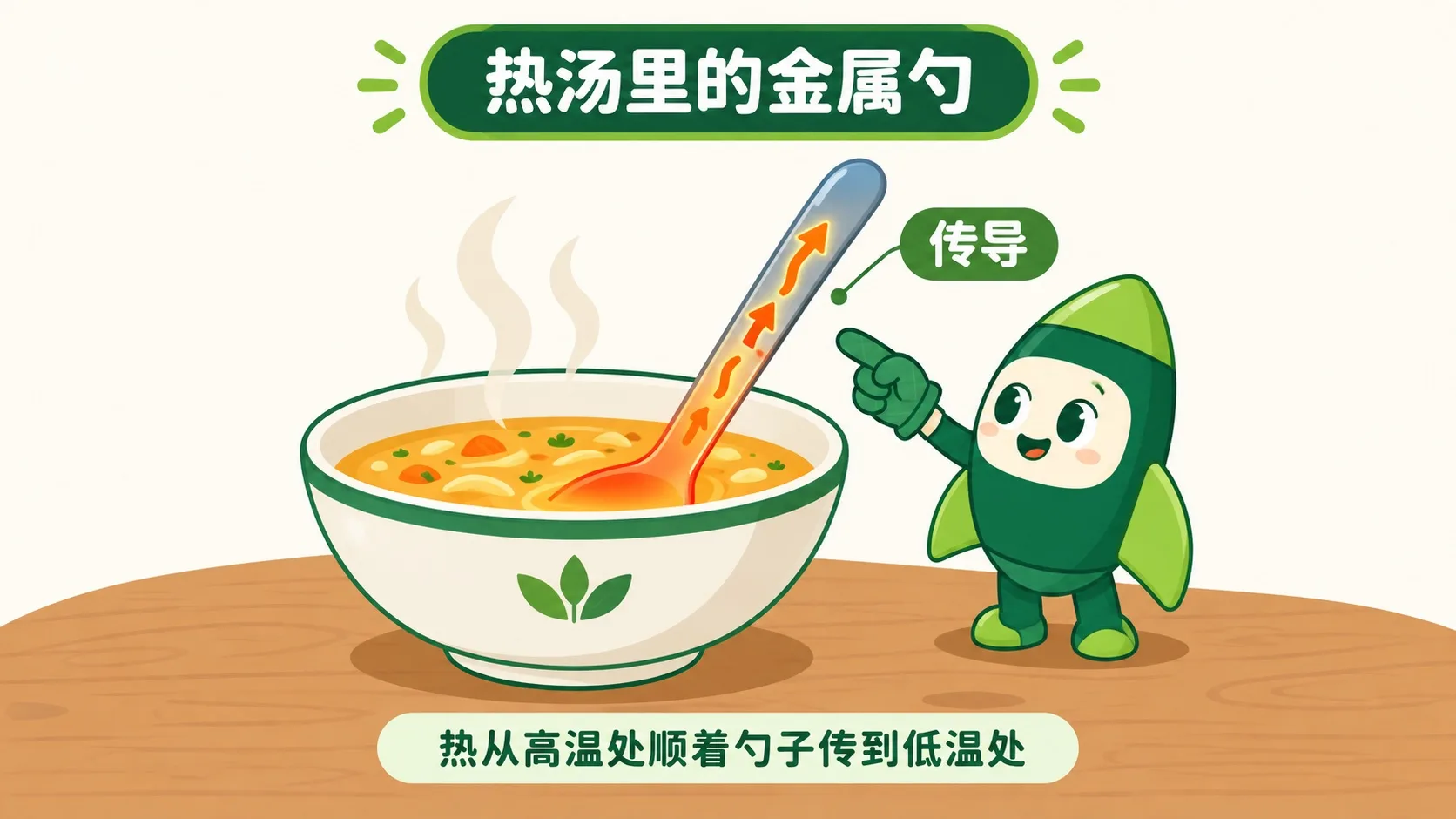
先看热汤里的金属勺:热不是“跳”过去的,而是挨着一格一格往外爬。Start with a metal spoon in hot soup: heat doesn't jump — it climbs cell by cell along the metal.
勺口在热汤里,金属里的分子被“撞”得越抖越快,又把这份抖劲传给旁边的分子——热就这么顺着勺身一路爬到勺柄。固体的主要走法就是传导,金属最擅长:所以金属勺烫手,木勺不烫。注意方向:热量只往冷处跑,从不倒着来。The bowl end sits in hot soup; its molecules jiggle faster and bump their neighbours into jiggling too, passing the energy along until the handle warms up. Conduction is the main road inside solids, and metals are champions at it — which is why a metal spoon burns your hand and a wooden one doesn't. Note the direction: heat only ever flows toward the cold, never back.
可勺子是固体。那液体和气体里的热,又是怎么跑的?But a spoon is solid. How does heat move through liquids and gases?
第 2 步:对流——热搭着水“转圈搬家”Step 2: Convection — heat hitches a ride around the loop
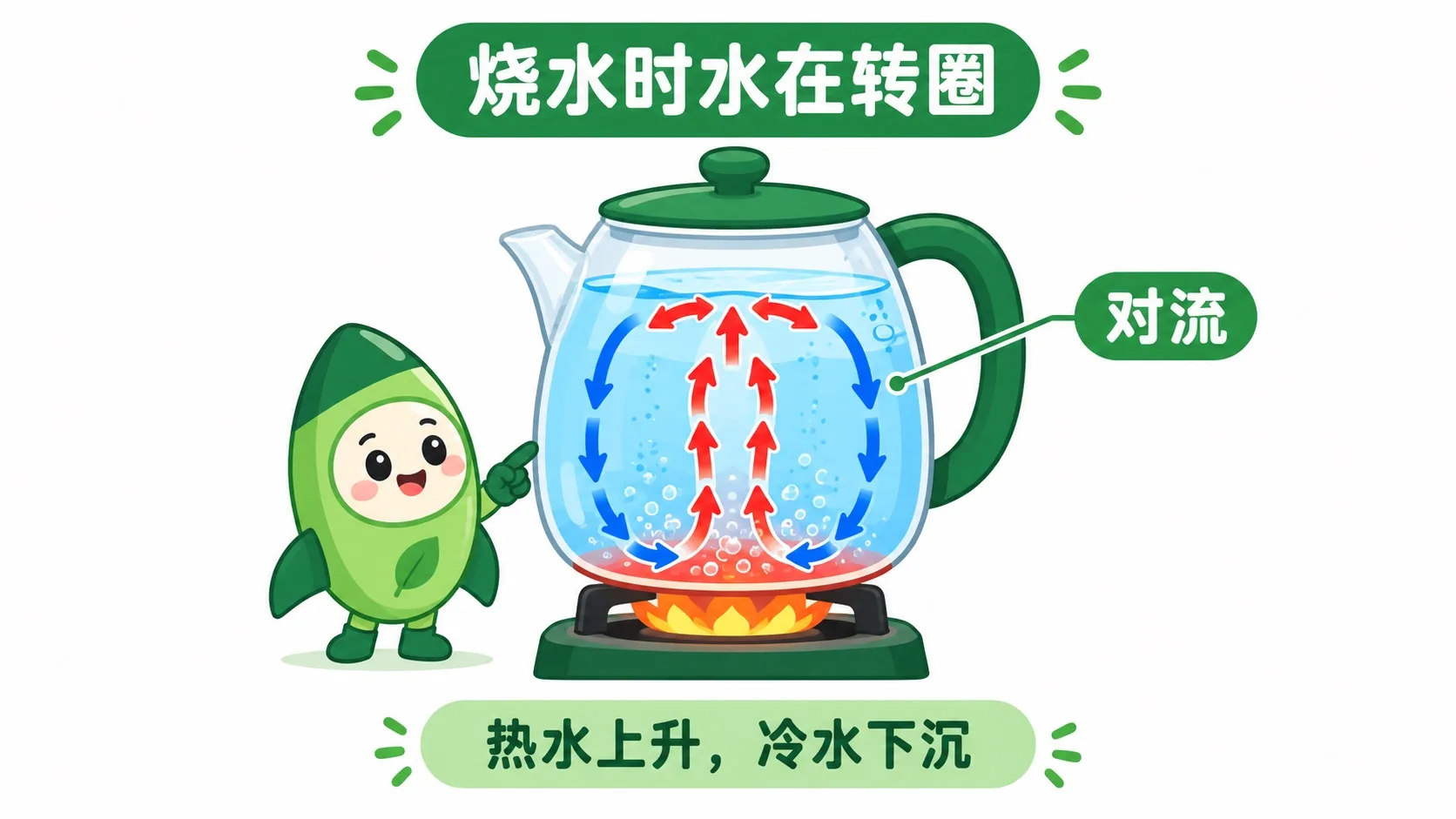
壶底的水先受热,变轻往上浮;上面的冷水比较重,沉下来补位——水就转起了圈。热搭着这趟“转圈车”把整壶水都烘热。暖气片烘暖房间也是同一招:热空气上升、冷空气下沉,全屋循环起来。液体和气体,主要靠对流。Water at the bottom warms first, becomes lighter and floats up; cooler water on top is heavier and sinks to take its place — so the water loops around, and heat rides the loop until the whole kettle is warm. A radiator heats a room the same way: warm air rises, cool air sinks, and the room circulates. For liquids and gases, convection is the main road.
那太阳呢?地球和太阳之间隔着没有水、也没有空气的太空,前两条路都走不通。What about the Sun? Between Earth and the Sun lies empty space with no water and no air — the first two roads can't work there.
第 3 步:辐射——不碰也能送;保温杯把三条路全堵上Step 3: Radiation — no touching needed; a thermos plugs all three roads
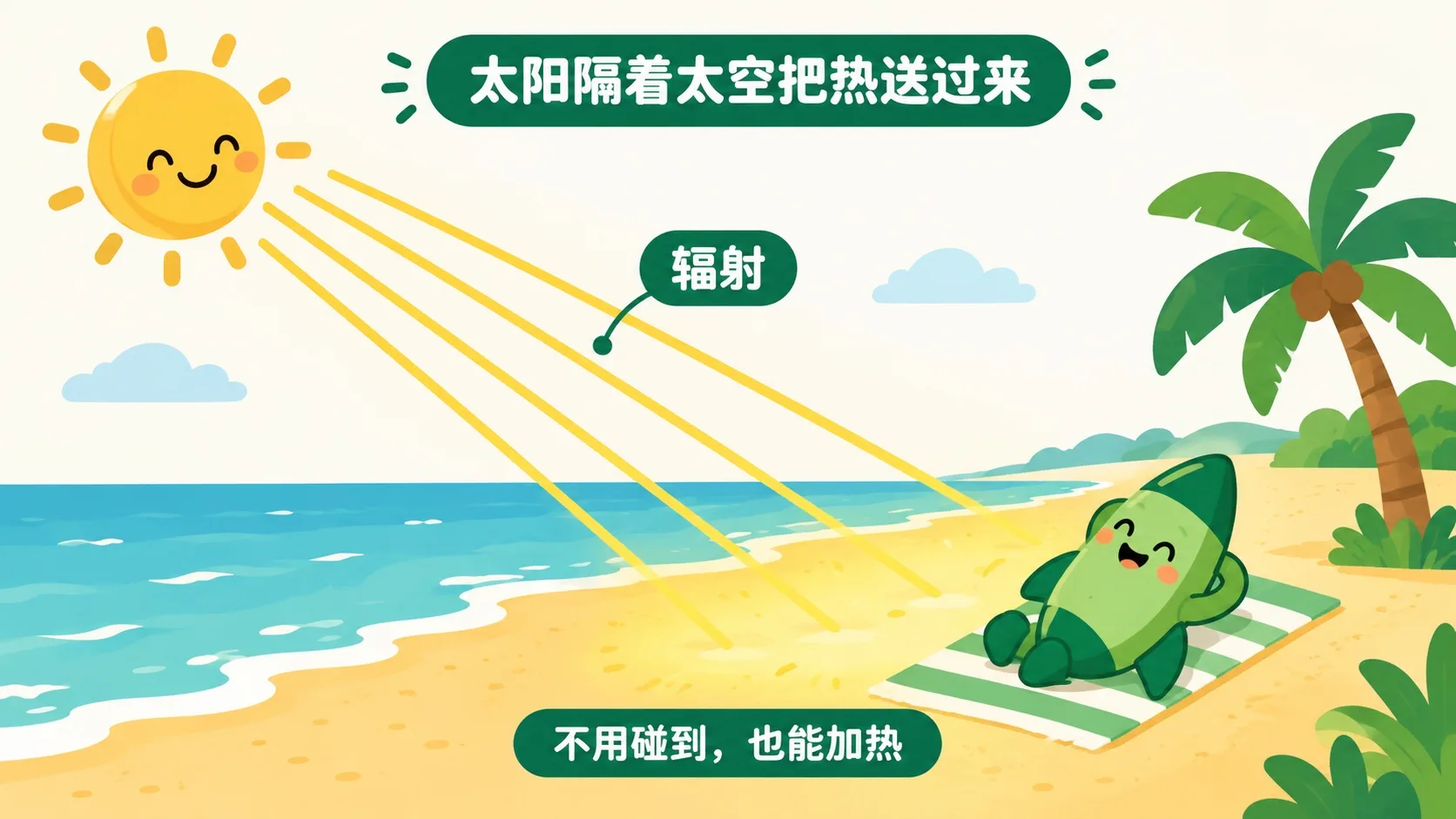
太阳用第三条路:辐射——热量变成看不见的射线,不靠任何东西,直线穿过太空照过来。烤火时脸发烫,也是辐射。所以保温杯要堵三条路:真空夹层堵住传导和对流,镀银内壁把辐射反射回去,盖子盖严——热出不去,热水就能一直热。The Sun uses road three: radiation — heat leaves as invisible rays that need no material at all and shoot straight across space. The warmth on your face by a campfire is radiation too. That's why a thermos plugs all three roads: a vacuum layer blocks conduction and convection, a silvered wall reflects radiation back, and a tight lid seals the last gap — heat can't get out, so your drink stays hot.
🎮 你来当热传递侦探(40 秒)🎮 Your turn: heat detective (40 seconds)
三个场景看完了。先点上面的三个按钮切换演示,再判断下面 4 个生活场景走的是哪条路。Switch through the three scenes above, then decide which road each of the 4 everyday scenes uses.
一句话记住它:热量三路走,方向不回头——永远从高温流向低温,直到两边一样热。Remember it in one line: heat takes three roads but never turns back — it always flows from hot to cold until both sides match.
传导:热顺着物体自己爬,固体主要靠它,金属最会导Conduction: heat climbs through the material — the main road in solids, and metals lead the way对流:受热上升、变冷下沉,水或空气转着圈把热搬走Convection: warm rises, cool sinks — water or air loops around carrying heat辐射:不靠东西、隔空直线送;保温杯靠堵住三条路保温Radiation: straight across space with no material; a thermos keeps heat by plugging all three roads
内容参考 OpenStax 等公开教材,多来源核对 · AI 生成、人工审核 · 发现错误欢迎指正,帮这片叶子长得更好。Based on OpenStax and other open textbooks, cross-checked across sources · AI-generated, human-reviewed · Spotted a mistake? Tell us — help this leaf grow.
 Back to tree