🎢 惯性:物体顽固地保持现状🎢 Inertia: Stubbornly Keeping Its State
上一片里,力总是成对出现。可急刹车时没人推你,身体却向前冲。物体天生爱保持现状,这个脾气就叫惯性。Last leaf, forces always came in pairs. Yet when a bus brakes, nobody pushes you and your body still lunges forward. Objects love to keep their current state — that stubborn habit is inertia.
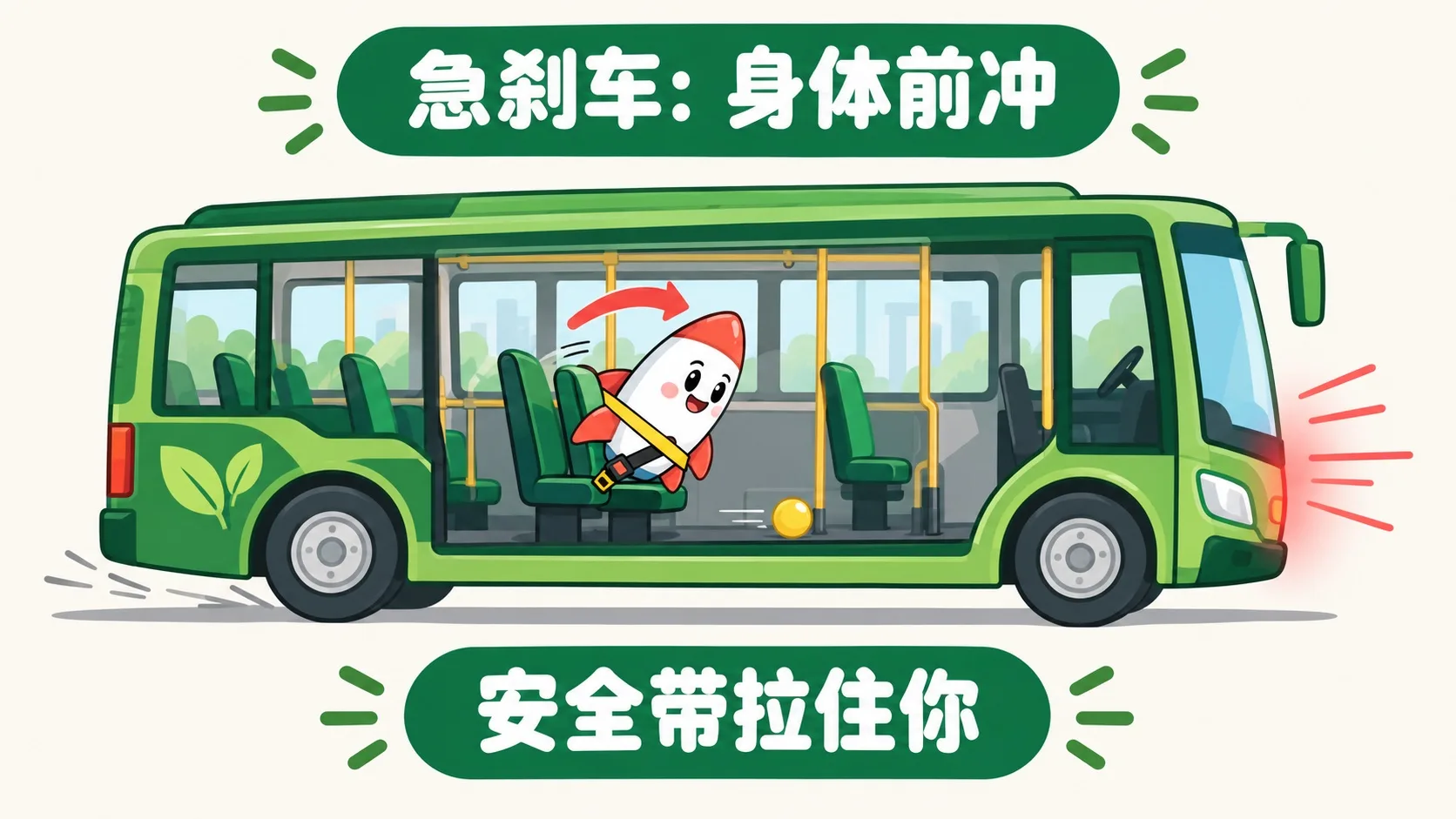
第 1 步:急刹车,谁在推你?Step 1: Who pushes you when the bus brakes?
先看急刹车的那一秒,车里发生了什么。Start with the split second a bus slams its brakes.
车停了,脚跟着停,上半身却想保持原来的速度,一头向前冲。没人推你,是身体在保持现状。安全带一把拉住你——它救的就是这股冲劲。The bus stops; your feet stop too, but your upper body still wants its old speed and lunges forward. Nobody pushed you — your body is keeping its state. The seatbelt catches you — that lunge is exactly what it saves you from.
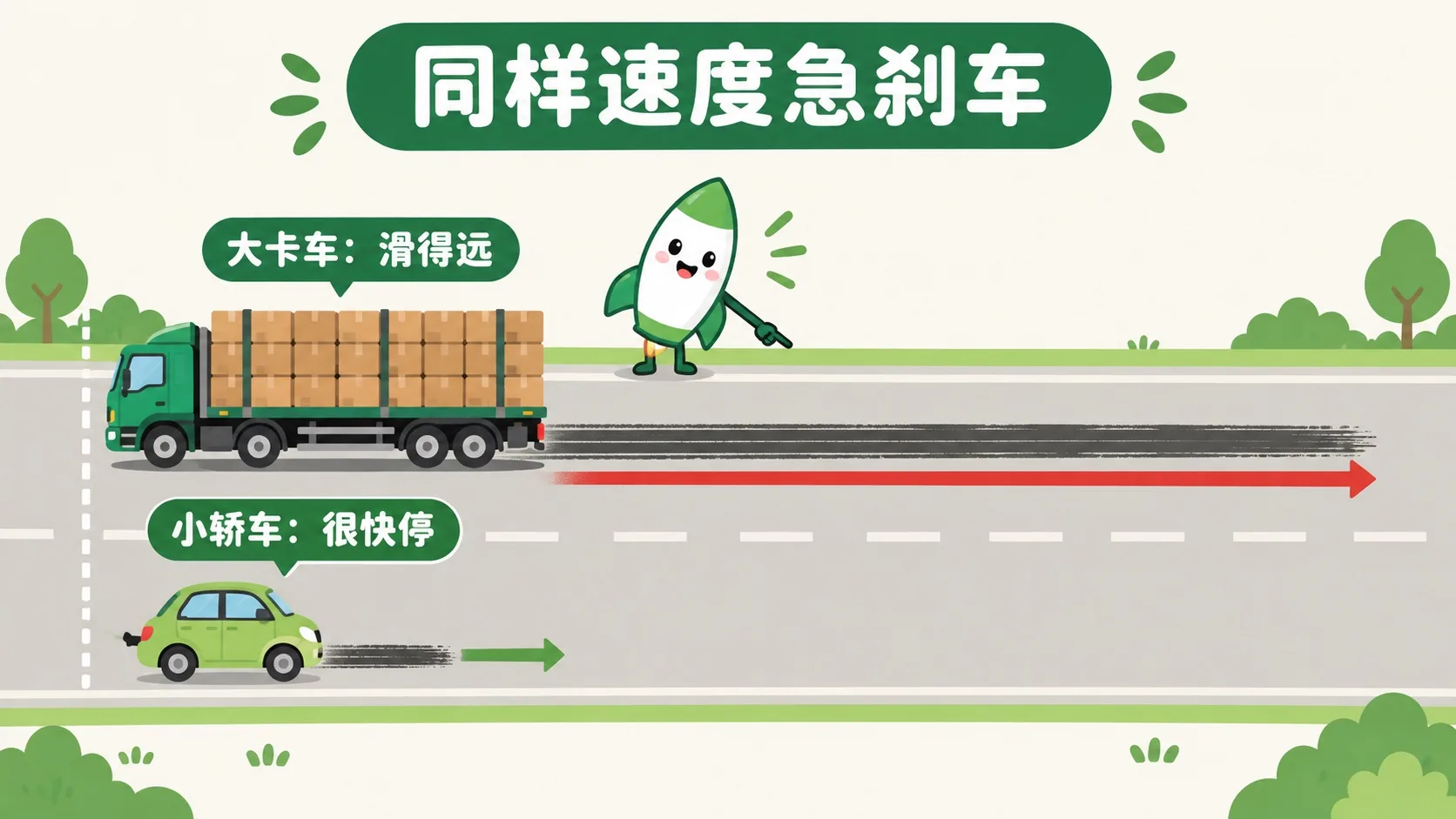
那为什么大卡车比小轿车更难刹住?And why is a truck so much harder to stop than a car?
第 2 步:越重,越难改变Step 2: Heavier means harder to change
同样速度急刹车,大卡车滑得远得多。质量越大,惯性越大——要改变它的运动,就得费更大的劲。所以大车要提前刹车、拉开更远的车距。记住:惯性只看质量,与速度无关。慢慢开的火车,惯性也比飞快的自行车大得多。Braking from the same speed, the heavy truck slides much farther. More mass means more inertia: changing its motion takes far more effort. That's why big vehicles brake earlier and keep longer gaps. And remember: inertia depends on mass alone, never on speed — a slow train still has far more inertia than a fast bicycle.
这股“保持现状”的脾气,还藏在哪些地方?Where else does this “keep things as they are” habit hide?
第 3 步:生活里的惯性Step 3: Inertia in daily life
拍打衣服,灰尘保持静止,衣服一动,灰尘就掉下来;抽桌布,碗保持静止,桌布从下面溜走;跳远助跑,是利用合适的惯性带你飞得更远。看懂了它,就能利用它,也能防着它。Beat a coat and the dust stays still — the cloth moves, the dust doesn't, so it drops off. Whip a tablecloth and the bowl stays put while the cloth slips away. A long-jump run-up borrows your body's inertia to carry you farther. Understand it, and you can use it or guard against it.
🎮 你来当测试员(30 秒)🎮 Your turn: test driver (30 seconds)
道理讲完了。先调载重、踩急刹车,看车滑多远;再判断 4 组物体谁惯性大。Theory done. First set the load and slam the brake to see how far the truck slides; then judge which of 4 pairs has more inertia.
一句话记住它:惯性 = 物体顽固地保持现状。质量越大,惯性越大;惯性只看质量,不看速度。Remember it in one line: inertia = an object's stubborn habit of keeping its state. More mass, more inertia — mass, not speed, is what counts.
急刹车前冲、安全带拉住,都是惯性在起作用The lunge when braking and the seatbelt that catches you — all inertia质量越大惯性越大——大卡车比小轿车难刹住More mass, more inertia — a truck is harder to stop than a car惯性与速度无关;拍灰尘、跳远助跑都在利用它Inertia ignores speed; beating dust and long-jump run-ups both use it
内容参考 OpenStax 等公开教材,多来源核对 · AI 生成、人工审核 · 发现错误欢迎指正,帮这片叶子长得更好。Based on OpenStax and other open textbooks, cross-checked across sources · AI-generated, human-reviewed · Spotted a mistake? Tell us — help this leaf grow.
 Back to tree