🌡️ 内能:分子们的总“活力”🌡️ Internal Energy: the molecules' total “pep”
上一片里,小火箭学会了用温度计读出冷热——可读数只是个数。数字背后,到底是什么在悄悄变化?答案是:分子。Last leaf, the little rocket read hot and cold off a thermometer — but a reading is just a number. Behind that number, what is quietly changing? Molecules.
第 1 步:一切物体里,分子都在动Step 1: In every object, molecules are moving
先钻进观察箱,看看物质里面到底在发生什么。Let's climb into the observation box and see what matter is really doing inside.
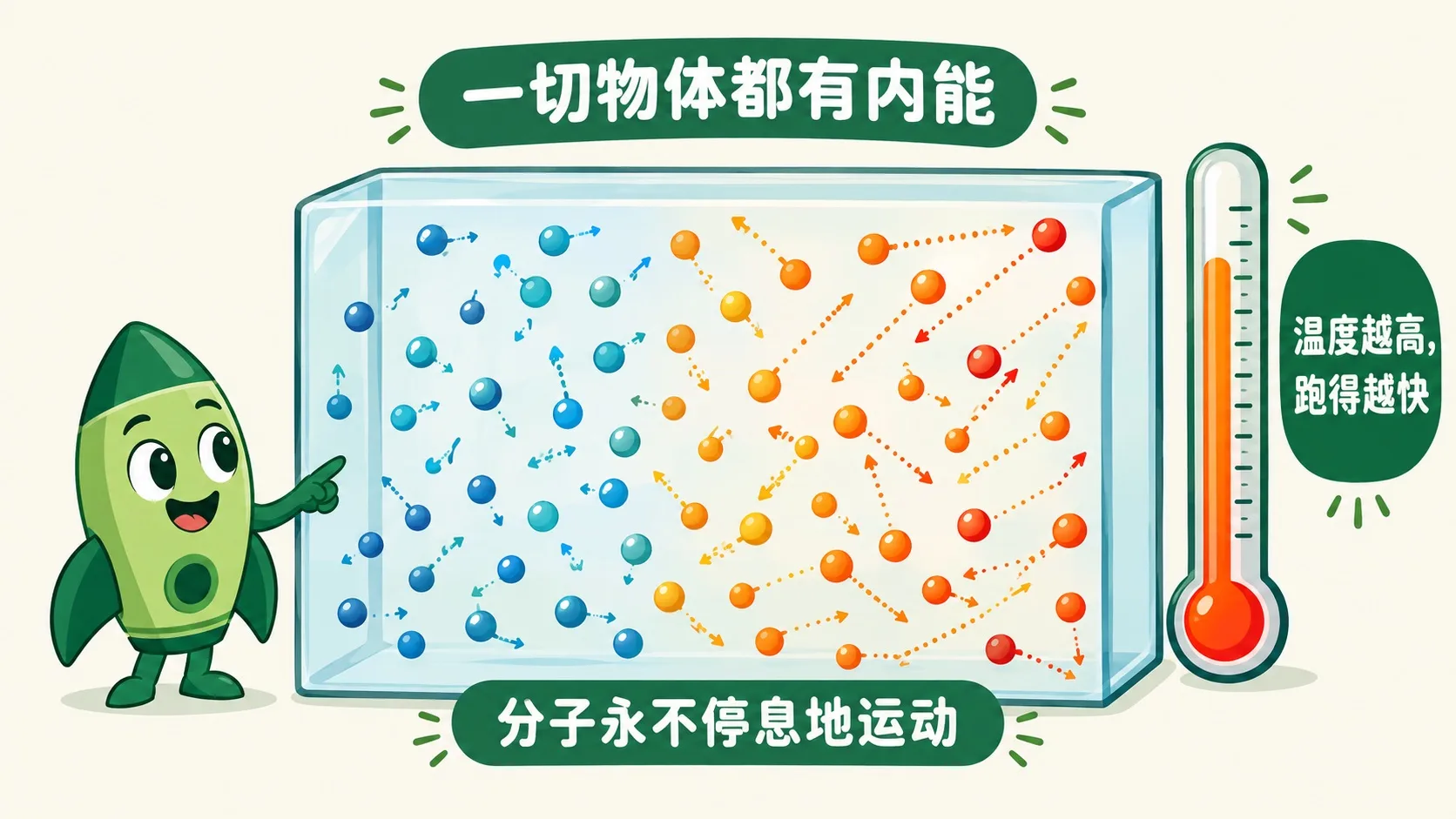
一杯水、一块石头,里面都挤满了分子,它们从不休息:有的跑得快、有的慢,像箱子里不停弹跳的小球。温度越高,分子平均跑得越快——温度计量的就是这份「平均活力」。所以再冷的冰,分子也一直在动:内能永远不为零。A cup of water, a stone — both are packed with molecules that never rest: some dash, some stroll, like balls bouncing nonstop in a box. The hotter it gets, the faster they move on average — a thermometer measures exactly that average pep. So even ice keeps moving inside: internal energy is never zero.
那这些不停弹跳的小球,加起来叫什么?So what do all those bouncing balls add up to?
第 2 步:内能 = 分子动能 + 势能的总和Step 2: Internal energy = molecular kinetic + potential energy
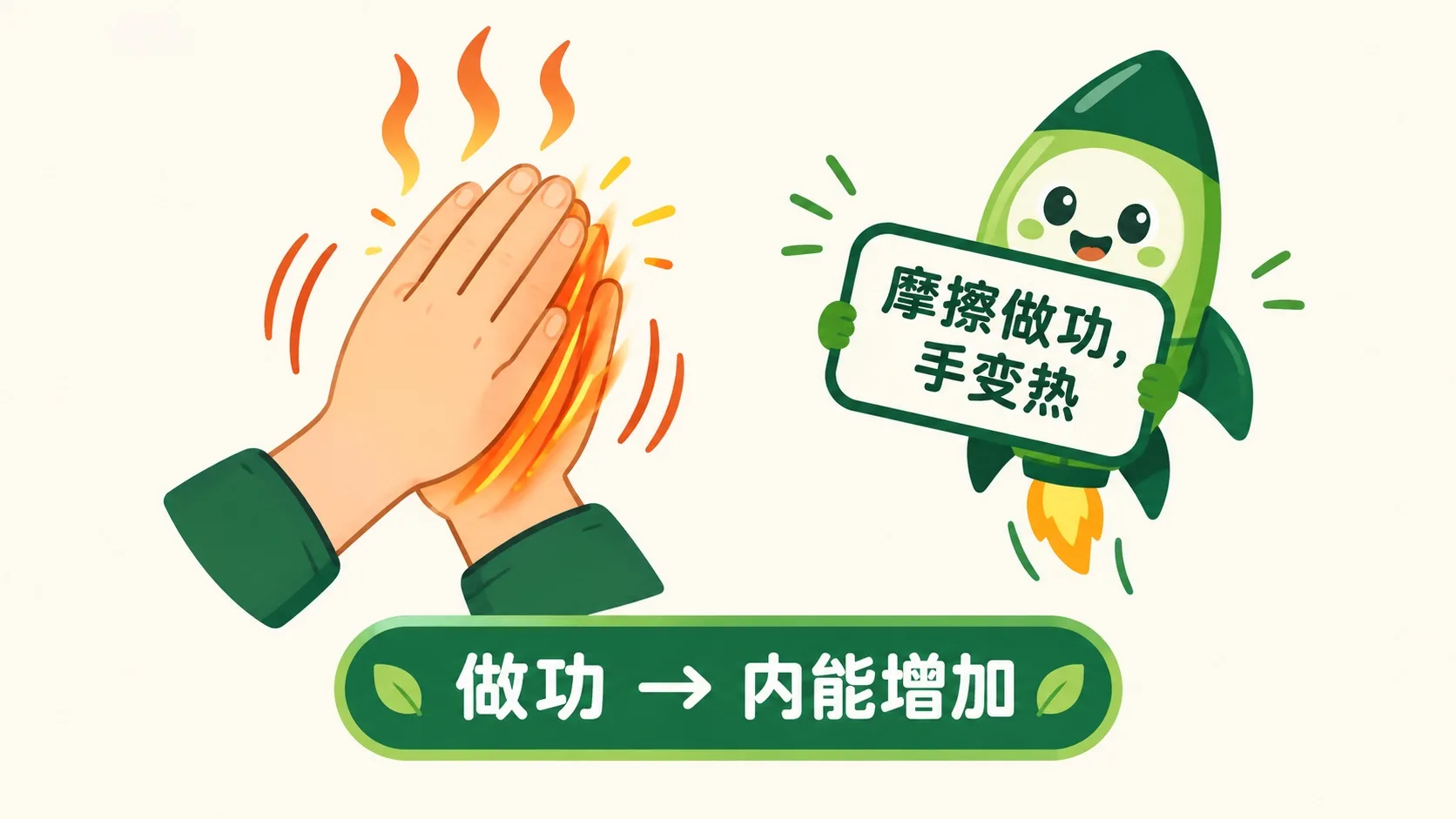
内能,就是物体里所有分子的动能与势能的总和(势能来自分子之间的相互作用)。改变它有两条路,第一条是「做功」:两只手互相摩擦,克服摩擦做功,机械能转成了内能,手心就热起来。给自行车打气,打气筒筒壁发烫,也是压缩空气做功的结果。Internal energy is the sum of all kinetic and potential energy of the molecules inside an object (the potential part comes from how they pull on one another). One way to change it is “doing work”: rub your hands together, and work against friction turns mechanical energy into internal energy — your palms warm up. Pump a bike tire and the barrel gets hot: work done compressing air.
不想费劲搓手,还有别的办法暖起来吗?Is there a lazier way to warm up than rubbing?
第 3 步:第二条路——热传递Step 3: The other route — heat transfer
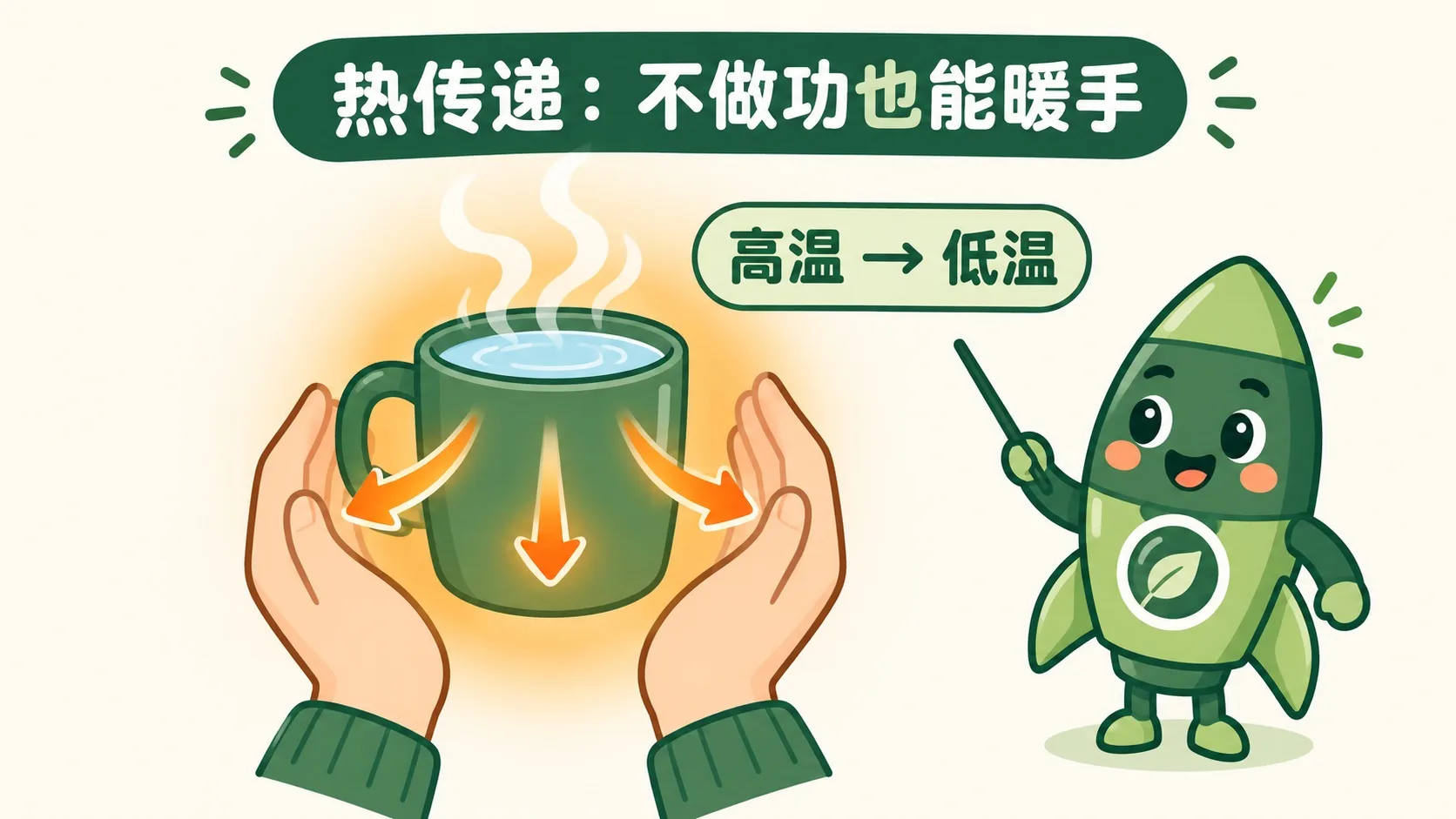
把冻僵的手贴在热水杯上:热量从高温的杯子自动流向低温的手,这就是热传递。不用摩擦、不用使劲,只要存在温度差,它就会发生,直到两边温度相同。做功和热传递是改变内能的两条路——效果一样,都是给内能「记账」。Press cold hands on a hot mug, and heat flows on its own from the hot mug to the cold hands — that's heat transfer. No rubbing, no effort: whenever temperatures differ, it happens, until both sides match. Doing work and heat transfer are the two routes that change internal energy — different routes, same result.
🎮 你来当分子观察员(30 秒)🎮 Your turn: molecule observer (30 seconds)
先拖温度滑块,看分子小球怎么变快变慢、变红变蓝;再判断 4 个生活情境靠哪种方式改变内能。Drag the temperature slider and watch the balls speed up, slow down, turn red or blue — then judge 4 everyday scenes: work or heat transfer?
一句话记住它:内能 = 物体里所有分子的动能 + 势能总和;一切物体都有内能,改变它只有两条路——做功与热传递。Remember it in one line: internal energy = the total kinetic + potential energy of all molecules; every object has it, and it changes through just two routes — doing work and heat transfer.
分子永不停息地运动;温度 = 分子平均动能,越热跑得越快Molecules never stop moving; temperature = their average kinetic energy — hotter means faster内能 = 所有分子的动能 + 势能总和;0°C 的冰也有内能Internal energy = all molecular kinetic + potential energy; even 0°C ice has it改变内能两条路:做功(摩擦、压缩)和热传递(接触传热)Two routes to change it: doing work (rubbing, compressing) and heat transfer (touching)
内容参考 OpenStax 等公开教材,多来源核对 · AI 生成、人工审核 · 发现错误欢迎指正,帮这片叶子长得更好。Based on OpenStax and other open textbooks, cross-checked across sources · AI-generated, human-reviewed · Spotted a mistake? Tell us — help this leaf grow.
 Back to tree