📉 机械效率:省下的功去哪了📉 Mechanical Efficiency: Where Did the Saved Work Go?
上一片里,小火箭用杠杆和滑轮省了力,得意极了。可一算总账它发现:省力是真的,"省功"却是假的——干同样的活,花掉的功总比有用的功多。多出来的去哪了?Last leaf, our little rocket used levers and pulleys to save force and felt proud. But the full bill told another story: saving force is real, saving work is not — for the same job, the work you spend always exceeds the work you use. Where does the extra go?
第 1 步:把功分成两份Step 1: Split the work in two
先看一台起重机吊货,把“花了多少功”和“用到多少功”分开算。Start with a crane lifting a crate, and count separately what work is spent and what work is used.
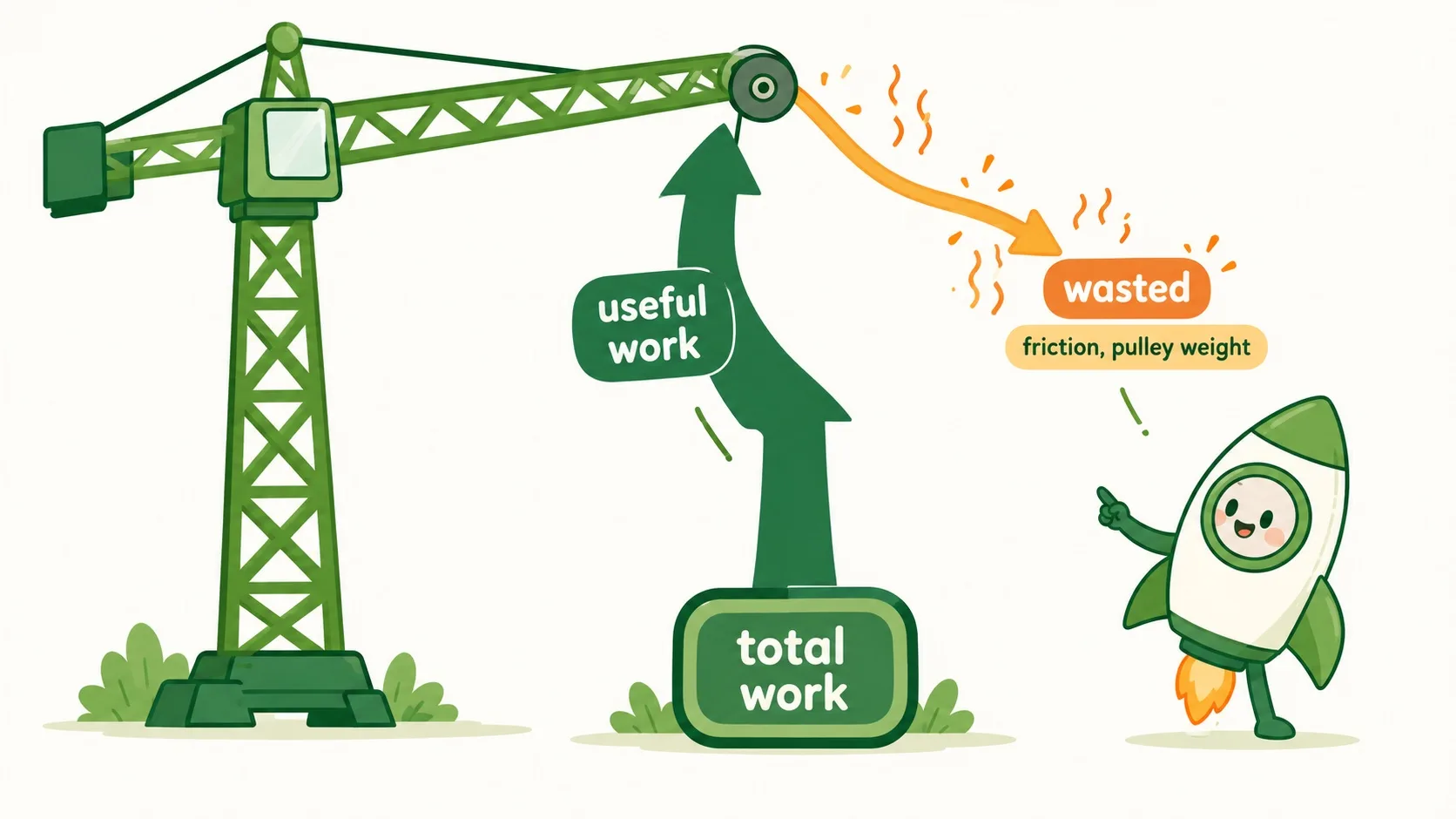
起重机把 500 N 的货物吊高 2 米,真正有用的部分是把货提上去——W有 = G·h = 500 × 2 = 1000 J。可电机实际花掉的总功更多:滑轮摩擦、钢索和吊钩自己的重量也要被拖动,这部分叫额外功 W额。总功 W总 = W有 + W额。小火箭发现:有用功只是总功的一部分,另一部分从滑轮那儿“漏”走了。The crane lifts a 500 N crate 2 metres. The genuinely useful part is raising the load — Wuseful = G·h = 500 × 2 = 1000 J. Yet the motor spends more: pulley friction, and the cable and hook's own weight must be moved too. That part is the wasted work Wwasted. Total work Wtotal = Wuseful + Wwasted. The little rocket sees it clearly: useful work is only part of the bill — the rest leaks away at the pulley.
那为什么有的装置效率高、有的低?So why is one device efficient and another not?
第 2 步:三种提法,三本账Step 2: Three ways to lift, three bills
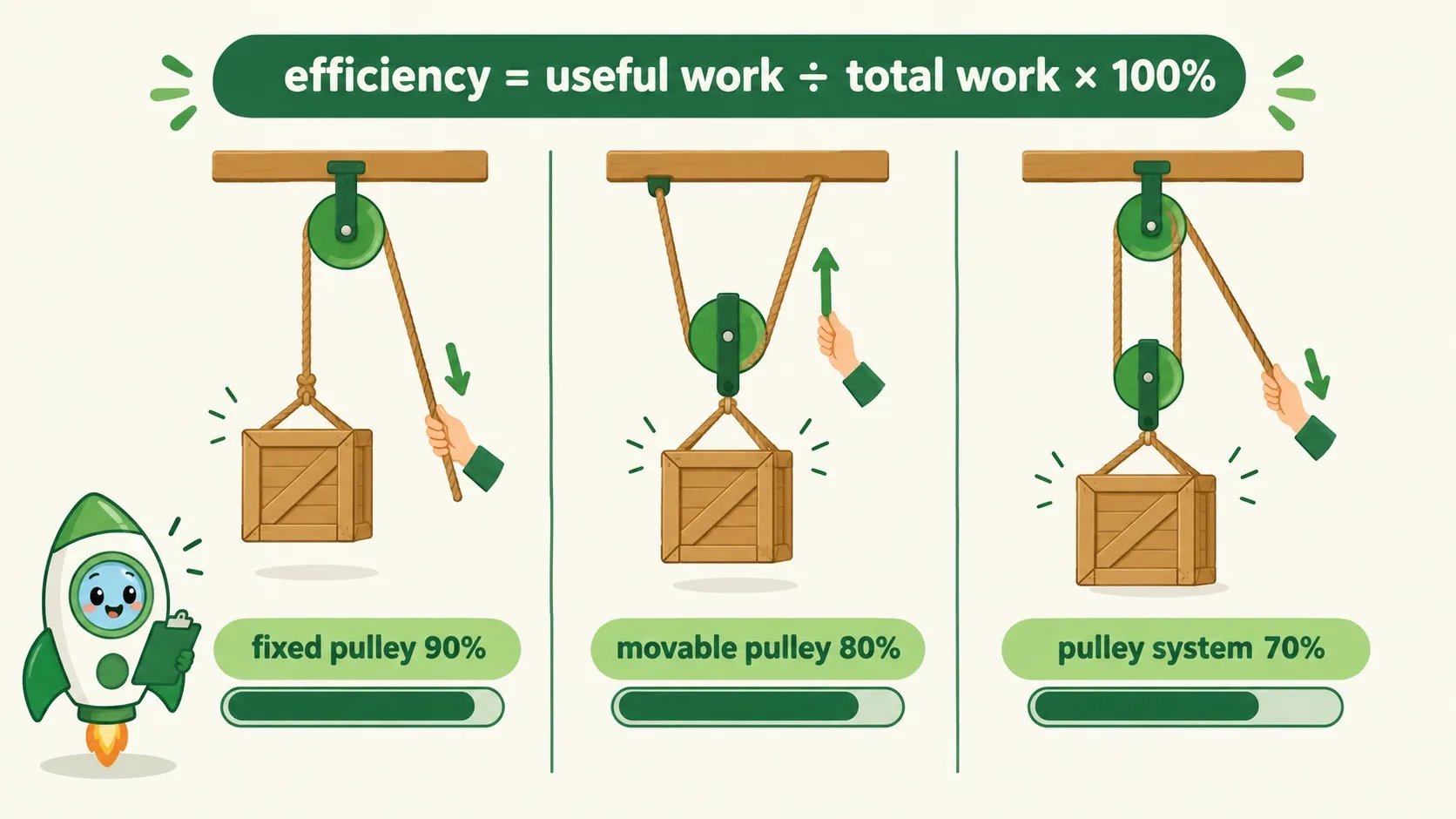
提起同一个重物,有用功一样多,但不同装置的额外功不同。定滑轮简单、损耗小,效率高;动滑轮省了一半力,却要连自己一起被提上去,摩擦也更多;滑轮组绕绳最多、摩擦最大,效率通常更低。效率 η = W有 ÷ W总 × 100%。省力越多的装置,往往要多付一份“额外功”的账。Lift the same load and the useful work is identical — but each device wastes differently. A fixed pulley is simple with little loss, so it is efficient. A movable pulley halves the force, yet it must be lifted along with the load and adds friction. A pulley system has the most rope and the most friction, so it is usually least efficient. Efficiency η = Wuseful ÷ Wtotal × 100%. Devices that save more force usually pay a bigger wasted-work bill.
那这些“漏掉”的功,到底变成了什么?And what do those “leaked” joules actually become?
第 3 步:漏掉的功在发热Step 3: The leaked work turns into heat
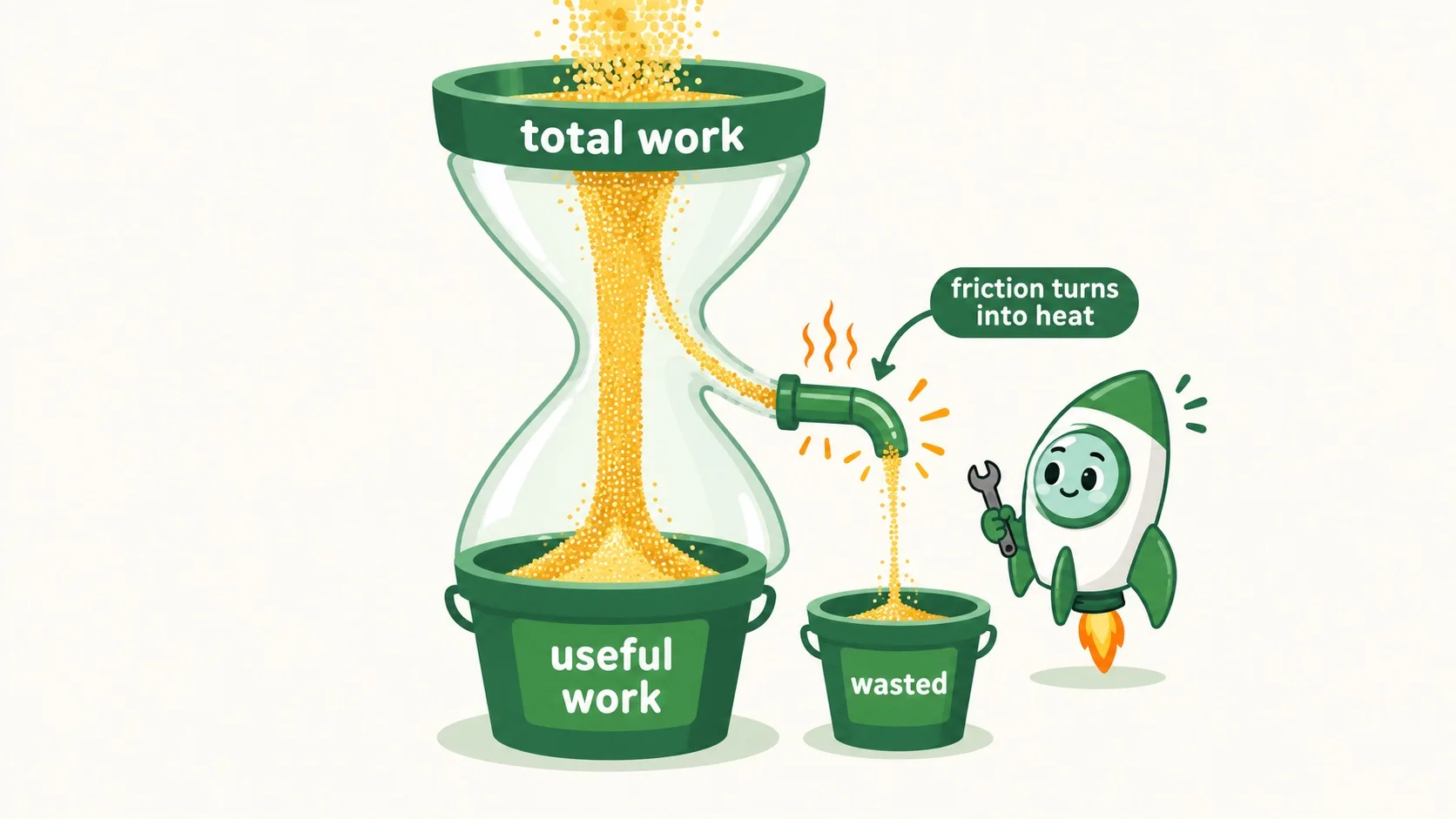
能量不会凭空消失。额外功变成了摩擦的热、机械零件自己的“折腾”,散进周围的空气里。所以效率 100% 的机械根本不存在——只要零件互相摩擦、只要机械自己也要动,“漏掉”就躲不开。工人给齿轮上油、把动滑轮做轻,就是想把漏掉的功再捞回来一点。Energy never vanishes. Wasted work becomes friction heat and the machine's own extra motion, drifting into the surrounding air. That is why no machine reaches 100% — as long as parts rub and the machine itself must move, some work will leak. Oiling gears and making movable pulleys lighter are ways to scoop a little of it back.
🎮 你来开起重机(30 秒)🎮 Your turn: drive the crane (30 seconds)
道理讲完了。先拖「损耗」滑块看效率和总功怎么变,再算对 4 道效率题。Theory done. Drag the “waste” slider to watch efficiency and total work change, then solve 4 efficiency tasks.
一句话记住它:效率 = 有用的功 ÷ 花掉的总功;摩擦和机械自重让额外功永远大于零,所以 100% 永远达不到。Remember it in one line: efficiency = useful work ÷ total work spent; friction and the machine's own weight keep wasted work above zero, so 100% stays out of reach.
W总 = W有 + W额;η = W有 ÷ W总 × 100%Wtotal = Wuseful + Wwasted; η = Wuseful ÷ Wtotal × 100%摩擦和机械自重是额外功的两大来源,也是效率上不去的原因Friction and the machine's own weight are the two big sources of wasted work省力不等于省功;效率 100% 的机械不存在Saving force is not saving work; a 100%-efficient machine does not exist
内容参考 OpenStax 等公开教材,多来源核对 · AI 生成、人工审核 · 发现错误欢迎指正,帮这片叶子长得更好。Based on OpenStax and other open textbooks, cross-checked across sources · AI-generated, human-reviewed · Spotted a mistake? Tell us — help this leaf grow.
 Back to tree