🧂 分子与离子:原子们的组队方式🧂 Molecules & Ions: How Atoms Team Up
上一片认识了原子这块小积木。这次 🚀 小火箭把小烧瓶送进粒子城——看原子们怎么组队:有的手拉手,有的带电。Last leaf we met the atom, the little brick. This time 🚀 the rocket drops our flask off at Particle Town — to watch atoms team up: some hold hands, some charge up.
第 1 步:手拉手,组成分子Step 1: Hold hands — a molecule is born
先看最温柔的组队方式——手拉手。First, the gentlest way to team up — holding hands.
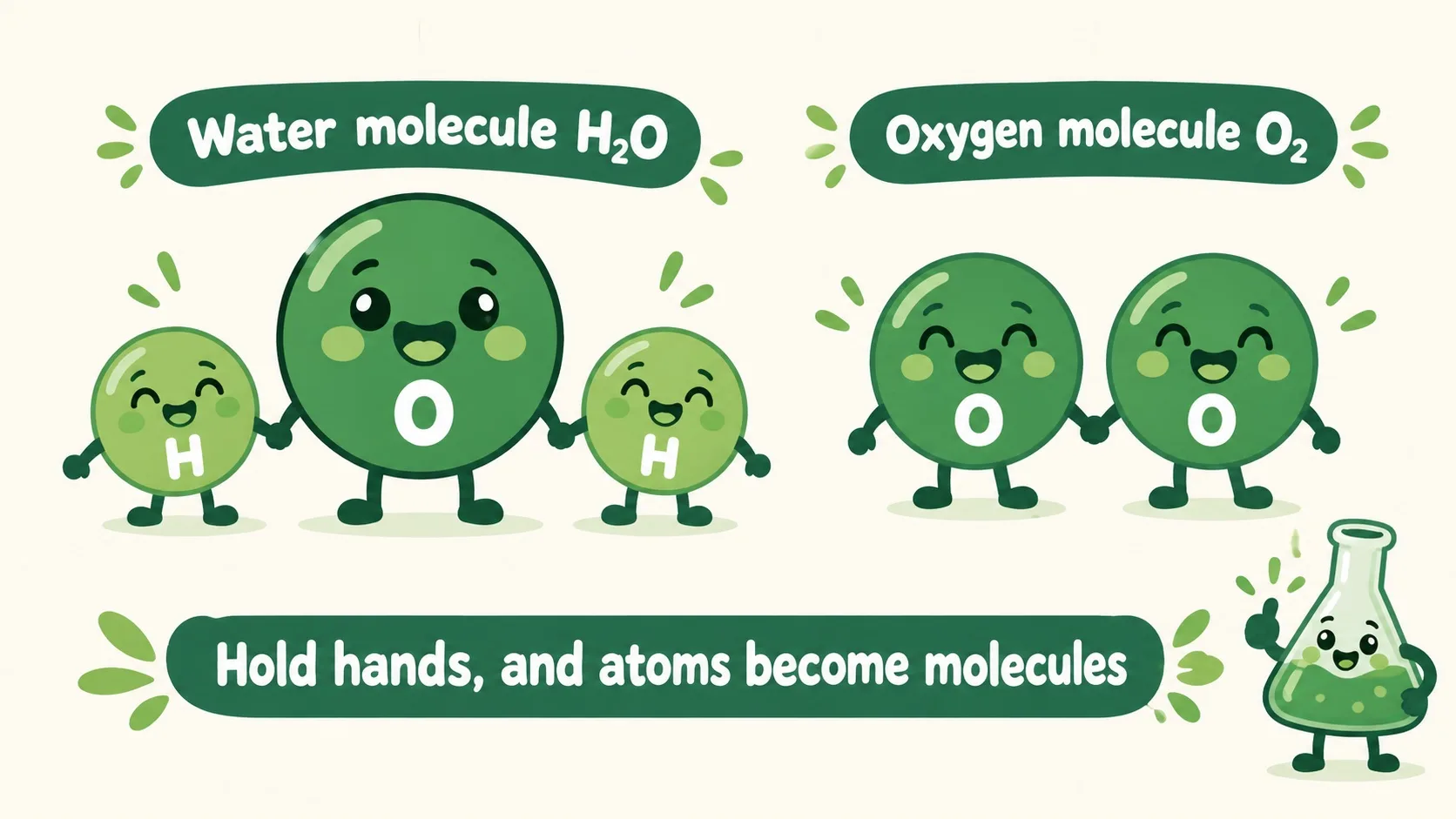
两个氢原子加一个氧原子,手拉手抱成水分子 H₂O。一对氧原子手拉手,就是氧气 O₂。原子像积木:靠"拉手"拼出各种分子。水、氧气、二氧化碳都是这样组队的。Two hydrogen atoms and one oxygen atom hold hands to make a water molecule, H₂O. A pair of oxygen atoms holding hands is oxygen gas, O₂. Atoms are like bricks: holding hands builds every molecule — water, oxygen, carbon dioxide.
可有些原子不想好好拉手——它们会带电。But some atoms don't hold hands nicely — they charge up instead.
第 2 步:带电了,组成离子Step 2: Charged up — an ion is born
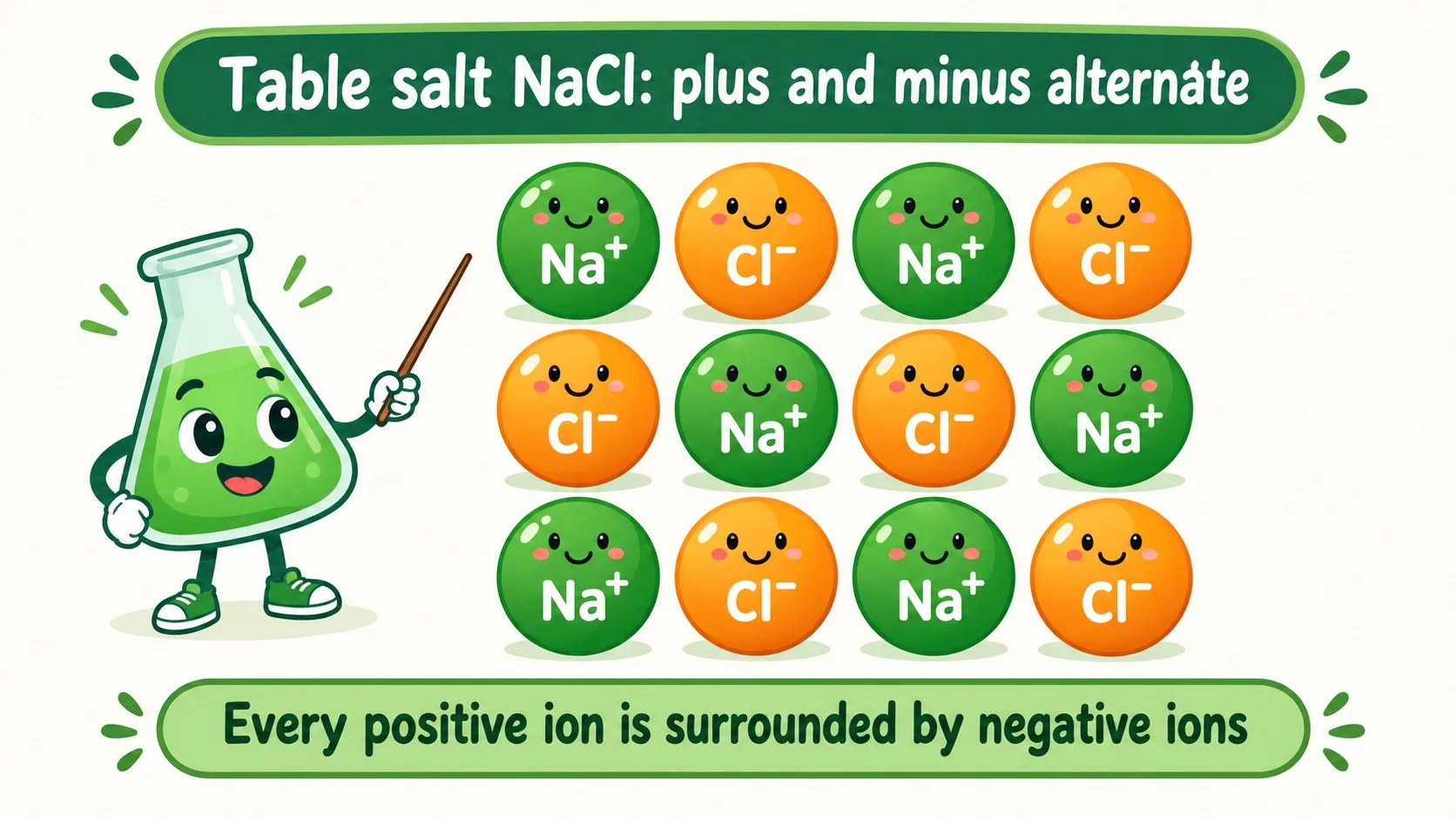
钠原子丢掉 1 个电子,带上正电,变成 Na⁺。氯原子得到 1 个电子,带上负电,变成 Cl⁻。正负相吸,它们紧紧抱团。食盐 NaCl 就这样码成晶格:一个正离子挨着一个负离子。A sodium atom loses 1 electron and becomes positive — Na⁺. A chlorine atom gains 1 electron and becomes negative — Cl⁻. Opposite charges attract, so they hold tight. Table salt, NaCl, packs into a lattice: every positive ion sits next to a negative one.
带电有什么用?把食盐和糖分别放进水里,差别马上出来。What is charge good for? Drop salt and sugar into water and the difference shows at once.
第 3 步:食盐与糖,导电的秘密Step 3: Salt vs sugar — the secret of conduction
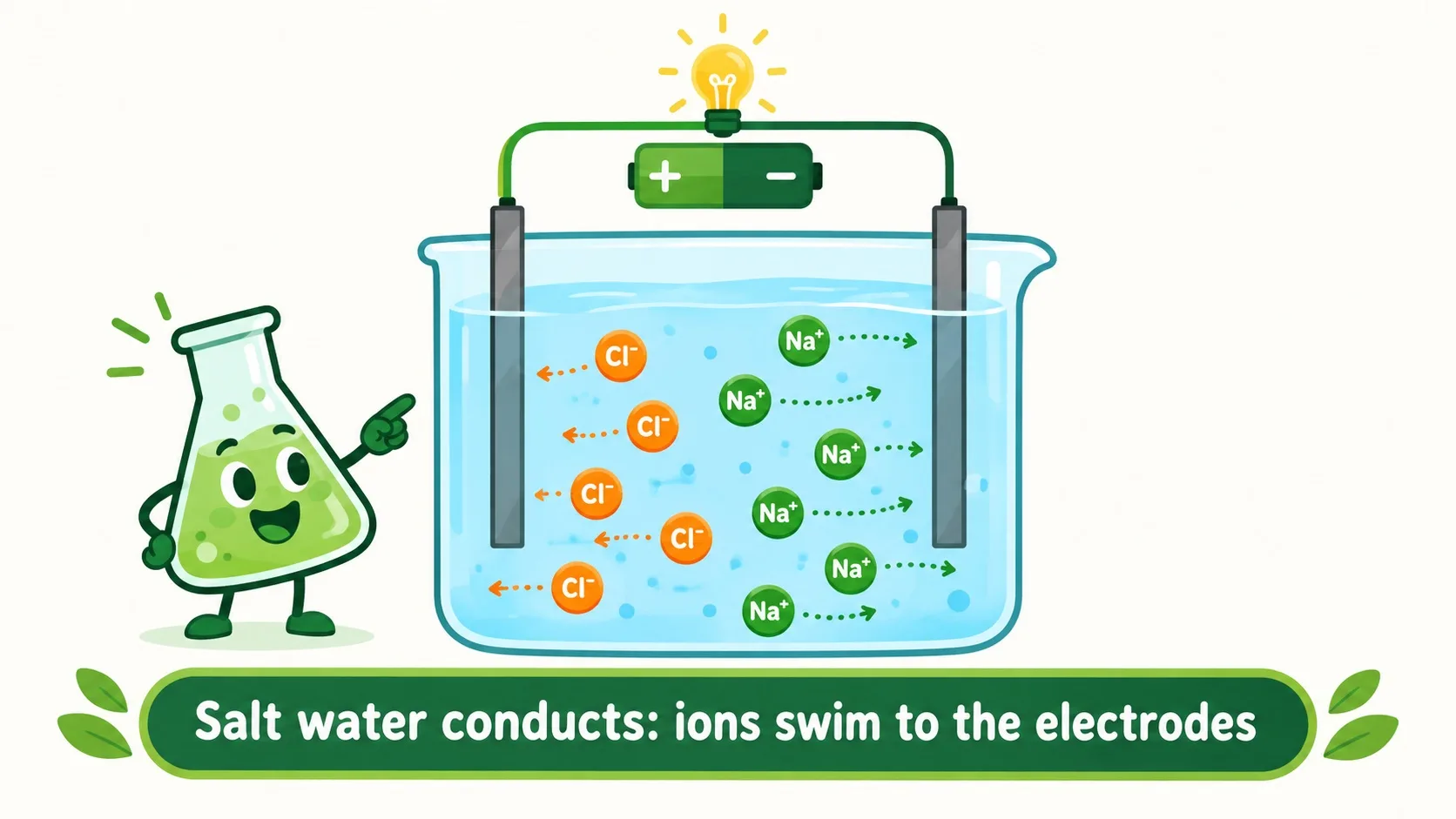
食盐溶进水里,Na⁺ 和 Cl⁻ 散开,游向正负电极——水就导电了,食盐水是电解质。糖溶进水里还是一个个糖分子,不带电、不游动,糖水不导电。导电的本质:离子在跑。Dissolve salt in water: Na⁺ and Cl⁻ spread out and swim toward the electrodes — the water conducts; salt water is an electrolyte. Sugar stays as whole sugar molecules: no charge, no swimming, no conduction. Conduction means ions on the move.
🎮 你来当分拣员(30 秒)🎮 Your turn: particle sorter (30 seconds)
道理讲完了,来做分拣员:把 4 张粒子卡分进"分子"和"离子"两个筐。Time to sort: drop the 4 particle cards into the molecule basket or the ion basket.
一句话记住它:分子是原子"手拉手",离子是原子"带电了";食盐水导电,靠的就是离子跑来跑去。Remember it in one line: molecules are atoms holding hands; ions are atoms that got charged — salt water conducts because its ions run around.
分子:原子手拉手(H₂O、O₂、CO₂)Molecule: atoms holding hands (H₂O, O₂, CO₂)离子:失电子带正电(Na⁺),得电子带负电(Cl⁻)Ion: lose electrons → positive (Na⁺); gain electrons → negative (Cl⁻)食盐水导电靠离子游向电极;糖水不导电,因为糖还是分子Salt water conducts because ions swim to the electrodes; sugar water doesn't — sugar stays as molecules
内容参考 OpenStax 等公开教材,多来源核对 · AI 生成、人工审核 · 发现错误欢迎指正,帮这片叶子长得更好。Based on OpenStax and other open textbooks, cross-checked across sources · AI-generated, human-reviewed · Spotted a mistake? Tell us — help this leaf grow.
 Back to tree