展馆的灯也可能用到核电。小树想追踪:原子核的变化怎样点亮灯?The museum’s lights may use nuclear-generated electricity. Mia follows energy from an atomic nucleus to a lamp.
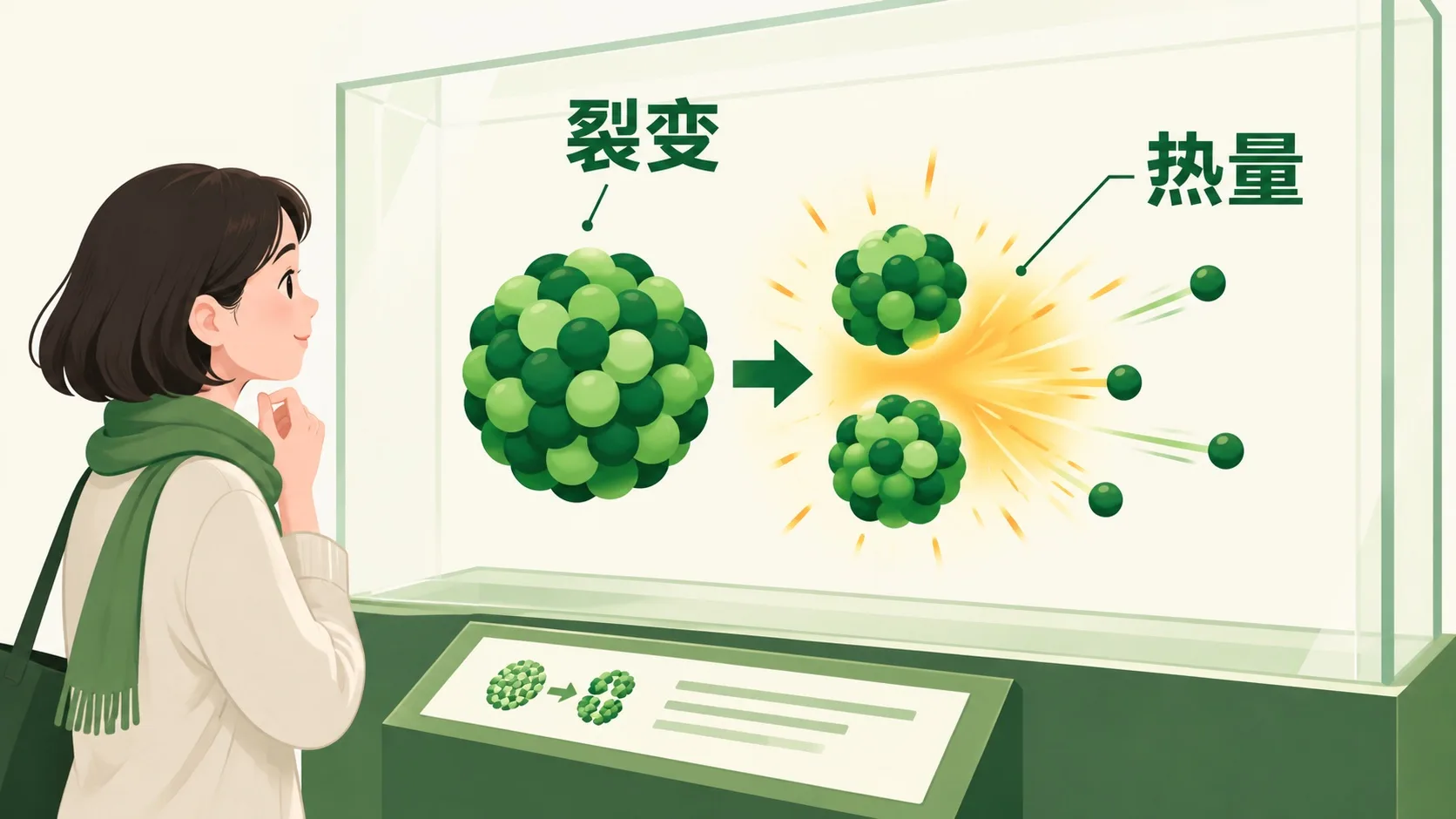
第 1 步:裂变释放能量Step 1: Fission releases energy
先看热量来自哪里。Start with the source of heat.
裂变是重原子核分裂的过程。它能释放能量与中子。中子可引发后续裂变。反应堆把这种过程加以控制。Fission splits a heavy atomic nucleus. It can release energy and neutrons. Neutrons may cause further fission. A reactor controls this process.
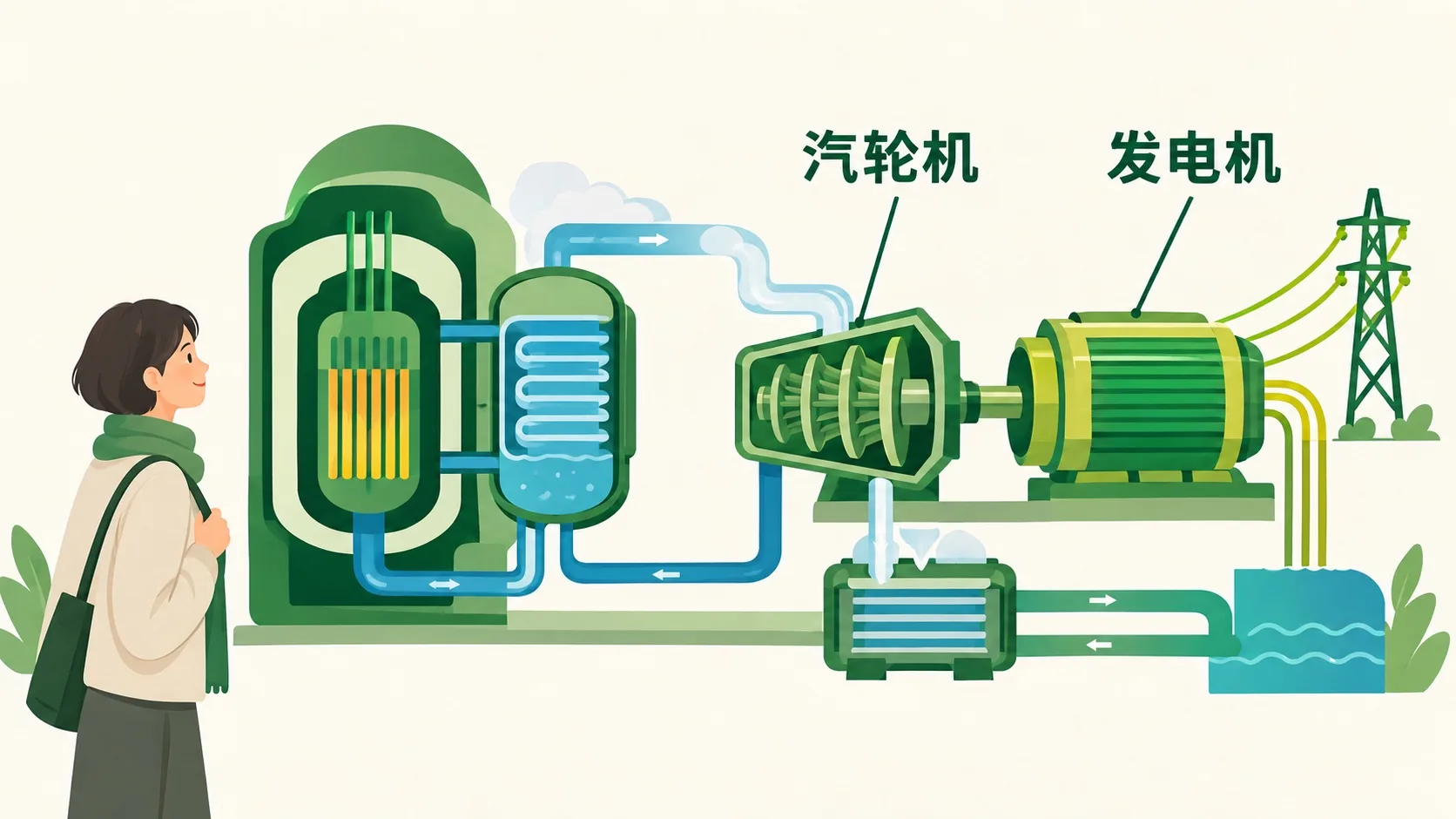
第 2 步:热推动常见发电链Step 2: Heat drives a familiar power chain
核变化怎样接上灯泡?How does a nuclear change connect to a lamp?
常见核电站利用热产生蒸汽。蒸汽带动汽轮机。发电机再输出电能。核燃料不是直接流进电线。Common nuclear plants use heat to produce steam. Steam drives a turbine. A generator produces electricity. Nuclear fuel does not flow through the power lines.
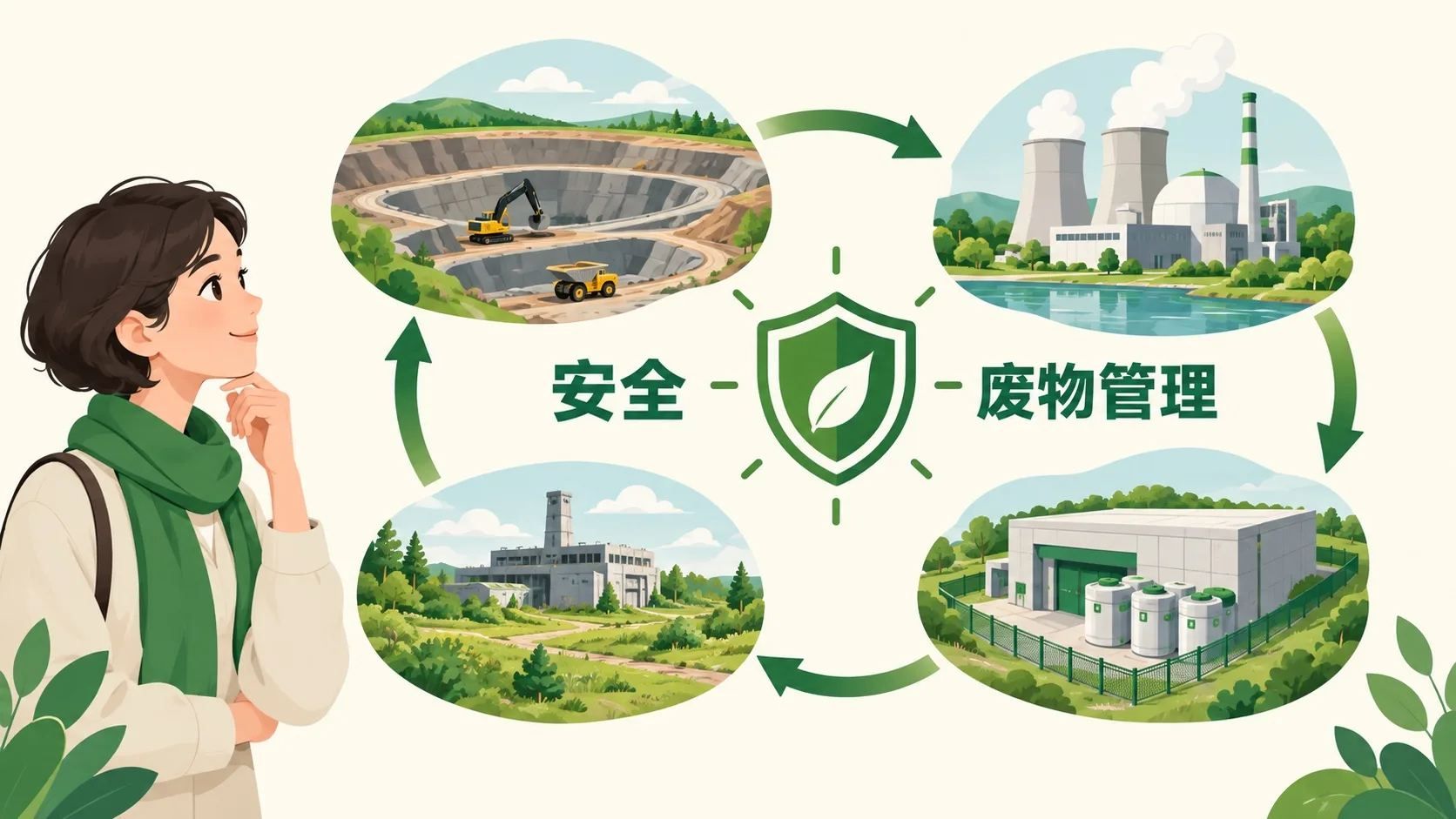
第 3 步:评估整个生命周期Step 3: Evaluate the whole life cycle
核电运行时的碳排放较低。建造、采矿与退役仍有影响。安全系统与废物管理很重要。成本和选择需结合当地条件。Nuclear operation has low carbon emissions. Construction, mining, and decommissioning still have impacts. Safety systems and waste management matter. Costs and choices depend on local conditions.
🎮 机制实验室:观察,再判断🎮 Mechanism lab: observe, then decide
按阶段追踪能量形式。不是核反应堆操作或设计模型。Follow energy forms by stage. This is not a reactor operation or design model.
一句话记住它:Remember it:核能的热可以发电,评价要覆盖安全与全生命周期。Nuclear heat can generate electricity; evaluation includes safety and the full life cycle.
裂变是重原子核分裂的过程。Fission splits a heavy atomic nucleus.常见核电站利用热产生蒸汽。Common nuclear plants use heat to produce steam.核电运行时的碳排放较低。Nuclear operation has low carbon emissions.
裂变发电机制:较高把握。成本和能源政策存在情境差异与争论,不给出统一优劣排名。High confidence in fission power mechanisms. Costs and policy choices vary and are debated; no universal ranking is given.
核对日期:2026 年 10 月 6 日。文字与配图由 AI 生成;已做来源核对及程序测试,待人工复核。Checked 6 October 2026. Text and illustrations are AI-generated. Sources and software checks were performed; human review is pending.
 Back to tree