🌊 洋流:海上的大传送带🌊 Ocean Currents: the Sea's Great Conveyor
上一片里,季风一年调头两次。风推的不只是空气,还有海水。🌍 蓝色星球向导跳上小渔船 Wave 号出海:海面下有一条常年不停的大传送带。Last leaf, the monsoon reversed twice a year. Wind doesn't only push air — it pushes water. 🌍 Blue Planet Guide hops aboard the little fishing boat Wave: under the surface runs a conveyor belt that never stops.
第 1 步:海水绕着大圈跑Step 1: The sea runs in giant loops
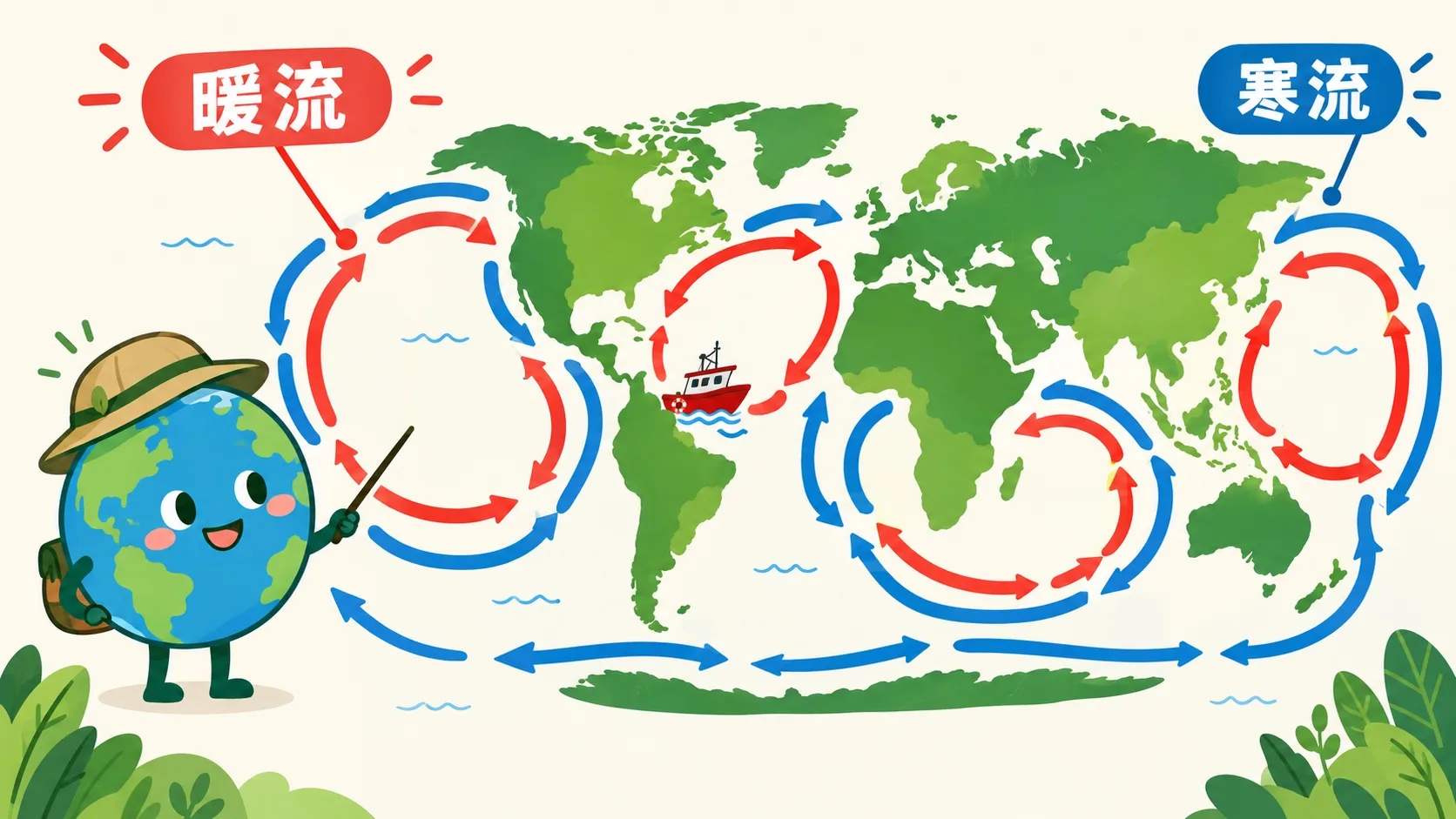
先看一张世界洋流图——红的和蓝的,方向都是固定的。Start with a world current map — the red and the blue both follow fixed routes.
海水不是一潭死水,它常年沿着固定路线绕圈跑,这就是洋流。从低纬流向高纬的叫暖流(红箭头),一路送热;从高纬流回低纬的叫寒流(蓝箭头),一路送冷。每个大洋里都有这样一个大圈:北半球顺时针转,南半球逆时针转。Wave 号顺着红箭头开,省一半油。The sea is no still pond: it runs the same routes all year long, and that is an ocean current. Water heading from low latitudes toward the poles is a warm current (red arrows), carrying heat; water returning from high latitudes is a cold current (blue arrows), carrying chill. Every ocean holds one of these giant loops — clockwise north of the equator, counter-clockwise south of it. Riding a red arrow, Wave burns half the fuel.
这么大一圈水,是谁推着它一直转的?So who keeps a loop that big turning, year after year?
第 2 步:风是推手,地球让它拐弯Step 2: Wind pushes, Earth's spin bends it
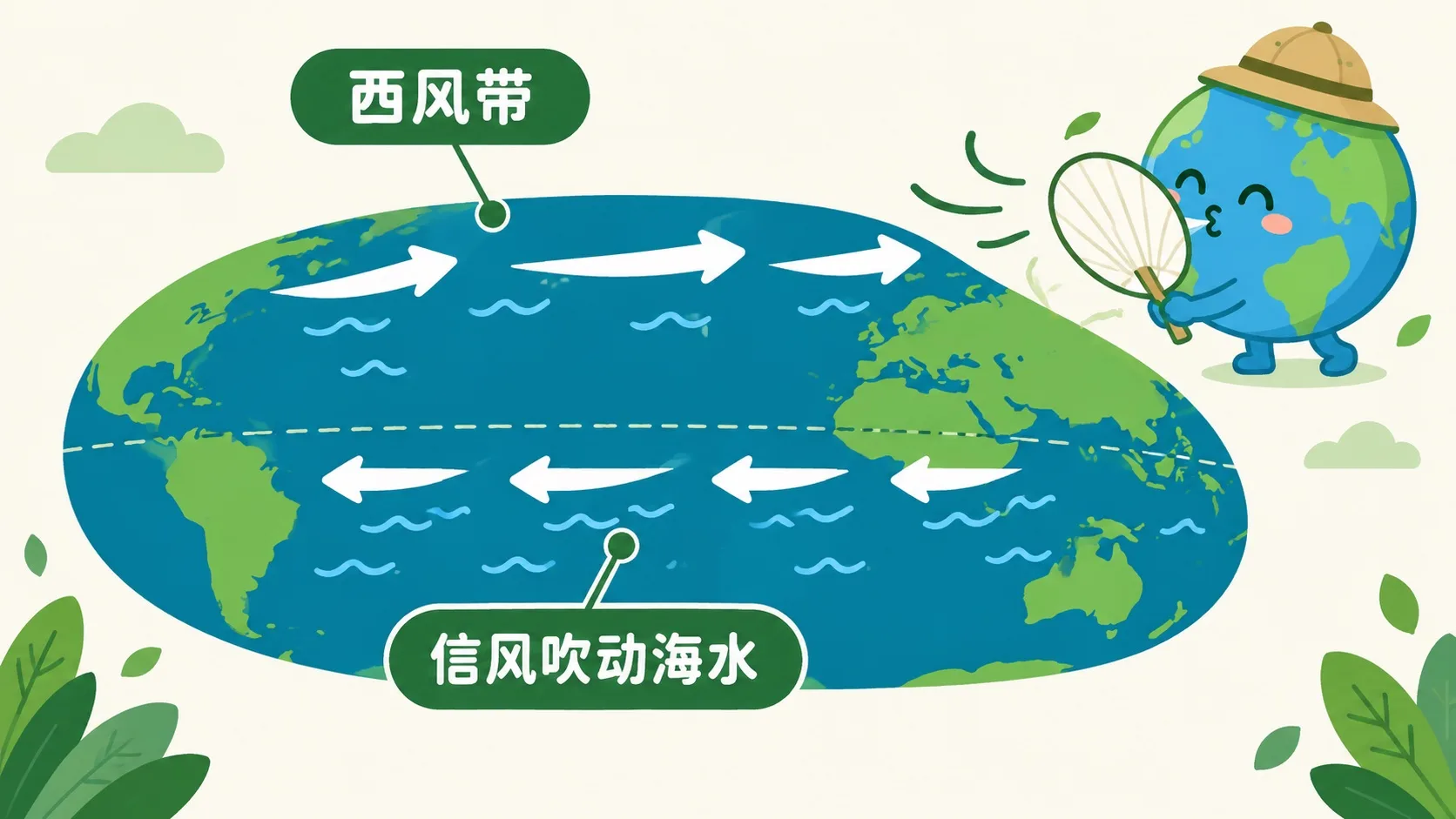
主要推手是常年不变的风。赤道附近的信风从东往西吹,把表层海水往西赶;中纬度的西风带从西往东吹,把海水送回去。一来一回,就推出了一个大圈。地球自转还会让水流拐弯:北半球偏右,南半球偏左——圈就这样闭合了。风只推得动表面几百米,深层还有另一套更慢的循环。The main push comes from winds that never change: trade winds near the equator blow east to west, dragging surface water westward; the westerlies in mid-latitudes blow west to east and send it back. Out and back, and a giant loop is born. Earth's spin also bends the flow — to the right north of the equator, to the left south of it — which closes the circle. Wind only stirs the top few hundred metres; deeper down, a slower circulation runs on its own.
水绕起圈来之后,会给岸上的人带来什么?Once the loop is turning, what does it bring to the people ashore?
第 3 步:搬运热量,也搬来鱼群Step 3: It moves heat — and fish
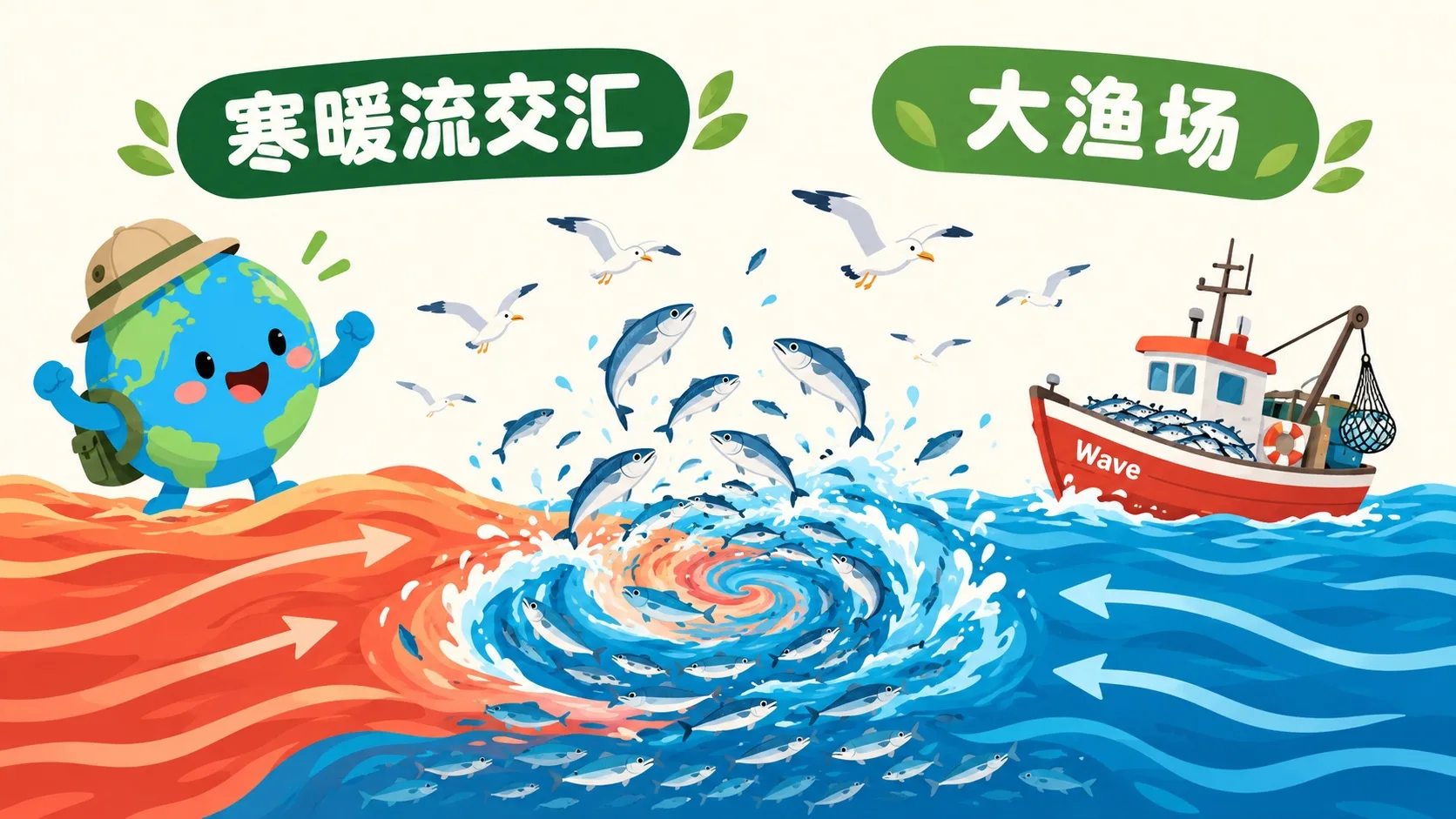
洋流是地球的暖气管道。暖流经过的海岸冬天不冻:英国和加拿大同纬度,却暖得多,靠的就是北大西洋暖流。寒流经过的海岸又冷又干,沙漠能一直逼到海边。寒暖流相遇的海域最热闹:海水上下翻动,把海底的养分带上来,小鱼小虾疯长,鱼群聚集——世界级大渔场几乎都在这种交汇处。Wave 号满载而归。Currents are Earth's heating pipes. A coast washed by a warm current stays unfrozen in winter: Britain sits at Canada's latitude yet feels far milder, thanks to the North Atlantic warm current. A coast washed by a cold current turns cold and dry, with desert running right down to the sea. Where warm meets cold, things get lively: the water overturns and lifts nutrients from below, plankton bloom, and fish crowd in — nearly every world-class fishing ground sits at such a meeting point. Wave comes home full.
🎮 你来吹风(30 秒)🎮 Your turn: blow the winds (30 seconds)
道理讲完了。先把信风和西风两个滑块推上去,看大圈转起来、暖流爬上高纬海岸;再接下面 4 张航海工单。Theory done. First push the trade-wind and westerly sliders up, watch the loop close and warm water climb north; then take the 4 work orders below.
一句话记住它:洋流 = 风推出来的海上大传送带;暖流送热、寒流送冷,两股相遇的地方出大渔场。Remember it in one line: an ocean current is a wind-driven conveyor belt at sea — warm ones carry heat, cold ones carry chill, and where they meet, the fish gather.
暖流由低纬流向高纬(送热),寒流反过来(送冷)Warm currents run from low to high latitudes (heat), cold ones the other way (chill)推手是信风和西风带,地球自转让水流拐弯成圈Trade winds and westerlies do the pushing; Earth's spin bends the flow into a loop寒暖流交汇处海水翻动、养分上浮,成为世界级大渔场Where warm meets cold, water overturns and nutrients rise — world-class fishing grounds
内容参考 OpenStax 等公开教材,多来源核对 · AI 生成、人工审核 · 发现错误欢迎指正,帮这片叶子长得更好。Based on OpenStax and other open textbooks, cross-checked across sources · AI-generated, human-reviewed · Spotted a mistake? Tell us — help this leaf grow.
 Back to tree