Wave 号顺着洋流回到港口,却进不去了——海水退走了一大半。🌍 蓝色星球向导抬头指了指天上:这回不怪风,是月亮在拉海水。Wave rides the current home, only to find the harbour too shallow to enter — half the water has drained away. 🌍 Blue Planet Guide points at the sky: this one isn't the wind's doing. The Moon is pulling the sea.
第 1 步:海水被拉出两个鼓包Step 1: The sea gets two bulges
先看月球怎么把一整个海洋拉变形。First, watch the Moon pull a whole ocean out of shape.
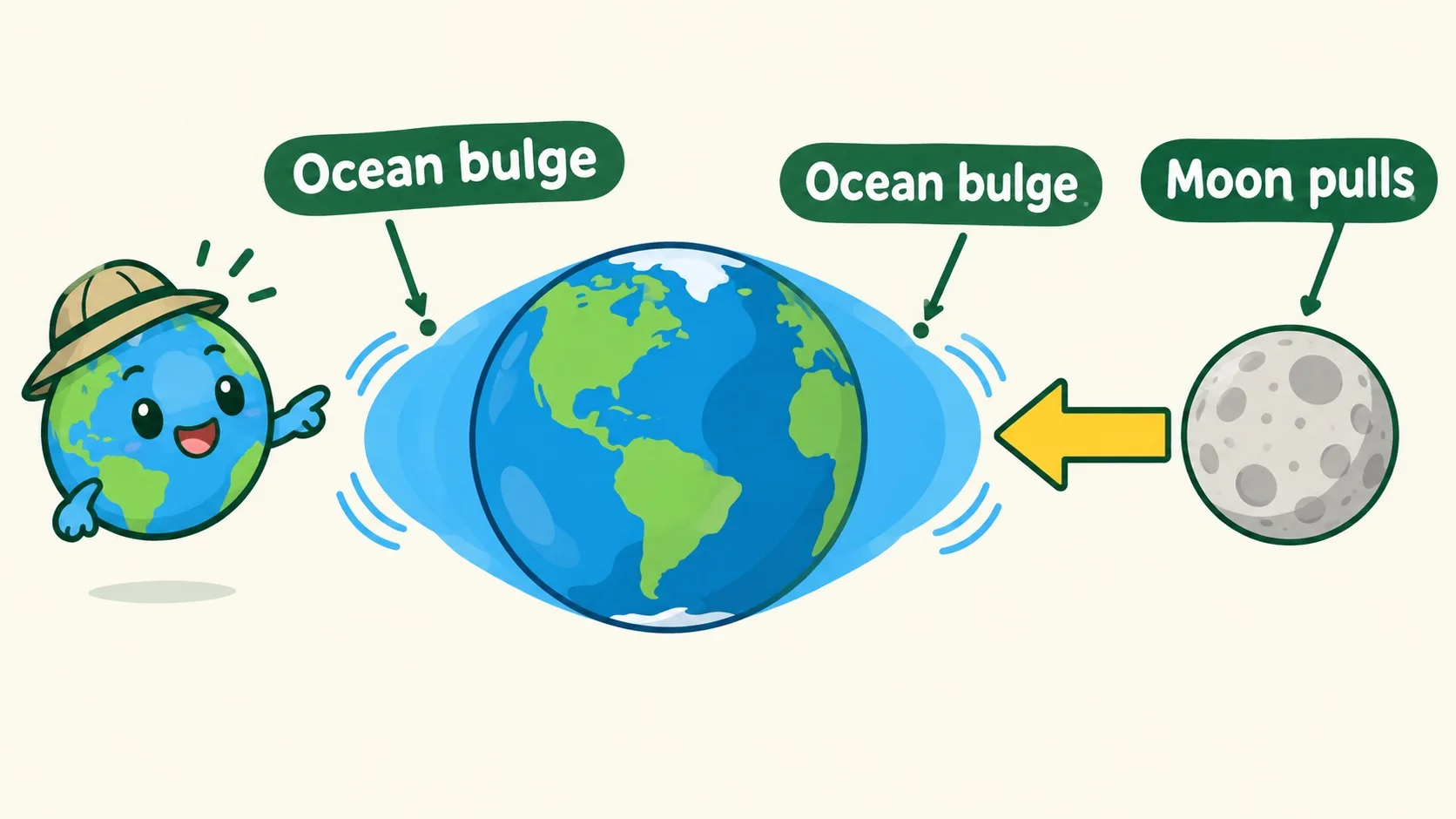
月球的引力拉着地球上的海水。正对月亮的一面被拉得鼓起来,形成一个水包;背对月亮的一面离月球最远、被“甩”在外面,也鼓起一个水包。于是海水被拉成一个椭球。地球每天自转一圈,海岸依次穿过这两个鼓包——所以大多数海边一天涨两次、退两次,一轮大约 12 小时 25 分。The Moon's gravity tugs at Earth's oceans. The side facing the Moon is pulled into a bulge; the far side, left behind as the Moon pulls Earth itself away, bulges too. The ocean ends up shaped like an egg. Earth spins once a day, so every coast sweeps through both bulges — which is why most shores get two high tides and two low tides a day, one round trip every 12 hours 25 minutes or so.
可为什么有的日子潮水特别猛,有的日子几乎不动?But why is the tide fierce on some days and barely noticeable on others?
第 2 步:太阳来帮忙,还是来拆台Step 2: The Sun either helps or gets in the way
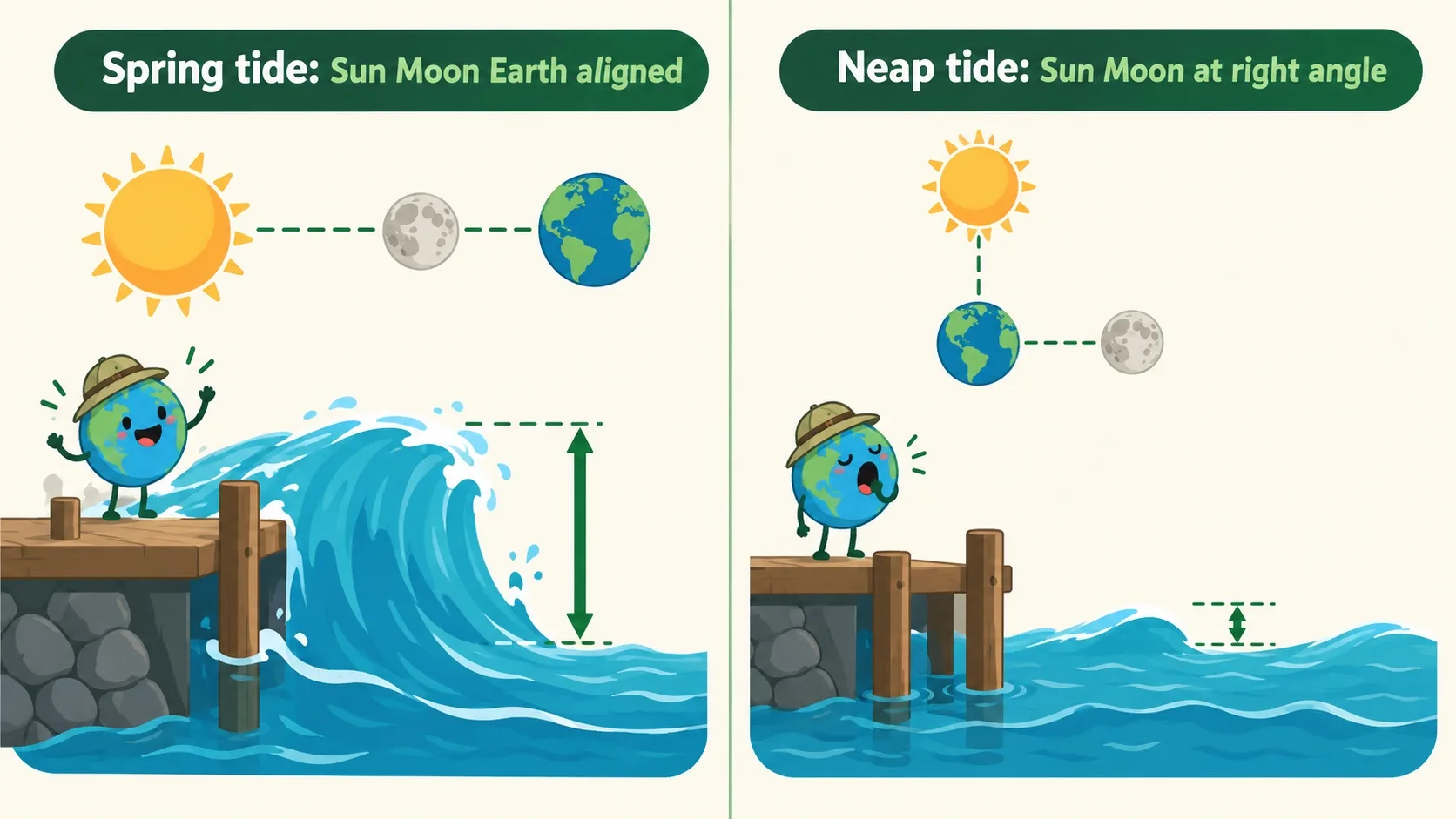
太阳也在拉海水,只是力气大约只有月球的一半。农历初一和十五,日、月、地几乎排成一条直线,两股拉力叠在一起,潮差(大白话:涨到最高和退到最低的高度差)最大,叫大潮。农历初八和二十三前后,日月对地球成直角,两股力互相抵消一部分,潮差最小,叫小潮。所以潮汐大小跟着月相走:一个月两大两小。The Sun pulls the sea as well, with about half the Moon's strength. Around new moon and full moon, Sun, Moon and Earth line up, the two pulls add together, and the tidal range (plain words: the height gap between highest and lowest water) is at its biggest — a spring tide. Around the half moons, Sun and Moon sit at right angles to Earth, the pulls partly cancel, and the range is at its smallest — a neap tide. So tides follow the Moon's phases: two big spells and two small ones each month.
既然潮汐这么有规律,人就能提前把它算出来。A rhythm this regular means people can work it out in advance.
第 3 步:照着潮汐表过日子Step 3: Living by the tide table
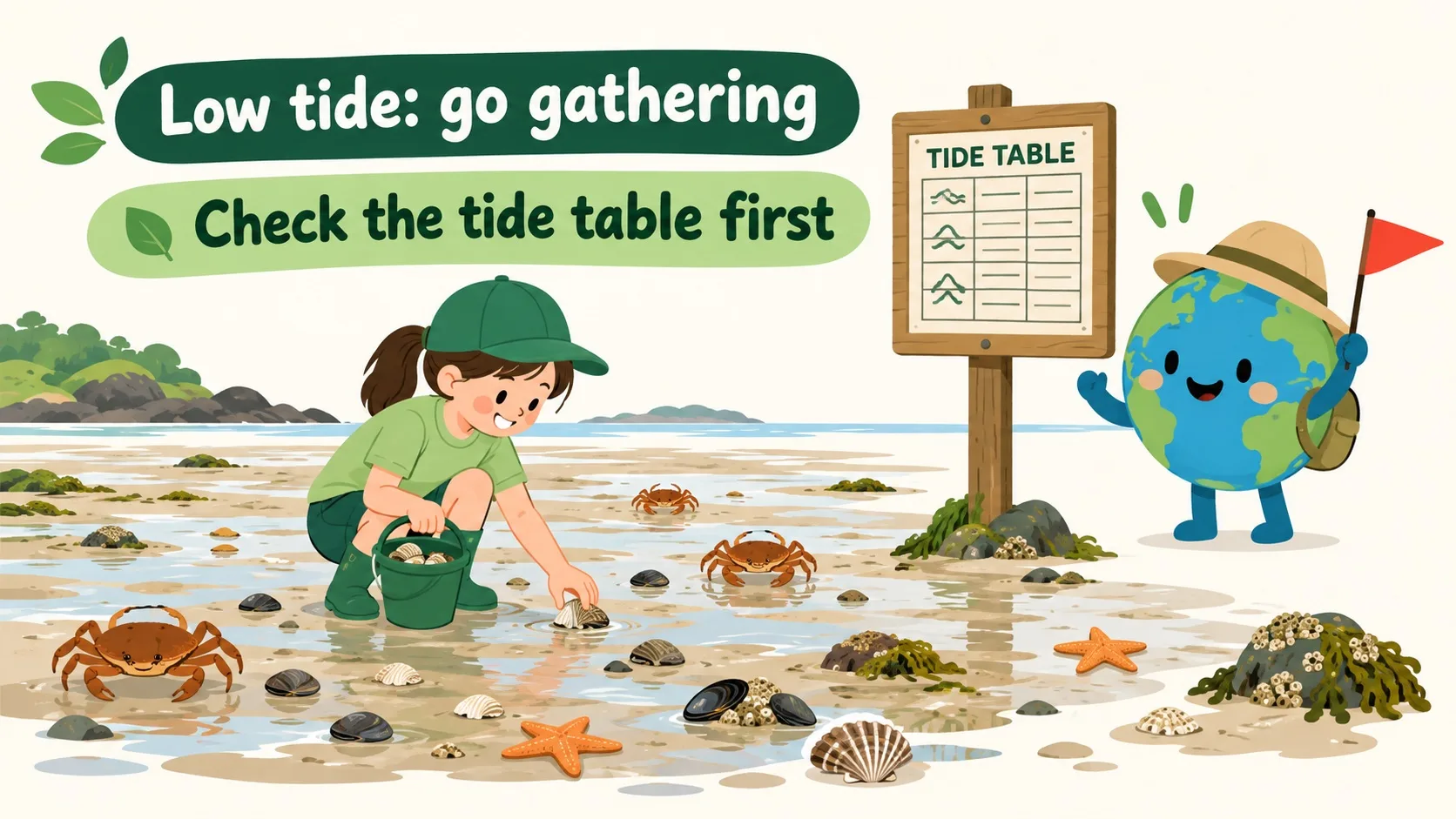
潮汐能提前几年算好,印成潮汐表。赶海的人照表出门:退潮时滩涂露出来,捡贝壳、抓螃蟹;涨潮前必须上岸,否则很容易被水围住。大船照表进出港,钱塘江大潮照表去看,潮汐发电站也照表发电。Wave 号就在港外等了两个小时,等涨潮把水位顶上来,才稳稳开进港。Tides can be computed years ahead and printed as a tide table. Shell-gatherers go by it: at low tide the flats open up for shells and crabs, and everyone must be back on shore before the water returns, or it will surround them. Big ships time their harbour runs by it, tidal-bore watchers pick their day by it, and tidal power stations generate by it. Wave waited two hours outside the harbour for the rising tide to lift the water, then slid safely in.
🎮 你来当潮汐调度员(30 秒)🎮 Your turn: tide desk (30 seconds)
道理讲完了。先转地球、搬月球,把 Wave 号送进港;再闯下面 4 关:判大潮、小潮,和该查表的时候。Theory done. First spin Earth and move the Moon to float Wave into the harbour; then clear 4 rounds: spring tide, neap tide, and when to just read the table.
一句话记住它:潮汐 = 月亮(加上太阳)把海水拉出两个鼓包,地球自转让海岸每天穿过它们两次。Remember it in one line: a tide is the Moon (plus the Sun) raising two ocean bulges, and Earth's spin carrying every coast through both of them each day.
一天两涨两落,约 12 小时 25 分一轮,因为有两个鼓包Two highs and two lows a day, about 12 h 25 min apart — because there are two bulges日月地一线 → 大潮;日月成直角 → 小潮,跟着月相走Sun-Moon-Earth in line → spring tide; at right angles → neap tide, following the Moon's phases潮汐能提前算成潮汐表:赶海、进港、发电都照表办Tides are predictable and printed as tables: gathering, docking and power all run on them
内容参考 OpenStax 等公开教材,多来源核对 · AI 生成、人工审核 · 发现错误欢迎指正,帮这片叶子长得更好。Based on OpenStax and other open textbooks, cross-checked across sources · AI-generated, human-reviewed · Spotted a mistake? Tell us — help this leaf grow.
 Back to tree