上一片里,月亮轻轻拉出了潮汐。🌍 蓝蓝站在码头上问:那一阵阵的海浪,又是谁推起来的?答案是风。Last leaf, the Moon gently pulled the tides. 🌍 Lanlan stands on the pier and asks: who pushes the rolling waves? The answer is wind.
第 1 步:风越大,浪越高Step 1: Stronger wind, taller waves
先看风怎么把海面“写”出浪花。First, watch how wind “writes” waves onto the sea.
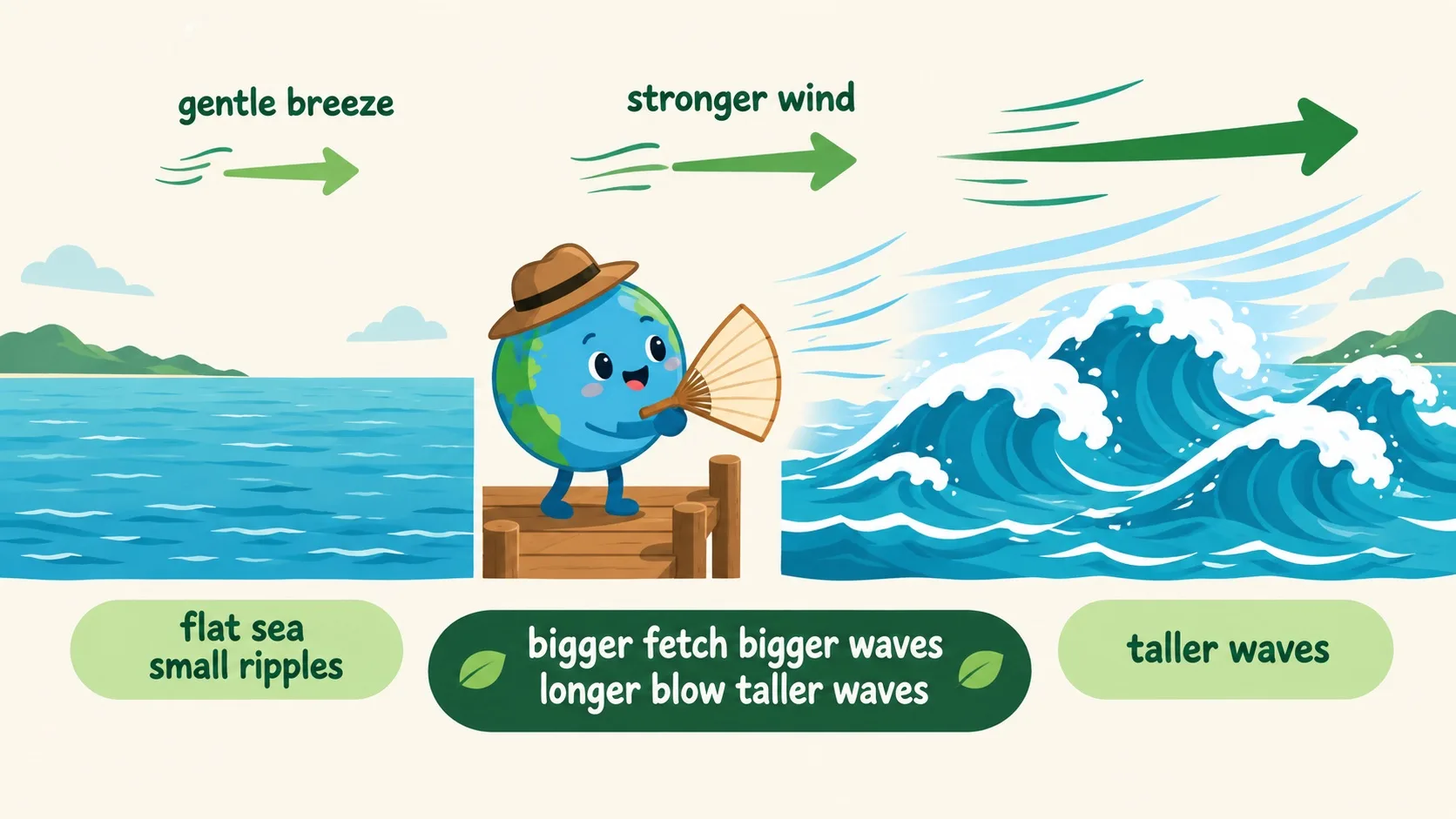
蓝蓝举起大纸扇,对着海面扇风。风擦过海面,把水“拽”起一道道浪。浪有多高,看三样东西:风速越快越高,风区越大越高,吹得越久越高。Lanlan waves a big paper fan at the sea. Wind drags across the surface and pulls the water into waves. Wave height depends on three things: faster wind, bigger fetch (wind area), longer blow — taller waves.
你可能会问:浪冲向沙滩,水是不是也跟着跑远了?You might ask: as waves rush to the beach, does the water travel far too?
第 2 步:能量在跑,水在原地打转Step 2: Energy runs on, water spins in place
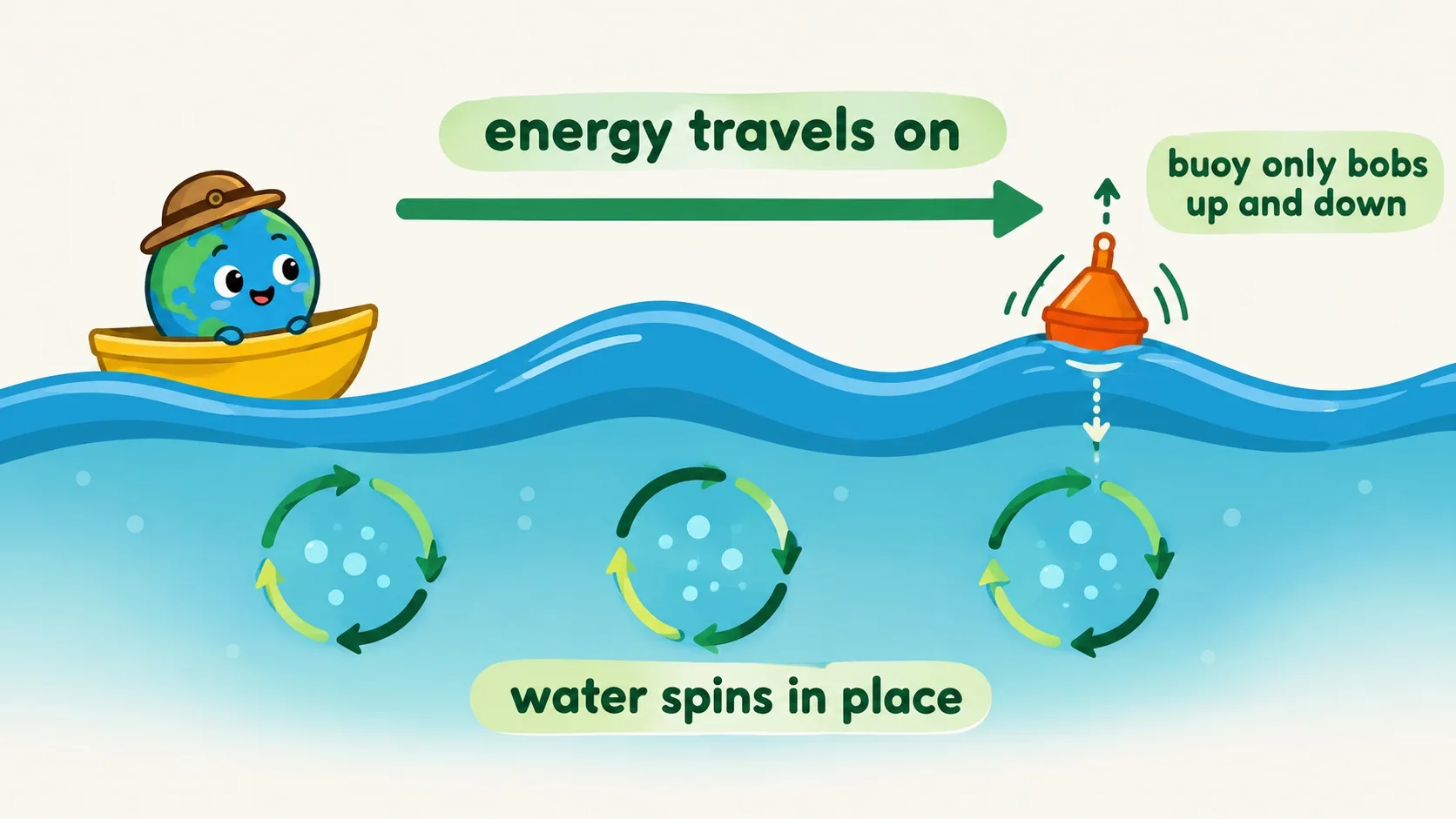
看那只橙色浮标:浪来了,它只上下打转,从不去远方。因为跑的是能量,不是水。水质点只在原地画圈圈,像排队跳绳的人。Watch the orange buoy: when a wave comes, it only bobs and loops — it never travels on. That is because the runner is energy, not water. Water particles just circle in place, like kids taking turns at jump rope.
那海啸呢?它也是风吹出来的大浪吗?What about a tsunami — is it just a bigger wind wave?
第 3 步:海啸是地震掀的,见到快跑Step 3: Tsunamis come from quakes — run uphill
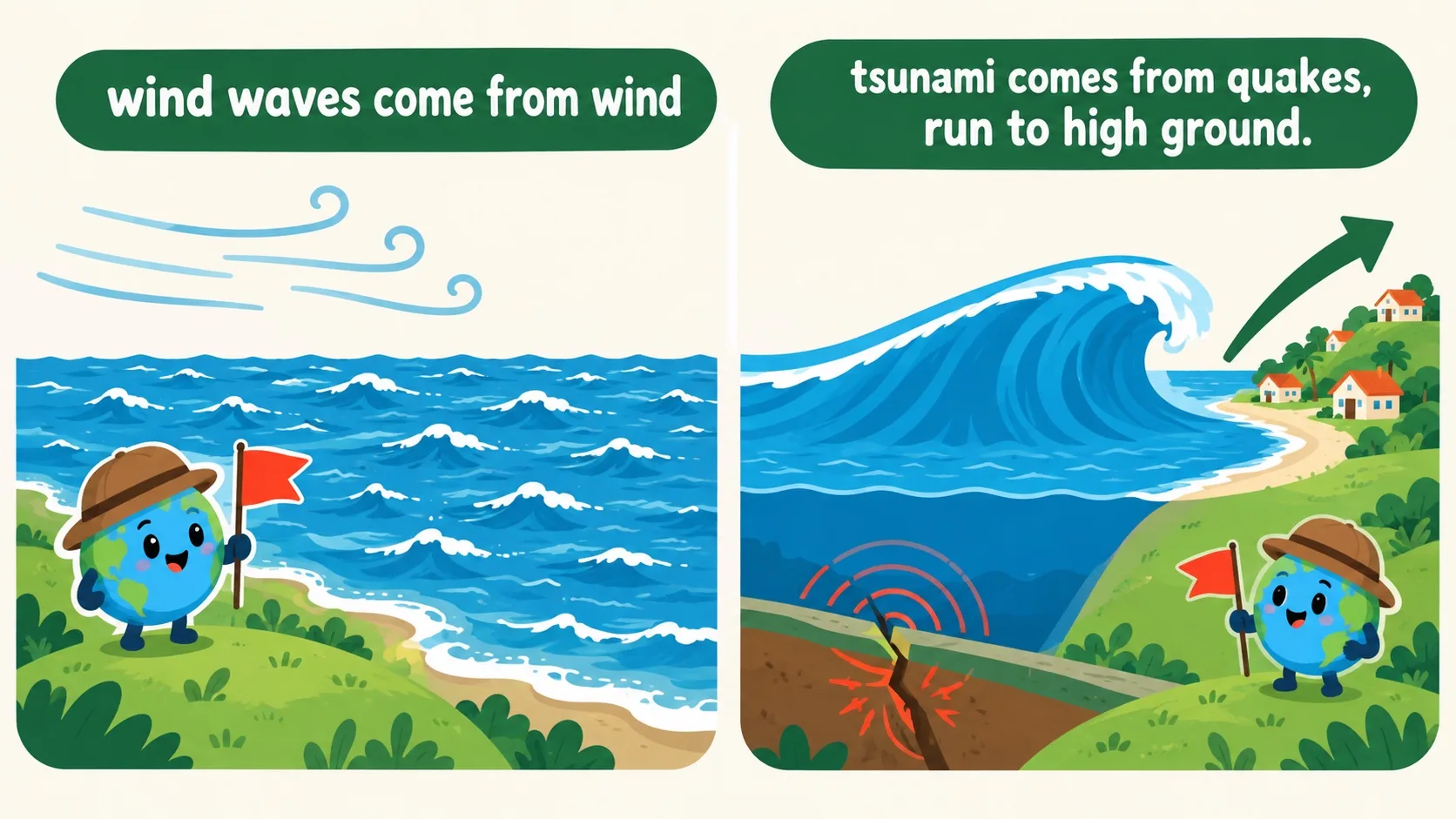
海啸不是风吹的,是海底地震掀起的超长波。它跑得快、能量大,上岸就是一堵水墙。记住:如果海水突然退得很远,快往高处跑。A tsunami is no wind wave — it is a super-long wave raised by an undersea earthquake. It runs fast with huge energy and lands as a wall of water. Remember: if the sea suddenly pulls far back, run to high ground at once.
🎮 你来当造浪师(30 秒)🎮 Your turn: wave maker (30 seconds)
道理讲完了。先转风速和时长两个旋钮,看浪怎么长高、浮标怎么打转;再闯下面 4 关,预测浪高、认出海啸。Theory done. First drag the wind slider and watch the waves and the buoy; then clear 4 rounds — predict heights, spot the tsunami.
一句话记住它:海浪是风吹出来的;跑的是能量,水只原地打转;海啸是地震掀的长波,见退潮快跑。Remember it in one line: wind makes waves; energy runs on while water loops in place; a tsunami is a quake-raised long wave — run uphill when the sea pulls back.
风速、风区、持续时间越大,浪越高Faster wind, bigger fetch, longer blow — taller waves波浪跑的是能量,水质点原地打转(浮标只上下动)Waves carry energy; water circles in place (the buoy only bobs)海啸是地震掀的长波,海水突退就往高处跑Tsunamis are quake-raised long waves — sudden pull-back means run high
内容参考 OpenStax 等公开教材,多来源核对 · AI 生成、人工审核 · 发现错误欢迎指正,帮这片叶子长得更好。Based on OpenStax and other open textbooks, cross-checked across sources · AI-generated, human-reviewed · Spotted a mistake? Tell us — help this leaf grow.
 Back to tree