文化馆要画雨桥海报。同一座桥,怎样画出不同感受?The fair needs a rainy-bridge poster. How can one bridge suggest different feelings?
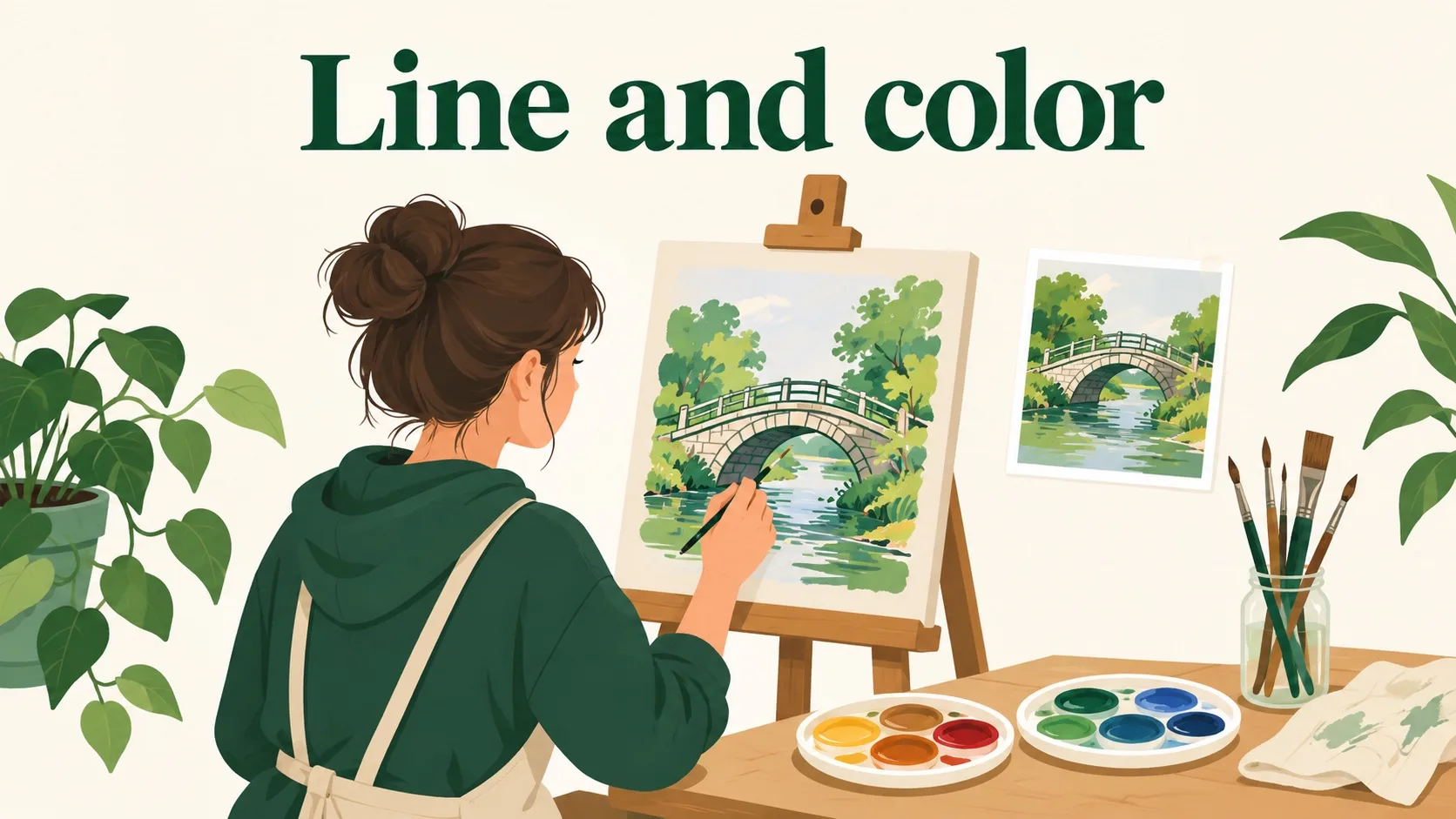
第 1 步:线条与色彩Step 1: Line and color
先看画家选择了什么。Look first at the artist’s choices.
绘画在表面上组织线条、色彩和形状。画家可以写实,也可以抽象。像照片并不是唯一目标。材料也会影响画面效果。Painting organizes lines, colors and shapes on a surface. It can be representational or abstract. Photographic likeness is not its only aim, and materials affect its appearance.
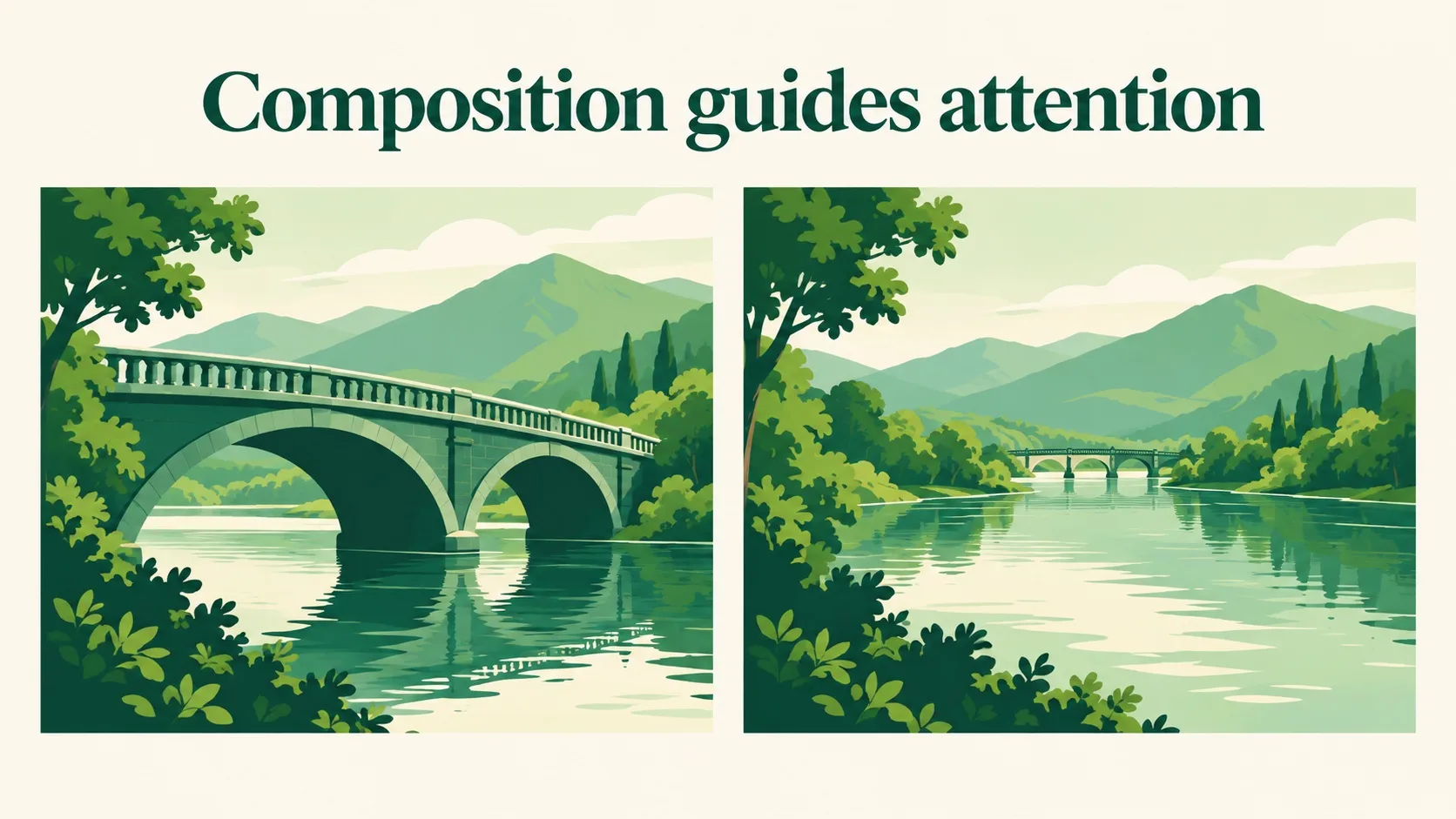
第 2 步:构图引导目光Step 2: Composition guides attention
元素都有了,怎样安排它们?How should the elements be arranged?
构图是画面元素的安排。把桥放在前景,会突出体量。明暗对比能吸引注意。透视是表现空间的一组方法,不是唯一画法。Composition arranges pictorial elements. A foreground bridge emphasizes its presence. Light-dark contrast can attract attention. Perspective offers ways to show space, not the only possible approach.
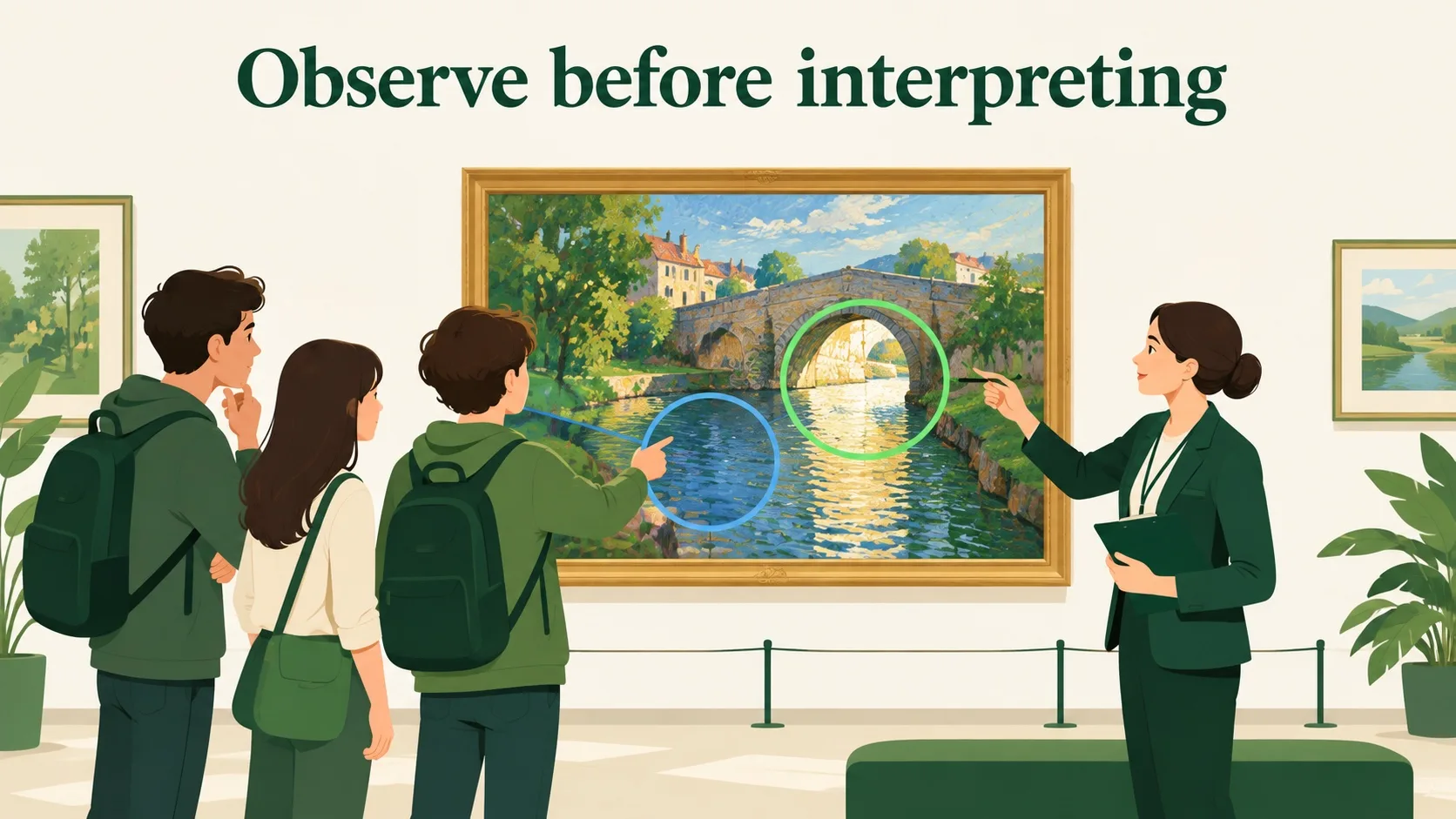
第 3 步:观察再解释Step 3: Observe before interpreting
有了感受,如何说清依据?How can a response be explained?
先说看见的颜色和形状,再提出解读。冷色不必总是悲伤,意义依作品而定。看原作材料、尺寸和背景,能修正屏幕印象。Describe visible colors and shapes before interpreting. Cool colors need not always mean sadness; meaning depends on the work. Materials, scale and context can revise a screen-based impression.
🎮 你来探索与判断🎮 Explore and reason
先操作实践台,再用四个挑战检验理解。每次判断都能看见理由。Explore the practice table, then try four challenges. Each judgment comes with a reason.
一句话记住它:绘画通过视觉安排创造观看体验。Remember: Painting creates an experience through visual arrangement.
写实不是唯一目标。Realism is not the only goal.构图影响注意的顺序。Composition affects attention.区分观察与解释。Distinguish observation from interpretation.
来源与理解边界Sources and limits
视觉元素可观察,审美和象征解读允许分歧。配图为原创教学图。Visual elements are observable; aesthetic and symbolic interpretations can differ. Illustrations are original teaching material.
来源查阅:2026 年 10 月 6 日。场景与例题为教学创作;插图为概念示意,不是历史实物照片。Sources checked on 6 October 2026. Scenarios and exercises are educational creations; illustrations are conceptual, not historical photographs.
参考上列公开资料 · AI 生成与自动化检查 · 欢迎提供可核查的勘误。Based on the public sources above · AI-generated and automatically checked · Verifiable corrections are welcome.
 Back to tree