🎼 音调:声音的高低由频率说了算🎼 Pitch: frequency sets how high a sound is
上一片弄清了声波——空气一疏一密地传过来。可蚊子嗡嗡是尖的,老牛哞哞是沉的,同样是声音,高低差别从哪来?这一片就管这件事:音调。Last leaf we met the sound wave — air passing along in pushes and pulls. Yet a mosquito buzzes high and an ox moos low. Same kind of thing, so where does the difference come from? This leaf is all about pitch.
第 1 步:一只蚊子,一头老牛Step 1: One mosquito, one ox
先看一对反差最大的嗓子。Start with the most extreme pair of voices around.
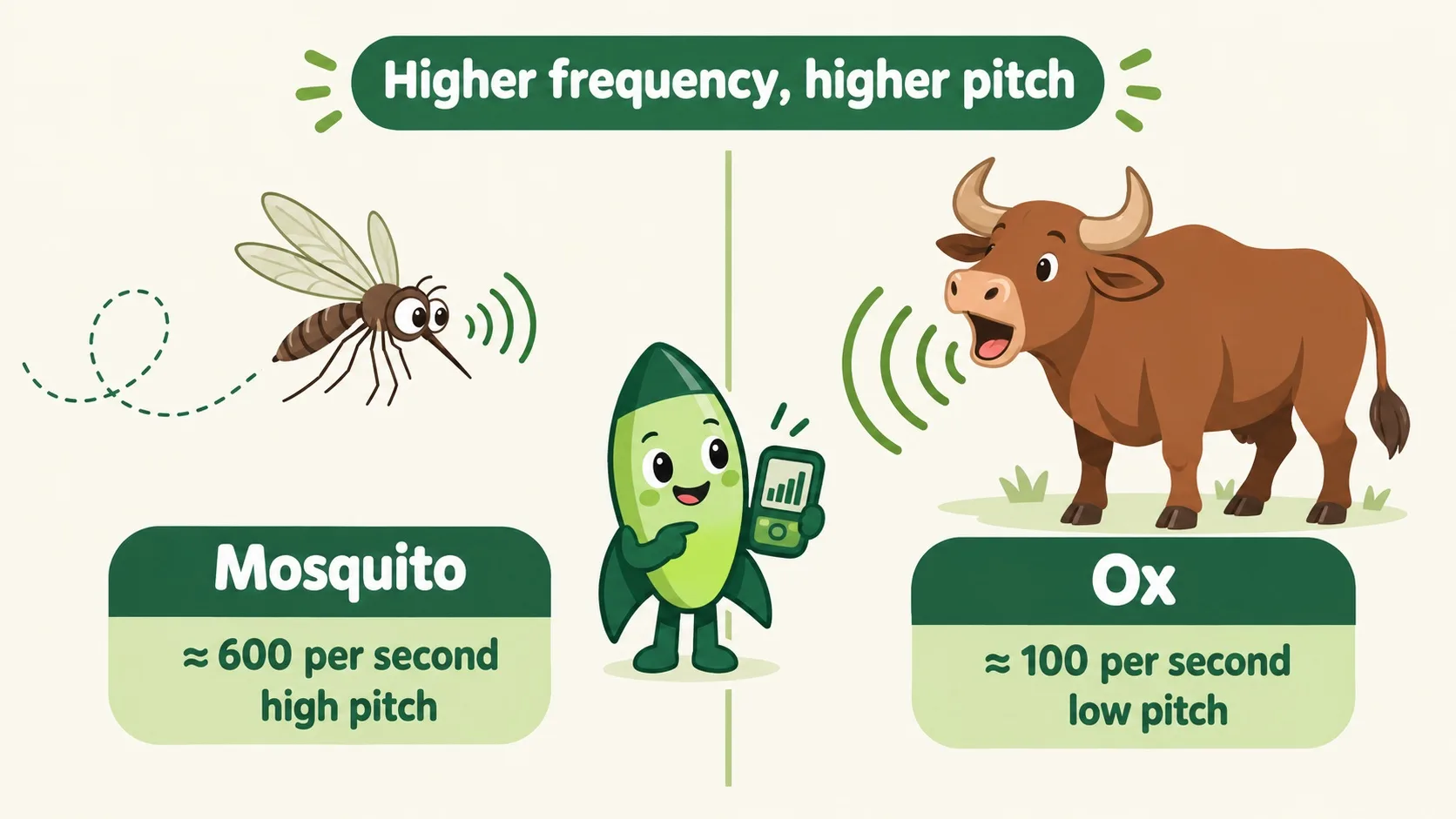
蚊子翅膀每秒振动约 600 次,声音又尖又细;老牛的叫声每秒约 100 次,低沉浑厚。每秒振动的次数叫频率(frequency),单位是赫兹(Hz):600 次/秒 = 600 Hz。频率高,音调就高——所以音调说的不是“声音大小”,而是声音的高低。A mosquito's wings flap about 600 times a second — a high, thin sound. An ox's moo is about 100 times a second — deep and low. The number of vibrations per second is the frequency, measured in hertz (Hz): 600 per second = 600 Hz. High frequency, high pitch. Pitch is not about loudness at all — it is how high or low a sound sits.
那频率又由什么决定?看看吉他手每天琢磨的东西。So what sets the frequency? Look at what guitarists fuss over every day.
第 2 步:弦越细、越紧,音越高Step 2: Thinner and tighter means higher
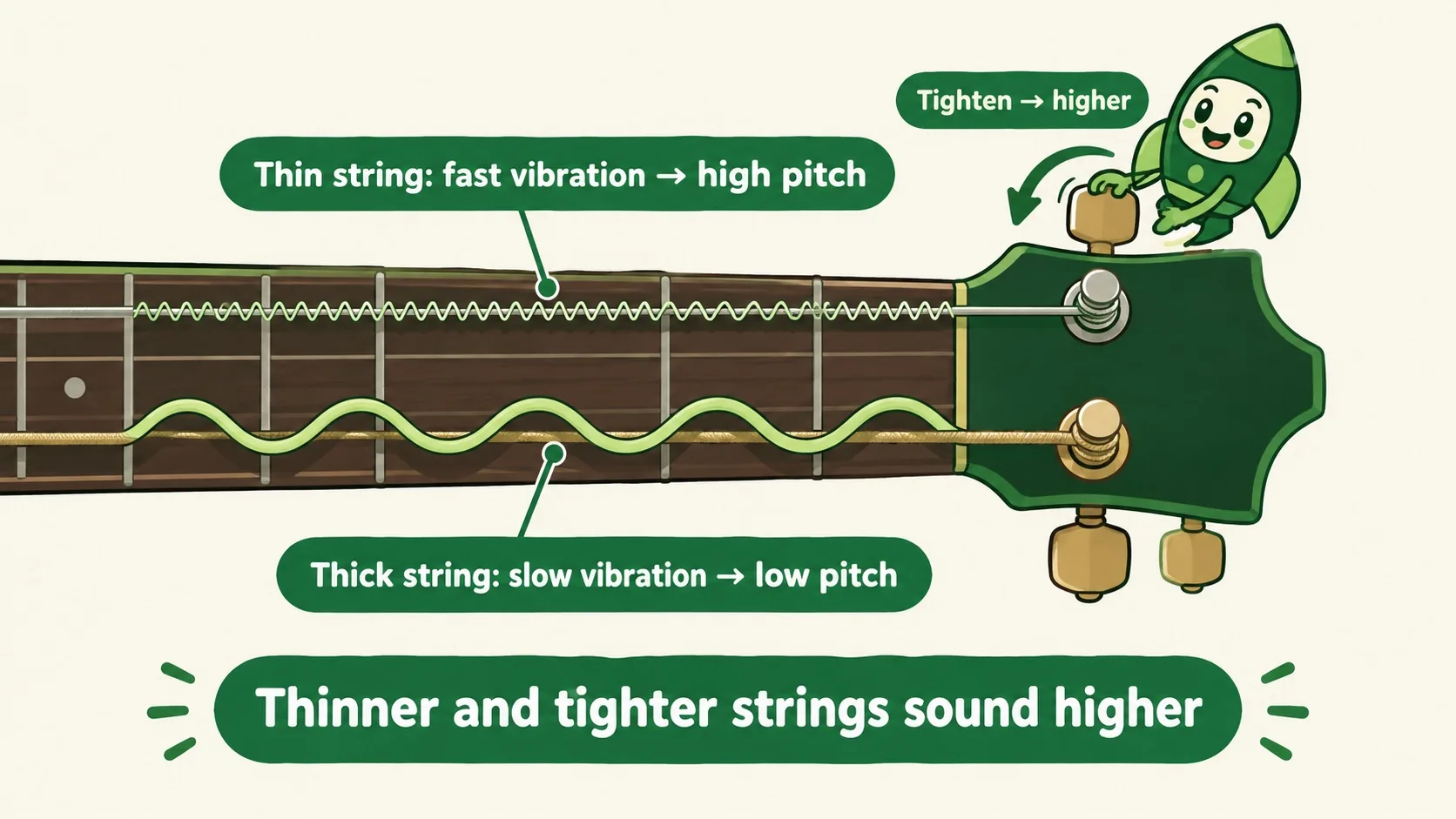
同一根弦,越细、绷得越紧、按得越短,振动就越快,频率越高、音调越高;换成粗弦或把弦拧松,振动变慢,声音就低。吉他手拧旋钮“调音”,调的就是弦的松紧——也就是频率。弦乐器、管乐器、鼓,所有乐器调音都是这个道理。On the same string: thinner, tighter, or shorter makes it vibrate faster — higher frequency, higher pitch. A thicker string, or one you loosen, vibrates slowly and sounds low. When a guitarist turns the tuning pegs, they are changing the string's tension — that is, its frequency. Every instrument, from strings to pipes to drums, is tuned the same way.
把声音画成波形,频率的差别一眼就能看出来。Draw sounds as waves, and the frequency difference jumps out at you.
第 3 步:波形越密,音调越高Step 3: Denser waves, higher pitch
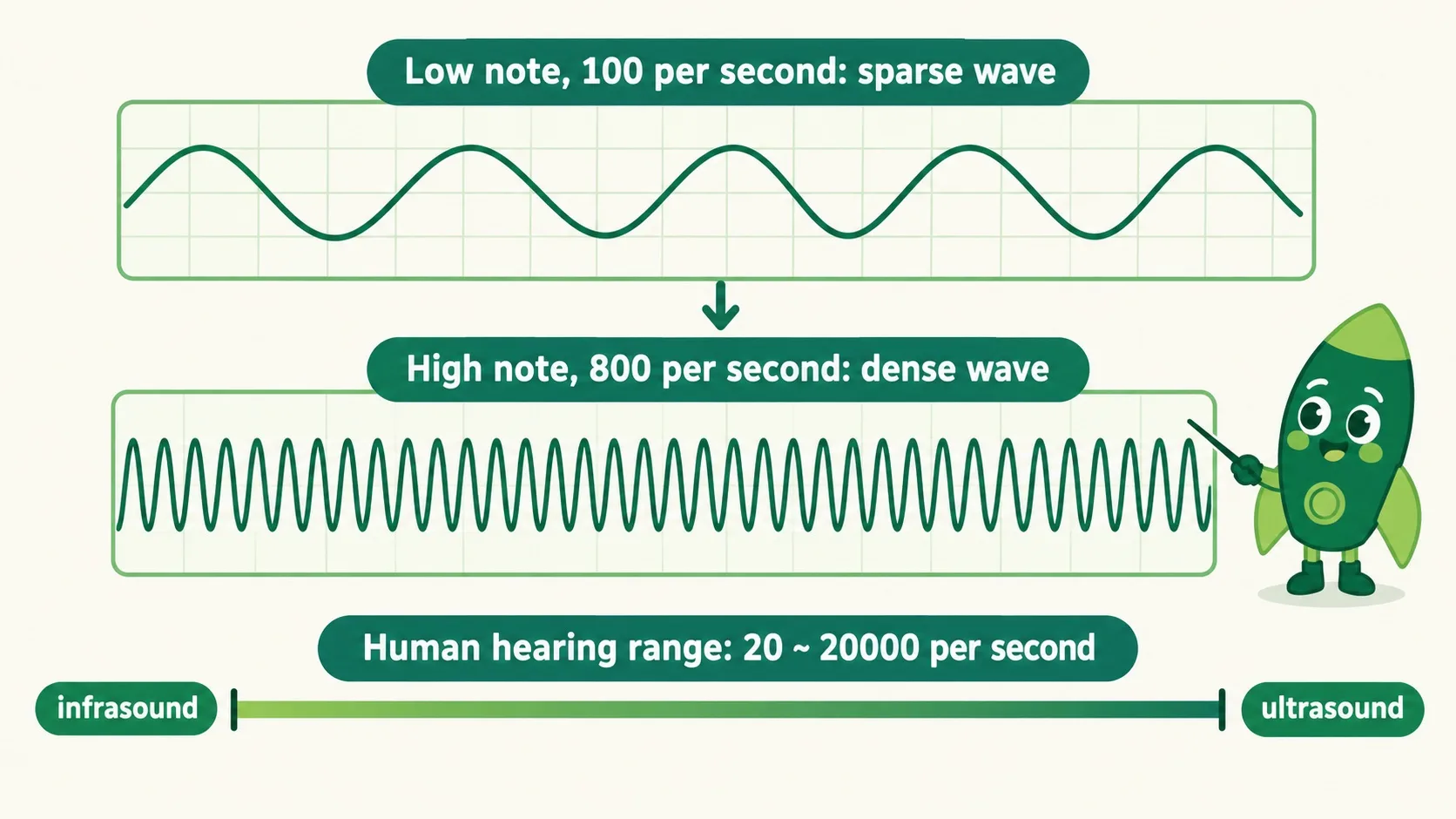
频率低的音,波形稀稀拉拉;频率高的音,波形又密又挤。人耳能听到的范围是 20 ~ 20000 Hz:低于 20 Hz 叫次声波,高于 20000 Hz 叫超声波,我们都听不见——蝙蝠和海豚却能用超声波“看”清世界。你能听到的最高音,还会随年龄慢慢下降哦。A low note draws a sparse, lazy wave; a high note packs the wiggles tight. Human ears catch roughly 20–20000 Hz. Below 20 Hz is infrasound, above 20000 Hz is ultrasound — we hear neither, but bats and dolphins use ultrasound to “see”. And the highest note you can hear slowly drops as you grow up.
🎮 你来当调音师(30 秒)🎮 Your turn: run the frequency generator (30 seconds)
道理讲完了。拖动频率滑块,看波形由疏变密、音高尺的指针往右跑;点“🔊 听一听”用耳朵验证,再接下 4 关挑战。Theory done. Drag the frequency slider and watch the wave go from sparse to dense as the pitch needle slides right; hit “🔊 Listen” to check with your ears — then take the 4 challenges.
一句话记住它:音调是声音的高低,由频率(每秒振动次数)决定——频率越高,音调越高。Remember it in one line: pitch is how high or low a sound is, set by frequency (vibrations per second) — higher frequency, higher pitch.
频率单位赫兹(Hz)= 每秒振动次数;蚊子约 600 Hz,老牛约 100 HzFrequency in hertz (Hz) = vibrations per second; mosquito ≈ 600 Hz, ox ≈ 100 Hz频率越高 → 波形越密 → 音调越高Higher frequency → denser wave → higher pitch弦越细、越紧、越短,频率越高;调音就是调松紧Thinner, tighter, shorter strings sound higher; tuning means changing tension人耳范围 20 ~ 20000 Hz,次声、超声都听不见Human hearing spans 20–20000 Hz; infrasound and ultrasound are out of reach
内容参考 OpenStax 等公开教材,多来源核对 · AI 生成、人工审核 · 发现错误欢迎指正,帮这片叶子长得更好。Based on OpenStax and other open textbooks, cross-checked across sources · AI-generated, human-reviewed · Spotted a mistake? Tell us — help this leaf grow.
 Back to tree