🔔 响度:声音的大小由振幅说了算🔔 Loudness: amplitude sets how loud a sound is
上一片讲清了声音的高低——音调。可同样是敲鼓,轻轻敲和用力敲,声音的“大小”完全两回事。这个大小在物理上叫什么?又该怎么量?这一片就管它:响度。Last leaf sorted out how high or low a sound is — pitch. But tap a drum gently and then hit it hard: the “size” of the sound is a whole different story. What is that size called in physics, and how do we measure it? This leaf is all about loudness.
第 1 步:轻敲与重敲Step 1: A gentle tap, a hard hit
先回到最直接的实验——敲鼓。Back to the most direct experiment there is — hitting a drum.
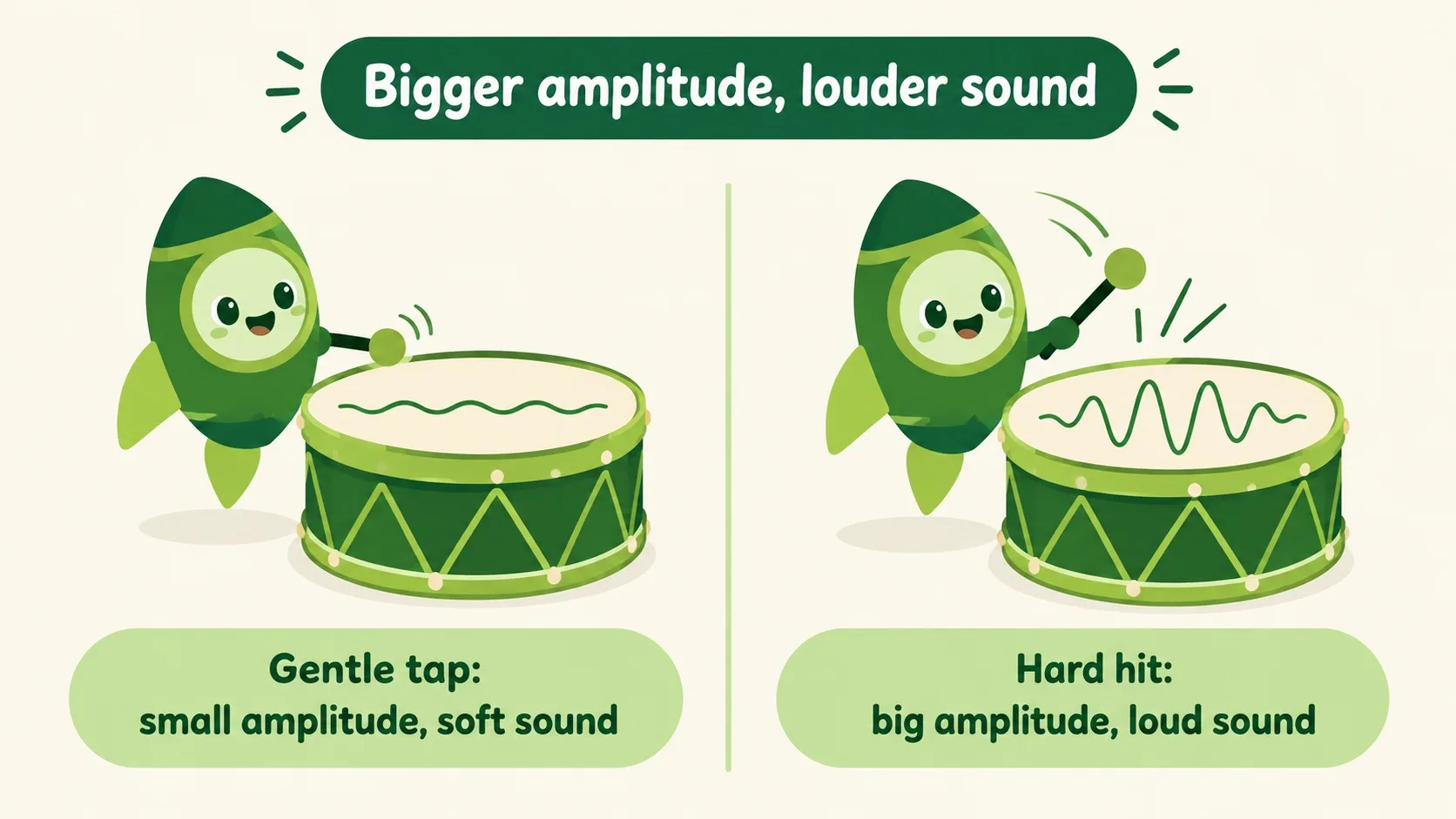
轻轻敲,鼓面只微微抖动,声音轻;用力敲,鼓面上下大幅度振动,声音响。振动的幅度叫振幅(amplitude):振幅越大,响度越大。注意——轻敲重敲,鼓声的音调没变,变的只是响度:响度管“多大声”,音调管“多高音”,两码事。A gentle tap barely moves the drum skin — a soft sound. A hard hit sends the skin swinging up and down — a loud sound. That swing width is the amplitude: bigger amplitude, bigger loudness. Notice: gentle or hard, the pitch of the drum stays the same. Loudness answers “how loud?”, pitch answers “how high?” — two different questions.
“响”到底有多响?得有一把统一的尺子。But how loud is loud? We need a shared ruler.
第 2 步:分贝刻度与 85 红线Step 2: The decibel scale and the 85 line
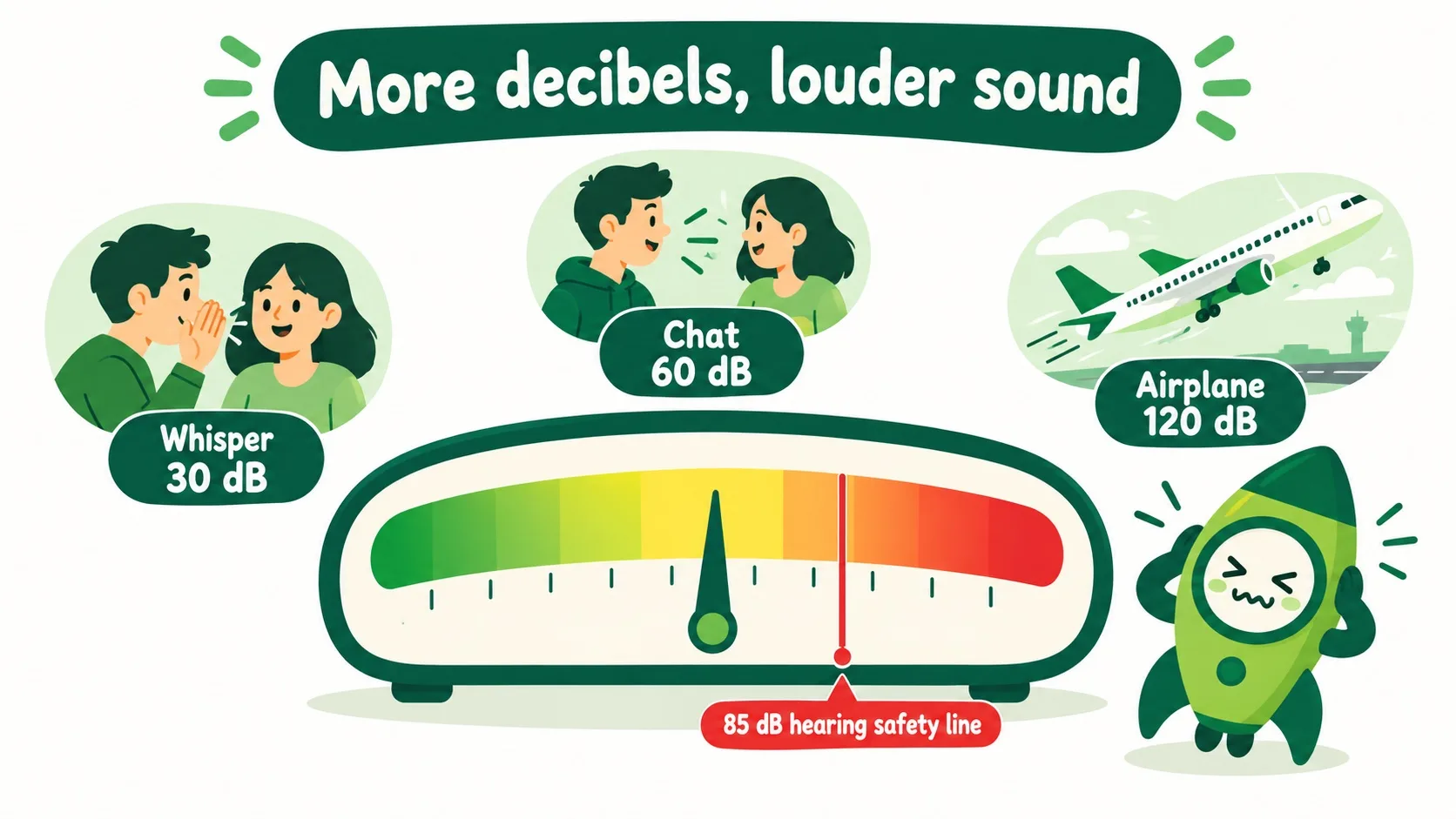
量响度用分贝(dB)。耳语约 30 dB,正常交谈约 60 dB,摩托约 90 dB,摇滚现场约 110 dB,飞机起飞约 120 dB。每加 10 dB,听起来大约响一倍。85 dB 是听力保护红线——长期超过它,内耳里负责听声音的毛细胞会受损,而且伤了就回不来了。Loudness is measured in decibels (dB). A whisper is about 30 dB, normal chat about 60 dB, a motorbike about 90 dB, a rock concert about 110 dB, a jet taking off about 120 dB. Every +10 dB sounds roughly twice as loud. 85 dB is the hearing safety line — stay above it too long and the tiny hair cells in your inner ear get damaged, permanently.
还有一件怪事:同一声鼓,站远一点就变轻了,振幅去哪儿了?One more odd thing: the same drum sounds softer when you stand farther away. Where did the amplitude go?
第 3 步:越远越轻Step 3: Farther means softer
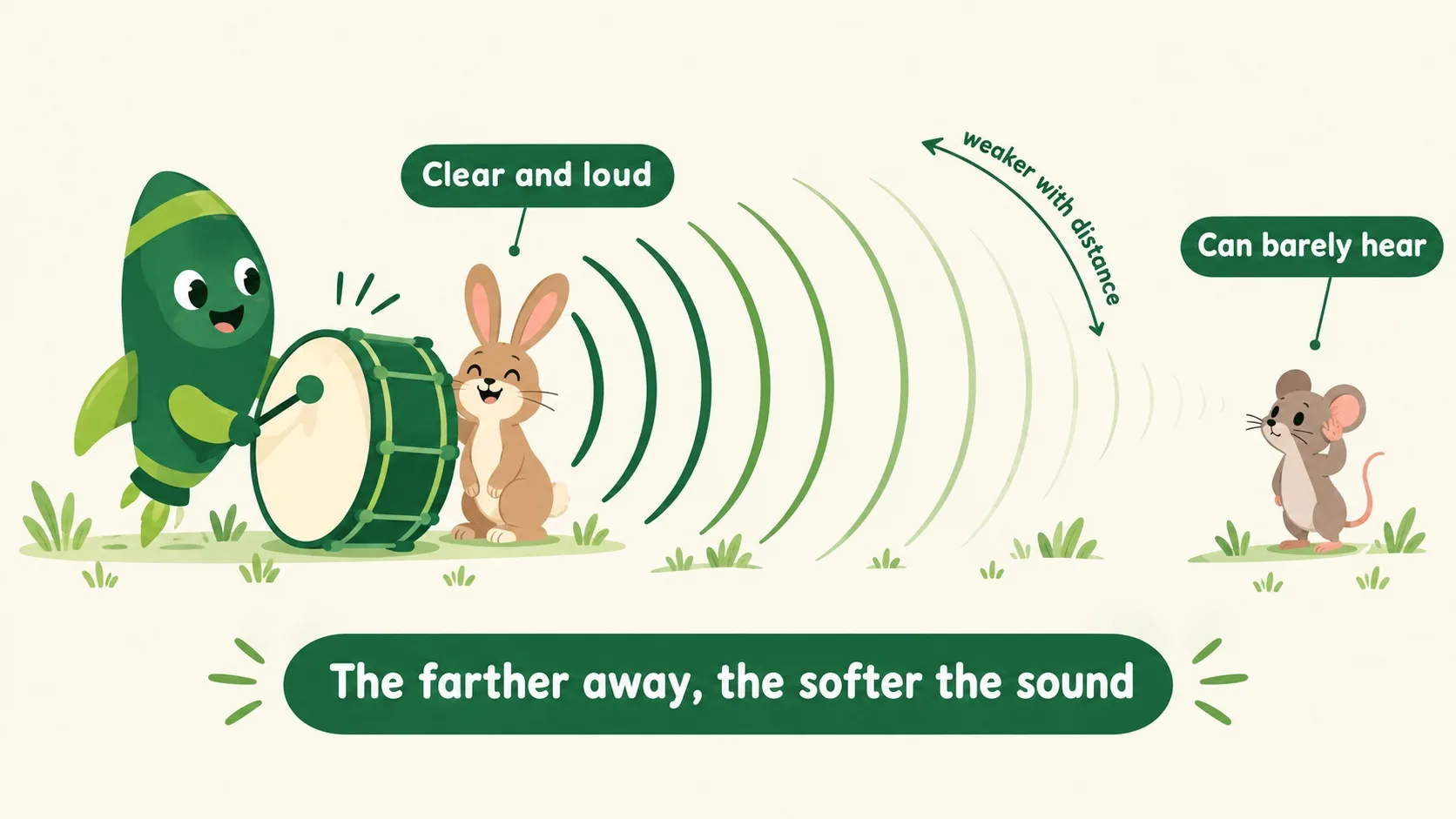
声音从鼓面向四面八方扩散,能量摊在越来越大的球面上——离得越远,分到每个位置的振动振幅越小,听起来就越轻。所以喊人要走近些,远处的雷声轰隆隆却总觉得“闷”。记住:响度由振幅决定,而距离会让振幅一路变小。Sound spreads out from the drum in every direction, its energy smeared over an ever-growing sphere — the farther away, the smaller the amplitude that reaches each spot, so the softer it sounds. That's why you walk closer to call someone, and why distant thunder rumbles “muffled”. Loudness comes from amplitude — and distance shrinks it all the way.
🎮 你来敲鼓(30 秒)🎮 Your turn: take the drumsticks (30 seconds)
道理讲完了。拖动“力度”滑块,看鼓面振幅、波形和分贝表一起变化;试试 9 档的摇滚现场,注意红线警告。然后接下 4 关挑战。Theory done. Drag the strength slider and watch the drum amplitude, the wave and the dB meter move together; try level 9 — the rock concert — and watch the red warning. Then take the 4 challenges.
一句话记住它:响度是声音的大小,由振幅决定——振幅越大,响度越大;轻敲重敲不改变音调。Remember it in one line: loudness is how big a sound is, set by amplitude — bigger amplitude, louder sound; a gentle tap and a hard hit do not change the pitch.
振幅 = 振动的幅度;敲得越重,振幅越大、声音越响Amplitude = the size of a vibration; harder hits, bigger amplitude, louder sound分贝(dB)是响度的尺子:耳语 30、交谈 60、摇滚 110、飞机 120Decibels (dB) measure loudness: whisper 30, chat 60, rock 110, airplane 12085 dB 是听力保护红线,超过别久听;每 +10 dB 约响一倍85 dB is the hearing safety line; every +10 dB is about twice as loud距离越远,声波摊得越薄,振幅越小、声音越轻The farther the sound travels, the thinner it spreads — smaller amplitude, softer sound
内容参考 OpenStax 等公开教材,多来源核对 · AI 生成、人工审核 · 发现错误欢迎指正,帮这片叶子长得更好。Based on OpenStax and other open textbooks, cross-checked across sources · AI-generated, human-reviewed · Spotted a mistake? Tell us — help this leaf grow.
 Back to tree