作坊的围巾要送到港口。小树发现,火车的本领不只在车头。The workshop’s scarves need to reach the harbour. Mia discovers that a railway is more than a locomotive.
第 1 步:轨道支撑定向运输Step 1: Tracks guide the load
先看重货怎样连续移动。Start with keeping heavy freight moving.
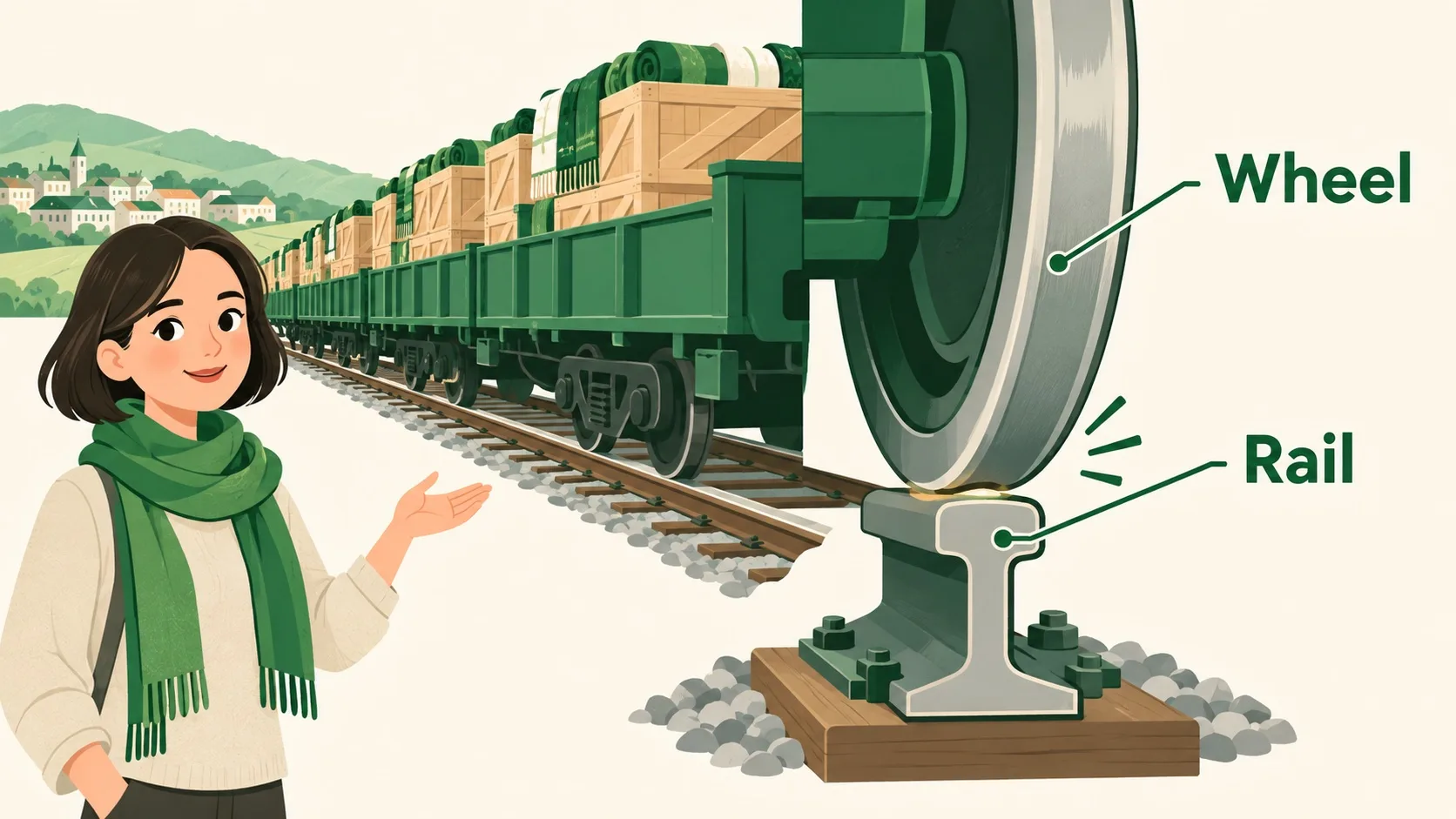
钢轮沿钢轨滚动。轨道支撑并引导列车。硬接触的滚动阻力通常较小。列车仍需要动力克服阻力与坡度。Steel wheels roll along steel rails. Tracks support and guide a train. Rolling resistance is usually relatively low on this hard contact. Power is still needed to overcome resistance and gradients.
第 2 步:同一条线需要协调Step 2: A shared line needs coordination
两列车都要走同一段怎么办?What if two trains need the same section?
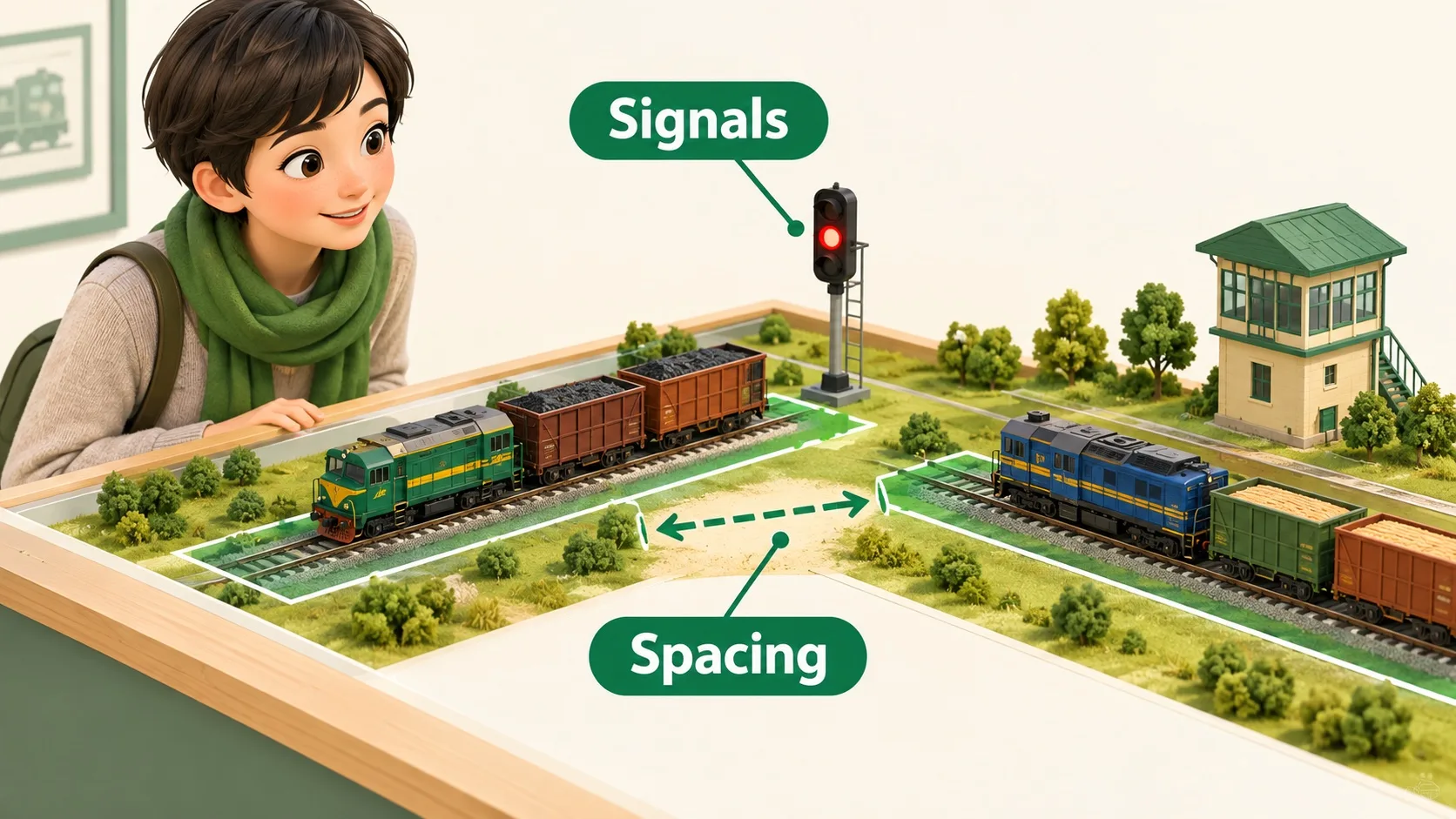
线路容量不是无限的。信号与调度协调通行。安全间隔给制动留空间。时刻表也要考虑装卸和延误。A line has limited capacity. Signals and dispatch coordinate access. Safe spacing leaves room for braking. Timetables also account for loading and delays.
第 3 步:铁路形成运输网络Step 3: Railways form a network
有轨道就能抵达每个地方吗?Do tracks reach every destination?
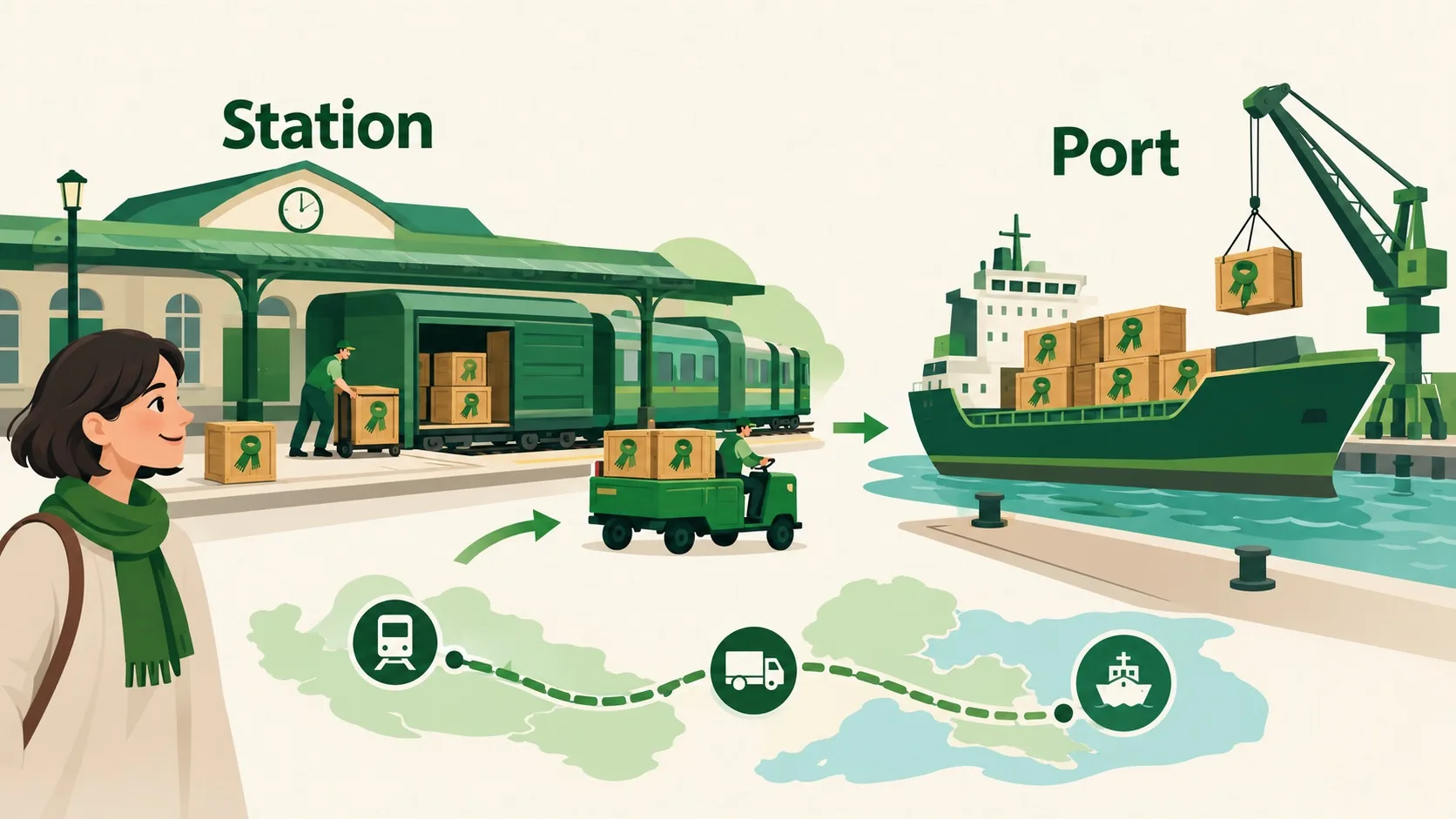
车站连接仓库、道路和港口。统一规则减少衔接障碍。建设维护需要长期投入。线路收益与环境影响都要评估。Stations connect warehouses, roads, and ports. Common rules reduce connection problems. Construction and maintenance require long-term resources. Benefits and environmental effects both need assessment.
🎮 机制实验室:观察,再判断🎮 Mechanism lab: observe, then decide
每段一次只容一列车。本模型仅判断请求区段是否被占,不模拟真实铁路信号。Each block holds one train. This model checks requested-block occupancy, not real railway signalling.
一句话记住它:Remember it:铁路的能力来自车辆、轨道和调度协作。Railway capability comes from vehicles, tracks, and coordinated operations.
钢轮沿钢轨滚动。Steel wheels roll along steel rails.线路容量不是无限的。A line has limited capacity.车站连接仓库、道路和港口。Stations connect warehouses, roads, and ports.
系统原理:较高把握。不同年代与国家的信号规则不同,图为教学简化。High confidence in system principles. Signalling differs across eras and countries; the illustration is simplified.
核对日期:2026 年 10 月 6 日。文字与配图由 AI 生成;已做来源核对及程序测试,待人工复核。Checked 6 October 2026. Text and illustrations are AI-generated. Sources and software checks were performed; human review is pending.
 Back to tree