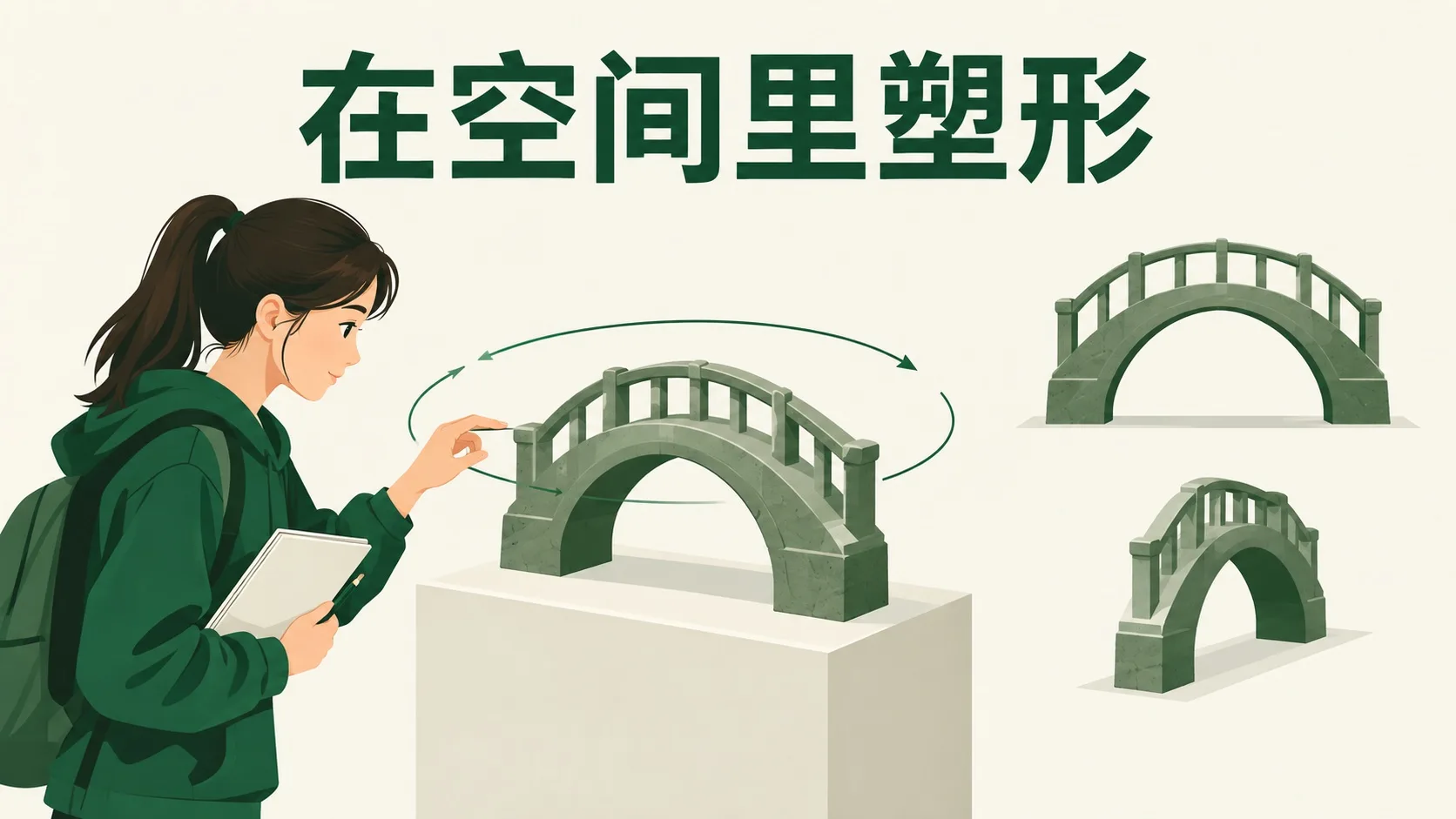
文化馆想做一座桥的模型。绕着看,为什么每面都不同?The fair makes a bridge sculpture. Why does each viewpoint reveal something different?
第 1 步:在空间里塑形Step 1: Shape in space
先把平面画和立体作品分开。Compare a picture with a spatial object.
雕塑用体积、空间和材料形成作品。圆雕可从多面观看;浮雕依附背景表面。两者边界也可被创作者探索。Sculpture works with volume, space and material. Freestanding sculpture allows multiple viewpoints; relief projects from a background. Artists can also explore the boundaries between them.
第 2 步:加上与减去Step 2: Add and subtract
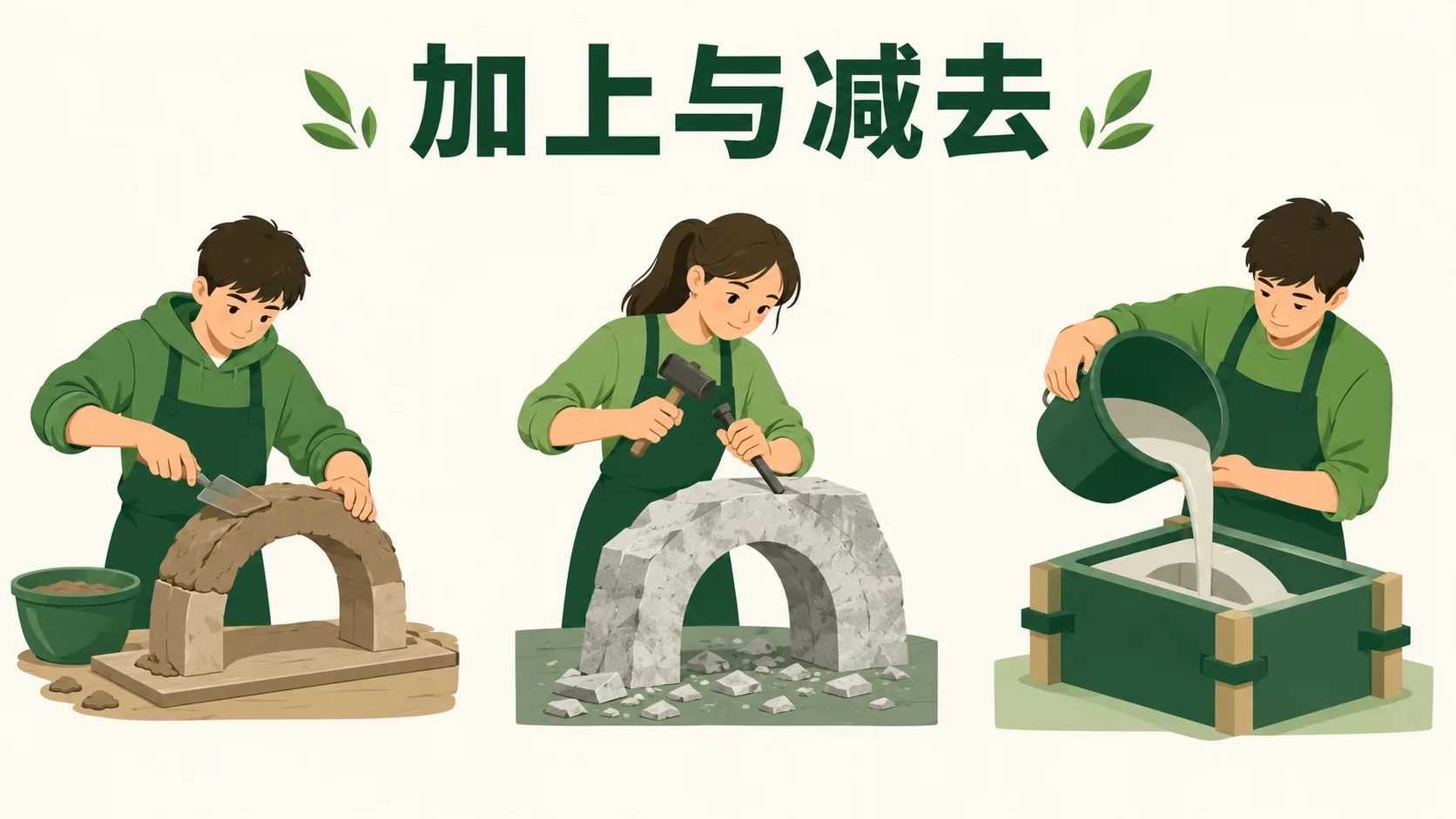
形状是怎样做出来的?How is the form made?
塑造可逐步添加黏土。雕刻从木石中减去材料。铸造把材料成形于模具。方法不同,会带来不同工具与限制。Modeling can add clay gradually. Carving removes wood or stone. Casting forms material using a mold. Each process brings different tools and constraints.
第 3 步:位置也是作品的一部分Step 3: Placement matters
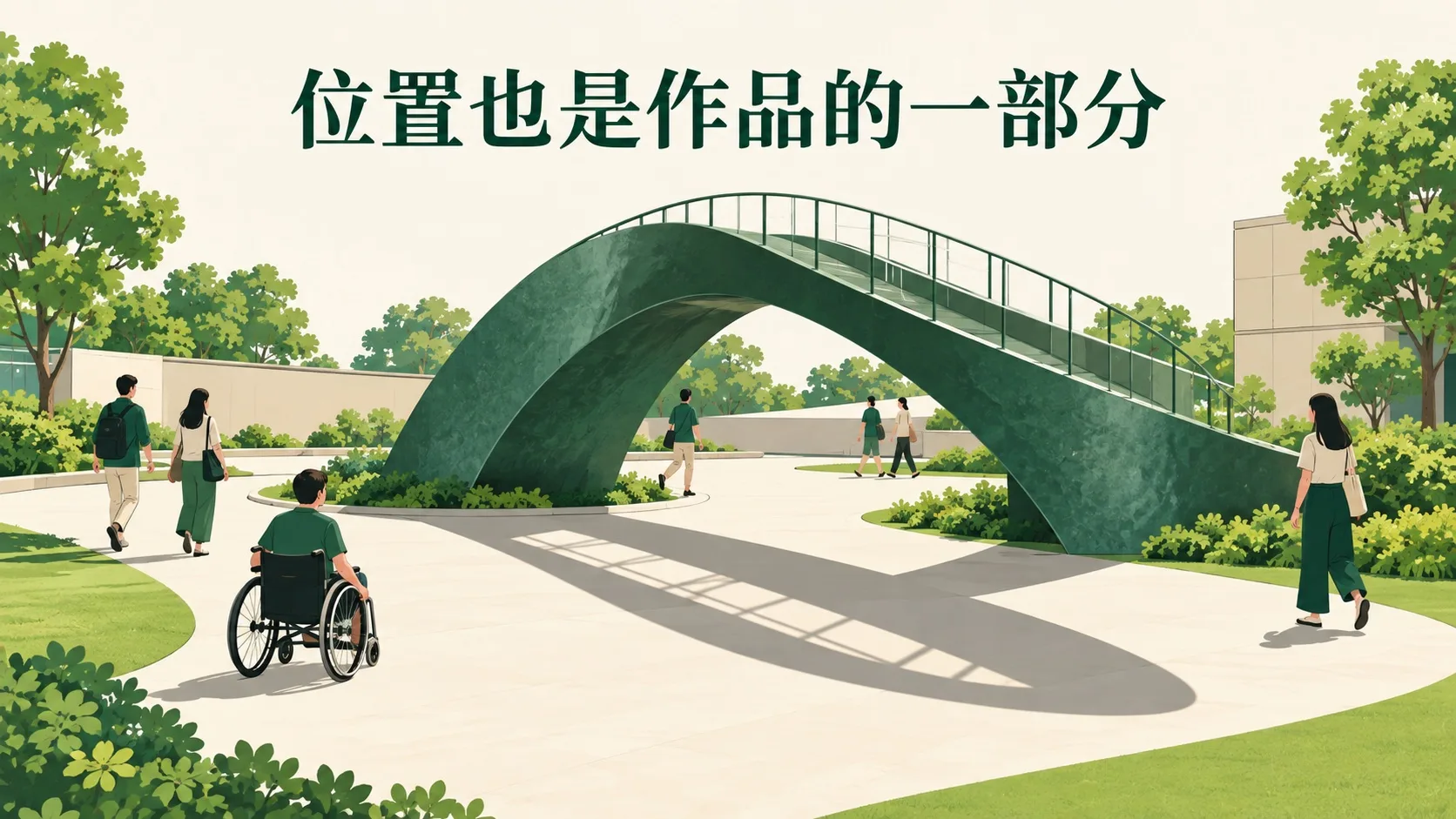
做好之后,摆在哪里?Where should the finished work stand?
小林测试桥洞的空隙与投影。尺度、灯光和行走路线影响观看。公共雕塑还要考虑场地和使用者,不只是单张照片。Lin studies the bridge opening and its shadow. Scale, light and walking routes affect viewing. Public sculpture also involves its site and users, beyond a single photograph.
🎮 你来探索与判断🎮 Explore and reason
先操作实践台,再用四个挑战检验理解。每次判断都能看见理由。Explore the practice table, then try four challenges. Each judgment comes with a reason.
一句话记住它:雕塑让材料、体积和空间共同表达。Remember: Sculpture brings material, volume and space into expression.
多视角能提供不同信息。Different viewpoints reveal different information.塑造、雕刻、铸造方法不同。Modeling, carving and casting differ.空隙与场地同样重要。Voids and sites matter too.
来源与理解边界Sources and limits
分类是常见制作方法,混合媒介作品可能跨越分类。These are common making processes; mixed-media works may cross categories.
来源查阅:2026 年 10 月 6 日。场景与例题为教学创作;插图为概念示意,不是历史实物照片。Sources checked on 6 October 2026. Scenarios and exercises are educational creations; illustrations are conceptual, not historical photographs.
参考上列公开资料 · AI 生成与自动化检查 · 欢迎提供可核查的勘误。Based on the public sources above · AI-generated and automatically checked · Verifiable corrections are welcome.
 Back to tree