🧩 词元:AI 眼里的文字积木🧩 Token: the Building Blocks of Text
上一片里,编码器和解码器一唱一和,把整句话传来传去。可它们传的到底是什么?句子进门之前,会先被拆成一块块“文字积木”——那才是模型真正读的东西。Last leaf, the encoder and the decoder passed whole sentences back and forth like two messengers. But what exactly do they pass? Before a sentence enters the model, it gets chopped into little “text blocks” — and those blocks are what the model truly reads.
第 1 步:先切块,再进门Step 1: Chopped into blocks first
那模型眼里的“一句话”,到底长什么样?So what does a “sentence” actually look like to the model?
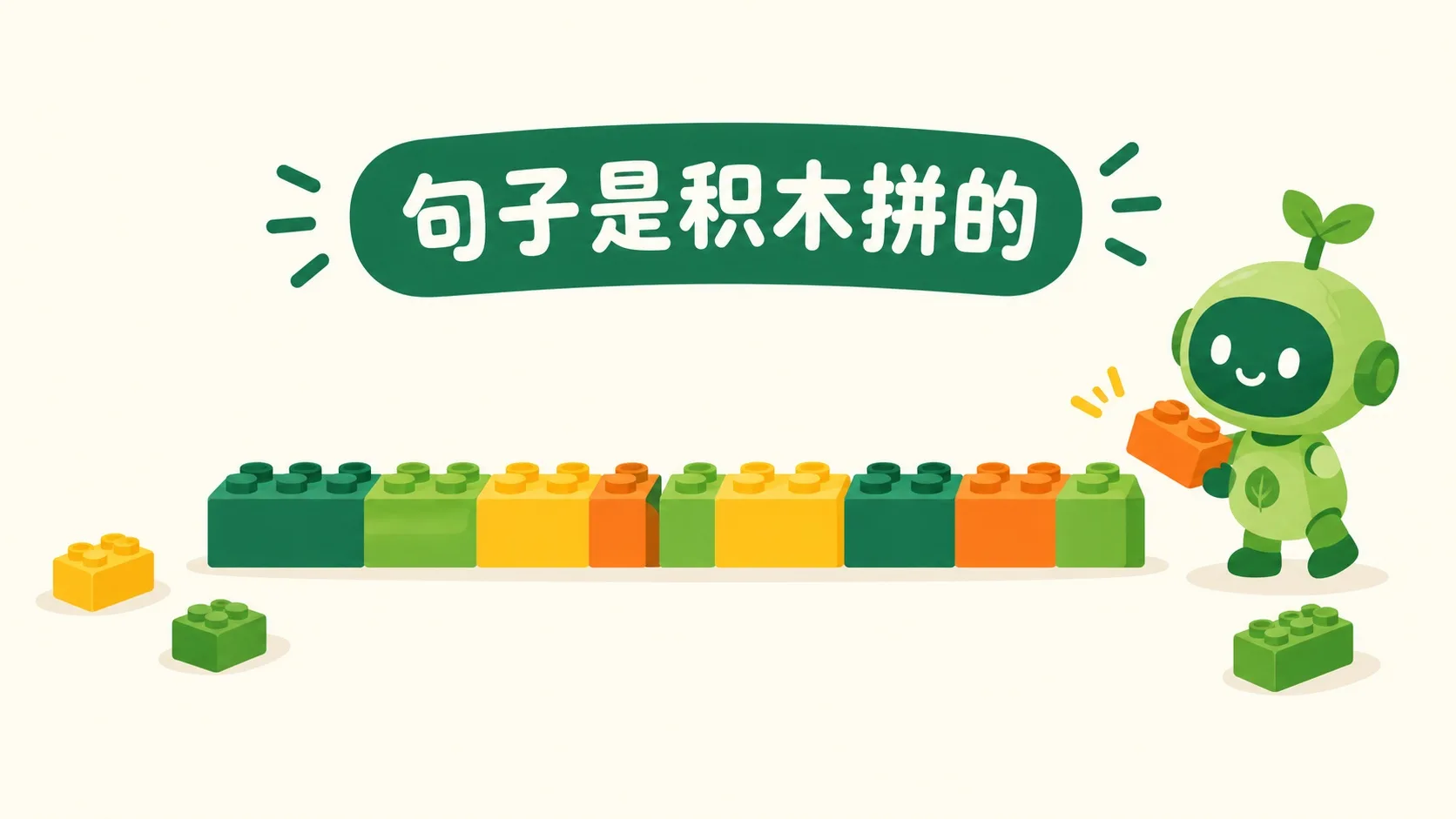
在模型眼里,一段文字像一盒拼好的乐高:连起来是一句话,拆开是一小块一小块的词元(token,也就是“文字积木”)。它不按“字”读,也不按“词”读,只认这盒积木——每块积木在盒里都有自己的编号。To the model, a piece of text is like a box of Lego: snapped together it reads as a sentence; pulled apart it is a row of tokens — text blocks. It doesn’t read letter by letter, nor word by word — it reads blocks. And every block has its own number in the box.
为什么有的词整块留下,有的却被切小?Why do some words stay whole while others get chopped small?
第 2 步:常见的整块,生僻的拆开Step 2: Common words stay whole, rare ones split
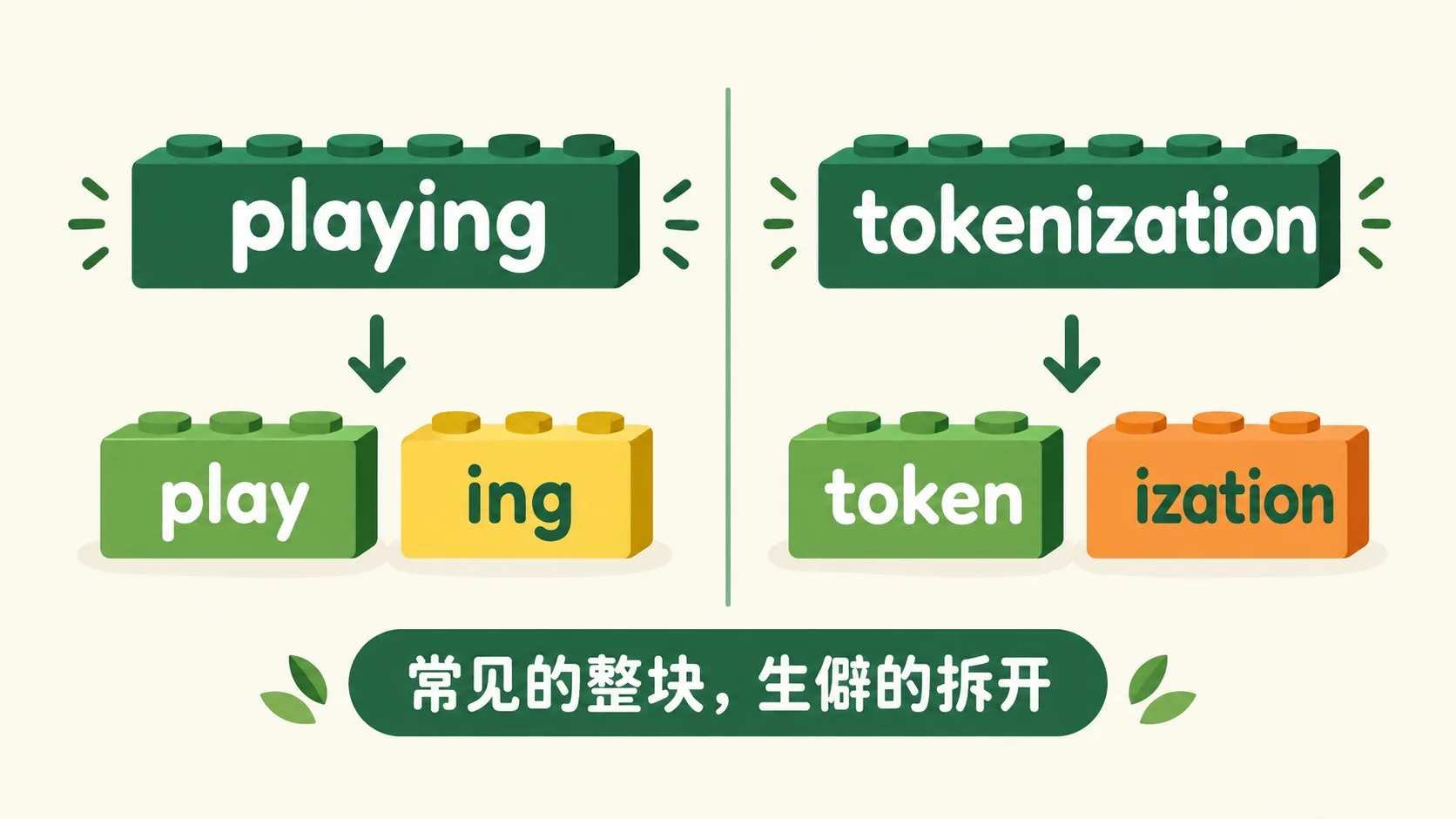
模型的积木盒里只有几万到十几万块,这叫词表。想给每个词都备一块,盒子根本放不下——那就改备“零件”:play 和 ing 盒里都有,playing 就各拿一块拼出来;生僻的 tokenization 拆成 token + ization,照样拼得出。再新的词,都能用盒里的积木拼出来。The model’s block box holds only tens of thousands of blocks — that’s the vocabulary. One block per possible word would never fit, so it stocks parts instead: play and ing are both in the box, so playing is built by grabbing one of each; the rare tokenization splits into token + ization and still comes out right. Even a word nobody has ever seen can be built from blocks in the box.
这跟我们的生活有什么关系?And how does this touch our daily life?
第 3 步:字数、账单,都按块算Step 3: Counts and bills, all by the block
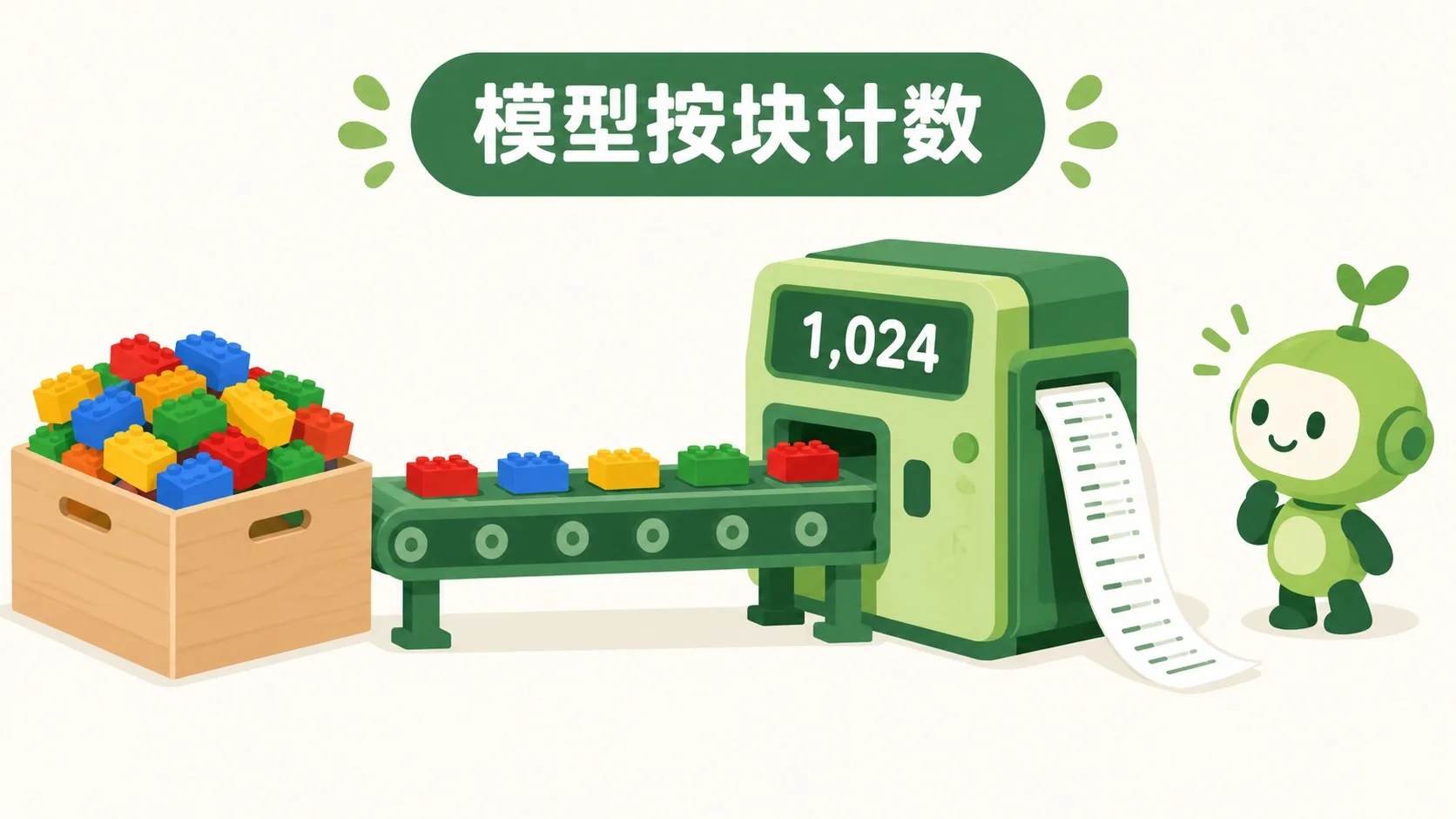
你平时数“字”,模型数“块”。输入框的字数统计、按量收费的 API 账单(API = 程序之间说话的接口),背地里数的都是词元:中文大约 1 个字 ≈ 1 块,英文大约 4 个字符 ≈ 1 块。同一句话,语言不同,块数差很多;喂进去的上下文越长,账单越厚。You count letters; the model counts blocks. The character counter under your text box and a metered API bill (API = how programs talk to each other) both count tokens behind the scenes: in Chinese, roughly 1 character ≈ 1 block; in English, roughly 4 characters ≈ 1 block. The same sentence costs very different block counts in different languages — and the longer the context you feed, the thicker the bill.
🎮 你来切积木(30 秒)🎮 Your turn: chop the blocks (30 seconds)
道理讲完了。下面 4 组词,每组有两种切法——点一个你认为切得对的;也可以点“自动演示”看一遍。Theory done. Here are 4 words, each with two possible splits — tap the one you think is right; or hit “Auto demo” and watch.
一句话记住它:AI 读文本之前,先把它切成词元(文字积木);常见词整块保留、生僻词拆成零件,而字数和账单,都按块来数。Remember it in one line: before reading anything, the AI chops text into tokens (text blocks); common words stay whole, rare ones break into parts — and character counts and bills are all counted in blocks.
文本先切块(token)再进模型——一句话就是一排拼好的积木Text is chopped into tokens before entering the model — a sentence is a row of snapped-together blocks词表只有几万到十几万块:常见词整块留,生僻词拆小块(playing → play + ing)The block box holds only tens of thousands of blocks: common words stay whole, rare ones split (playing → play + ing)字数和 API 计费都按词元数:中文 ≈ 1 字 1 块,英文 ≈ 4 字符 1 块Character counts and API billing count tokens: ≈ 1 Chinese character or 4 English characters per block
内容参考 OpenStax 等公开教材,多来源核对 · AI 生成、人工审核 · 发现错误欢迎指正,帮这片叶子长得更好。Based on OpenStax and other open textbooks, cross-checked across sources · AI-generated, human-reviewed · Spotted a mistake? Tell us — help this leaf grow.
 Back to tree