🏔️ 电压:驱动电流的“水压”🏔️ Voltage: The “Water Pressure” Behind the Current
上一片认识了电流——电荷的定向流动。可水不会自己往高处流,是水泵给了它压力。又是什么在推着电荷流动?答案是电压。Last leaf we met current — charge flowing in one direction. But water doesn’t push itself uphill: a pump supplies the pressure. So what pushes charge along a wire? The answer is voltage.
第 1 步:水塔越高,水压越大Step 1: A higher tower, greater pressure
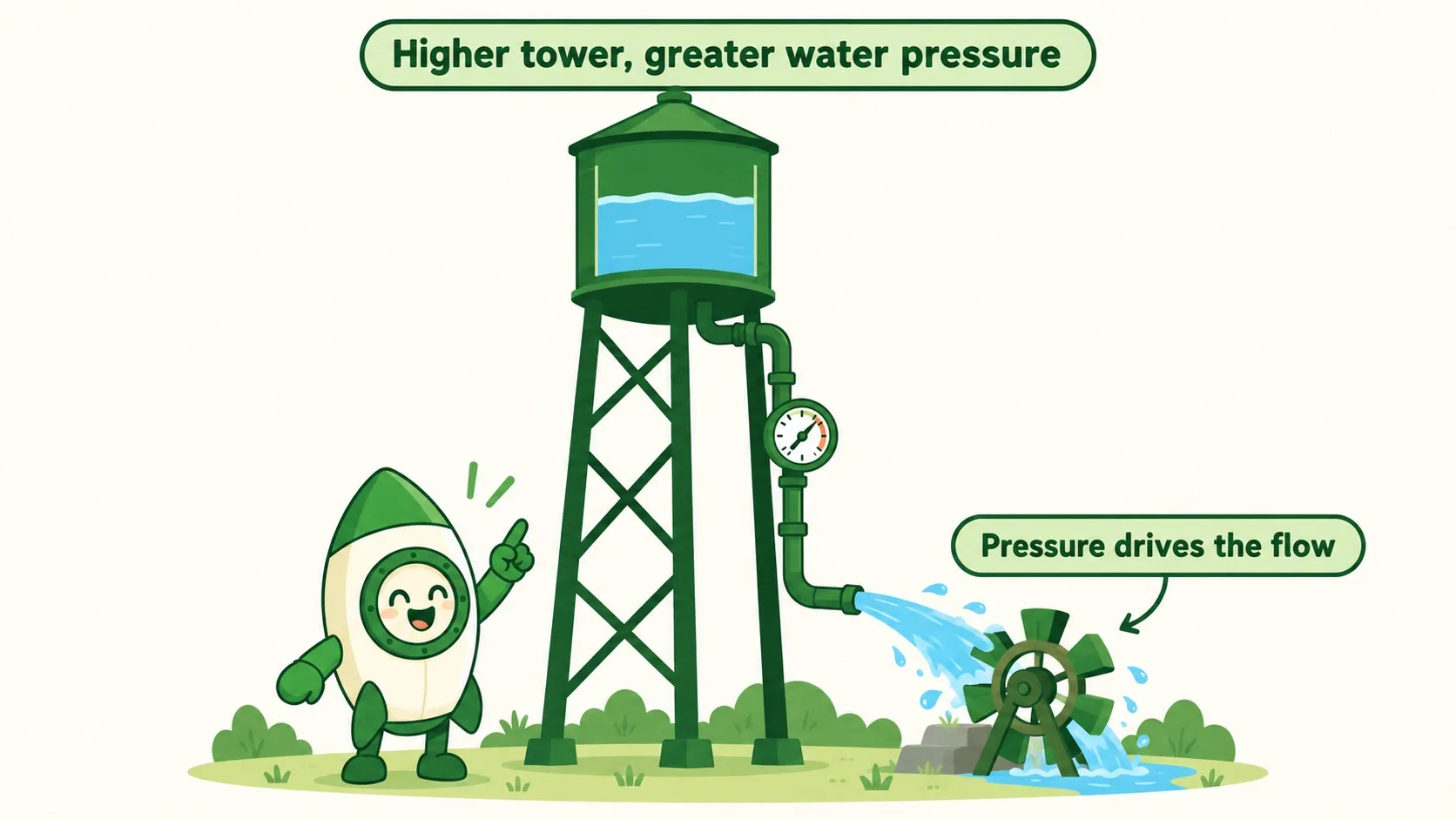
先回到那次“水管实验”,看看水流到底被什么推着走。Back to the water pipe experiment — what is really pushing the water along?
把水塔修得越高,塔底水管里的水压就越大,水冲下来越有劲。电路中也是一样:电压就是“电的压力”,它是推动电荷定向移动的原因。电压越大,“压力”越足,电流就越强——所以水塔高度对应电压,水流对应电流。The higher the tower, the greater the pressure in the pipe at its base, and the harder the water rushes down. Circuits are the same: voltage is the “electrical pressure” that drives charge along. The greater the voltage, the stronger the push and the stronger the current — tower height matches voltage, water flow matches current.
电压的大小,用什么单位来量?常见值又有哪些?What unit measures voltage — and what values show up in daily life?
第 2 步:伏特与几个常见值Step 2: Volts, and a few everyday values
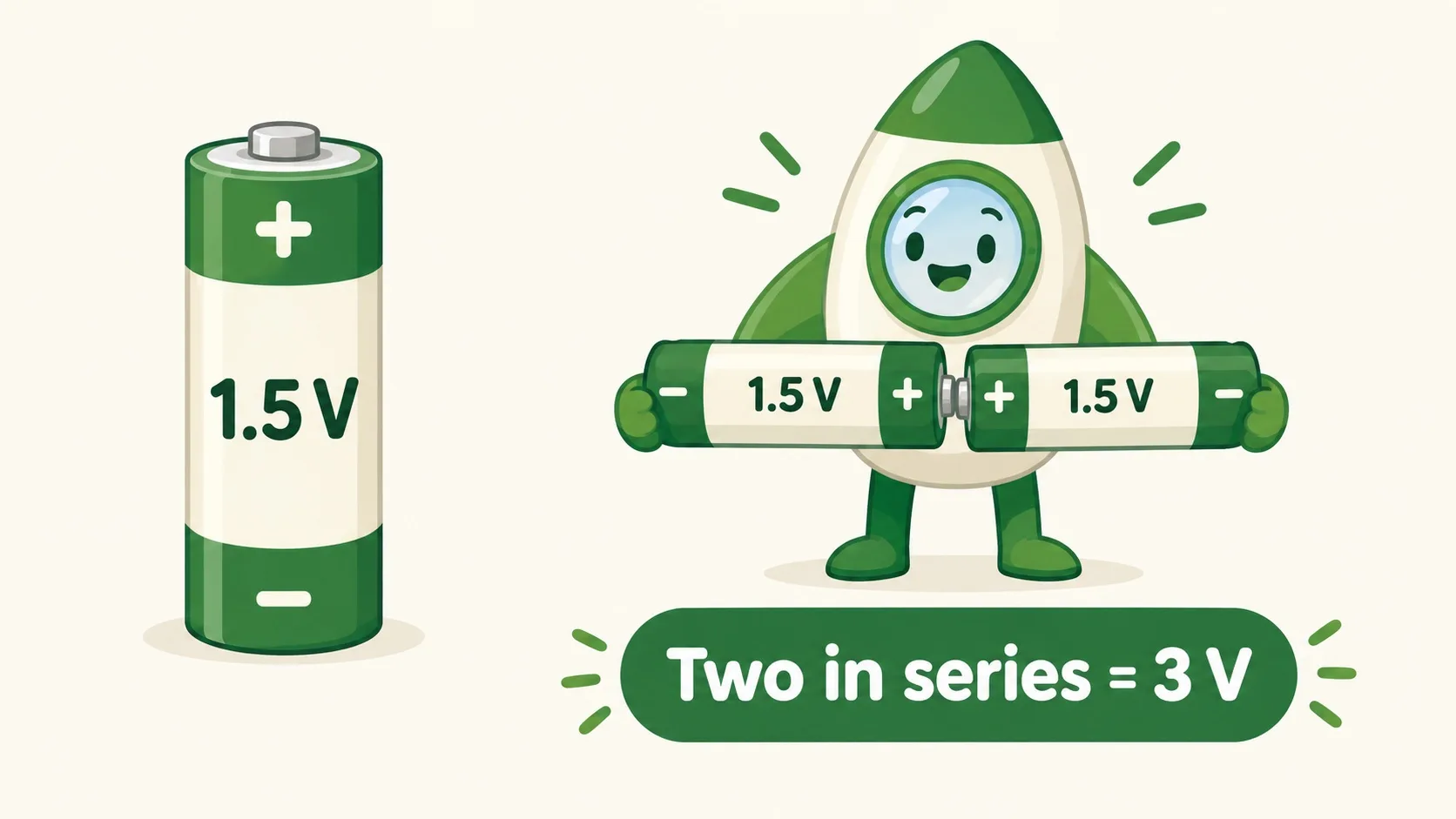
电压的单位是伏特,简称伏,符号 V。一节普通干电池的电压是 1.5 V;家里的插座是 220 V,插进插座很危险;对人体来说,不高于 36 V 的电压才是安全的。电池串联时电压相加:两节 1.5 V 的电池首尾相连,就得到 3 V。Voltage is measured in volts, symbol V. An ordinary dry cell is 1.5 V; a wall socket at home is 220 V — far too dangerous to touch; for the human body, anything up to 36 V counts as safe. Cells in series add up: two 1.5 V cells end to end give 3 V.
电压又该怎么量?它的接法和电流表不一样。And how do we measure voltage? Its wiring rule differs from the ammeter’s.
第 3 步:电压表并联测量Step 3: Measuring voltage — the voltmeter in parallel
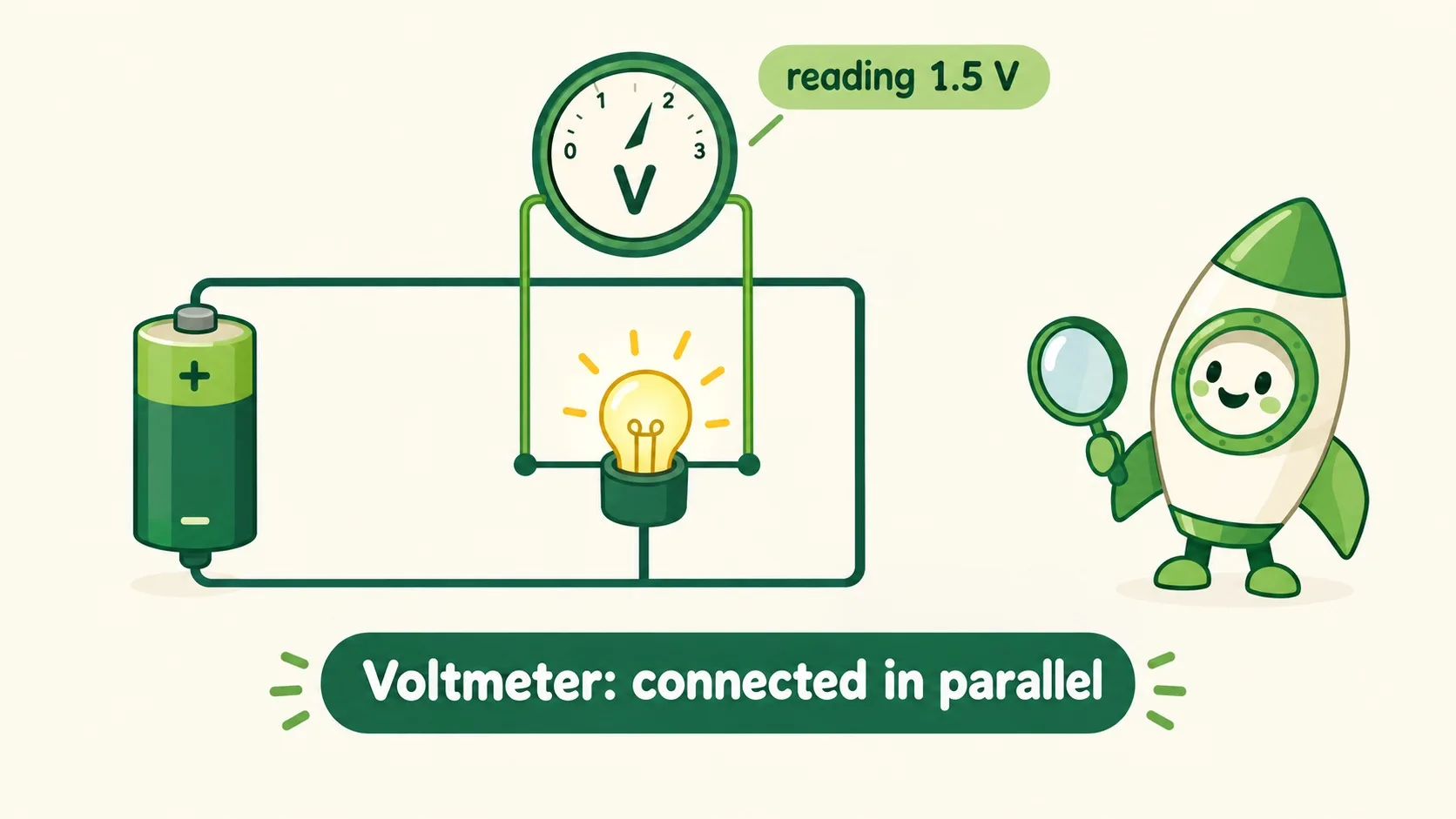
电压表要并联在被测用电器两端——像在灯泡两端的两个点之间架一台仪表,测的就是这两点之间的电压。它和灯泡是并联的,走的是自己的小支路。使用前同样要先选好量程,让指针落在刻度中间。A voltmeter goes in parallel with the part being measured — like hanging a gauge across the two ends of the bulb, reading the voltage between them. It sits in its own branch, so current doesn’t have to flow through it. As with the ammeter, choose the range first so the needle settles near mid-scale.
🎮 你来当水塔管理员(30 秒)🎮 Your turn: water tower keeper (30 seconds)
道理讲完了。拖动电池节数,看水塔高度、水压表、灯泡亮度和电压表怎么一起变化;再完成 4 个小挑战。Theory done. Drag the battery slider and watch tower height, pressure gauge, bulb brightness and voltmeter all move together; then take 4 quick challenges.
一句话记住它:电压是驱动电流的“水压”,单位伏特;它由电源提供,串联电池电压相加。Remember it in one line: voltage is the “water pressure” that drives current, measured in volts — supplied by the source, and cells in series add up.
电压 = 推动电荷的“电压力”,有电压才可能有电流Voltage = the electrical pressure that drives charge; no voltage, no current单位伏特 V:干电池 1.5 V、家用 220 V、安全电压不高于 36 VUnit: volt (V) — dry cell 1.5 V, home 220 V, safe up to 36 V电压表并联在被测用电器两端;串联电池电压相加Voltmeter in parallel across the part; cells in series add their voltages
内容参考 OpenStax 等公开教材,多来源核对 · AI 生成、人工审核 · 发现错误欢迎指正,帮这片叶子长得更好。Based on OpenStax and other open textbooks, cross-checked across sources · AI-generated, human-reviewed · Spotted a mistake? Tell us — help this leaf grow.
 Back to tree