🚧 电阻:电流路上的“窄管”🚧 Resistance: the Narrow Pipe on the Current's Road
上一片里,电压是推着电荷走的“压力泵”。可同一节电池,接铜线电流很大,接铅笔芯却小得可怜——因为路上还有一位“拦路者”:电阻。Last leaf, voltage was the “pressure pump” pushing charges along. But the same battery drives a big current through copper wire and a tiny one through pencil lead — because a gatekeeper stands on the road: resistance.
第 1 步:电阻 = 电流路上的窄管Step 1: Resistance is the narrow pipe
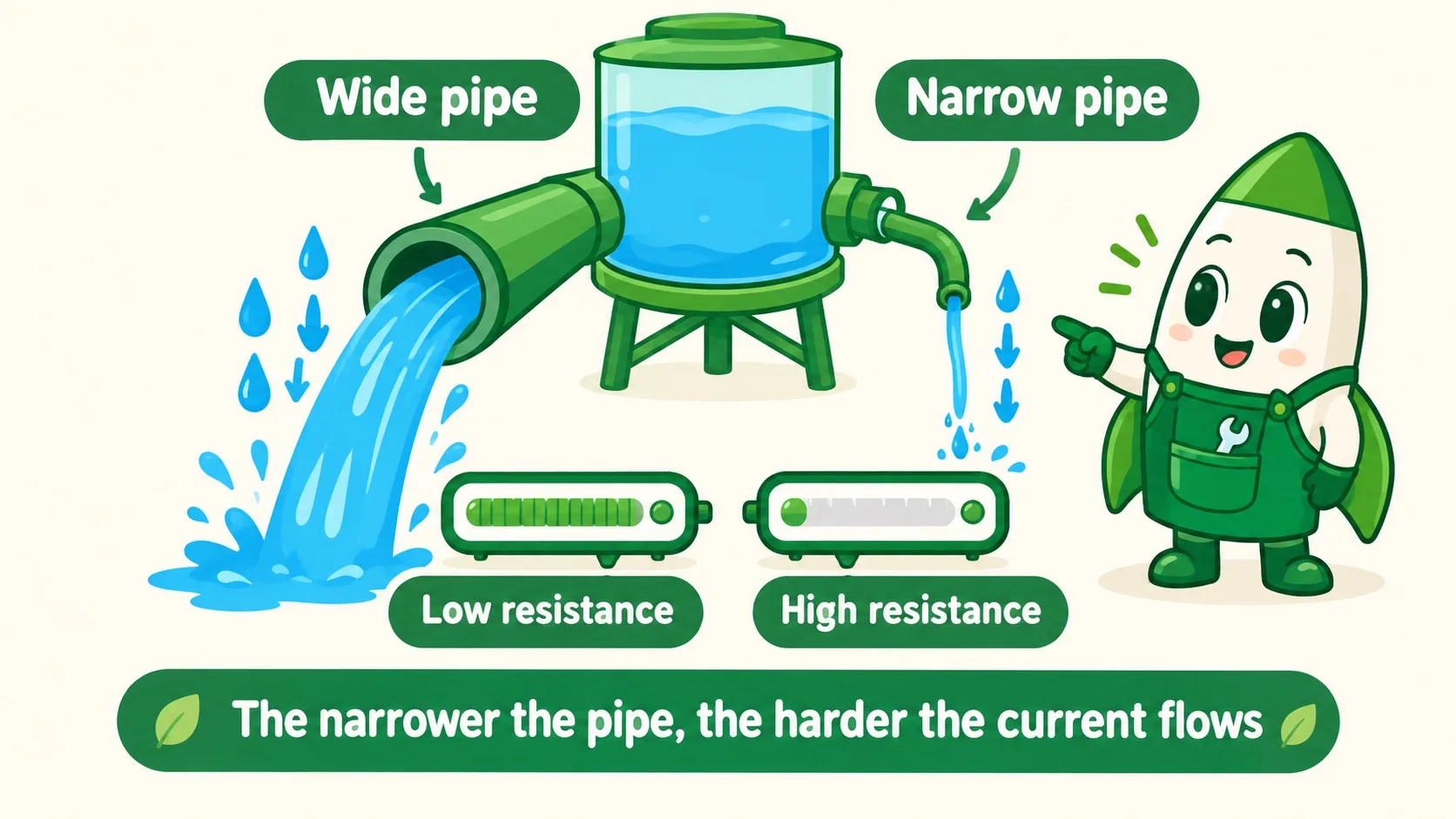
小火箭把电路接成一套水管,电阻在干什么一眼就看懂了。The little rocket rewired the circuit as a water-pipe system — and resistance became obvious at a glance.
电压像水泵,推着水流(电流)往前走。管子越窄,水就越难通过;电阻越大,同样电压下电流越小。电阻用 R 表示,单位是欧姆(Ω)。Voltage is the pump pushing the water (current) along. The narrower the pipe, the harder the flow. More resistance means less current at the same voltage. Resistance is written R and measured in ohms (Ω).
那这根“管子”的宽窄,到底由什么说了算?So what decides how narrow that pipe is?
第 2 步:什么决定管子有多窄?Step 2: Who decides how narrow it is?
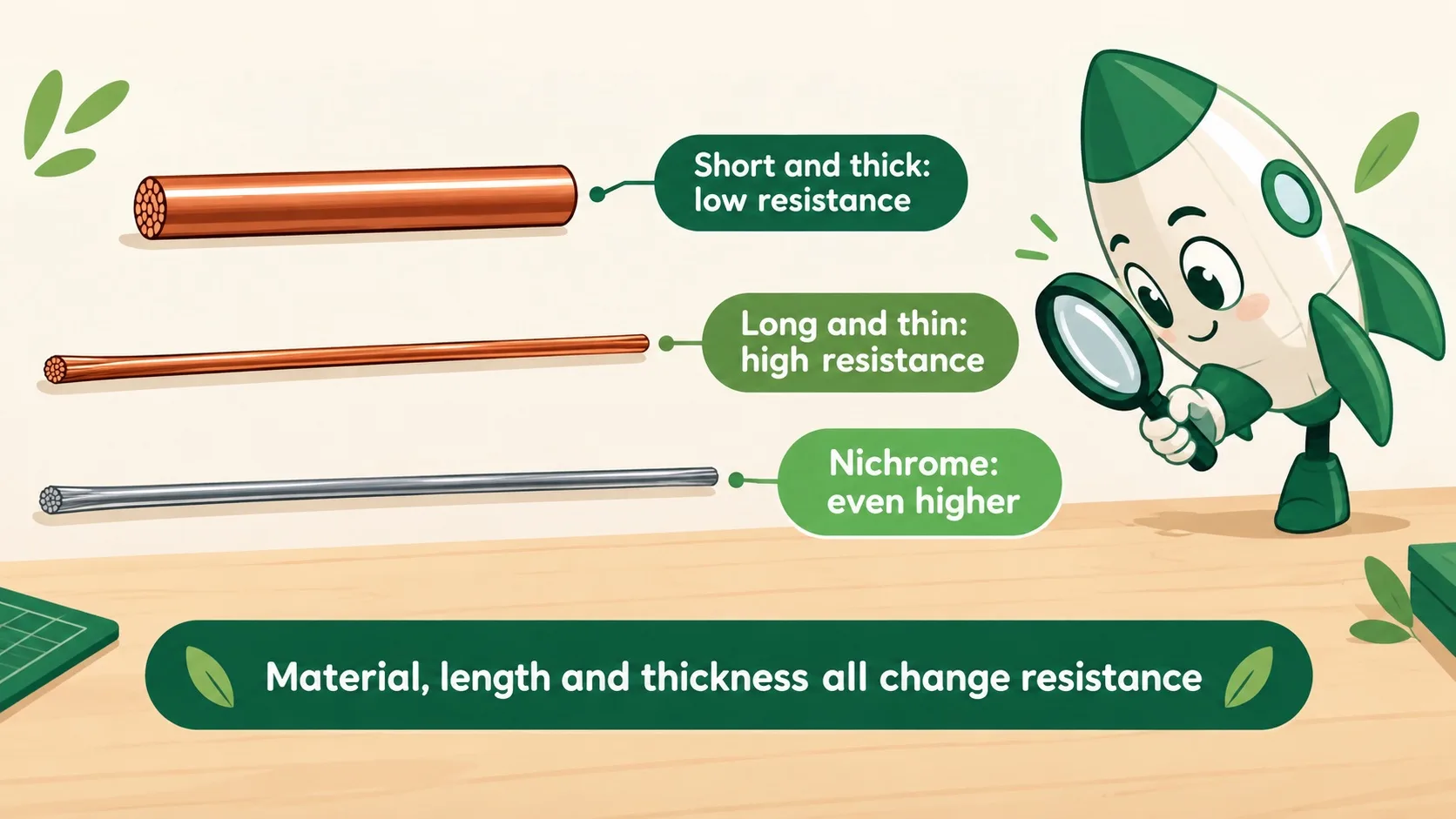
决定电阻的有四个因素。材料:镍铬合金比铜“难走”得多;长度:越长电阻越大;粗细:越细电阻越大;温度:多数金属越热电阻越大。口诀——长、细、材料差,电阻大。Four factors set the resistance. Material: nichrome is much harder to push through than copper. Length: longer means more resistance. Thickness: thinner means more resistance. Temperature: for most metals, hotter means more resistance. One phrase to remember: long, thin, poor material — big resistance.
管子的宽窄出厂就定死了,如果想让电阻随时可调呢?A pipe's width is fixed at the factory. What if we want resistance we can adjust any time?
第 3 步:能调的电阻——滑动变阻器Step 3: Adjustable resistance — the rheostat
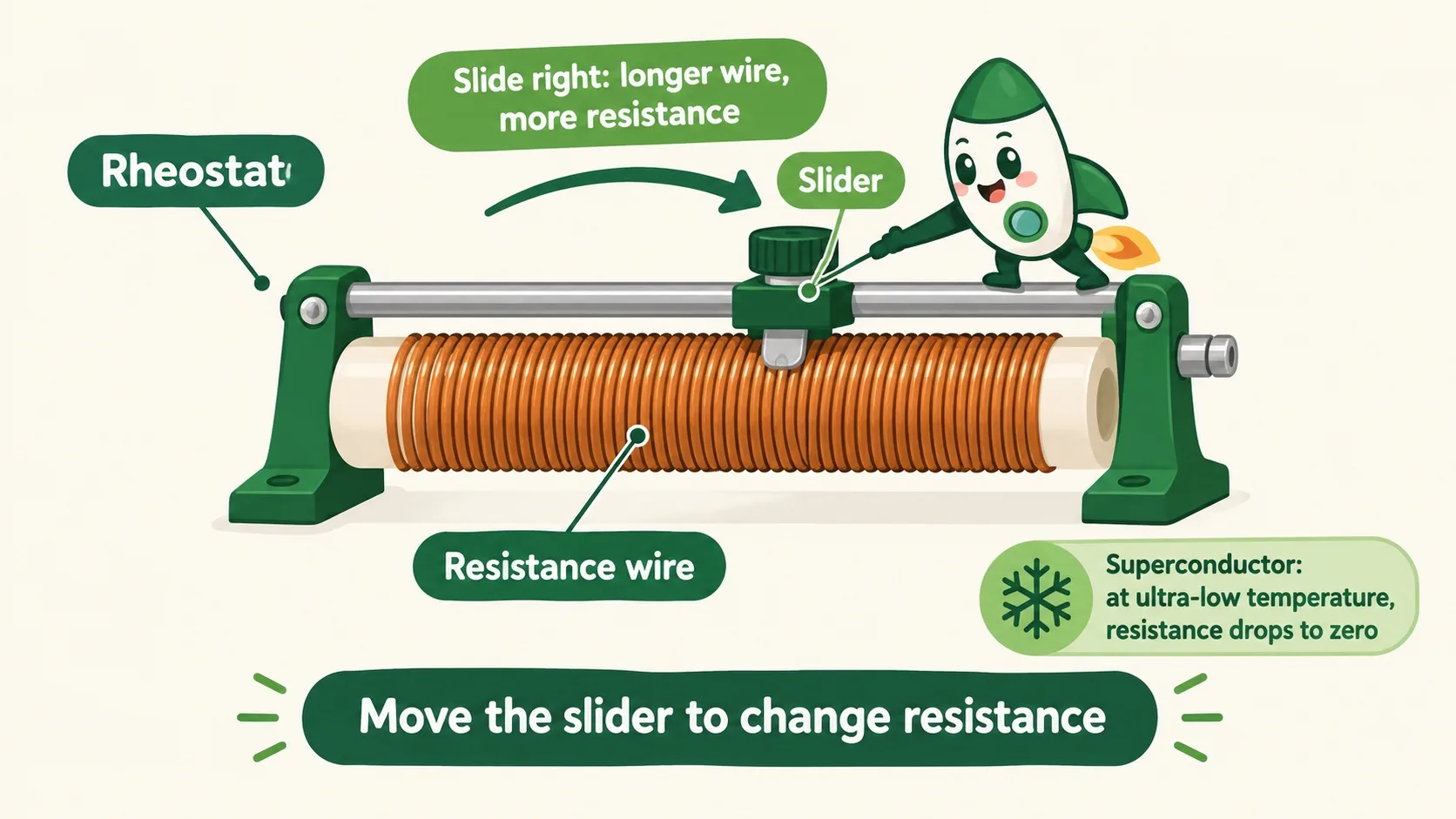
滑动变阻器就是一段“长度可选”的电阻丝:滑片向右移,接入的丝变长,电阻变大;向左移则变小。调音量、调台灯亮度,都靠它。彩蛋:温度降到极低时,有些材料的电阻会突然变成 0——这叫超导,磁悬浮列车就靠它。A rheostat is a resistance wire whose length you can choose: slide it right and more wire joins the circuit, so resistance grows; slide it left and resistance shrinks. Volume knobs and dimmer lamps rely on it. Bonus: near absolute zero, some materials drop to zero resistance — superconductivity, the trick behind maglev trains.
🎮 你来当管道工程师(1 分钟)🎮 Your turn: pipeline engineer (1 minute)
道理讲完了。先拖滑块看电阻和电流怎么变,再判断下面 4 组管子谁电阻更大。Theory done. Drag the sliders to watch resistance and current change, then judge which of the 4 pipe pairs has more resistance.
一句话记住它:电阻 = 导体对电流的阻碍,像电流路上的窄管;越细、越长、材料越差、温度越高,电阻越大。Remember it in one line: resistance is a conductor's hindrance to current — a narrow pipe on the road. Thinner, longer, poorer material, hotter: more resistance.
电阻 R 单位欧姆(Ω),表示阻碍电流的本领R is measured in ohms (Ω): how strongly a conductor blocks current长度↑、粗细↓、材料电阻率↑、温度↑ → 电阻↑Length ↑, thickness ↓, resistivity ↑, temperature ↑ → R ↑滑动变阻器靠改长度调电阻;超导时电阻变成 0A rheostat adjusts resistance by changing wire length; superconductors drop to 0
内容参考 OpenStax 等公开教材,多来源核对 · AI 生成、人工审核 · 发现错误欢迎指正,帮这片叶子长得更好。Based on OpenStax and other open textbooks, cross-checked across sources · AI-generated, human-reviewed · Spotted a mistake? Tell us — help this leaf grow.
 Back to tree