🚰 电流:电荷的定向流动🚰 Electric Current: The Directed Flow of Charge
上一片认识了电荷——它们平时东倒西歪地乱跑。可一旦所有电荷都朝同一个方向移动,就形成了电流。这一片看看电流怎么流、往哪流、怎么量。Last leaf we met electric charge — usually wandering about in all directions. But once the charges all drift the same way, they form an electric current. This leaf looks at how current flows, which way it goes, and how we measure it.
第 1 步:水管里的秘密Step 1: The secret in the water pipe
看不见的电流,怎么才能“看见”?先借一根水管来帮忙。How can we “see” an invisible current? Borrow a water pipe to help.
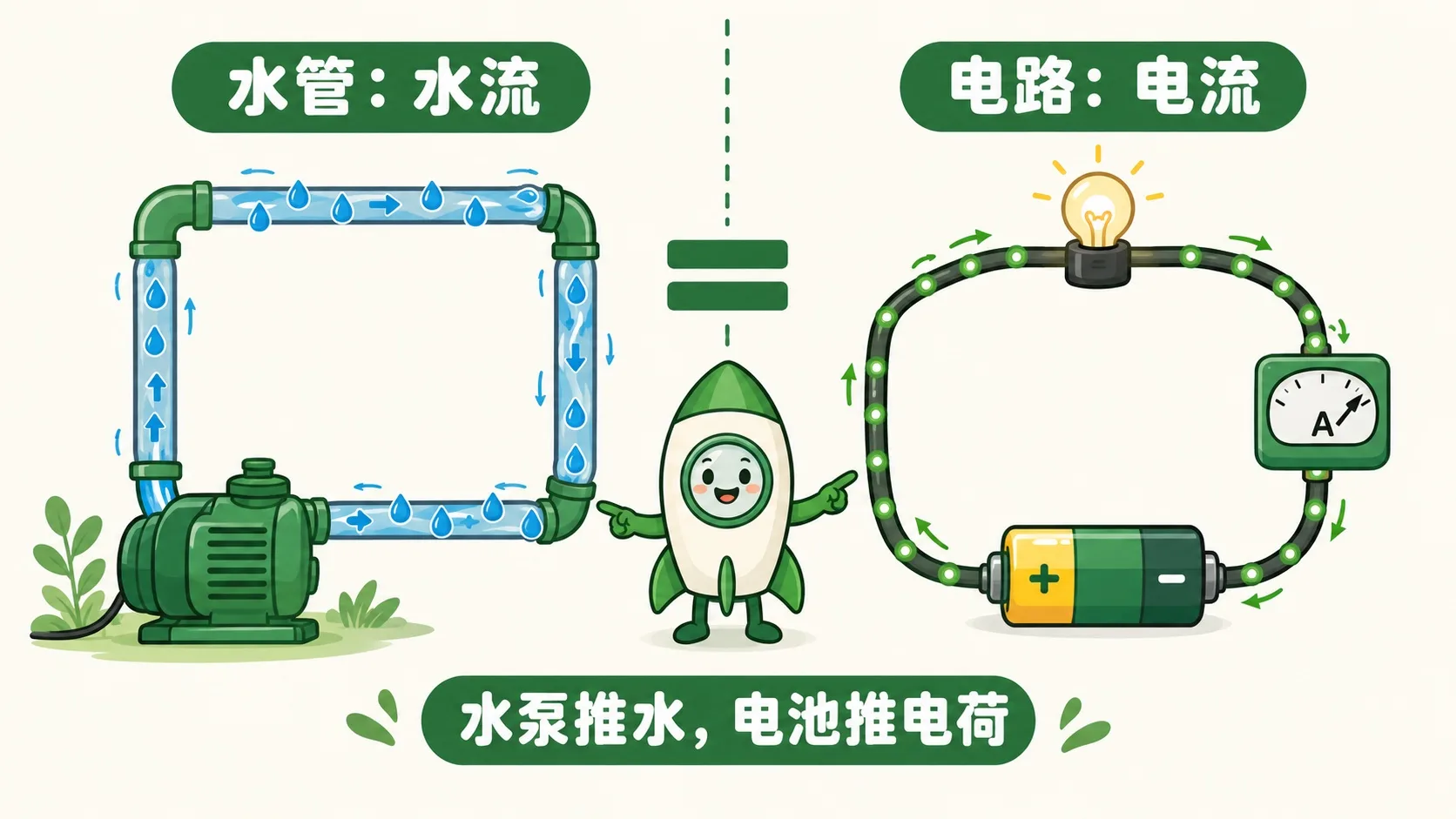
水泵一开,水管里的水就朝一个方向流起来。电路也一样:电池像“电的泵”,推动导线里的电荷定向移动,这就是电流。水流看不见,但水轮会转;电流也看不见,但灯泡会亮、表针会动——这些都是电流在工作的信号。Turn on the pump and water in the pipe flows one way. A circuit is the same: the battery is the “pump” that pushes charge along the wire in one direction — that is electric current. You can’t see water flow, but the wheel spins; you can’t see current, but the bulb glows and the needle swings — those are its signals.
水流有方向,电流也有——它的方向是怎么规定的?Water flows a certain way, and so does current — but who decided its direction?
第 2 步:电流往哪边流Step 2: Which way does current flow?
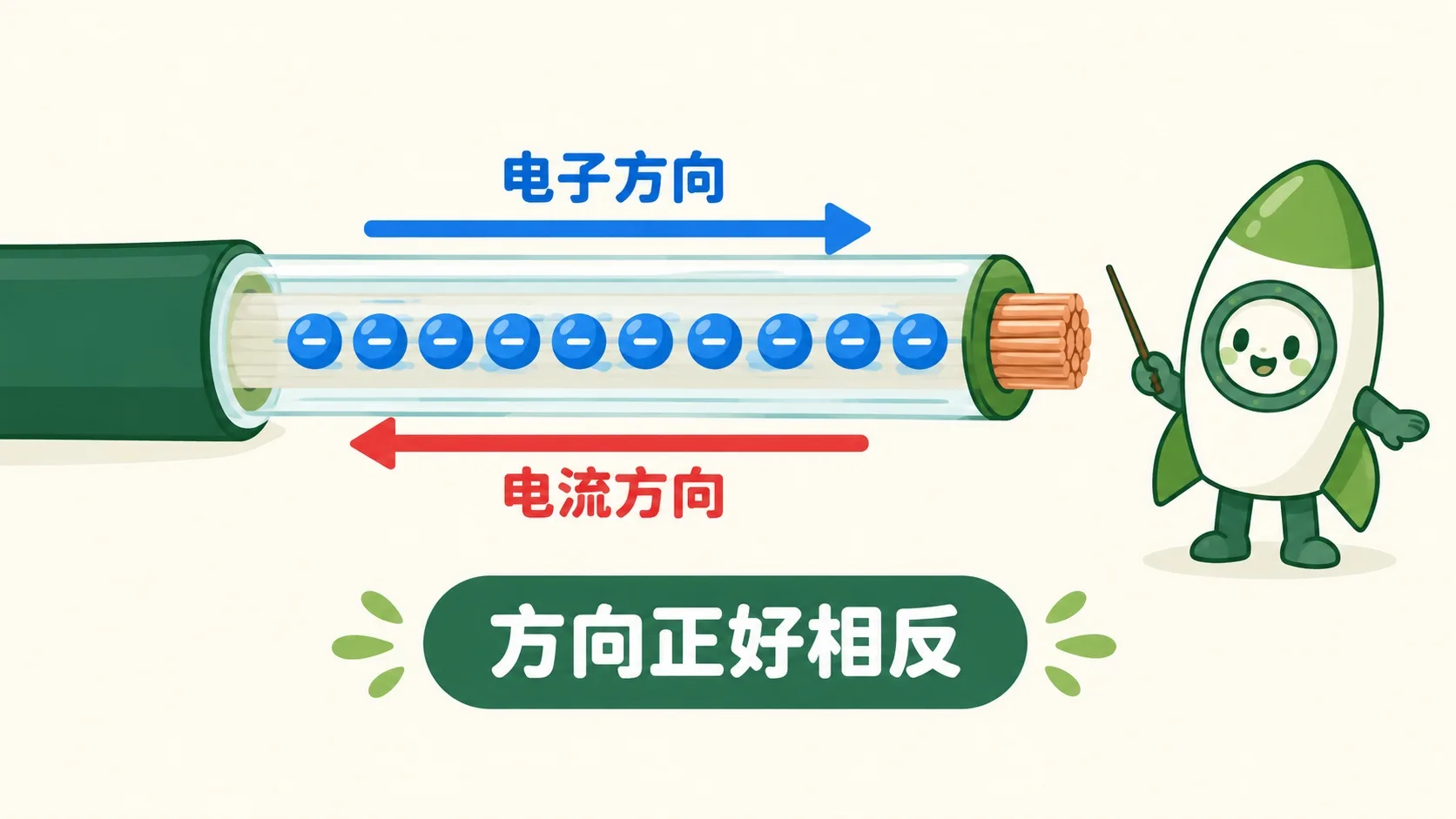
科学家约定:正电荷移动的方向,就是电流的方向。所以在电路里,电流从电池正极(+)流出,经过灯泡,再回到负极(−)。有趣的是,金属导线里真正能移动的是带负电的电子,它们的方向正好和电流相反。电流的单位是安培,简称安,符号 A。Scientists agreed: the direction positive charge would move is the current direction. So current flows out of the battery’s positive (+) terminal, through the bulb, and back to the negative (−) terminal. The twist: in metal wires what really moves are negative electrons, drifting exactly opposite to the current. Current is measured in amperes (amps), symbol A.
想知道电流有多大,就要请出专门的电表。To know how big the current is, we bring in a dedicated meter.
第 3 步:电流表串联测量Step 3: Measuring current — the ammeter in series
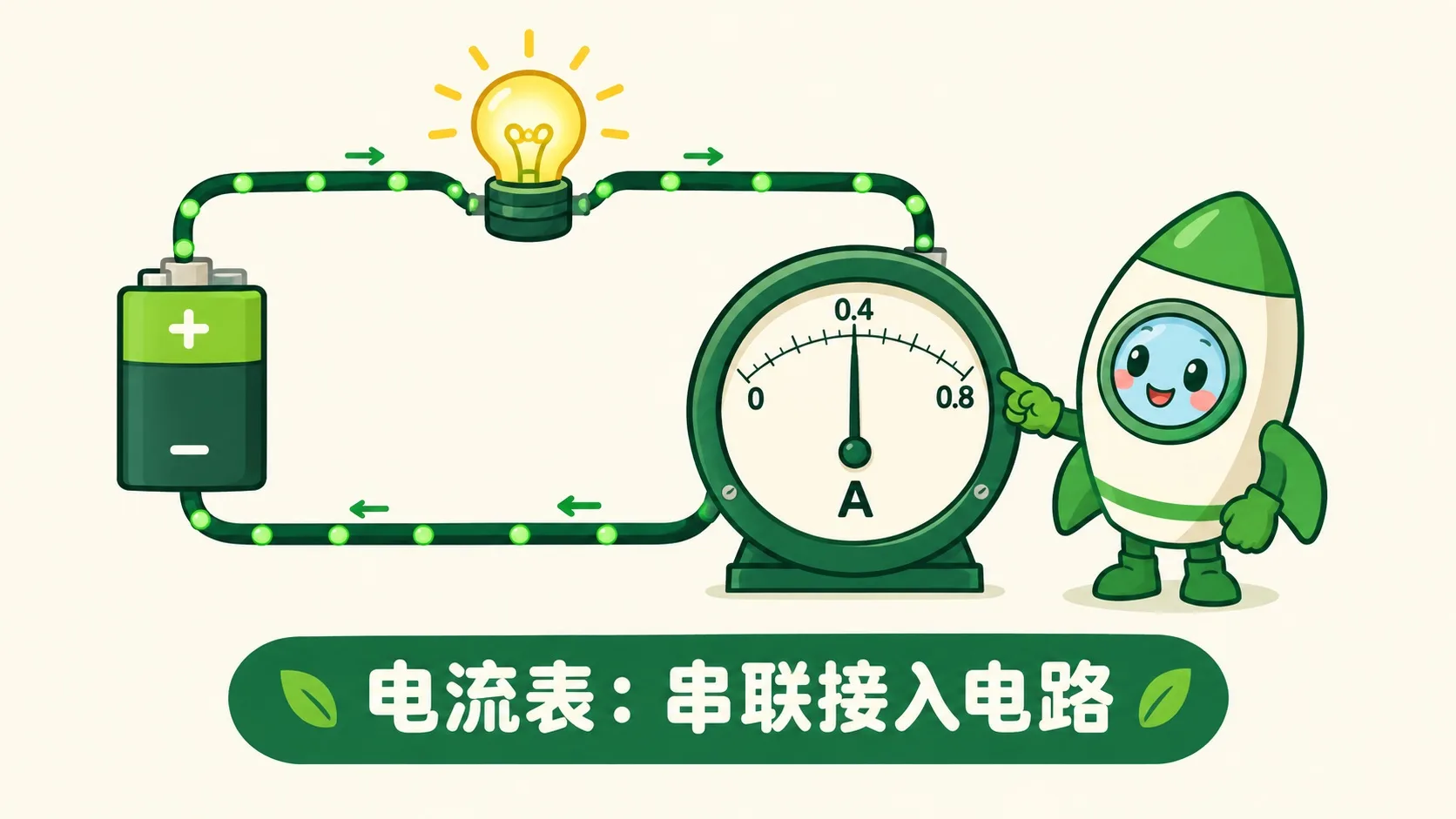
电流表要串联进电路——让电流从“+”接线柱流进去,从“−”接线柱流出来。使用前先估一估大小,选合适的量程,指针才能落在刻度中间。千万不能把电流表直接并联到电池两极,那样电流太大,会把它烧坏。An ammeter goes in series — current enters the “+” terminal and leaves the “−” terminal. Estimate the size first and pick a suitable range, so the needle lands near mid-scale. Never connect an ammeter directly across the battery terminals: the current would be far too large and could burn it out.
🎮 你来当水电工程师(30 秒)🎮 Your turn: water & circuit engineer (30 seconds)
道理讲完了。拖动水泵档位,看水流和电流怎么“同步呼吸”;再完成 4 个小挑战。Theory done. Drag the pump level and watch water flow and current “breathe” together; then take 4 quick challenges.
一句话记住它:电流是电荷的定向流动;方向从正极到负极,用电流表串联测量。Remember it in one line: current is the directed flow of charge — from the positive terminal to the negative, measured with an ammeter in series.
电流 = 电荷的定向移动,电池就是“电的泵”Current = charge flowing in one direction; the battery is the “pump”电流方向按正电荷约定,与导线里电子的实际方向相反Current direction follows the positive-charge convention — opposite to the electrons’ drift电流表要串联:+ 进 − 出,先估大小再选量程Ammeter in series: + in, − out; estimate first, then pick the range
内容参考 OpenStax 等公开教材,多来源核对 · AI 生成、人工审核 · 发现错误欢迎指正,帮这片叶子长得更好。Based on OpenStax and other open textbooks, cross-checked across sources · AI-generated, human-reviewed · Spotted a mistake? Tell us — help this leaf grow.
 Back to tree