〰️ 机械振动:来回往复的运动〰️ Mechanical Vibration: The Back-and-Forth Motion
上一片里,热量让物质换了个模样;这一片换个话题——看一种最守规矩的运动:物体沿着同一条路,来回往复。钟摆、弹簧、音叉,全是这套动作,它叫机械振动。Last leaf, heat changed matter's form; this leaf switches topic — to the most well-behaved motion of all: an object running back and forth along the very same path. Pendulums, springs and tuning forks all repeat this one move. It is called mechanical vibration.
第 1 步:围绕平衡位置,来回往复Step 1: Back and forth around the equilibrium position
拉一下弹簧再松手,小球为什么自己荡回来?因为它总想回到那个“不费力”的位置。Pull a spring and let go — why does the ball come back by itself? Because it always wants to return to the spot where nothing is stretched.
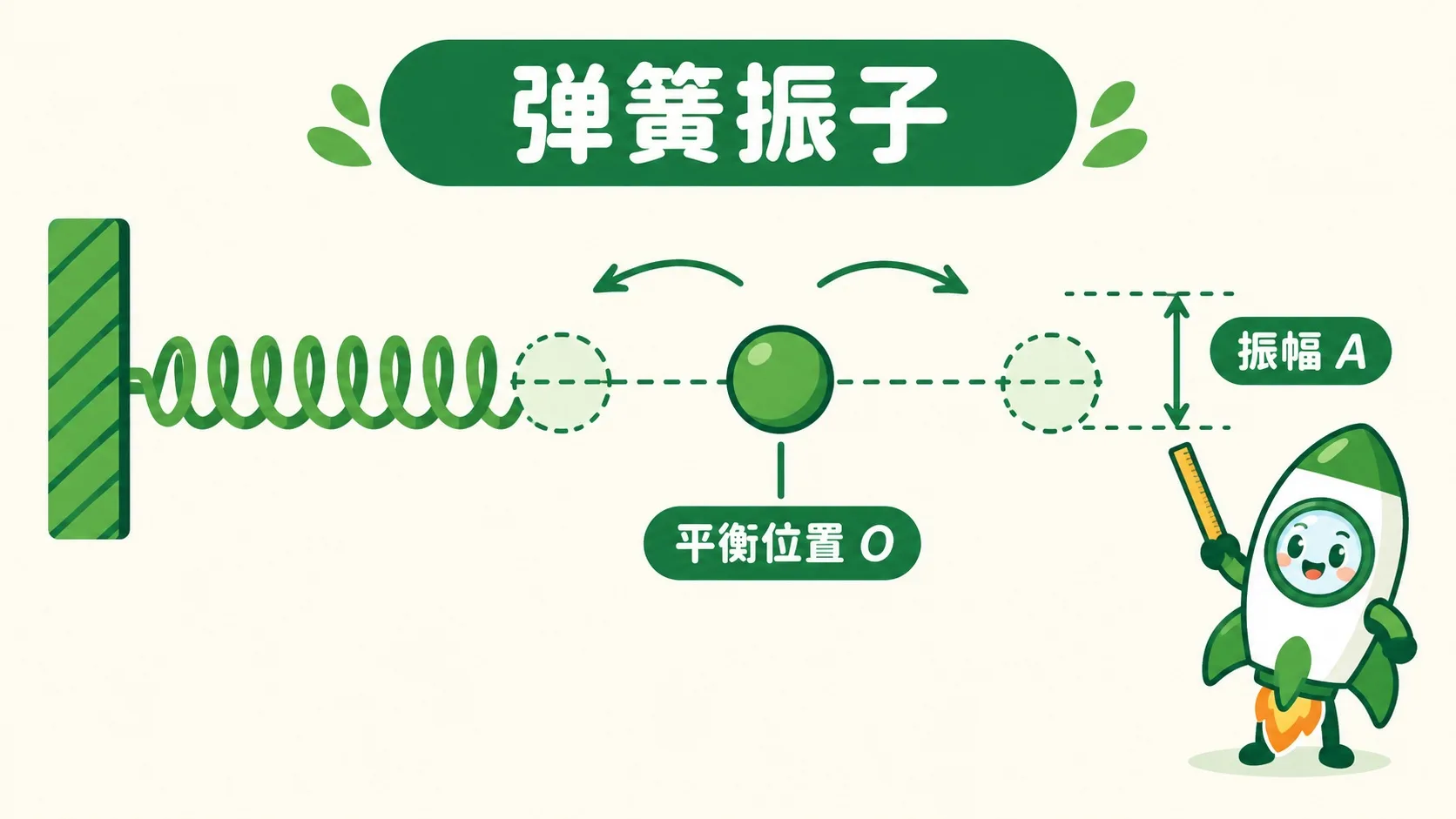
弹簧一端固定,另一端连着小球。小球静止不动时的位置叫平衡位置(O 点)。把它拉到最远的 A 点松手,小球就在 A 和 B 之间来回跑:经过 O 点时最快,冲到两端时慢下来、停一瞬,再折返。这种围绕平衡位置的往复运动,就叫机械振动——钟摆、音叉、秋千,全是同一个套路。One end of the spring is fixed, the other holds a ball. Where the ball rests is called the equilibrium position (point O). Pull it to the far end A, let go, and the ball shuttles between A and B: fastest as it sweeps through O, slowing near the ends, pausing for an instant before turning back. This back-and-forth motion around an equilibrium position is mechanical vibration — pendulums, tuning forks and swings all follow it.
来回一次要多久?偏得最远有多远?两个词就能把它说清楚。How long does one round trip take? How far does it stray? Two words are enough to pin it down.
第 2 步:振幅、周期、频率Step 2: Amplitude, period and frequency
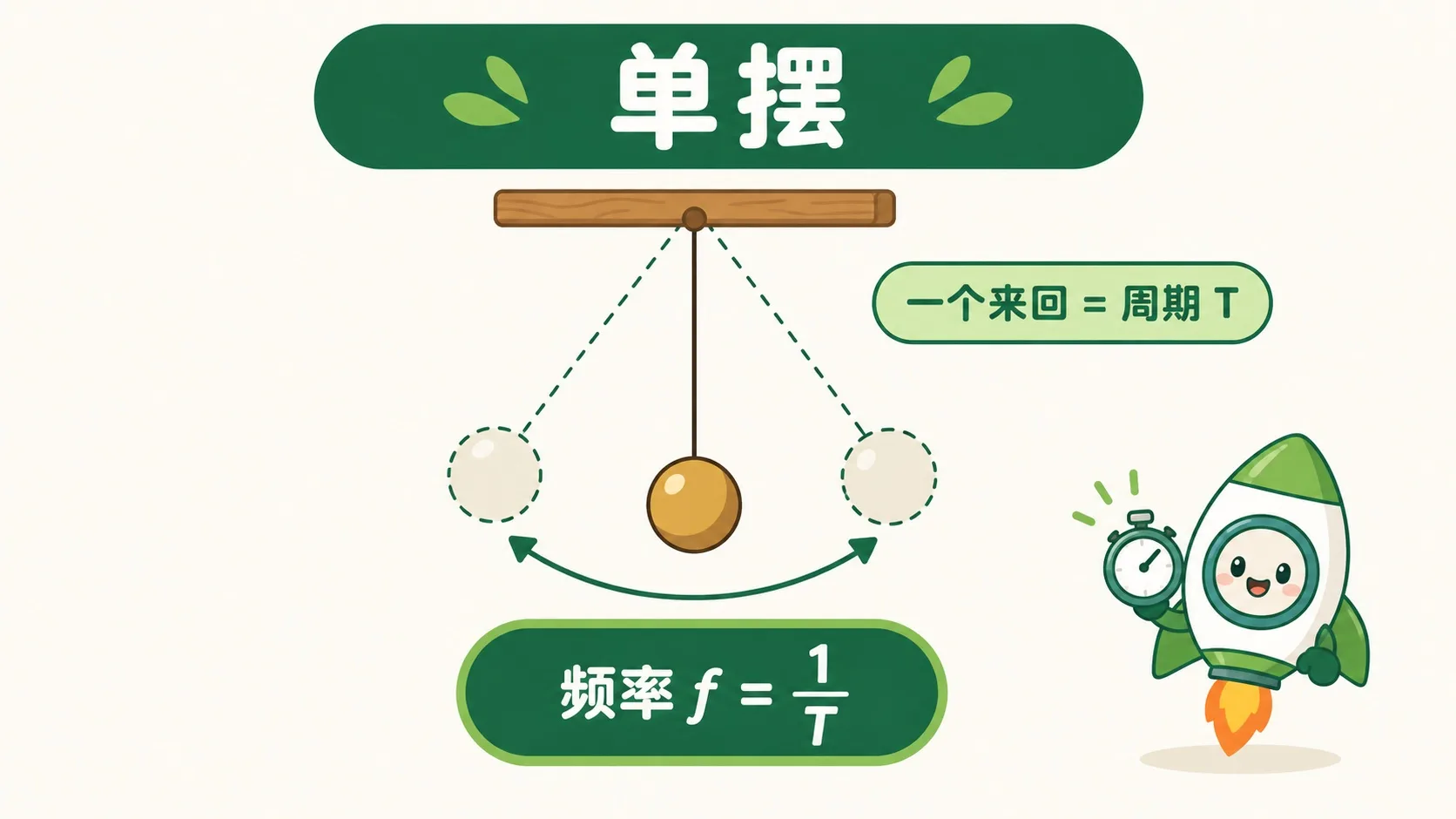
摆锤从最左边荡到最右边,再荡回来,方向也回到原样——这才叫一次全振动,用的时间叫周期 T,单位是秒。一秒钟完成多少次全振动,叫频率 f,单位是赫兹(Hz)。f = 1/T:周期越短,频率越高。摆锤偏离平衡位置的最大距离叫振幅 A,它只管“荡得多远”,不影响快慢:轻轻推和用力推,来回一次的时间几乎一样。A pendulum swings from the far left to the far right and back, ending in the same direction it started — that is one full vibration, and its duration is the period T, in seconds. How many full vibrations happen each second is the frequency f, in hertz (Hz). f = 1/T: shorter period, higher frequency. The greatest distance from equilibrium — the amplitude A — only sets how far the swing goes, not how fast: a gentle push and a hard push take about the same time for one full trip.
还有个容易漏掉的细节:到底什么才算“一次”?One detail is easy to miss: what exactly counts as “one” vibration?
第 3 步:一次全振动,走四个振幅Step 3: One full vibration covers four amplitudes
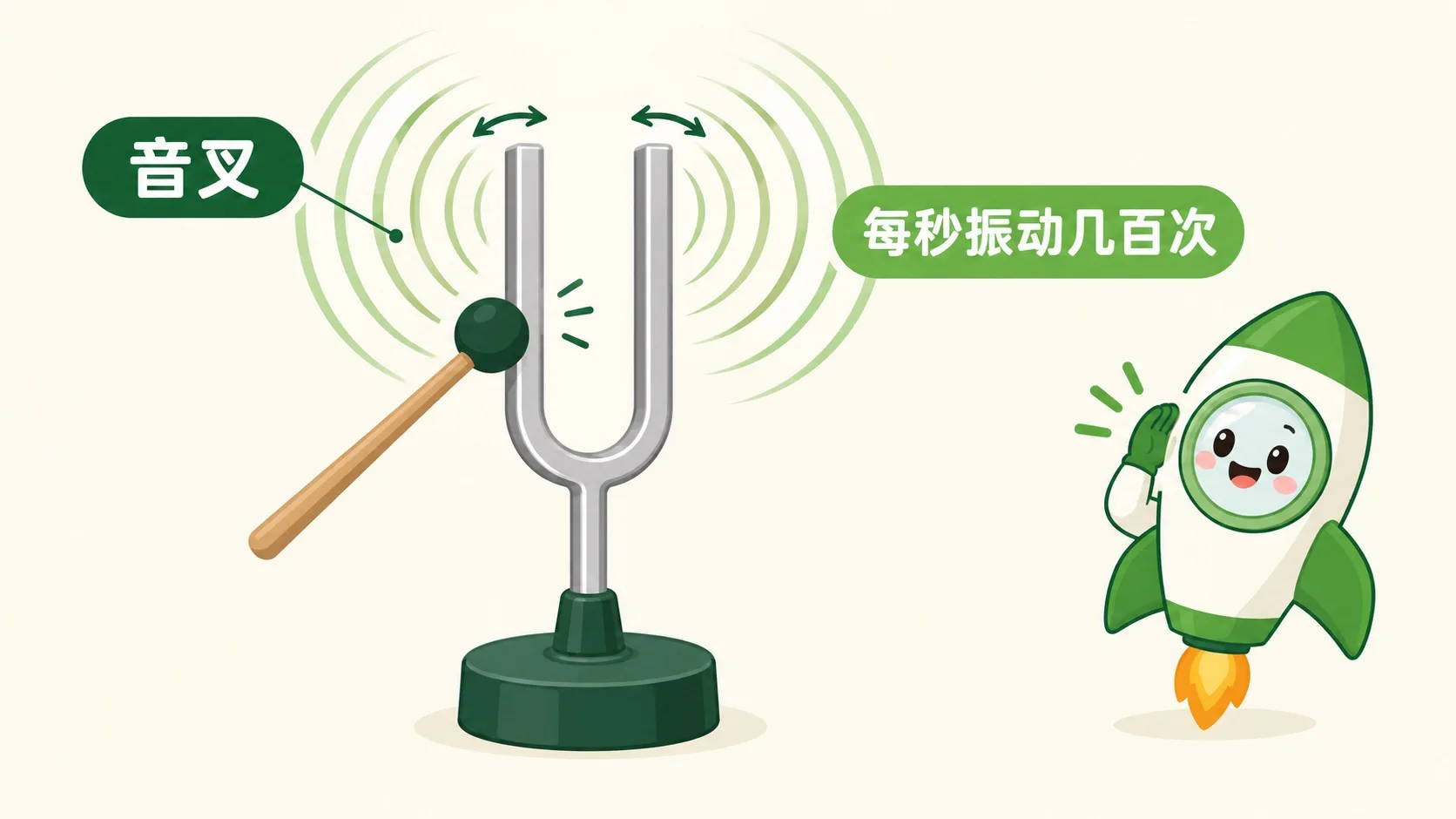
敲一下音叉,它每秒来回振动几百次,把振动传给周围空气,我们就听到了声音。再看“一次全振动”的路程账:小球从最右端 A 出发,经过 O 到最左端 B,再经过 O 回到 A——位置和方向都回到原样,这才算一次。这段路是 A→O→B→O→A,正好四个振幅。记住:回到出发点还不够,方向也要和出发时一致。Strike a tuning fork and it vibrates hundreds of times every second, passing the vibration into the air — that is how we hear it. Now the distance bill of one full vibration: the ball starts at the far end A, sweeps through O to the far end B, then back through O to A — same position, same direction as when it left. That is one full vibration, and the route A→O→B→O→A is exactly four amplitudes. Remember: coming back is not enough — it must come back moving the same way.
🎮 你来当振动观测员(40 秒)🎮 Your turn: vibration observer (40 seconds)
拖动振幅和周期两个滑块,看小球来回跑、轨迹图实时画;再闯 4 关读数题。Drag the amplitude and period sliders to watch the ball shuttle and the graph draw itself live; then take on 4 reading challenges.
一句话记住它:振动 = 围绕平衡位置来回往复;周期 T 是一次全振动的用时,f = 1/T;一次全振动走四个振幅。Remember it in one line: vibration means running back and forth around equilibrium; T is the time of one full vibration and f = 1/T; one full vibration covers four amplitudes.
振动 = 围绕平衡位置来回往复:弹簧、钟摆、音叉都是Vibration = back-and-forth around equilibrium: springs, pendulums, tuning forks振幅管“偏多远”,周期管“用多久”;f = 1/T,单位赫兹(Hz)Amplitude sets how far; period sets how long; f = 1/T, in hertz (Hz)一次全振动 = 回到出发点且方向一致,路程是 4 个振幅One full vibration = back to the start, moving the same way — four amplitudes of travel
内容参考 OpenStax 等公开教材,多来源核对 · AI 生成、人工审核 · 发现错误欢迎指正,帮这片叶子长得更好。Based on OpenStax and other open textbooks, cross-checked across sources · AI-generated, human-reviewed · Spotted a mistake? Tell us — help this leaf grow.
 Back to tree