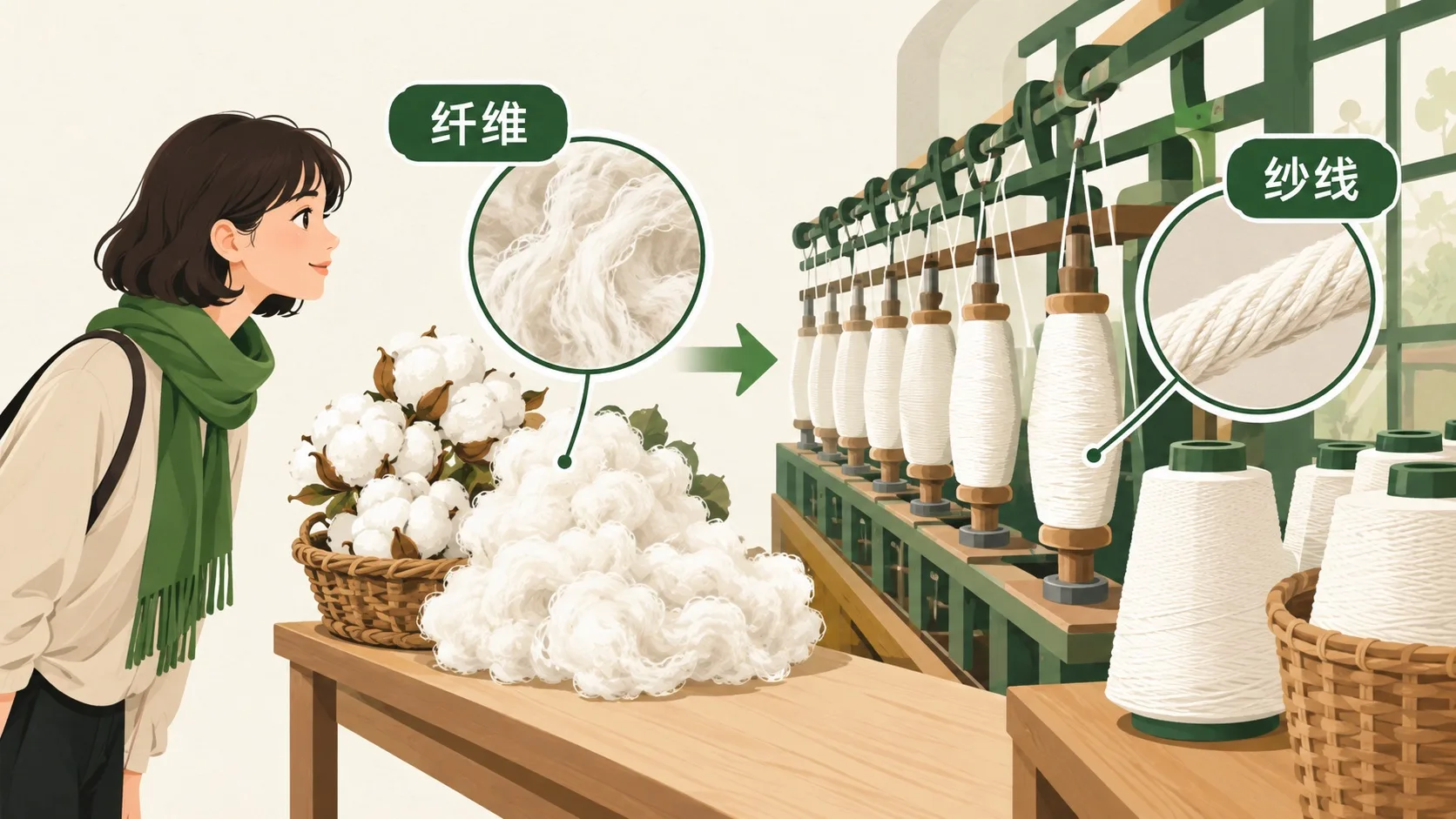
同一间作坊里,棉花还不是布。小树要追踪一条围巾的两次变化。In the same workshop, cotton is not yet cloth. Mia follows two transformations in making a scarf.
第 1 步:纺:把纤维变成线Step 1: Spinning: fibres into yarn
先解决散纤维的问题。First solve the problem of loose fibres.
纺纱把纤维拉伸并加捻。加捻让纤维相互抱紧。多锭机器同时处理多条线。纺纱速度因此可能提高。Spinning draws out fibres and twists them. Twisting helps fibres hold together. A machine with multiple spindles handles several threads at once. This can increase yarn output.
第 2 步:织:让两组线交错Step 2: Weaving: crossing yarns
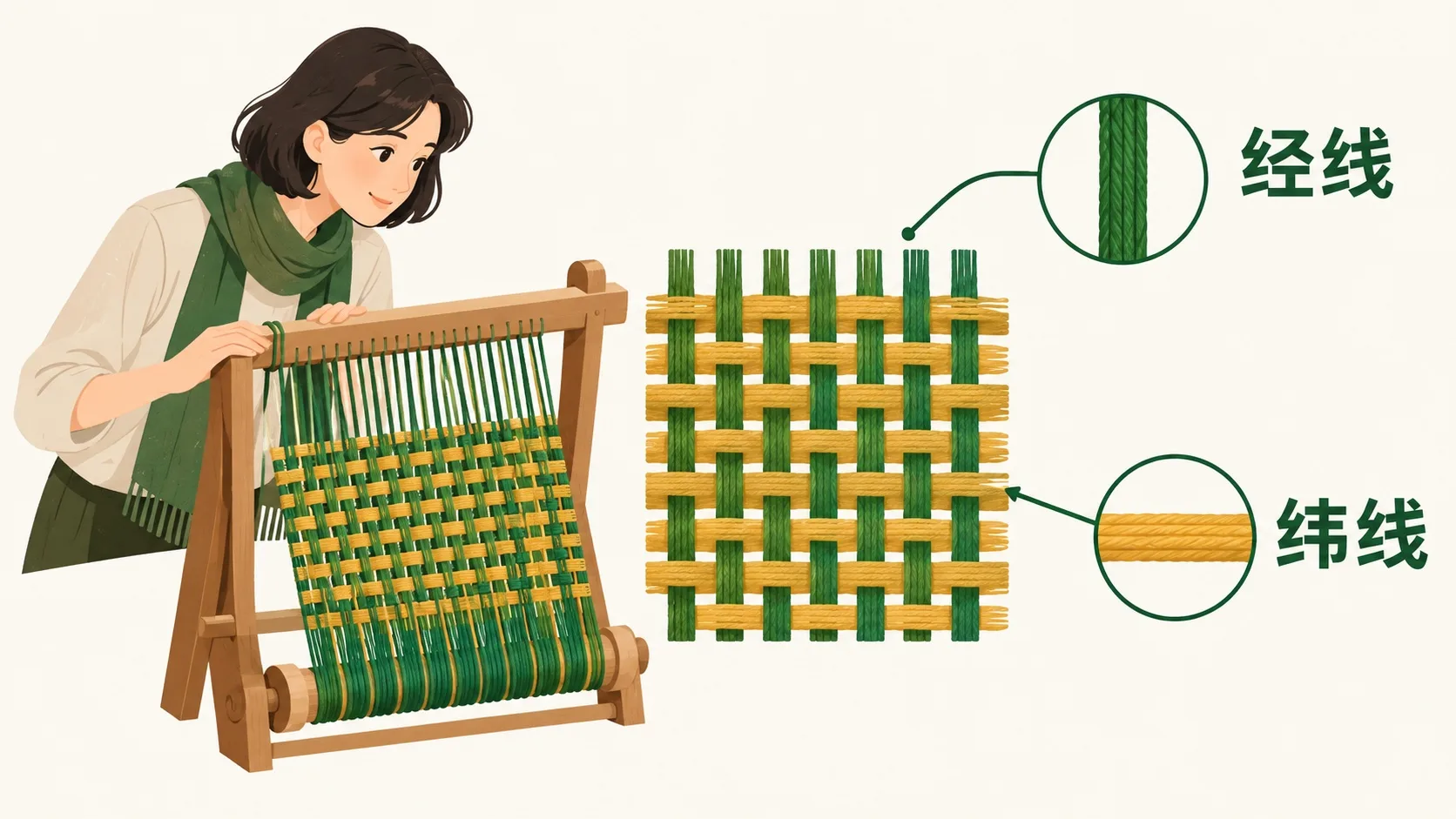
有了线,怎样成为一块布?How does yarn become a sheet of cloth?
经线沿布的长度排列。纬线横向穿过经线。织机控制交错顺序。纺纱和织布是不同工序。Warp threads run along the cloth. Weft passes across them. A loom controls the interlacing pattern. Spinning yarn and weaving cloth are different operations.
第 3 步:生产快了,条件也要看Step 3: Output and working conditions
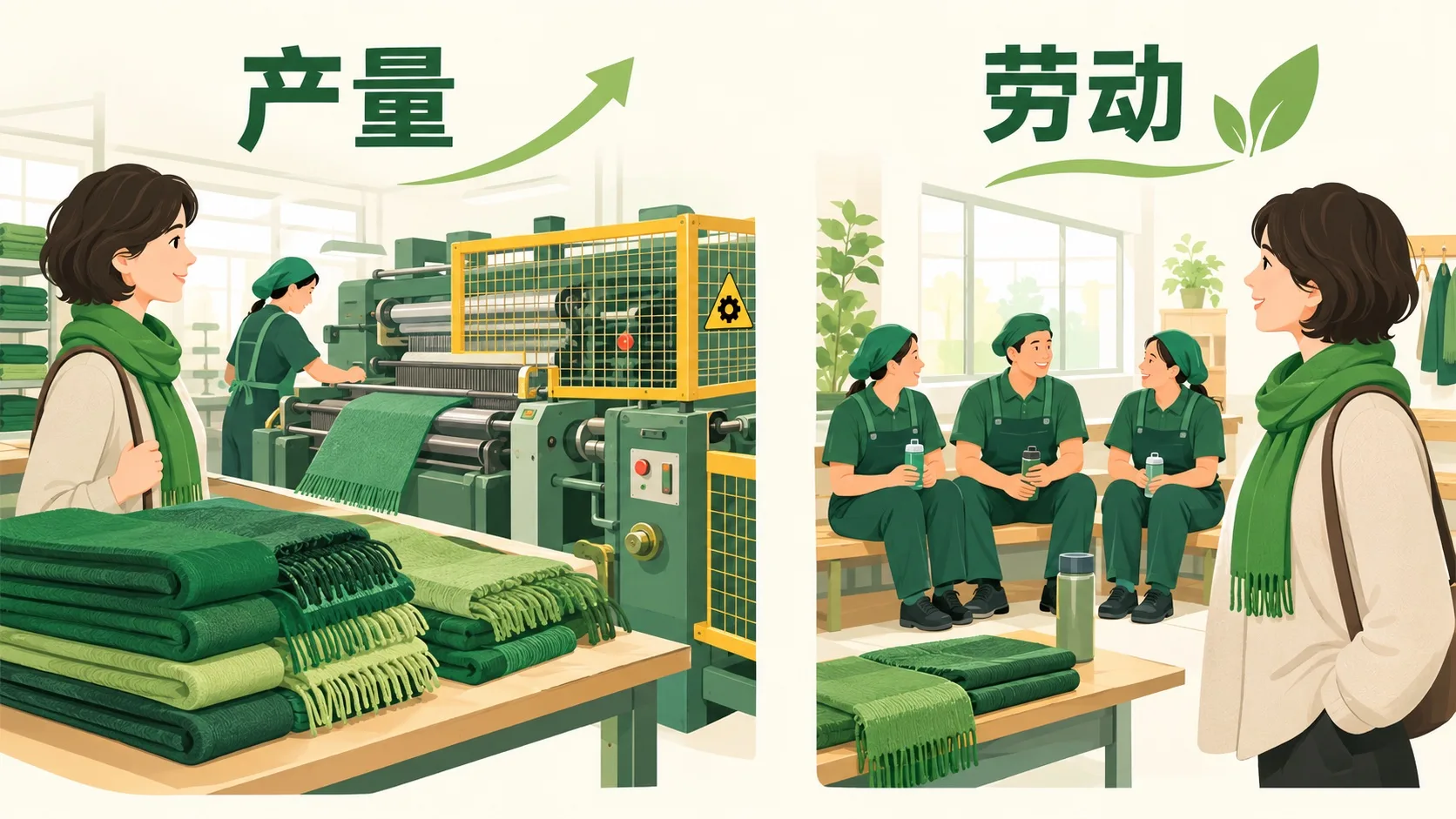
机器更多,所有人都更好吗?Do more machines benefit everyone equally?
机械化能降低单位生产时间。收益如何分配取决于制度。劳动安全和工时也要考虑。评估技术,要同时看产量与人的处境。Mechanization can reduce time per unit. How gains are shared depends on institutions. Safety and working hours matter too. Evaluate both output and people’s conditions.
🎮 机制实验室:观察,再判断🎮 Mechanism lab: observe, then decide
逐行织入纬线。相邻行交错穿过经线,形成平纹示意。Add weft row by row. Adjacent rows alternate over and under the warp to form a plain-weave diagram.
一句话记住它:Remember it:纺纱先成线,织布再成面;效率与劳动条件要一起看。Spin fibres into yarn, weave yarn into cloth; consider efficiency and working conditions together.
纺纱把纤维拉伸并加捻。Spinning draws out fibres and twists them.经线沿布的长度排列。Warp threads run along the cloth.机械化能降低单位生产时间。Mechanization can reduce time per unit.
工序区分:较高把握。机械化对劳动者的影响需要具体时期与地区证据。High confidence in the processes. Effects on workers need evidence for the particular period and place.
核对日期:2026 年 10 月 6 日。文字与配图由 AI 生成;已做来源核对及程序测试,待人工复核。Checked 6 October 2026. Text and illustrations are AI-generated. Sources and software checks were performed; human review is pending.
 Back to tree